By: Warren George
Published: January 23, 2026
Last updated: January 24, 2026
Using Italy’s extensive and efficient train network is one of the best ways to explore the country. Italy by train is straightforward, affordable, and well connected, making it easy to travel between regions, cities, and even across borders into the rest of Europe. Use my knowledge and personal experience contained within this comprehensive guide to master trains in Italy.
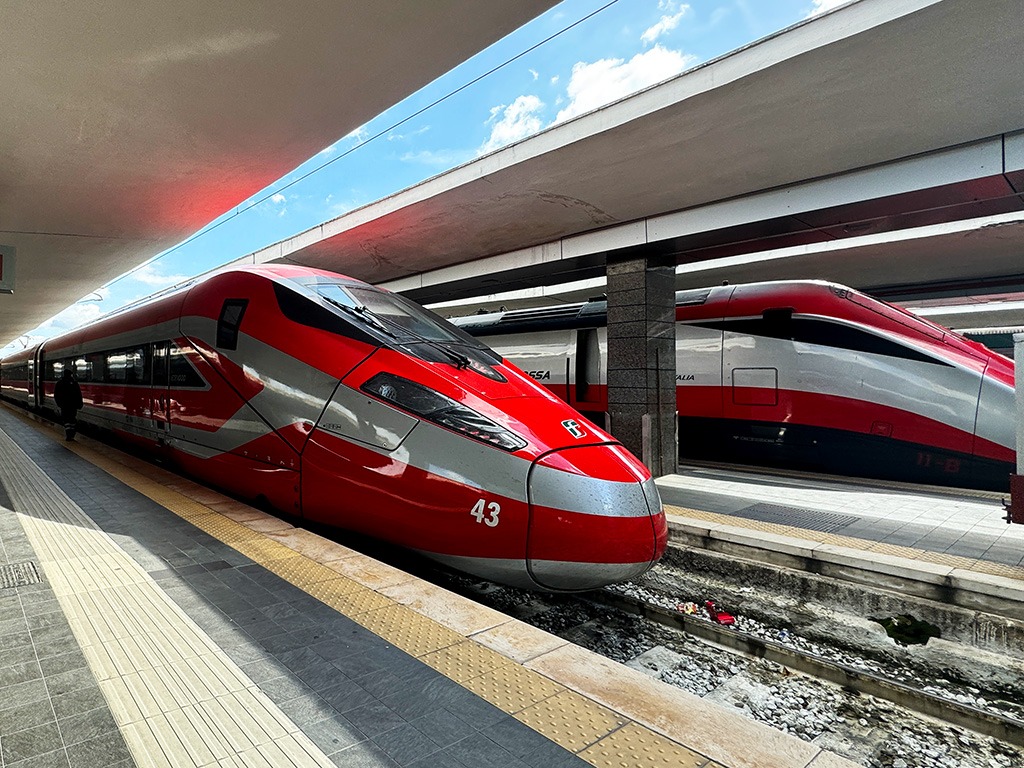
Fast, efficient and fairly priced – is train the best way to travel to and around Italy?
Getting Around, to, and From Italy by Train
Italy’s rail network is one of the most comprehensive in the world. It connects the entire mainland as well as Sicily, and integrates seamlessly with wider European rail systems. This means travelling within Italy by train is simple, but so is arriving from or departing to neighbouring countries.
In addition to long-distance and regional trains, several Italian cities also operate metro or underground networks. These provide fast, low-cost train transport within urban areas and are used daily by both locals and visitors.
This guide will help you understand how Italy’s train system works, how to book tickets, how to use high-speed and regional trains, and how to navigate metro networks in major cities. Below I’ll cover:
- My Top Tips for Travelling by Train in Italy
- How the Italian Railway System Works
- High Speed Trains in Italy
- Intercity and Night Trains
- Regional Trains in Italy
- International and Cross-Border Trains
- Main Train Stations and Airports
- Best Practices for Booking Train Tickets in Italy
- Local and Metro Train Networks
- Frequently Asked Questions about Italy Train Travel
My Top Tips for Travelling by Train in Italy
I’ve used Italy’s trains to explore the length and breadth of the country since my first visit here with Sara in 2013. If you’re new to train travel in Italy, these three tips will make a big difference:
1. Book train tickets as far in advance as possible
For all standard train journeys, excluding metro networks, I strongly recommend booking train tickets early. Reserving your tickets weeks or even months ahead usually means better prices. It also guarantees you a seat on trains that require reservations, as Italian trains are not overbooked in the way UK trains often are. Booking train tickets in advance also saves time on the day of travel, avoiding queues at ticket desks and machines.
2. Arrive at the station early
Aim to arrive at your train station 30 minutes to one hour before departure. This gives you time to find the correct platform, purchase tickets if needed, validate them where required, and grab refreshments without rushing. This is also relevant if your journey involves changing at stations – pace yourself during train travel and allow yourself some buffer time in busy stations.
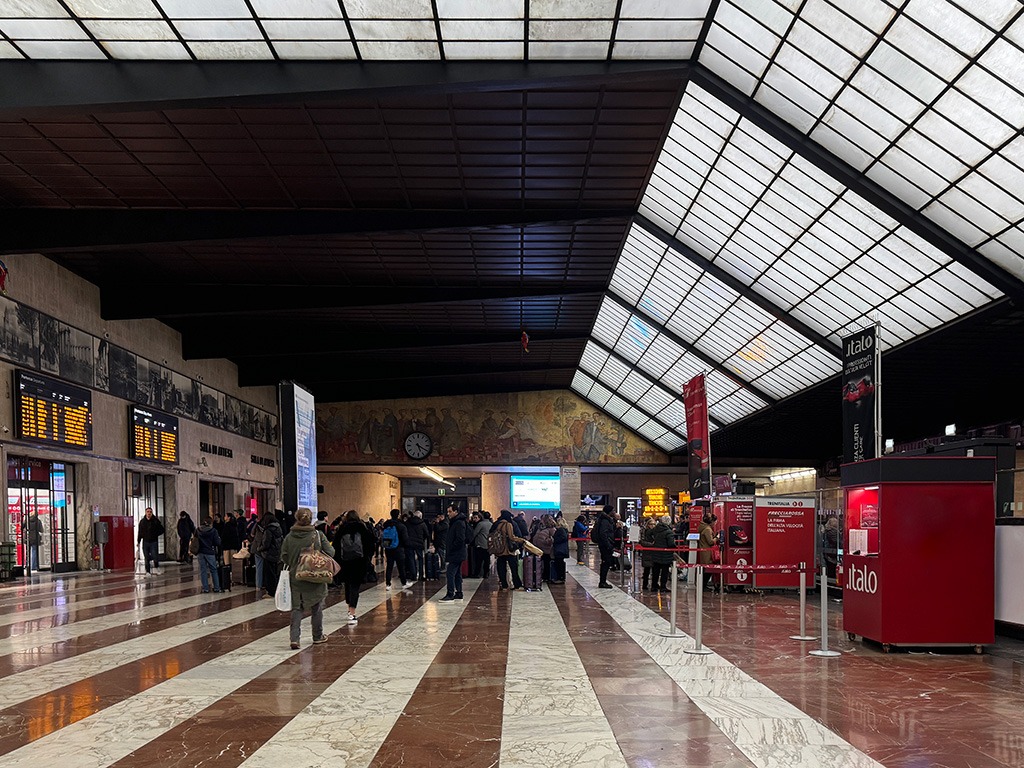
Italy’s major train stations are generally quite large and require some time to get around – be sure to leave yourself with a buffer when travelling
3. Stay flexible
Italy’s trains are generally reliable, but delays can still happen due to strikes, weather or timetable changes. Building flexibility into your plans helps reduce stress. Where possible, consider flexible tickets that allow changes without heavy fees.
How the Italian Railway System Works
The Italian railway system is built around a dense network of main lines and regional services. Most trains run frequently between main Italian cities, while regional trains fill in the gaps, connecting smaller towns and more rural areas. At a high level, trains in Italy fall into four main categories:
- High speed trains on dedicated high speed lines
- Intercity trains linking major cities at moderate speeds
- Trenitalia regional trains serving local routes
- International trains connecting Italy to neighbouring countries
Most trains are operated by Trenitalia, Italy’s national train company, alongside private operators such as Italo and regional providers. All of these I cover in more detail below.
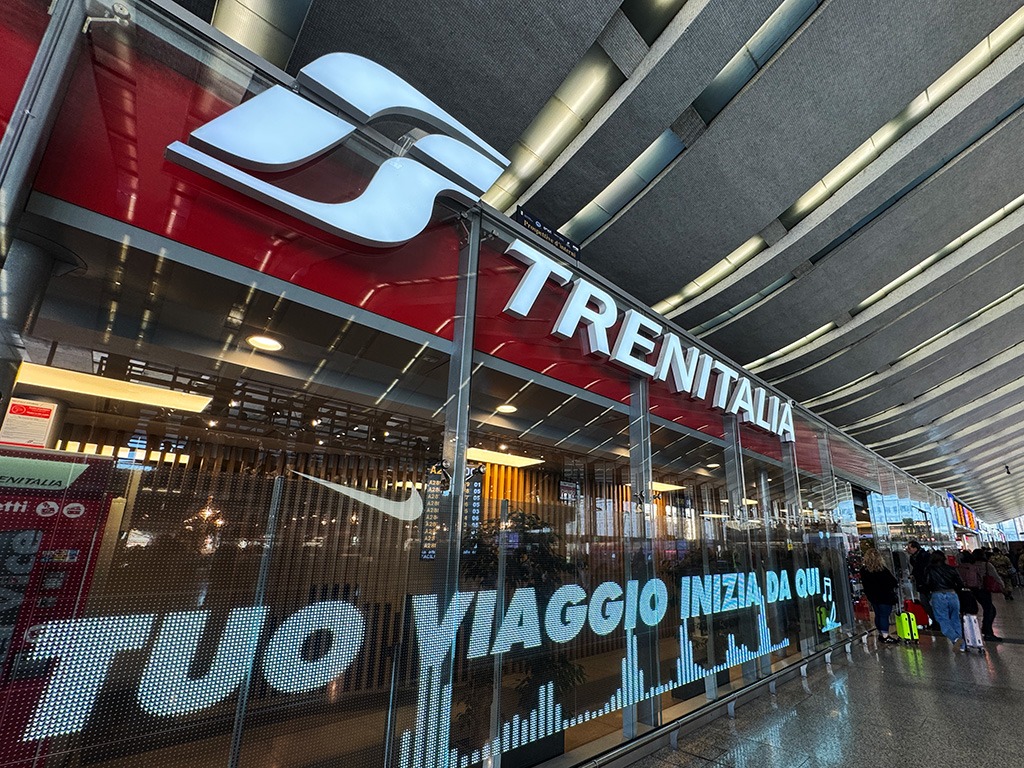
Trenitalia is the principle operator for trains in Italy, and you’ll see their famous branding all over Italian train stations
High Speed Trains in Italy
Italy’s high speed rail network is one of the most developed in Europe. Fast services operate on purpose-built high speed routes linking the country’s main urban centres.
The fastest trains in Italy are Frecciarossa trains and Italo services. These trains reach a maximum speed of up to 300 km per hour and connect cities such as Milan, Florence, Rome, Naples and Bologna in significantly reduced travel times.
The most popular train connections/cities where you can take high speed journeys are as follows:
- Turin – a major destination for connections within northwest Italy, as well as France
- Milan – the main hub for northern Italy, the lakes, and international connections to Switzerland and France
- Bologna – a large national rail hub for both high-speed and regional trains
- Florence – centrally located between Rome and Bologna, with easy onward travel throughout Tuscany
- Rome – a key hub for Lazio and onward connections to Italy’s Adriatic coastal cities such as Pescara and Bari
- Naples – gateway to Pompeii, Sorrento and Campania via regional lines
- Salerno – the southern end of the high-speed network, with onward connections to southern Italy (Reggio Calabria) and Sicily via Messina
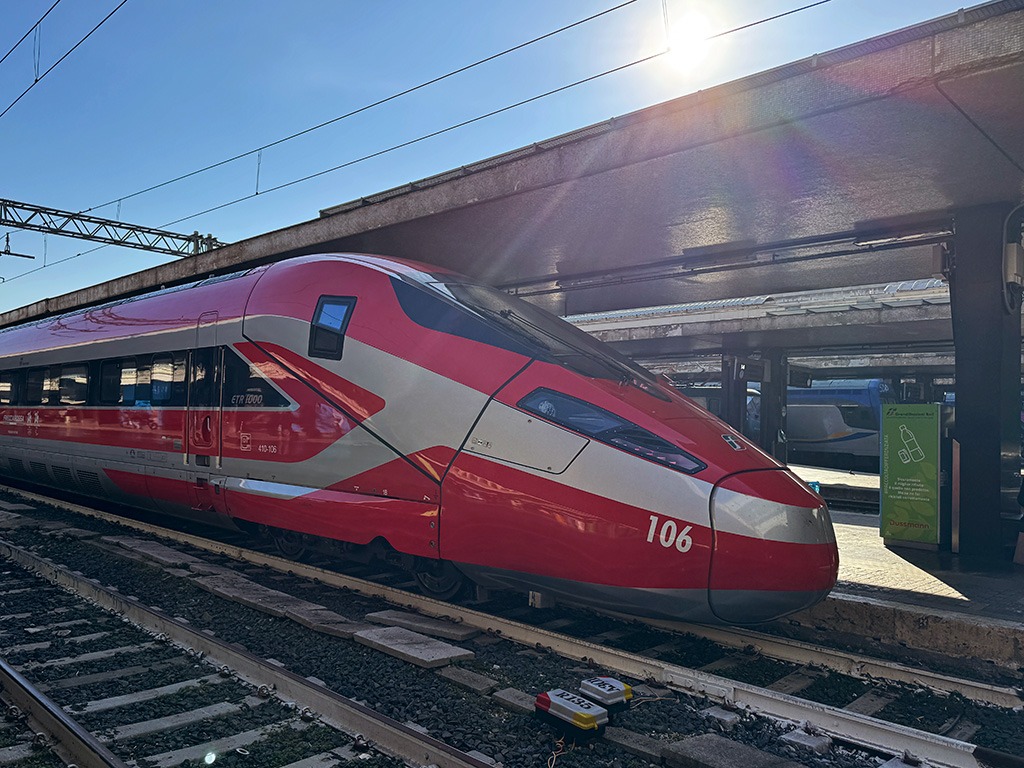
The sleek look of Italy’s highspeed trains is not just for looks; the areodynamic design allows them to reach a top speed of around 300km per hour
Ticket classes on a general level are similar to airlines:
- Economy/Super Economy – comfortable seating with basic refreshments
- Business Class – larger seats, more space, enhanced food and drink, and greater flexibility
- Prima (First Class) – the highest class with maximum comfort, often including pre-departure lounge access at major train stations such as Roma Termini and Napoli Centrale
High speed trains always feature reserved seating only, air conditioning, power sockets, luggage racks, and seated carriages. You’ll often find also a bar/cafè service onboard (beyond the complimentary refreshments) in a restaurant car or simple café service.
When booking, you can usually choose your seat (sometimes for an extra fee subject to the route and demand), add cancellation insurance, or pay extra for lounge access at major stations if this isn’t included by default in your ticket. These lounges offer WiFi, comfortable seating and complimentary refreshments prior to your journey, and are a great way to avoid what are often very busy main station areas.
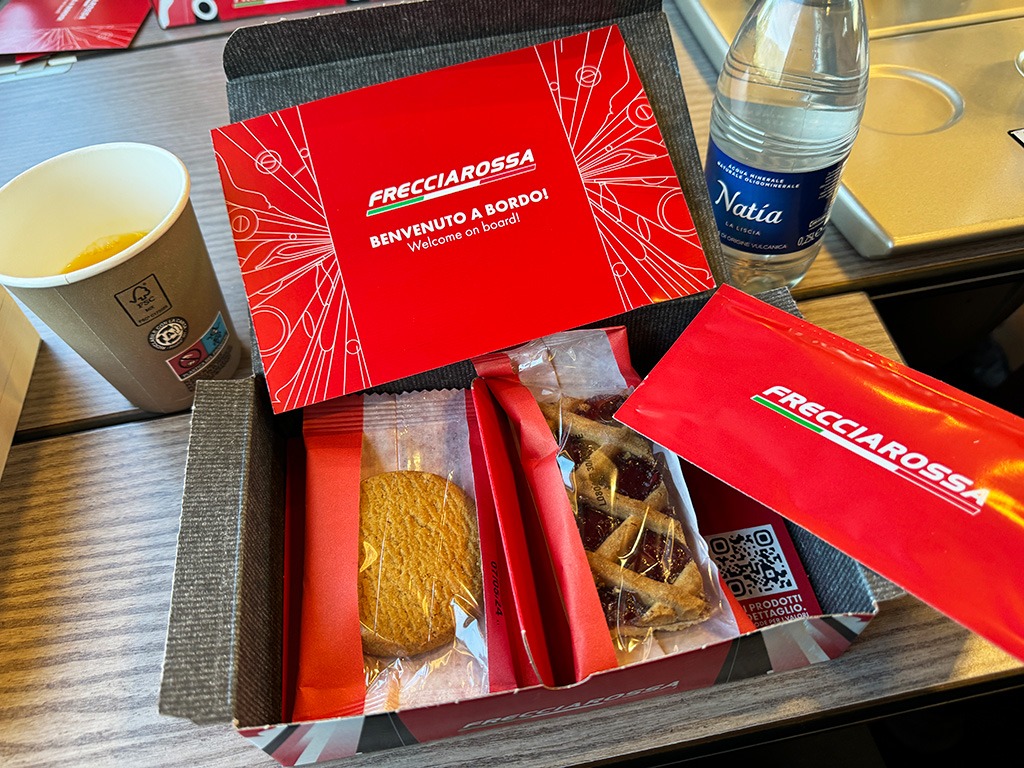
Most Business and First Class (Prima) options include onboard refreshments, brought to your seat by the hospitality teams
Intercity and Night Trains
Intercity trains run on main routes between major cities and coastal destinations, covering areas where high speed services do not operate. They are slower than high speed trains but more comfortable than regional services, normally with reserved seating and onboard facilities.
Night trains operate on selected long-distance routes (such as from Sicily to Rome) and remain a useful option for overnight travel. Night trains operate with sleeping compartments, couchettes and seated carriages, allowing you to save time and accommodation costs.
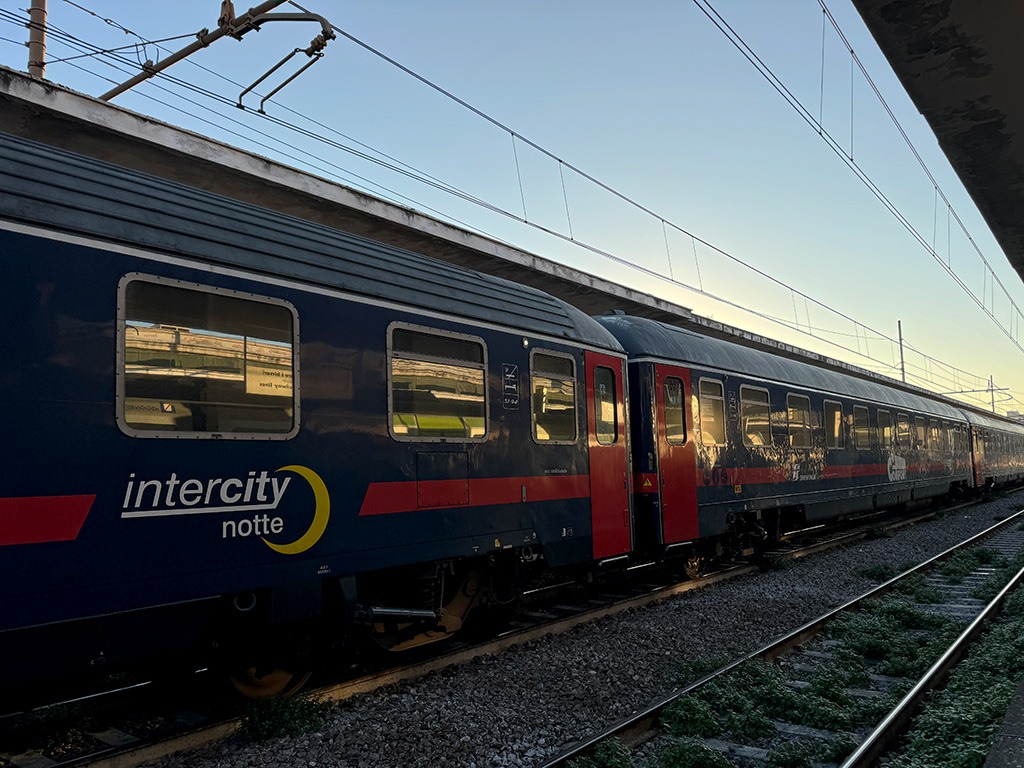
Taking a night train is a great way to save money while travelling through Italy, and lessen the impact of travel on the environment where the carbon output is far lower per passenger compared to internal air travel
Regional Trains in Italy
Regional trains form the backbone of everyday Italian train travel. Regional services connect local villages, towns, suburbs and rural areas, often stopping at many small stations along the route. Most regional trains do not have the option to do seat selection and are priced with a fixed adult fare.
Facilities are basic but functional. Expect air conditioning on most trains, small luggage racks, and simple interiors. Power sockets and food services are less common.
Regional trains are ideal for slower travel, shorter journeys, or when you want to save money.
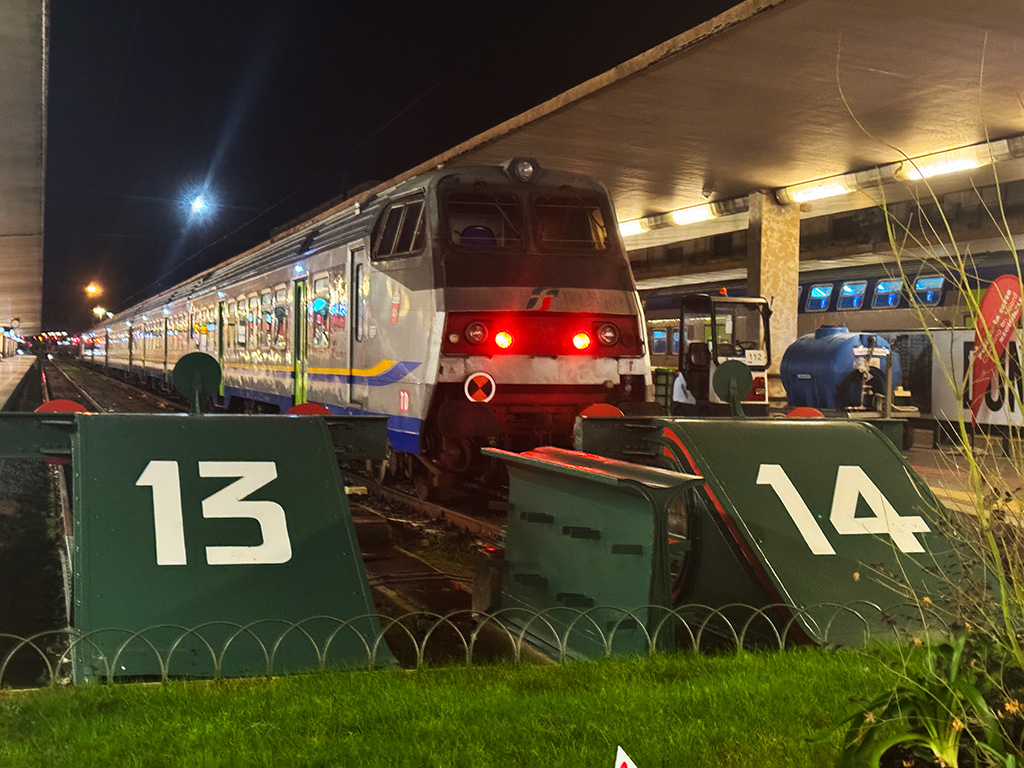
Regional trains are recognisable from their blocky-design, where most feature two levels of seating and standing areas for passengers
International and Cross-Border Trains
Italy is well connected to neighbouring countries via international trains. EuroCity trains, TGV trains, Thello trains and Eurostar Italia services link Italy with France, Switzerland, Austria, Germany and beyond.
These cross-border trains usually require seat reservations and operate from main train stations such as Milano Centrale. Popular international routes include Milan to Paris, Milan to Zurich and Venice to Vienna, allowing travellers to easily utilise Europe’s integrated rail network to explore beyond Italy.
With such a plethora of route and provider options, understanding the best combination can be tricky. The best place to start in my experience is via Trainline EU which will quickly provide you with route options. Their website and app clearly breaks down the operators, and the stops/changes on any given journey.
Pay close attention to the time between train changes in particular, ensuring you leave plenty of buffer time in the event of delays or schedule changes (more common in some countries where the railway networks are not as reliable as they are in Italy).
Main Train Stations and Airports
Most key train journeys within, to and from Italy begin and end at central train stations located close to the the historic (city) centres. Key stations for most visitors to Italy include:
Roma Termini, Rome, Lazio
This huge station is the nexus for Rome’s train lines, the city’s main metro lines, and the express rail service to Fiumicino Airport. Most of Rome’s major landmarks are within walking distance of Roma Termini, making this a very convenient and efficient location for travelling Italy via train. Find out more about Roma Termini in this detailed guide on Romewise.
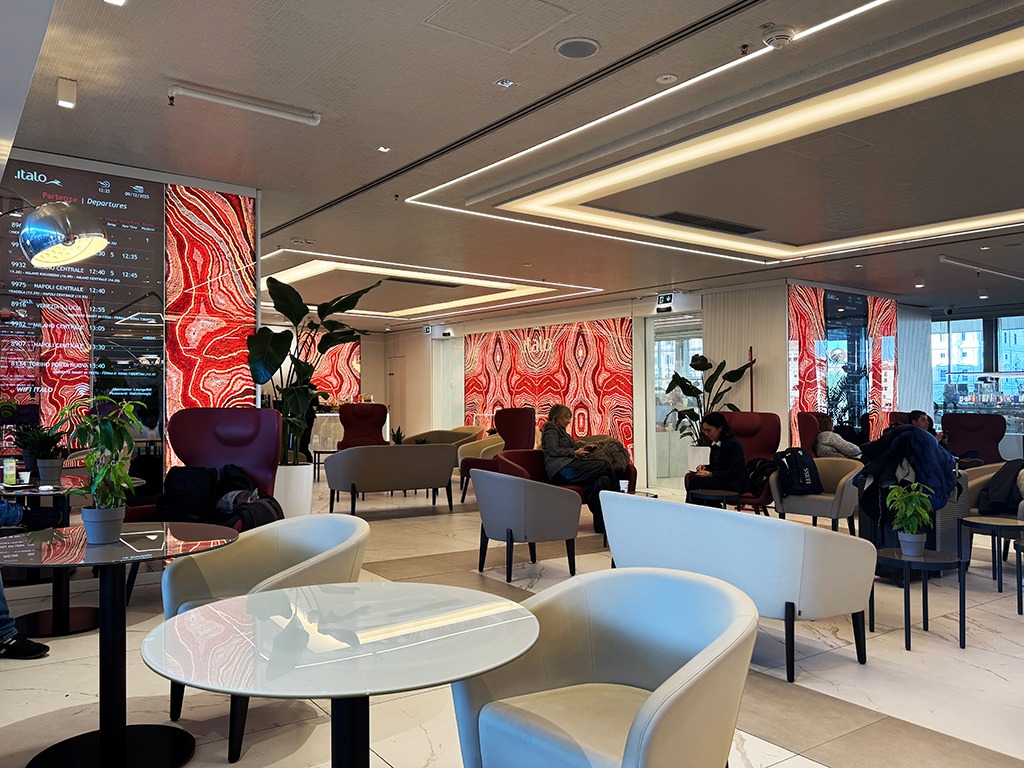
Rome’s Termini is one of the best equipped train stations in Italy where you’ll find a huge range of shops, bars, cafes and waiting lounges (pictured)
Firenze Santa Maria Novella, Florence, Tuscany
While not a big train station when compared to others such as Roma Termini, this hub is Florence’s principle transit centre, with the city’s buses and trams converging here as well as the train networks. Florence city center can be reached easily on foot from Firenze Santa Maria Novella.
Milano Centrale, Milan, Lombardy
Milan’s central station is the nexus for northern Italy’s rail connections, and for routes to France and Switzerland (and beyond). The station is a little distance from the historic heart of Milano, but is connected to the city’s metro network and is a main hub for other public transport options.
Napoli Centrale, Naples, Campania
Naples’ main train station connects the city to the wider region and further south via the Circumvesuviana and other local lines. Much of the city’s public transport also connects through here, as well as the direct bus service to Naples Capodichino international airport. Find out more about Napoli Centrale in this detailed guide on Napleswise:
Venezia Santa Lucia, Venice, Veneto
Located in the centre of Venice, this small station offers visitors to the Floating City immediate access to key landmarks, either on foot or by utilising the unique ‘water bus’ (vaporetti) service.
Beyond the major cities you’ll find that most medium and large towns are connected to Italy’s rail network, and are reachable via local and regional trains.
Airport connections via rail
Popular direct airport connections via train include:
- The Leonardo Express from Roma Termini directly to Fiumicino Airport which runs every 25 minutes from early in the morning to late and night, with a journey time of around 35 minutes.
- Trains from Milano Centrale to Malpensa Airport, Trenord operates the Malpensa Express which connects the city and airport directly with an average journey time of around 50 minutes.
- A fast transit connection between Pisa Centrale to Pisa Airport, with a journey time of 5 minutes running frequently between 6 AM and midnight daily.
Best Practices for Booking Train Tickets in Italy
There are several ways to book train tickets in Italy but generally only one approach that I now follow – let me outline all the options for you here so you have a complete picture, plus my recommended way to buy train tickets:
- If you are already in Italy, you can buy tickets at stations using ticket desks or automated machines. However, this isn’t always convenient, especially if you’re travelling during busy periods.
- You can also book directly with the official train operators. This usually gives you the best base fare, but it requires knowing which operator runs the route you want.
- My preferred option is using a platform like Trainline. It shows all available trains on a route across operators and highlights the best time and price options. I’ve used it for years, both in the UK and Italy, because the app and website are simple to use. Digital tickets also mean no paper validation is required on most services, saving even more time compared to traditional methods.
Local and Metro Train Networks
Between regional trains and city metro systems sit local rail services such as Rome’s Metromare and Campania’s Circumvesuviana. These can be confusing, as some are integrated into city transport networks while others require separate tickets. Always check ticket validity carefully.
Metro Networks in Italian Cities
Milan
Naples
Naples has a multi-line metro network integrated with buses and trams. Some stations are famous for their design, often referred to as “art stations.” Dante station is our personal favourite where the walls are lined with the texts of the famous Italian writer. Parts of the Circumvesuviana line are included in the network, while others, such as the Campania Express, are not. For more information on Naples’ transit network, visit Napleswise here.
Other cities from north to south in Italy feature smaller metro and fast-transit networks, including Genoa in Liguria, Turin in Piemonte, Brescia in Lombardy and Catania in Sicily.
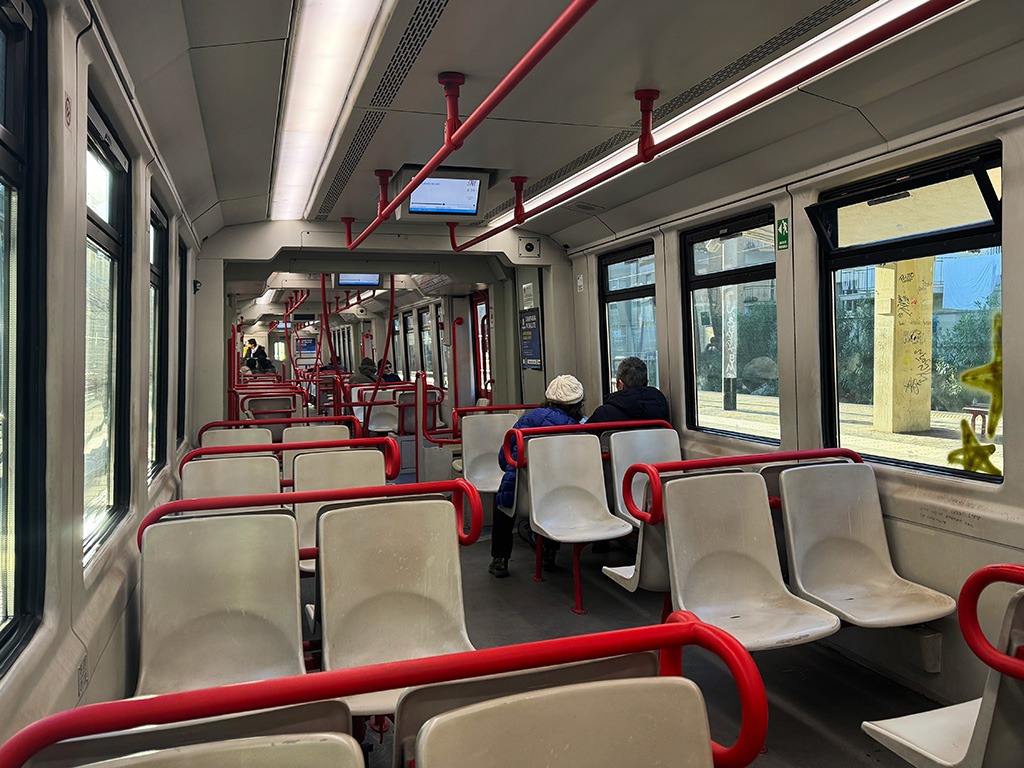
Local trains like the Campania Express from Naples to Sorrento may not offer luxury experiences, but they will get you from A to B reliably
Rome
Rome’s metro includes Lines A, B and C, along with additional rail services integrated into the same ticketing system. Buses and trams are part of the same network. Note that the train to Fiumicino Airport is not included and requires a separate ticket reservation.
Frequently Asked Questions about Italy Train Travel
If you have a physical train ticket you will almost always need to validate it. The majority of the time this means putting it in a small device located in the train stations, or at ticket barriers – the most common version you’ll see are yellow machines on the walls of Italian train stations.
Most long-distance Italian trains have designated luggage spaces, including overhead racks and larger compartments for bigger bags (on the more modern trains these can be further secured with locks for a small fee). Unlike planes, there is no official limit on what you can bring onboard, providing it fits in the spaces available and that you can get it on and off the train. Huge suitcases can be a struggle however so I recommend keeping your baggage on the smaller side where possible.
The most reliable way to save money on Italian rail travel is to book in advance – generally, the further ahead that you reserve your journey, the better the price. I’d also strongly recommend using a service like Trainline so you can review all journey options in one place, which not only saves time, but also means you can select the cheapest journey if you’re travelling on a budget.
There are several ‘rail pass’ options available for traveling Italy via train. Each comes with different benefits and perks, but having never used one myself, I cannot make a direct recommendation. Popular options include ItaliaPass and Pass Interrail Italia (Eurail Pass).
All aboard?
Italy train travel is reliable, efficient and accessible for first-time visitors and experienced travellers alike. With many trains running daily, a well-connected high speed network, and clear ticketing options, trains remain one of the best ways to explore Italy.
Whether you’re travelling between major cities, following popular routes, or planning slower journeys using regional services, understanding the basics of Italian trains will help you travel with confidence – and make the journey part of the experience, not just the logistics.