

By: Warren George
Published: February 22, 2026
Last updated: February 27, 2026
With 2,000+ years of history to discover and beautiful beaches just a stone’s throw from the historic centre, Noto in southeastern Sicily – and the surrounding area – offers visitors plenty to do. Let me share with you a breakdown of the best places to visit, experiences to enjoy, options for day trips nearby and much more based on my own direct experiences.
This town, alongside seven others in the area, make up the Val di Noto UNESCO Heritage Site and are packed with history, beaches, shopping, and day trip options.
Noto Sicily – top activities, must-see sites and more
I’ve been visiting Noto, Sicily regularly since 2015 and consider it one of my favourite places in all of Sicily alongside Taormina. I’m not exaggerating when I say this, and one of the reasons I love it so much is because of the wealth of things to do, sites to explore and experiences in and near this famous Baroque town.
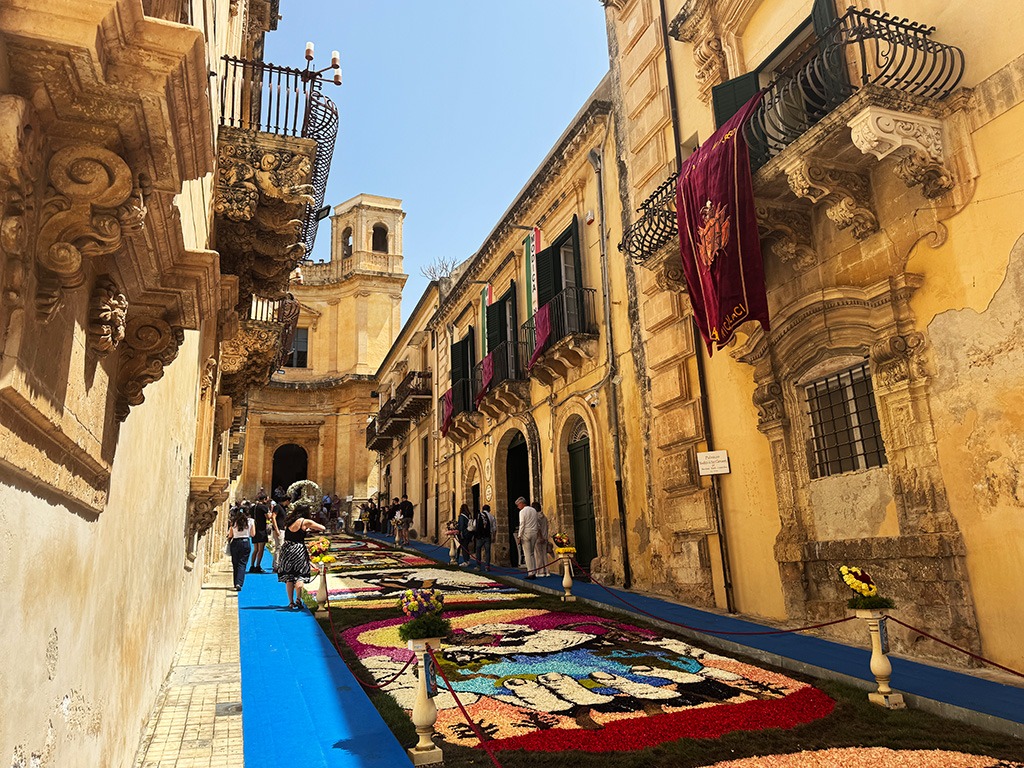
After all, there aren’t many other places in the world when you can see an entire street blanketed in flowers, arranged into stunning works of art. But the special Infiorata di Noto festival is just one example of what makes this place special. This guide will share much more. While it won’t tell you if Noto is worth visiting, it will detail how to visit it in the best way possible, making the most of any Sicily itinerary you are planning. This guide will break down:
Who is this guide for?
This guide is for travellers looking for inspiration and recommendations on what to do in and around Noto, Sicily. If you’re looking for information on where to stay in Noto, getting to and from this part of Sicily, and other general travel advice, take a look at my guide here:
Noto’s top historical and cultural sites
Most people who come to Noto do so to see the town’s beautiful Baroque architecture and landmarks, constructed after the infamous 1693 earthquake that destroyed much of this part of south east Sicily.
Most of the noteworthy sites in Noto are located along, or very close to the town’s main thoroughfare, Corso Vittorio Emanuele. Starting at the eastern end, the best approach is to walk westwards, following my outline below. I’d encourage you to visit each of the sites included below (and any others that catch your eye along the way). Even if you just spend a short while at each, by the end of your time in Noto you’ll have done this gem of a town justice.
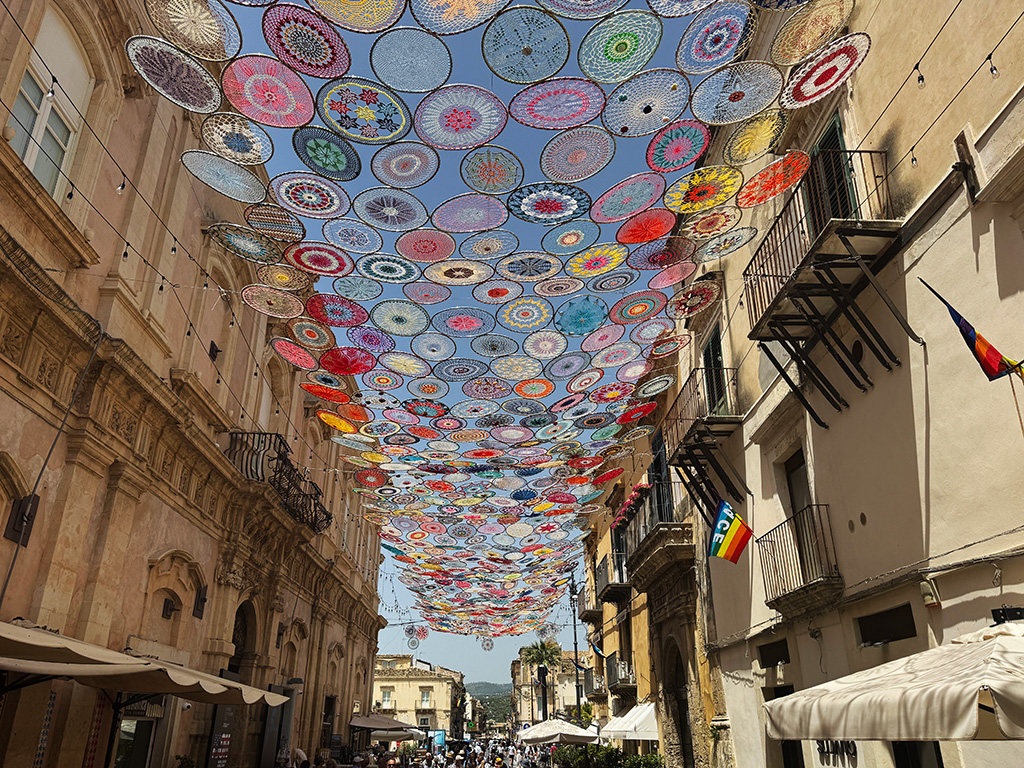
Noto isn’t a big town and is mostly flat, meaning it can be comfortably explored in a day or two
The first major sight is the Porta Reale o Ferdinandea, the symbolic entrance to Noto. This ceremonial arch was built in 1838 to celebrate a visit by Ferdinand II of Bourbon, King of the Two Sicilies. It was restored in 2014, bringing back to life the gleaming golden local limestone that you’ll see throughout Noto’s architecture.
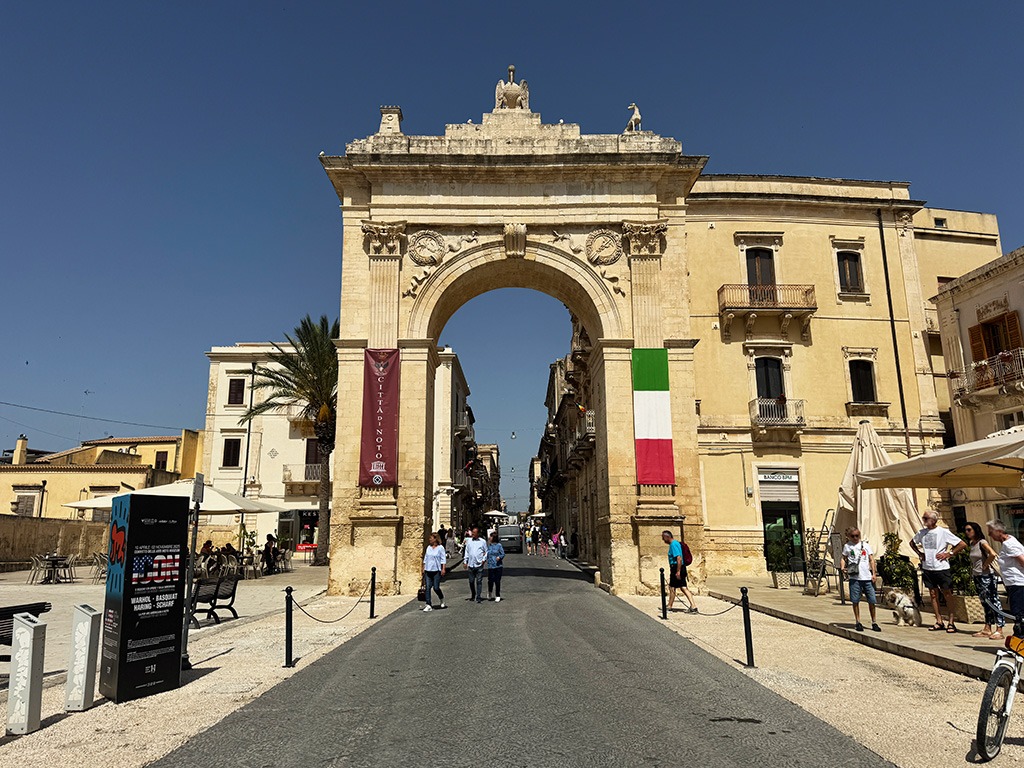
This impressive gateway is the perfect starting place to start any self-guided walk of Noto’s historic centre
Continuing along Corso Vittorio Emanuele you’ll spot lots of bars, restaurants and shops between the historical landmarks. I share my top recommendations for eating, drinking and shopping below, as well as in this general introduction to Noto where you can learn more about the town’s history if you’re interested in doing so.
I like to think of Noto as a huge outdoor theatre where the grand buildings dominate the visitor’s eye like ornate stage sets. I think you’ll agree when you arrive here. With this in mind, the first act of our show (if the Porta Reale o Ferdinandea was the warm-up), is the church of San Francesco d’Assisi all’Immacolata.
When visiting any churches in Italy, be sure to be respectful of dress codes and clothing expectations. All visitors should ensure their shoulders, midriffs and knees are covered entirely. There is no need for women to wear headscarves (a common misconception), and no specific requirement on footwear.
I always stop to appreciate this somewhat unassuming church that most people walk past on their way to the bigger, more famous examples of Noto’s architecture. I love the way it sits perfectly nestled among the levels of Noto and the main street below. I believe the best view of San Francesco is from street level, looking up towards the facade where the design is somewhat imposing, yet offset by the refined stonework and Baroque details.
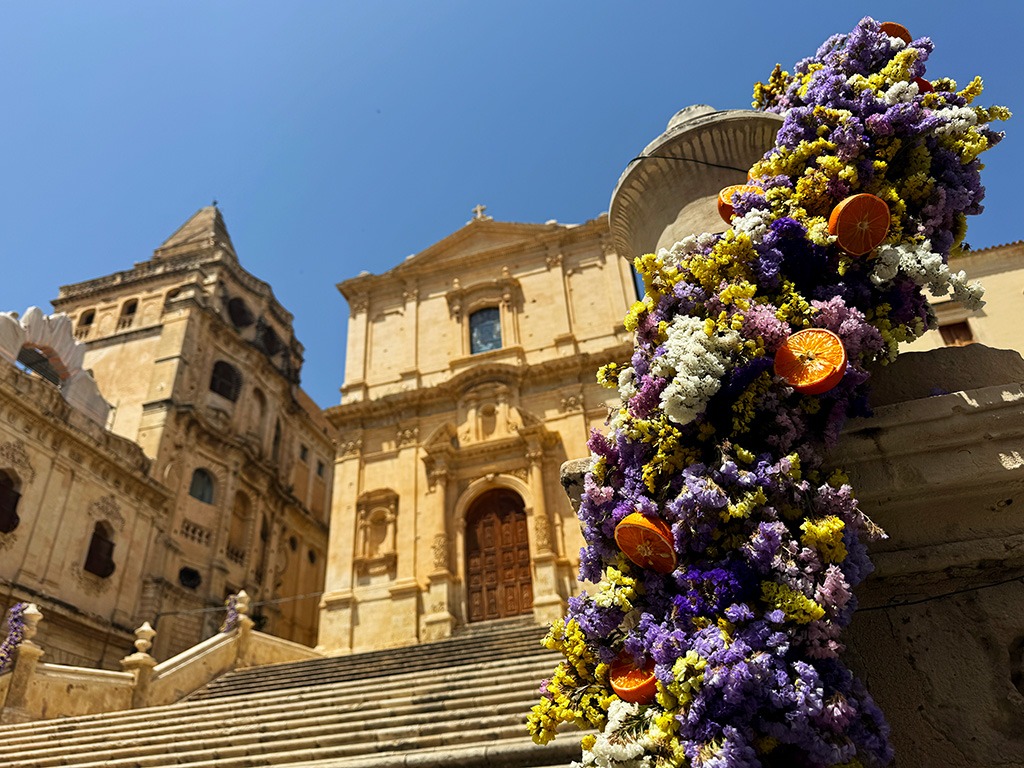
This church is especially beautiful when the Infiorata di Noto is on, when the exterior is decorated extensively with flowers
You can walk the entire town of Noto, end to end, without stopping in 15 minutes – it’s pretty compact. So it won’t be long until you arrive at Piazza del Duomo, the architectural centrepiece of the town and main scene of our imaginary stage show. Use this square as a waypoint as you explore Noto, coming back here if you get lost or need to reset at one of the nearby bars or cafes.
Whenever I’m here I am awed by the Baroque style of the seemingly oversized buildings, especially in the late afternoon and early evening. At this time of day the setting sun brings out the colour of the local yellow limestone used in the buildings, reminding me in equal measure of the rugged Sicilian landscape and the colour of a rich white wine from the slopes of Mount Etna.
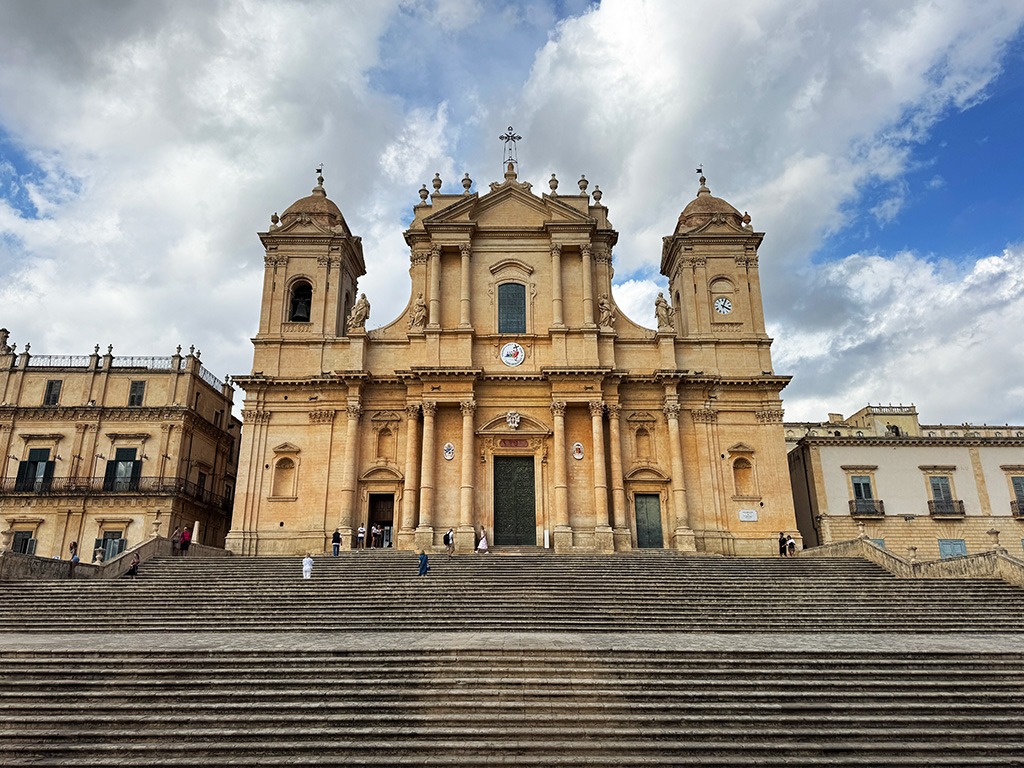
Here you’ll find the town’s most famous sites; Noto Cathedral of San Nicolò and Palazzo Ducezio.
Be sure to take some time in Piazza del Duomo. Venture up the steps of each building to get a powerful view of the other, opposite. If you were previously unable to see why I said Noto feels like a huge outdoor theatre set, I believe you’ll see it here.
If opportunity presents, head inside each, although this isn’t always possible as the cathedral holds regular masses, and is a popular site for weddings, while the palazzo is the seat of the local government (town hall for the Comune di Noto).
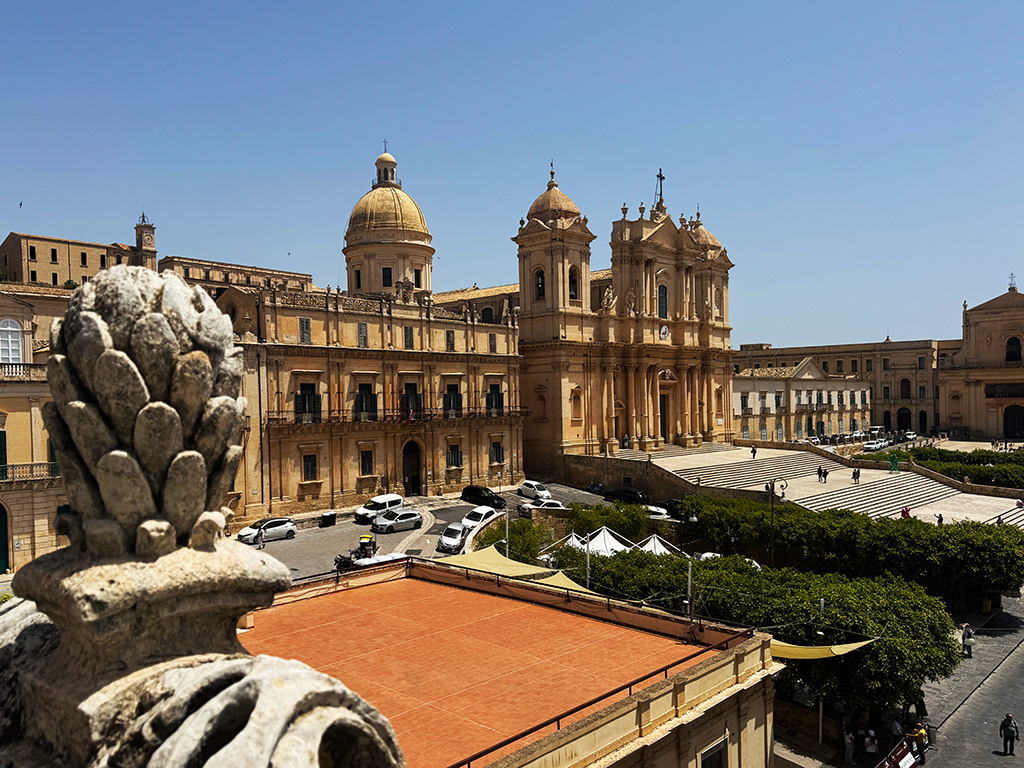
One of the best views of Noto’s historic centre is from the roof of the church of San Carlo al Corso
Exploring further, history lovers and culture-seekers should also visit Palazzo Nicolaci di Villadorata, one of Sicily’s pre-eminent noble palaces. Home to the Nicolaci family up until 1989, it was completed in 1737, and comprises 90 rooms decorated with frescoes, and housing treasures from across the centuries. This Baroque building is most famous however for its exterior design, and specifically the ornate wrought iron balconies that go beyond functionality and are works of art in their own right.
Seeing the famous Infiorata di Noto
This famous festival is held annually, typically on the third weekend of May, where Via Corrado Nicolaci is transformed into a giant outdoor art installation. Huge detailed designs created by flower artists following the year’s theme, using just plants, whole flowers and petals fill the street with colour and floral scents.
Sara and I made a special trip to Noto in 2025 to see the Infiorata in person, and were deeply moved by the works created with the theme of peace. This came not long after the passing of Pope Francis, an advocate for global peace, and the soothing effect of the natural beauty and scent of the flowers used in the works that filled the air was unlike anything else I’ve experienced.
Beyond walking along Via Corrado Nicolaci to see the works of art up close, it’s worth paying the small fees to climb to the top of the towers of Chiesa di Montevergine and Church of San Carlo al Corso which overlook the festival at opposite ends.
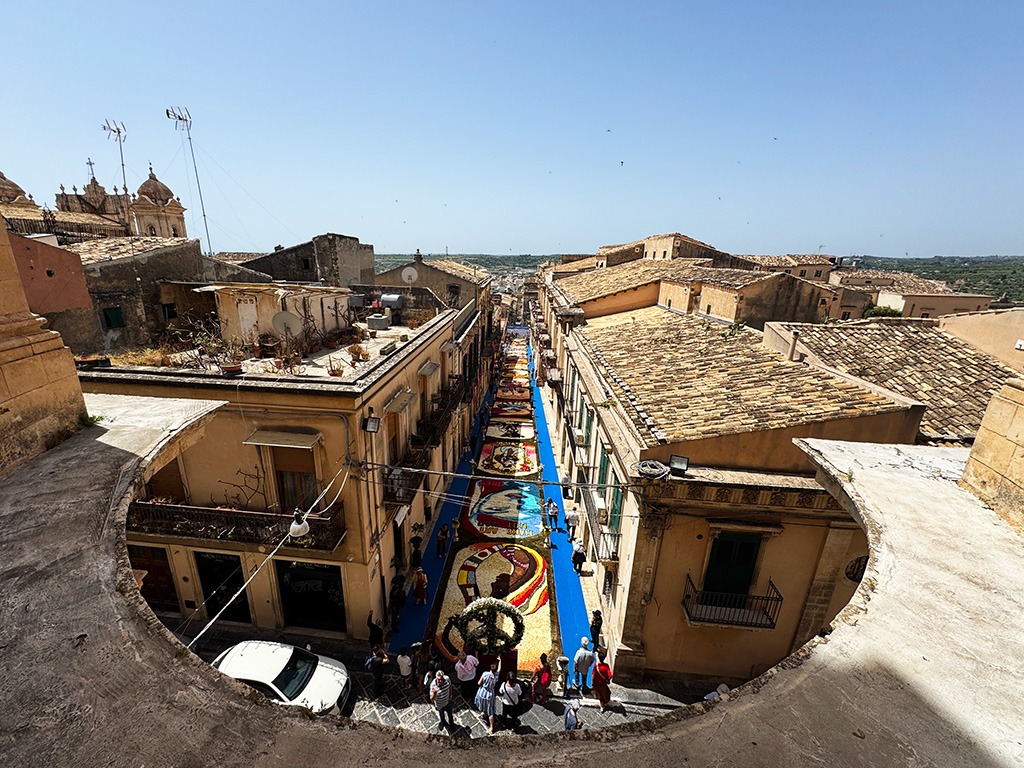
Head up the bell tower of Chiesa di Montevergine to get a birdeye view of the Infiorata below
The Infiorata draws visitors from across Sicily, the Italian mainland and beyond, which means Noto is almost always busy during May. If you’re visiting during this time, be sure to book activities in advance when possible, as well as restaurant reservations – it always pays to be organised when coming to popular locations like Noto, Sicily, in my experience.
A quick note: while Noto is a regular town that can be visited all year round, many of the things to do included in this guide from this point onward are weather dependent, and some are not available during the winter months. If you want to make the most of any trip to Noto, consider visiting in May, June or October. July and August can be extremely hot and busy with visitors, making a lot of the recommendations below difficult to plan and enjoy during high temperatures.
For more information about when best to visit Noto, and a more detailed introduction to the town including getting here, the history of Noto and more, read this guide:
Shopping in Noto Sicily
Noto is full of fantastic stores and routinely hosts markets with local producers and artisans, making it a great place for shopping.
You won’t find any big brand shops, department stores or malls here. Instead, Noto’s stores are small boutiques, focusing on quality over quantity.
You’ll also see a lot of classic tourist-focused shops, offering cheaply made souvenirs – we’ll usually grab a fun magnet in these types of stores to remember our time somewhere, but that’s about it. If you enjoy shopping while travelling, we invite you to check out the following locations below where you can pick up something special for yourself, friends, or family.
The following lists our top three stores, heading east to west along Corso Vittorio Emanuele:
For jewellery, homeware and foods
Before you reach the Porta Reale o Ferdinandea gate, through the warmer months you’ll typically find market stalls lining the start of Corso Vittorio Emanuele within the Villa Comunale Noto. These stalls offer a great range, from local foods (to eat there and then or take home), up-cycled homeware and antiques, through to handmade jewellery. On a recent stop at one of the stalls, Sara purchased a couple of pairs of earrings made by a local artisan – they’ve quickly become some of her favourite jewellery.
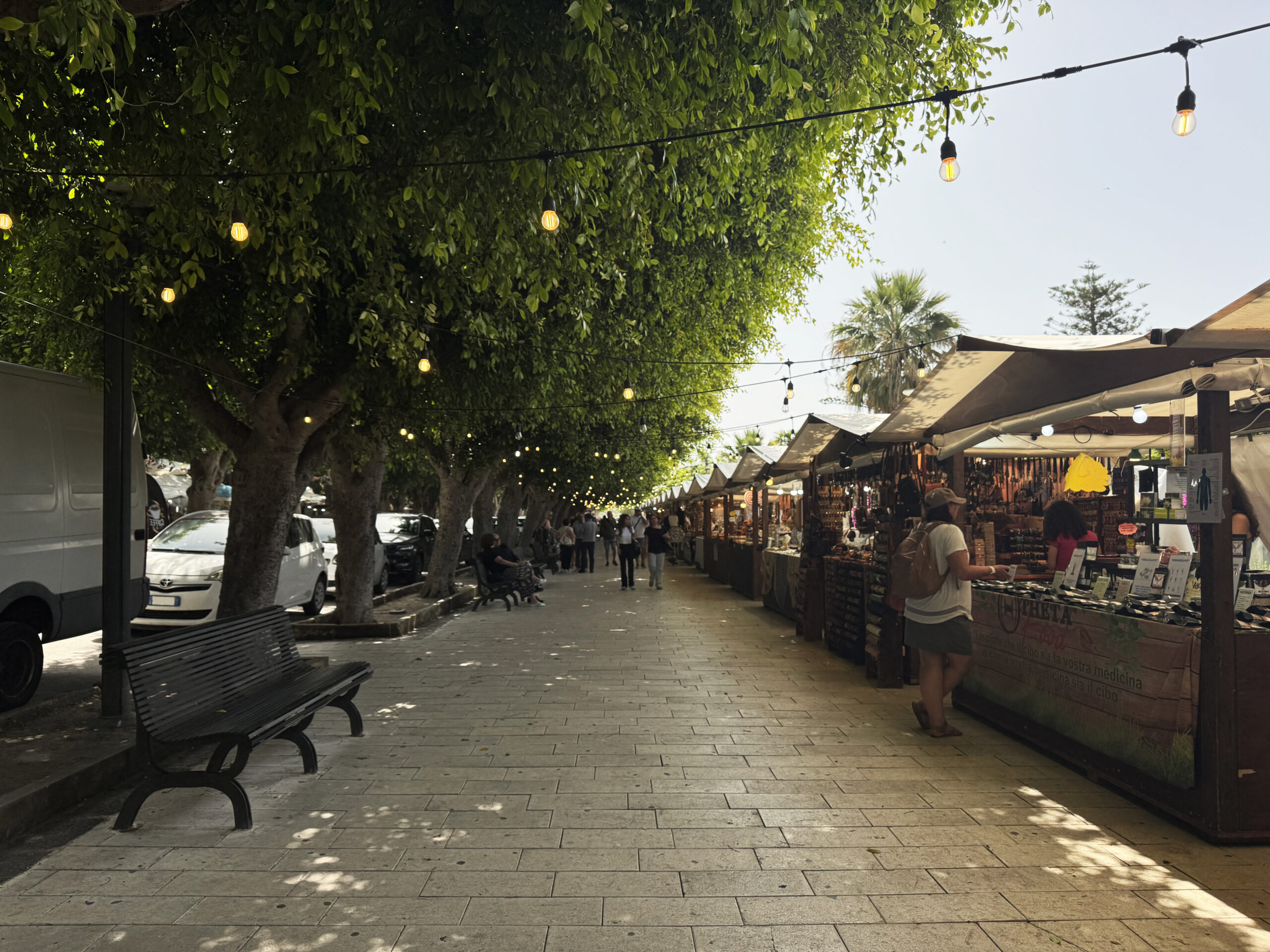
You’ll also find stalls here offering local food and drink specialities to enjoy while on the move, or to take home
For high-quality souvenirs and art
Passing under the Porta Reale o Ferdinandea and entering the historic centre of Noto, on the left hand side of the street you’ll see a modern-looking store – the Marini & Pannuzzo art gallery at Corso Vittorio Emanuele 159. This small space is run by local artists who pay homage to Sicily in the works they create, using bright colours and striking designs inspired by Sicily’s unique look. We love their style and products, from magnets through to full-size paintings, and could easily buy a lot more than we already have!
Is there a best time of day to shop in Noto? If your priority when in Noto is shopping, I’d recommend getting up early and setting out at the start of the day. This is when you’ll find the markets are ready and offering their full range of items, and all of the stores will be open. Coming to Noto for shopping later in the day (after lunch) risks that market stalls might be running low on stock, and some stores will be closed.
For skincare, toiletries and more homeware
A few steps beyond Piazza del Duomo, again on the left side of the main street is our favourite store in Noto; Ortigia (Corso Vittorio Emanuele 97). This small store is one of a small group based out of Ortigia in Syracuse (hence the name), and is famous for its high-quality skincare, fragrances and bathing products all made from Sicily’s famous flowers and fruits.
Their products are gender-neutral, and created without animal testing, meaning it’s become our go-to stop for our own bathroom and wellbeing essentials, but also for gifts where we want to share a little bit of Sicily with friends and family.
We recently detoured via the town on our way to the ferry port at Pozzallo, and even with only an hour to grab something to eat, we still found time to stop here and stock up!
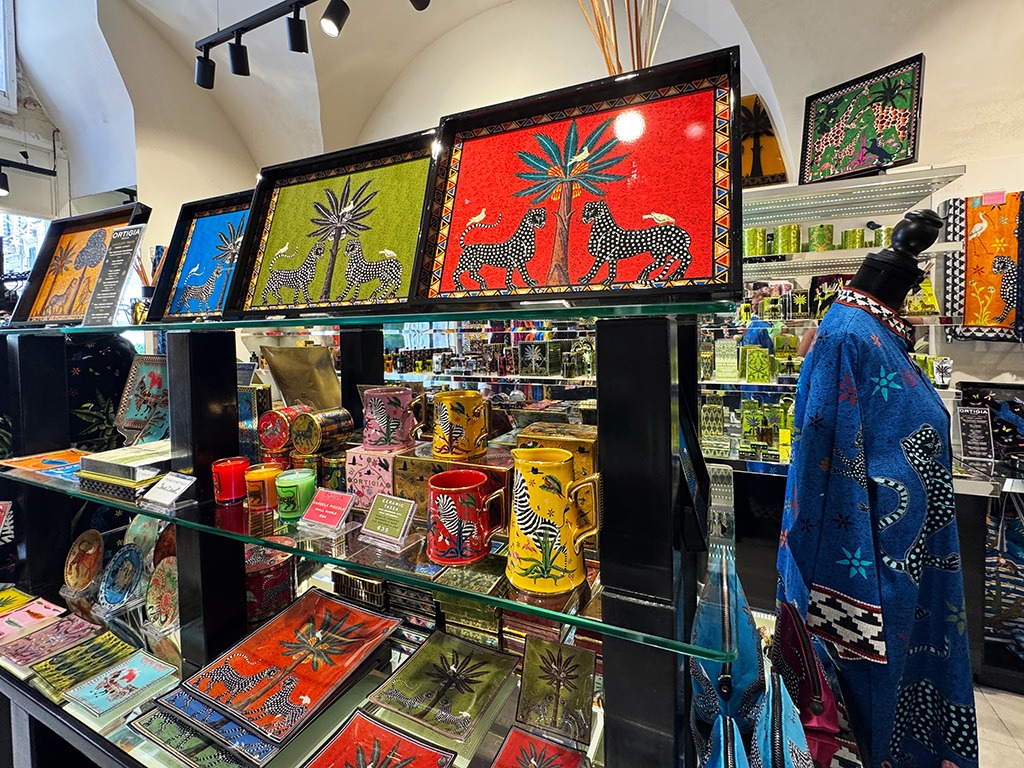
We also love Ortigia’s small range of homeware and fashion items, perfect for gifts for anyone back home
Beaches near Noto
Noto and the nearby coastline might not be as famous as other parts of Sicily when it comes to beaches, but you’ll still find beautiful stretches of sand, peaceful coves and some of the clearest waters in eastern Sicily. Let’s take a look at the three best beaches close to Noto:
Avola
Heading north from Noto, along Sicily’s eastern coast you’ll find the town of Avola. This small town is connected to Noto via the same train line that goes to Syracuse, making getting here viable via public transport. Trains take less than 10 minutes, and from Avola’s train station you can either walk, take a taxi or jump on a local bus to travel the 2km to the beautiful sandy beach here. You’ll find traditional Italian beach clubs (stabilimenti) offering waterside dining, drinks and sunbed/deckchair rental.
Italian beach culture took Sara and I a while to get our heads around. Now we live by the beach, and like anything, practice makes perfect. We’ve mastered how to navigate sunbed rental, dress codes and expectations, swim safety, and everything else that’s needed to enjoy Italy’s beaches like a local. We share all of this so you don’t have to learn the hard way in this detailed guide on Napleswise:
Spiaggia di Calamosche
Located in the protected Vendicari Nature Reserve roughly 10km from Noto, this small cove beach is a great place to enjoy snorkelling in the shallow bay. Calamosche is the place to be if you’re looking to be immersed in nature, as it’s a great base for hiking the paths of the nature reserve. Or, if you’re feeling especially adventurous, you can visit nearby coves such as Cala Loco and Cala Giusy, taking less accessible paths or kayaking from Spiaggia di Calamosche.
Eloro Beach
Also found within the boundaries of the Vendicari Nature Reserve, Eloro is larger and more sandy than Calamosche (above), but doesn’t offer the same experience if you’re looking to snorkel. However, something unique about this beach is that there is a small, ruined ancient Greek theatre just a few paces from the sand and water, close to the car park.
For both Calamosche and Eloro beaches, unfortunately there are no direct public transport links from Noto so you’ll need to drive or take a taxi, but the serenity of these excellent beaches is well worth the effort. Note that you won’t find sunbed rental or any permanent amenities here as disruption to the local environment is kept to a minimum, but you are permitted to bring towels and small chairs as long as nothing is left behind at the end of your visit.
Eating and drinking in Noto
If you enjoy Sicily’s cuisine (incidentally, my favourite in Italy’s pantheon of regional cuisines), you’re in luck in Noto. The town and nearby area is full of amazing places to eat and drink, where limited space means competition is fierce and quality high almost everywhere as a result.
One of my top things to do in Noto during the day is a self-guided food tour, as some of my all-time favourite foods come from this island. Here’s a loose route that I’ve enjoyed many times over the years:
Stop 1: A real Sicilian breakfast
Forget pastries – those are for breakfast on the Italian mainland. A traditional Sicilian breakfast is granita, served with a plump brioche bun. If you’re unfamiliar with granita, it’s a semi-frozen mix of water, natural ingredients (typically citrus fruits, or nuts) and sugar. It doesn’t contain milk, meaning it has an almost gritty texture, unlike gelato which is smoother. The combination of granita’s sweet coarseness and the smoothness of a freshly baked brioche is my all-time favourite way to start the day, at any time of the year (but it’s especially welcome in the heat of the Sicilian summer).
My go-to spot for granita is Caffè Costanzo, a few steps from Piazza del Duomo, which also offers other traditional Sicilian specialities such as martorana – almond sweets made to imitate the island’s iconic fruits.
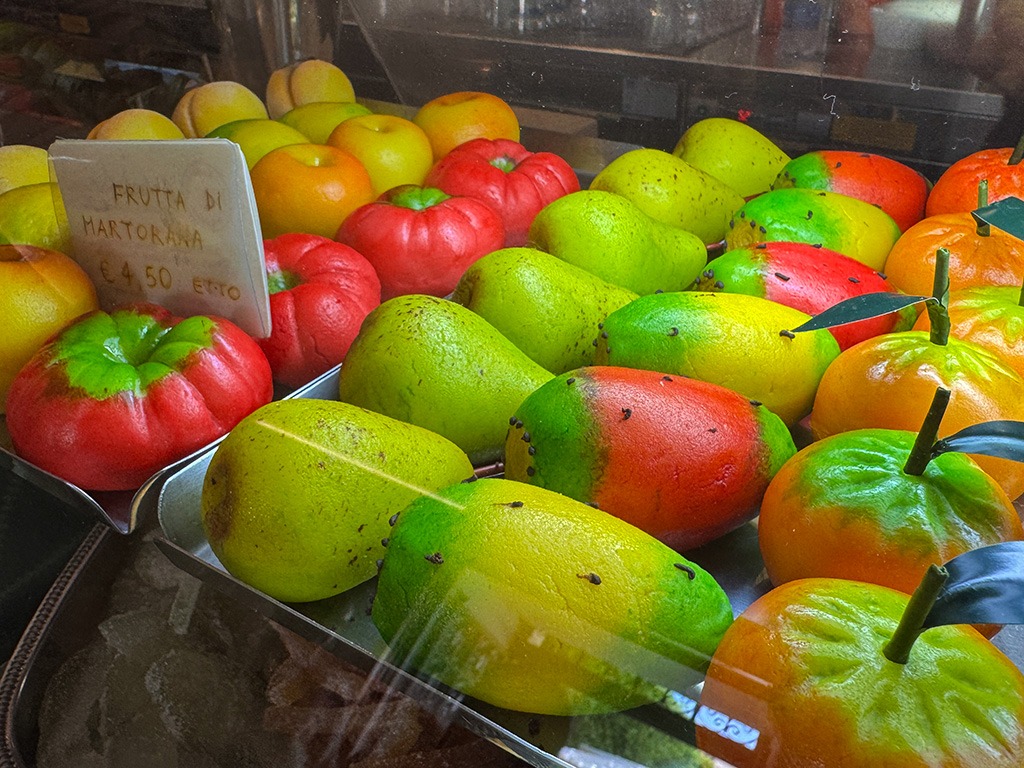
If you’re not tempted by the granita, try a martorana with a coffee for an equally traditional taste of Sicily
Lunch on the go
Sicilian street food is all about convenience; intended to be eaten on the go, and kept relatively light to avoid slowing you down during hot days. I’d recommend embracing this ethos by stopping at any of the small bars you’ll see around Noto and getting yourself an arancino (fried rice ball), sfincione (a pizza-like flavoured bread), or whatever the bar has on offer that day. I can honestly say I’ve never been disappointed when I’ve grabbed something on a whim around town, so head inside wherever takes your fancy.
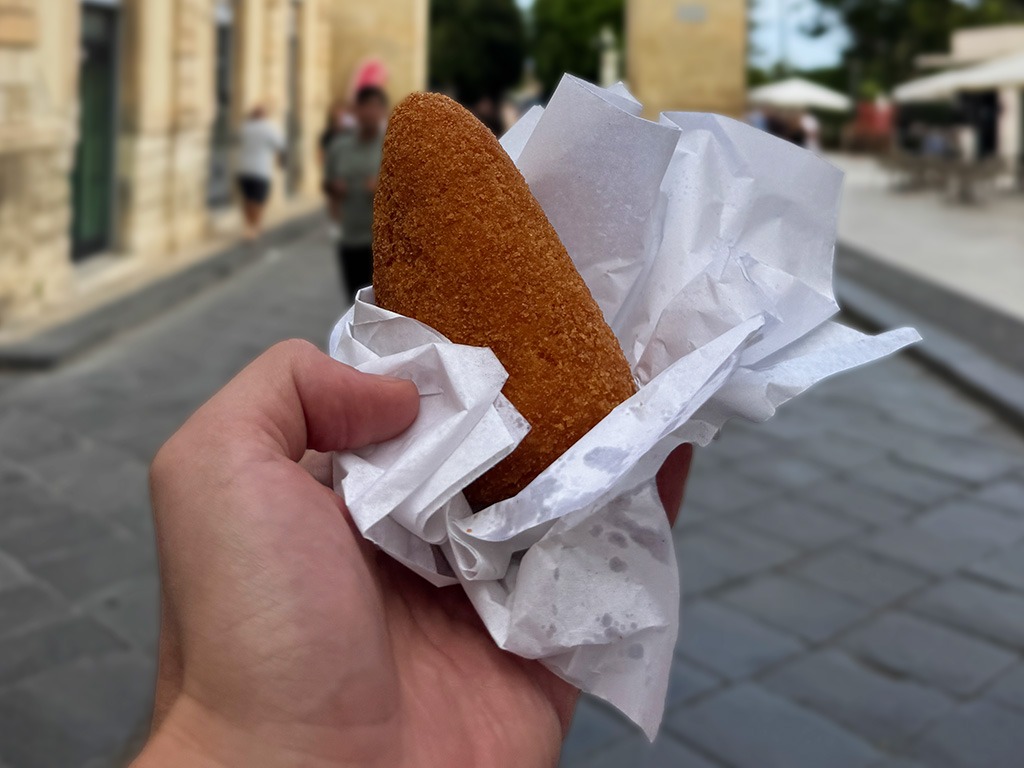
Look out for the conical shaped arancini which are the most-traditional version, shaped to mimic Mount Etna
Stop 3: My favourite meal of the day
Aperitivo, the hours before dinner (usually 17:00-20:00) where you unwind from a day of work or sightseeing with a drink and some light snacks, is my favourite time of the day. In this part of Sicily, I enjoy it especially as my favourite red wine (period.) is made here; Nero d’Avola. It’s a rich, deep red wine produced extensively in the Val di Noto, and is typically the go-to wine for most restaurants in Noto.
However, I’d recommend making your way to Enoteca Val di Noto who have an extensive collection including the area’s best Nero d’Avola. This wine bar also offers organic wines, international wines and other specialities, all waiting for you to sample them in their picture-perfect courtyard, ideally situated away from the hustle and bustle of the main streets.
If you’re still hungry…
For dinner, Sara and I will almost always venture out of Noto to enjoy an authentic Sicilian meal in the surrounding countryside. This will mean either driving or taking a taxi (restaurants will happily organise this for you on request), but the effort is rewarded with some of the best quality food in all of Italy.
Our top spot is Masseria degli Ulivi, around 20 minutes (12km) from Noto where they use only local ingredients and traditional recipes to create truly authentic dishes, served in a tranquil and peaceful environment. Believe me when I say that this restaurant has been in my top five places to eat in Italy since our first visit in 2015. Since then I’ve explored the entirety of this country, and have only found a few other places that come close to the Masseria’s quality.
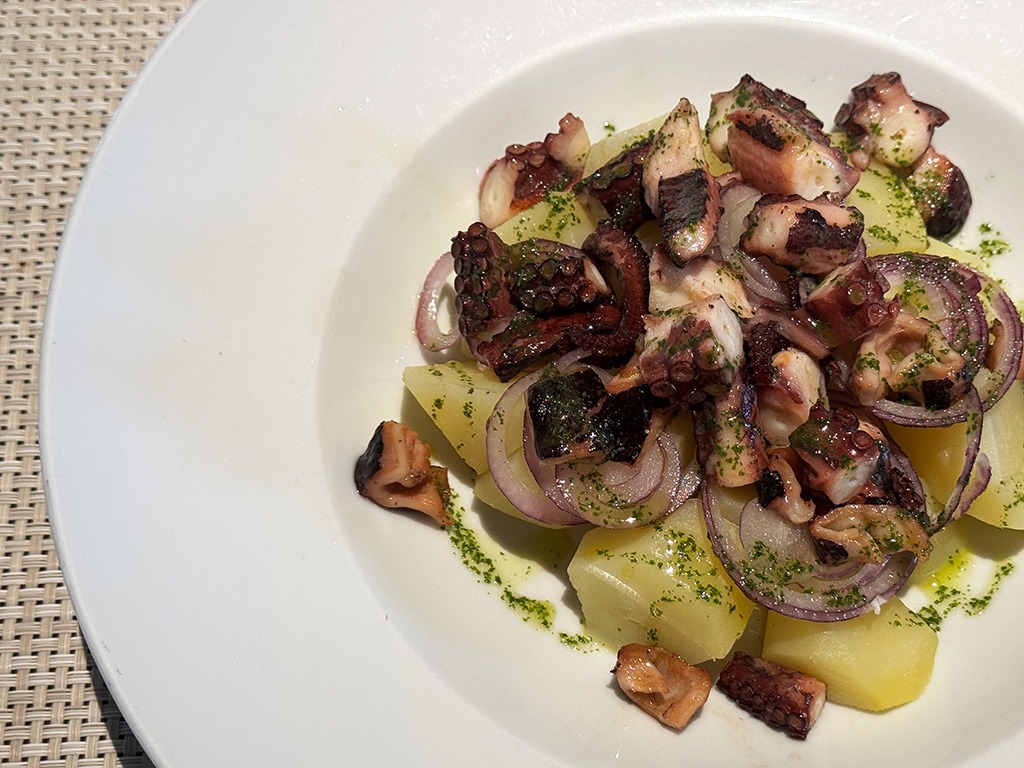
I love Sicilian cuisine for its simplicity; this salad at Masseria degli Ulivi is just freshly caught octopus with locally grown potatoes in olive oil and simple seasonings – it is still in my mind many months after eating it
Day trips from Noto, Sicily
Beyond what Noto town and the immediate area has to offer, it’s also a great base from which to explore more of Sicily (and beyond) – here are some day trip suggestions:
Noto Antica
Before Noto was rebuilt in its current location at the end of the 1600s and early 1700s, the original town was around 14km away. Now referred to as ‘Noto Antica‘ (Ancient Noto) evidence of human habitation goes back over 2000 years to when the area was home to the native Sican people.
While the archaeological area of Noto Antica is small compared to other Sicilian sites, you’ll find fairly impressive ruins here which are fascinating to explore and a nice way to appreciate the area’s wider history.
Getting to Noto Antica
The best way to reach Noto Antica is via road, with a journey time of around 25 minutes. Alternatively, consider booking a guided tour where your transport and entrance to the site will all be covered and organised. Being so close to the modern town, an average visit to Noto Antica including travel normally takes two to three hours maximum.
Take a short trip of Noto to visit the site of the original city, levelled by the 1693 earthquake
Ragusa
Like Noto, much of Ragusa was rebuilt following the devastating earthquake of 1693, and the town features more examples of Sicilian Baroque architecture. The most famous site in Ragusa is the Duomo di San Giorgio (Cathedral of Saint George), located in the heart of the historic centre. Owing to its position in the hilly countryside, Ragusa’s layout is less organised than Noto’s, but this elevation creates a unique sense of drama when visiting – we love stopping for a coffee in Piazza Duomo, looking up the cathedral towering above.
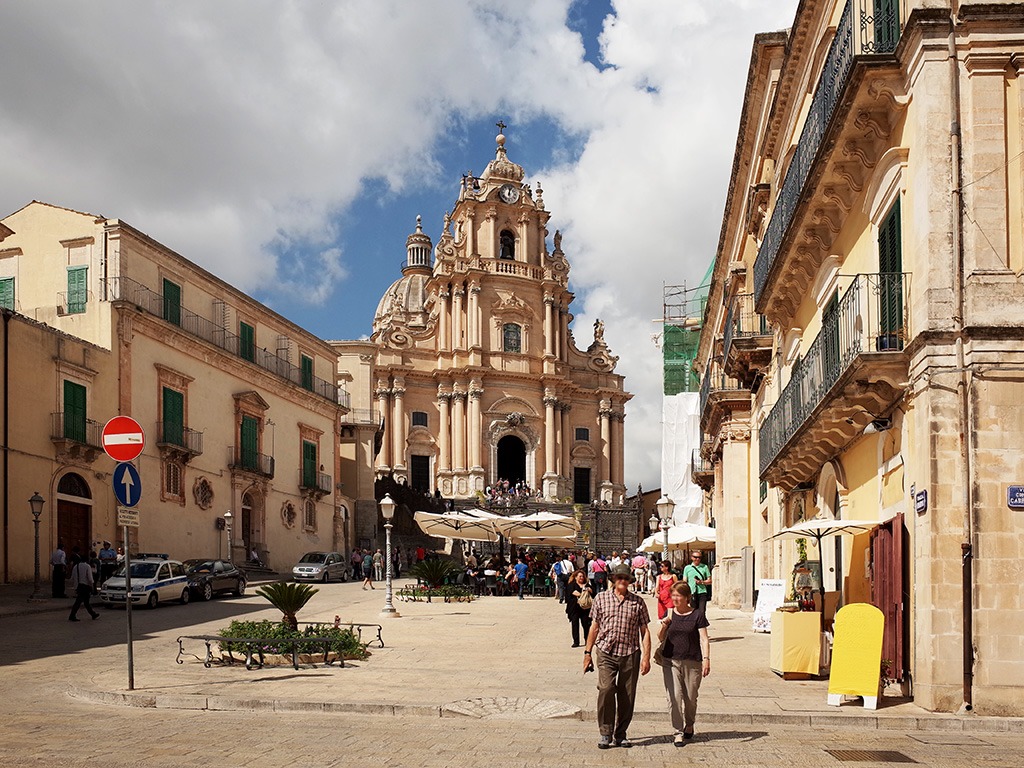
If you’re visiting during May, you can expect the exterior of this church to be beautifully decorated with flowers as part of the Infiorata festival
Getting to Ragusa from Noto
Ragusa is reachable via train from Noto with an average journey time of 1.5 hours. The train station in Ragusa is a short distance from the old centre (Ibla district, sometimes called Ragusa Ibla), which means taking a local bus or taxi to reach the Baroque city centre. With this in mind, consider allocating a full day to get to, from, and around Ragusa during your Sicilian itinerary.
Modica
Modica is yet another example of a town reborn after the famous earthquake of 1693, with large parts benefiting from the same reconstruction program as Noto and Ragusa in the late 1600s and early 1700s. The town’s principal sites such as the Duomo di San Pietro Apostolo and Duomo di San Giorgio are a little more spaced out, but the effort taken in reaching them is rewarded with breathtaking views of the town and local countryside.
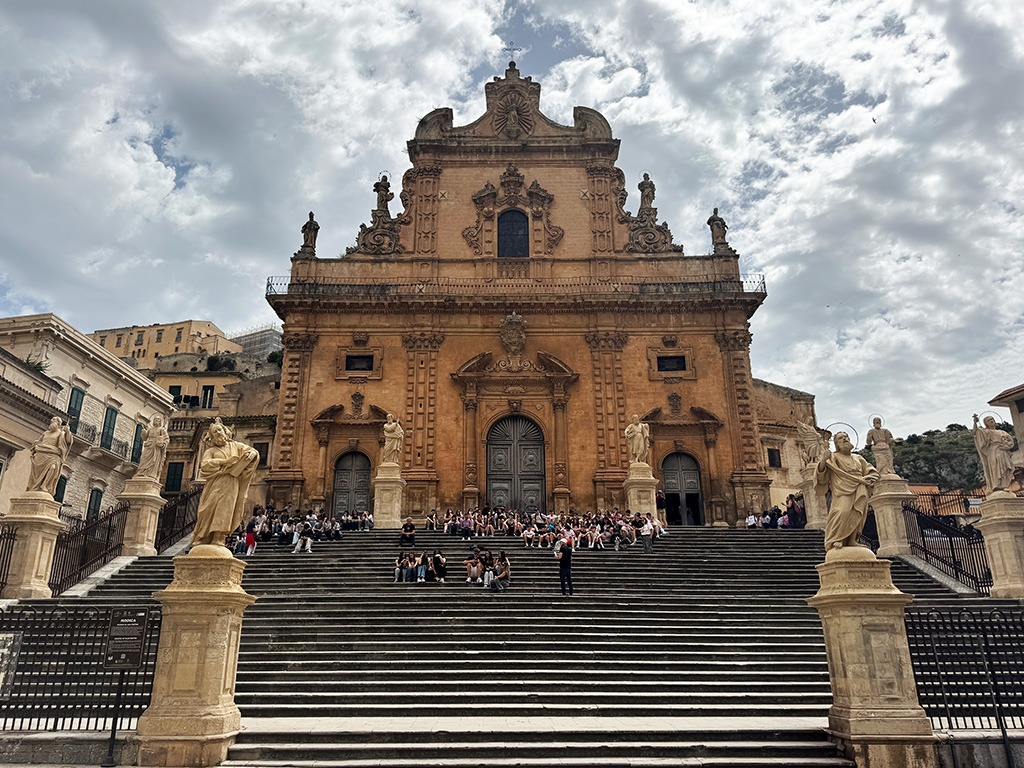
Modica’s architecture is less grand than Noto’s, but it makes up for it in detail and intricacy
Modica is famous also for its legacy as a centre of chocolate production. During the period of Spanish control of Sicily (1400s-1700s), cacao from the New World was introduced to the island, and a thriving chocolate industry developed. One of the best places to indulge in this edible history is Antica Dolceria Bonajuto, where chocolate is made following recipes and techniques now hundreds of years old. I personally love their super rich, almost jet black, 100% cocoa chocolate and will go out of my way when in this part of Sicily to pick some up.
Getting to Modica from Noto
Modica is on the same train line as Ragusa, but a little closer to Noto, meaning a typical rail journey to and from here takes an hour. The train station is located in the town centre, and by following the main streets of Via Vittorio Veneto and Corso Umberto you can walk to the main points of interest in around 20 minutes. This means it is viable to visit Modica comfortably on a half day excursion from Noto.
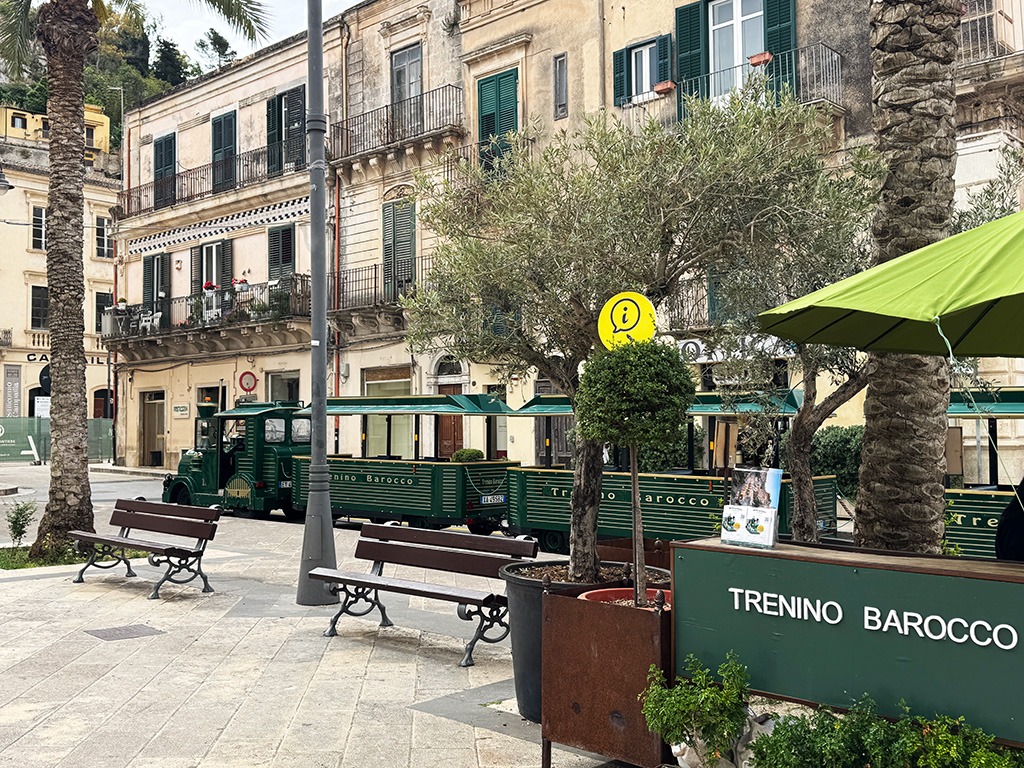
There’s also a small tourist train that navigates Modica which makes for a fun way to see the town – head to Piazza Matteotti to get your tickets and check timetables (they vary throughout the year).
Piazza Armerina
Deep in the Sicilian countryside are the remains of one of the best-preserved ancient Roman villas anywhere in the world. This sprawling complex was likely home to a member of the imperial family, an extremely wealthy merchant, or the island’s governor. Experts can’t decide based on current evidence, but what is obvious to anyone who visits is that the opulence of the villa can’t be disputed.
The most striking feature of this site is the incredibly well-preserved mosaics which are still in situ, and still as detailed as they were some two thousand years ago when they were laid.
Getting to Piazza Armerina from Noto
Due to its remote location (between 140-190km from Noto, depending on the route taken), the most direct option for getting to the Villa Romana is by car. The drive takes around two hours on average each way, meaning you should allow a full day to visit the site. An alternative to driving yourself would be to book a tour which includes pick-up and drop-off in Noto – take a look at your options here:
Syracuse & Ortigia
On Sicily’s east coast you’ll find the provincial capital of this part of the island, Syracuse, and within it, the island district of Ortigia. Syracuse has long been at the centre of events in this corner of Sicily where it was once a powerful independent Greek city-state, who for a time were able to hold at bay the great powers of the ancient age, Rome and Carthage. This history can be explored at the fascinating Neapolis Archaeological Park just outside of the modern city, at the city’s archaeological museum, and at various locations within the neighbourhood of Ortigia.
Ortigia is like a city within a city, where once you cross over the small bridges from Syracuse to the island district, you’ll feel like you’ve entered another world. Ortigia’s street layout still follows the ancient Greek grid pattern (much like Naples), and there are various ruins dotted around the island.
The best way to see Ortigia is by wandering without a goal; exploring the narrow streets that open out onto grand piazzas, before continuing to the impressive sea defences that protected Ortigia from invaders across the centuries, stopping for granita, coffee and/or spritzes when the mood strikes.
Getting to Syracuse & Ortigia from Noto
There is a direct train from Noto to Syracuse, with an average journey time of 40 minutes. On arrival in Syracuse, from the train station it’s possible to take a range of local buses to the major points of interest, and you’ll find a taxi rank.
If you’re feeling adventurous it’s also viable to get to and from the following famous locations from Noto in a single day, if planned correctly:
Mount Etna
The icon of Sicily, Europe’s largest volcano is just a couple of hours away from Noto. Based on volcanic activity levels, it’s possible to hike to the crater of Etna, enjoy wines on her slopes, and much more.
On a recent trip to Sicily with friends I hiked a large loop of the volcano exploring underground lava tunnels, martian-like landscapes and wild forests as we ascended. I did this with an expert local guide organised via Casa Mia Tours, who rounded the day off with a much-needed traditional aperitivo high on the side of the mountain.
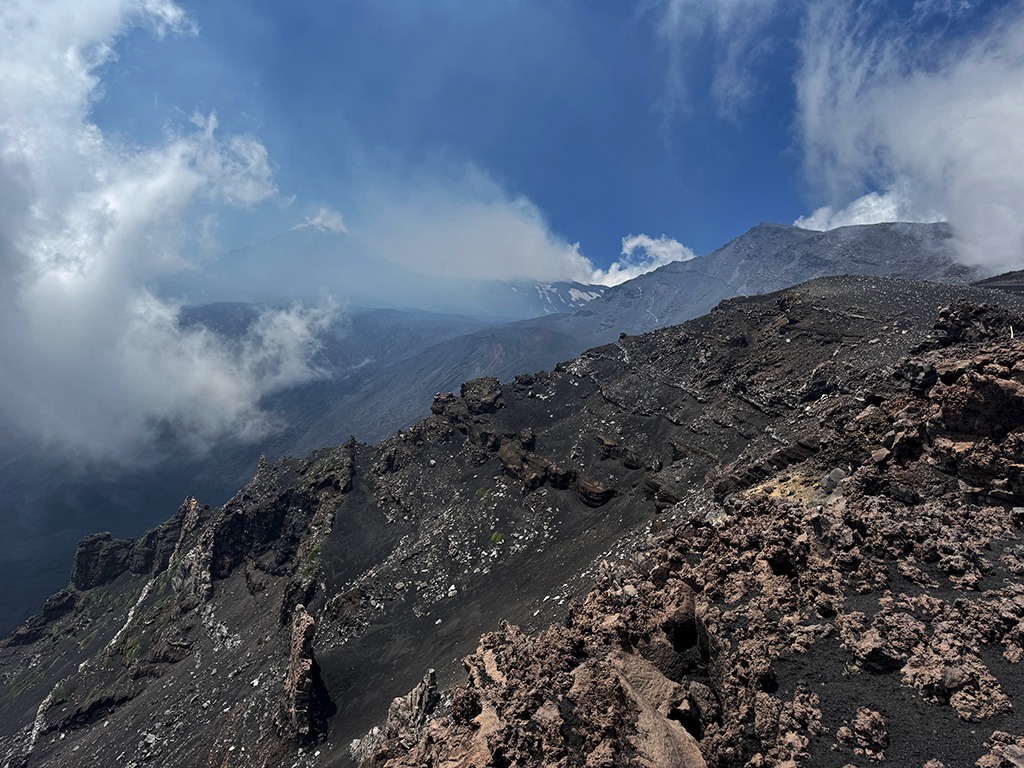
The words ‘unforgettable’ are thrown around a lot when people talk about travel, but when I say this experience was unforgettable, I really mean it – just look at this view of Etna’s caldera’s and summit (in the distance)!
Taormina
Another one of my favourite places in Sicily, the ancient town of Taormina perched high above the Ionian Sea epitomises Sicily’s version of La Dolce Vita – the Sweet Life – with grand hotels, high-end dining and unrivalled beaches. We’re routinely in Taormina and know the town and area well – if you’re interested in visiting, take a look at my dedicated guide here:
Agrigento
By travelling 2.5 hours by road heading west across Sicily you’ll arrive at Agrigento, home to the UNESCO World Heritage Site of The Valley of the Temples. During ancient times, Agrigento was a major centre of religion, and considered for a time as one of the world’s most beautiful cities. The remains of several of the Greek temples are still visible today, and stand evocatively in a now semi-arid archaeological park.
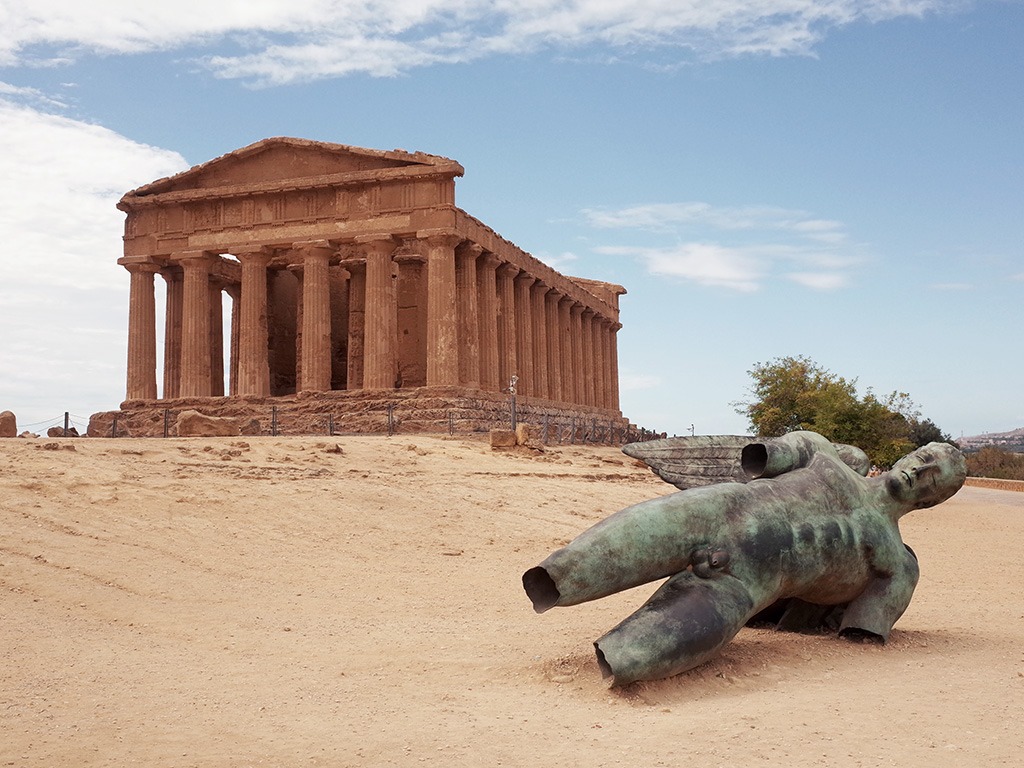
No other site showcases Sicily’s ancient past as well as Agrigento
I would put this site up there with places like Pompeii or the Colosseum in terms of significance when it comes to Italian history, so making the time to visit the Valley of the Temples is absolutely worth it for history seekers and culture lovers.
Malta
This is somewhat of a bonus suggestion in the fact that I only recently discovered how easy it is to get from this part of Sicily to Malta. There are regular ferries running between Pozzallo (30 minutes’ drive from Noto) and Valetta, Malta’s capital. These high-speed ferries take roughly two hours each way, making a day trip to Malta very viable. To find out more about using Sicily’s ferry network, take a look at my guide here:
To summarise
Hopefully this guide has inspired you to plan your Sicily itinerary, creating a perfect trip. As you can see, there’s no end of things to see, do and experience in Noto and the wider Val di Noto area. If you have any questions about travelling in Sicily, or anywhere else in Italy, I’m here to help.