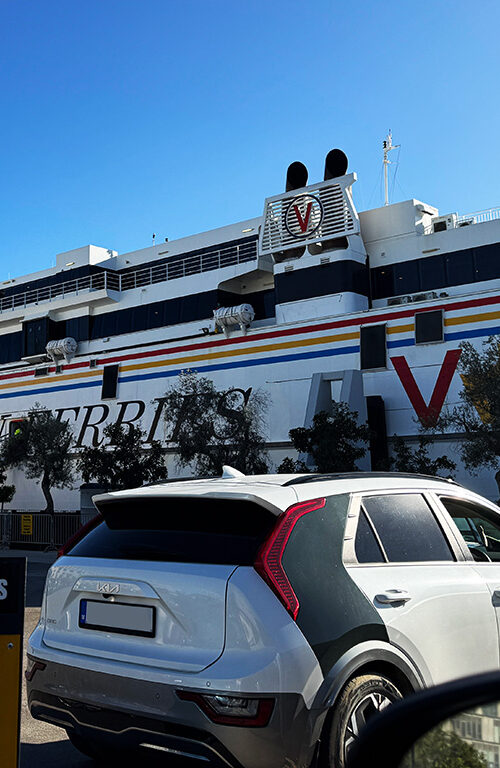

By: Warren George
Published: December 13, 2025
Last updated: February 27, 2026
Understanding how ferries work in Italy took me some time, a lot of trial and sometimes error. Each region, route and operator differs, but once you get a handle on the fundamentals, using Italy’s ferries means you can explore much more of this incredible country beyond the mainland and parts reached commonly by air.
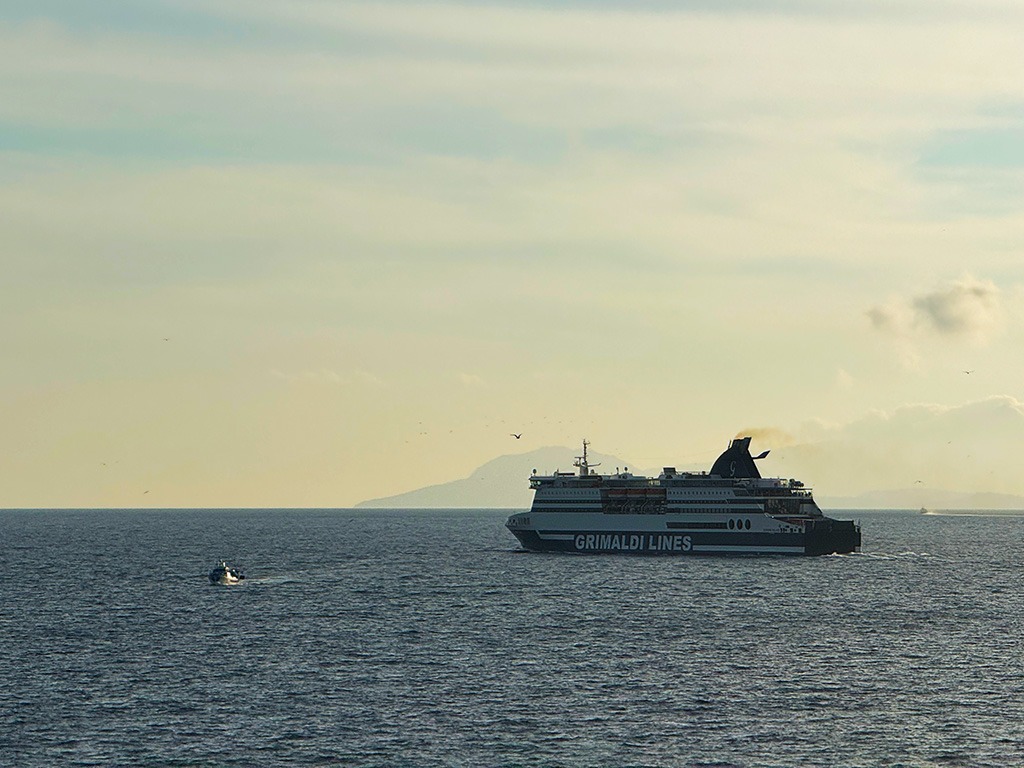
Let me share what you need to know to travel to, and around, Italy confidently via ferry
Ferry travel to and around Italy – the ultimate resource based on real experience
Utilising ferries is the only way to reach many of Italy’s islands and most beautiful cities, but with so many routes and operators, and a lot less information out there compared to air, road or train travel, where should you start to understand this mode of transport if you’re unfamiliar with it?
The good news is that I have you covered; I’ve explored all of Italy’s twenty regions, including many of its iconic islands, meaning I can share with you definitive guidance on travelling to, from and within Italy on the sea.
In this guide you’ll find two main parts – use the links in these lists to jump to the specific section that interests you the most.
In the first half I’ll cover some fundamentals of Italy ferry travel:
- Must-know tips for travelling using ferries in Italy
- Why travel in, to or around Italy via ferry
- Best practice for booking ferry tickets
- Using Italy’s ferries with a car
In the second half I’ll detail more specific information about the most popular ferry routes, destinations and operators:
- Travelling to, from, and around Sicily via ferry
- Getting to and from Sardinia with ferries
- Exploring the Gulf of Naples with ferries (Capri, Ischia, Sorrento, Amalfi Coast)
- More popular Italy ferry routes (Tremiti Islands, Tuscan Archipelago and Elba, Pontine Islands)
- Travelling outside of Italy using ferries
Three must-know tips for travelling using ferries in Italy
Across my years of exploring Italy from north to south, east to west, I can confidently say that I am an expert when it comes to using Italy’s extensive ferry network. During my adventures, I’ve picked up a thing or two, so benefit from my experience and make sure you have the best trip possible.
Here are my top three tips for ferry travel in Italy:
1. Book in advance
No matter the route, boat size, when you are travelling, or where you are headed/coming from, always book ferry tickets in advance. Unlike travelling on land, ferries are often the only way of getting to some places in Italy, so demand is high nearly all year round. This means that spots get booked up fast, especially on the popular holiday ferry routes.
Many years ago, Sara and I found ourselves stuck in Capri as we’d failed to book return tickets to the mainland after making a day trip. In the end we stayed the night on the island – the only option available, but far from ideal without any of our stuff, and it had a big (negative) knock-on to the rest of that trip.
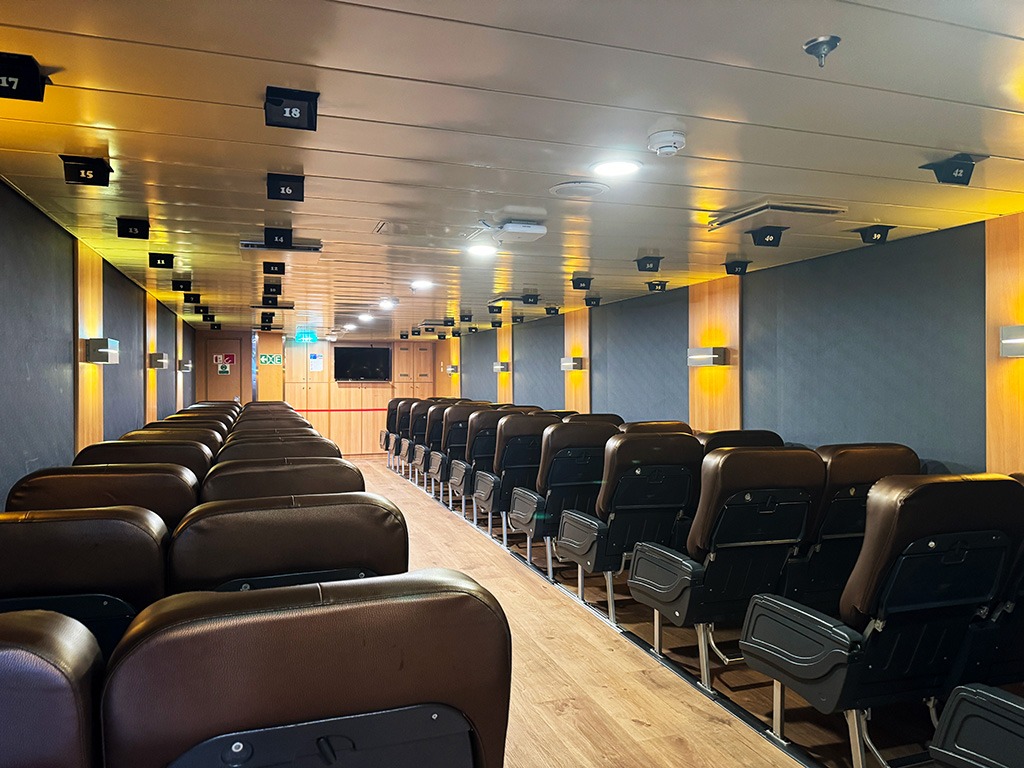
Learn from my mistakes to ensure a smooth and relaxing ferry journey when travelling within Italy
The big question is ‘how far in advance should I book?’, and this is very dependent on the route you’re looking at, and the weather you might expect in that region at your time of travel. I cover below more about how checking the weather is important when travelling via ferry, but in terms of routes, here are my recommendations:
- For ferries to and from Sicily and Sardinia (from the Italian mainland), these should be booked three months in advance if you’re travelling during the vacation period (June-September). For any point outside of these months, 4-6 weeks in advance is a good rule of thumb. If you’re planning to travel with a car, or want to book a cabin, the further in advance you can book, the better, as there’s limited garage and accommodation space on the long-distance ferries.
- For connections within the Gulf of Naples (Naples, Sorrento, Ischia, Capri, Procida, Amalfi, Positano), within the region of Sicily (Aeolian Islands, Pelagie Islands, Egadian Islands) and the Tuscan archipelago, aim to book 2-4 weeks in advance of travelling if doing so during the summer. During the rest of the year, timetables are very dependent on the weather, so keep a close eye on the official websites and book around 1-2 weeks in advance where viable.
- For all other ferry routes, look to book a week in advance at any point of the year – doing so not only guarantees you a spot, but saves you time on the day of travel, knowing there’s no need to worry about buying tickets at the counters/operator offices.
2. Check the weather
Ferry travel is much more dependent on the weather than most other forms of transport, and as such, I recommend keeping an eye on the forecast for the destination and origin of your ferry travel.
During the summer, it’s unlikely that your journey will be disrupted by bad weather in my experience. However, during the spring, autumn or winter there will be an increased chance of delays or cancellations due to poor sea conditions.
If you’ve pre-booked your journey (recommended), and in the event your trip is cancelled due to bad weather, you’ll likely be offered a spot on the next available route. Refunds are dependent on the type of ticket you bought, and whether you opted for purchase insurance when at the checkout (also recommended when travelling outside of the summer season).
3. Avoid peak season, or book a cabin
This tip applies explicitly to the long-distance ferries operating between mainland Italy, Sicily and Sardinia, and nearby countries; Greece, Spain, France, Malta, Croatia and Tunisia.
These routes are particularly popular with Italians in summer, both within Italy and to neighbouring countries, so the larger ferries fill up fast.
With limited cabin space on these boats, you’ll find the lounges, decks, bars and restaurants very busy for the duration of the journey, which, when coupled with the heat of the Italian summer, can make travelling via ferry pretty uncomfortable.
This can be mitigated by travelling outside of the summer months, but as this isn’t always viable, I’d strongly recommend booking a cabin, or if there are no cabins available, a dedicated seat in a lounge. Having your own private space will mean you can relax freely, and make the most of the journey. Of course, this is particularly relevant if you’re travelling overnight, but there’s no rule that you must book a cabin – you’re welcome to stay up through the night on the boat, where most essential services remain open.
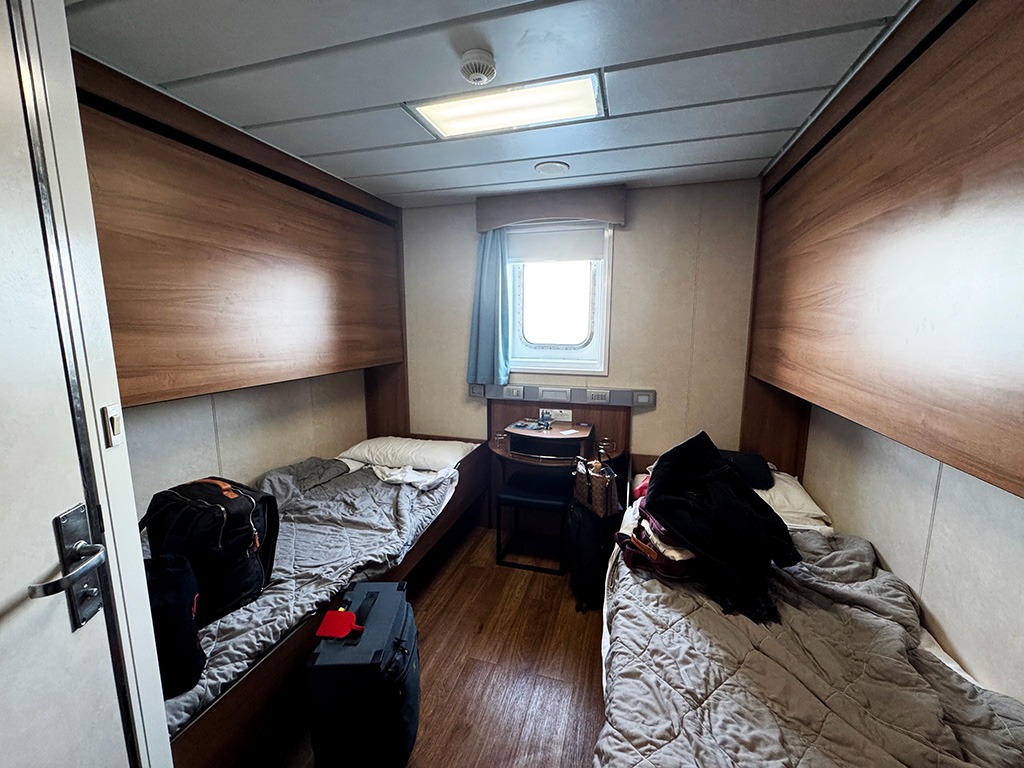
Ferry cabins are rarely luxurious but at least offer privacy and somewhere to relax
Why travel in, to or around Italy via ferry
Ferry travel is one of my favourite modes of transport. Unsure if it’s the right option for you? Here’s why I think you should consider it for a future trip:
- Travelling by ferry offers a more environmentally-friendly transport mode, where the impact on the planet is substantially lower per passenger/per route compared to air travel.
- The slow pace of ferry travel is more relaxing compared to air travel (in my opinion) and encourages you to switch off – there aren’t many things more soothing that gliding along the Mediterranean, especially without needing to worry about airport security, air traffic delays and everything else that goes with aeroplanes.
- I believe ferry travel provides a greater sense of freedom moving between destinations, where you can travel with a vehicle easily, enabling you to explore more openly at your own pace. Without baggage limits and more flexibility on timing, you can take your time and change up plans more freely.
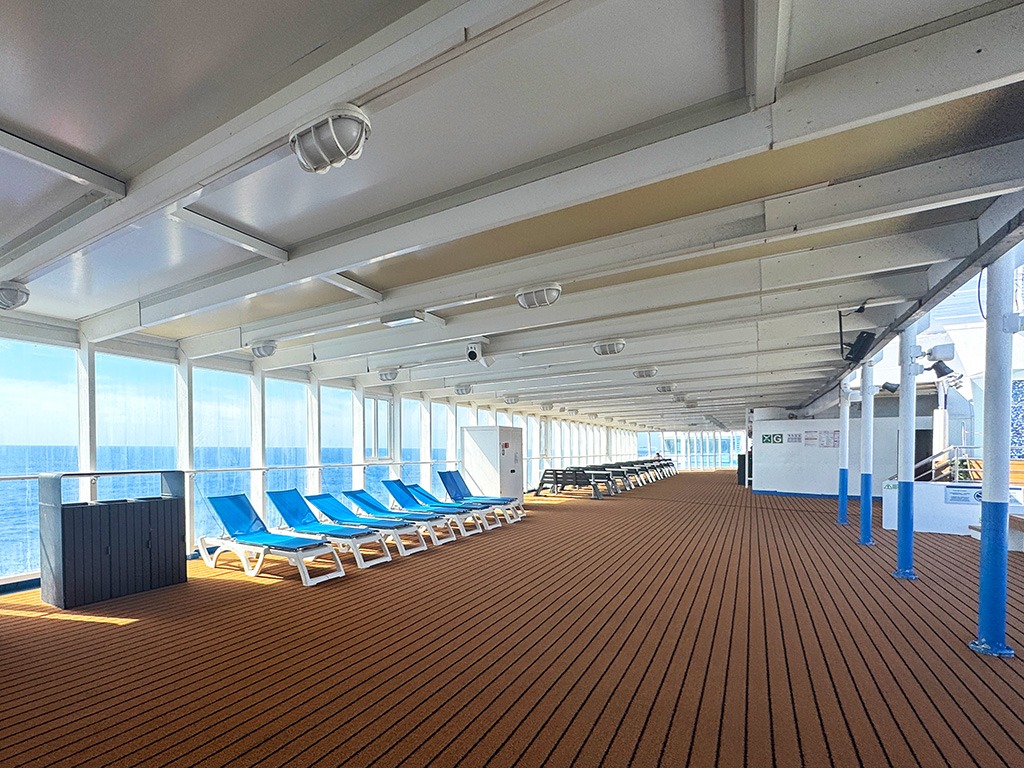
Greener, more relaxing and with a greater sense of freedom; what’s not to like about ferry travel?
Best practice for booking ferry tickets
Like any travel method, there are best practices to ensure you get the best prices on ferry tickets. Just like rail or air travel, you’ll find a range of websites that pull together the timetables of multiple operators and enable you to choose the best time and price for you.
My personal favourite platform is Direct Ferries, where I find they have the most comprehensive view of ferry availability, and generally the most competitive rates for tickets. I find their interface easy when comparing routes, and find cheap ferry tickets for almost all journeys to/from and within Italy.
It’s also worth keeping an eye on the official websites of the direct operators for seasonal sales and other promotions whenever possible. I wait until events like Black Friday in November to take advantage of discounts for ferries for the coming year.

You can opt to get your tickets at a port in person but this is not reliable in my experience; booking in advance is key to a stressless journey
Beyond using a website like Direct Ferries to check which times work best for you, I would reiterate that it really is worthwhile booking in advance. Doing so guarantees you a spot on your preferred boat/route, and also means you’ll almost always pay a better rate compared to leaving it to the last minute or day of travel.
One penultimate tip to ensure you get the best possible deal is to check the package deals that ferry operators offer for your trip. I’ve found sometimes that I can reserve a hotel or tour as a combo booking with ferry tickets, saving money compared to booking elements separately.
Lastly, it’s always worth checking the rates for a cabin on the longer-distance ferries. It’s common for operators to offer rooms cheaply on daytime ferries (where not many people use them), but also on overnight routes if demand is low (out of season for example). For a small extra cost you could ensure you have a private space to relax during your time on the sea.
Using Italy’s ferries with a car
The rules and processes around travelling with a car on Italy’s ferries vary depending on the time of year you’re transiting, and the route you’re looking to take. The headlines are:
- The short vehicle (and passenger, a.k.a ‘foot’) crossing between Villa San Giovanni in Calabria on the Italian mainland and Messina in Sicily is operational 365 days a year, 24/7. I share more information about this route further on in this guide.
- You can take a car on the larger ferries to and from Sardinia and Sicily (covered in more detail below), and out of Italy to other countries (France, Greece, Spain, Tunisia, Malta) all year round, subject to specific timetables.
- The smaller islands off Italy’s coast, such as Ischia and Capri in the Gulf of Naples can only be accessed with a car as a visitor at certain times of the year. You should refer to the local and official guidance for the latest information and procedures before travelling.
Transporting a vehicle will cost more compared to travelling just as a ‘foot’ passenger, but gives you the freedom to leave the arrival port immediately and continue your onward journey without waiting for taxis, buses etc.
For any journey with a car I’d recommend arriving at the departure port a minimum of two hours in advance – doing so means you can drive your car on to the ferry, park it securely, and find your way onto the boat’s main passenger areas with plenty of time.
One important point to note, especially relevant to using ferries with a car (where you need to come to the departure point sooner compared to foot passengers); unfortunately not all of Italy’s ports are well-equipped for travellers waiting to embark a ferry.
You’ll often find a simple cafe/bar, and toilets, but not much else in my experience. When I first travelled via ferry many years ago I expected the set-up to be similar to that of an airport and was surprised to find it to be a lot more basic.
Getting to, from and around Sicily
As Italy’s biggest region and with a population of nearly 5 million, there are a range of ferry services to and from Sicily and the main Italian peninsula. The region of Sicily is also home to several smaller islands which are connected by regional ferries, enabling locals to commute and visitors to explore. Let’s look at the key routes:
Between Calabria (Villa San Giovanni) and Messina
Crossing from Calabria on the Italian mainland to/from Messina in Sicily is straightforward and easy to organise. The process differs depending on whether you’re travelling on foot, or with a vehicle, or via train:
For vehicle and foot passengers
You can either book your crossing via the official website, or you can pay on the day of your travel at the port. The crossing here is an official extension of the Italian autostrada (motorway/freeway) network and as such the process for getting to the other side is very streamlined.
On arrival at the port, follow the clear signage depending on whether you have a ticket already, or whether you need to get one in that moment. Proceed next to the embarkation area (again, clearly signposted at both ends), queuing with the other waiting vehicles or passengers. If you’re in doubt of where to go, ask one of the attendants who you’ll see stationed throughout the embarkation area.
As you board the ferry your ticket will be checked, and you’ll then be guided onboard and directed where to park if you’re in a car, and to the lounges and decks for all passengers.
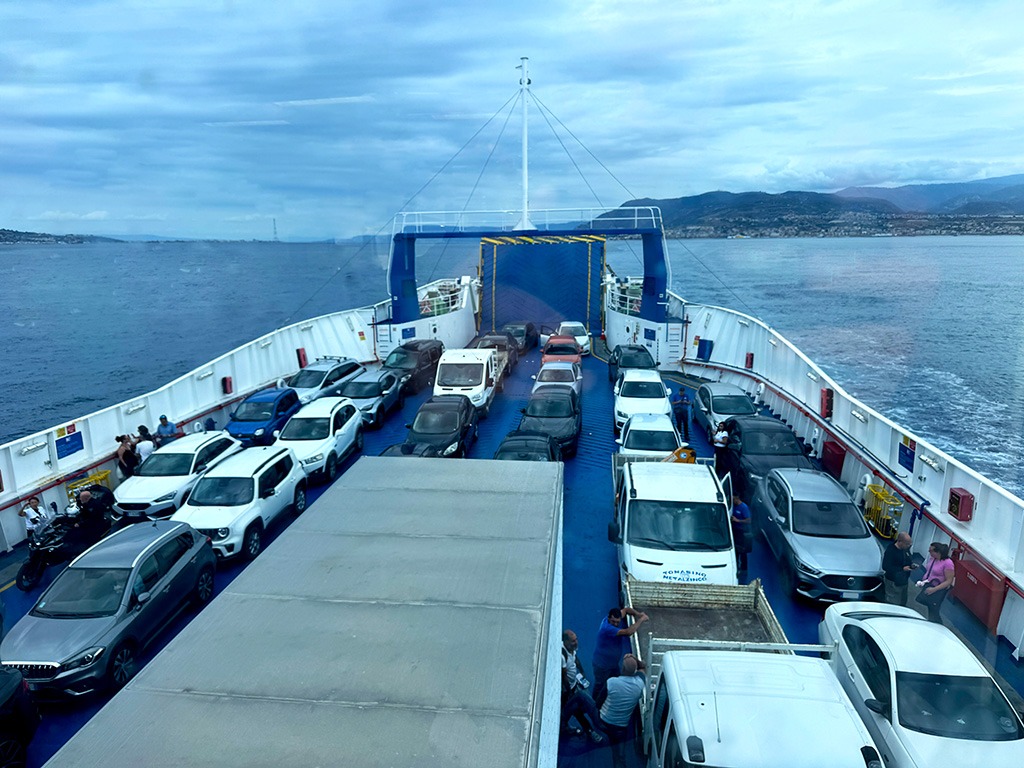
The majority of the ferries that cross the Straights of Messina are not large, but where they are frequent, you’ll never be waiting long to continue your trip
For train passengers:
On arrival at San Giovanni or Messina stations, your train will be slowly positioned to be loaded onto a special ferry – this process takes a little while, where the railway lines are aligned to the modified boat, but once onboard, the journey is quick. You’re free to stay in your carriage or exit for some fresh air, and a unique view of the Strait of Messina as you make your way across.
In either case, the crossing takes around 20 minutes on average. There are vehicle and passenger ferries 24/7, 365 days a year, whereas train crossings are subject to Trenitalia’s schedule. Most of the boats have a small kiosk or a couple of vending machines for light snacks and drinks, and you’ll also find bathrooms onboard.
Longer distance ferries to and from Sicily from the Italian mainland
You can also travel between Sicily and the Italian mainland via larger ferries that transit between locations including Naples, Salerno, Civitavecchia, Genoa, Palermo and Messina. The exact routes and journey durations available depend on the time of year and demand, so I’d recommend checking the schedules here on Direct Ferries.
Due to the distances involved you should allow a full day for crossing in either direction, or consider an overnight ferry with a cabin.
Travelling around Sicily’s satellite islands via ferry
Off the coast of Sicily there are numerous smaller islands, most of which can only be reached via the water. Here are the most popular destinations and key information for each:
Aeolian Islands
Just off the northeast coast of Sicily is a group of seven main islands which can be reached by connections from Milazzo and also from various points on the Italian mainland including Tropea in Calabria. These islands are popular for their easy living, incredible scenery and for the fact they are home to Stromboli, one of Italy’s most active volcanoes.
Journey times vary depending on where you’re departing/arriving from – check the ferry schedules and travel options for the Aeolian islands here on Direct Ferries.
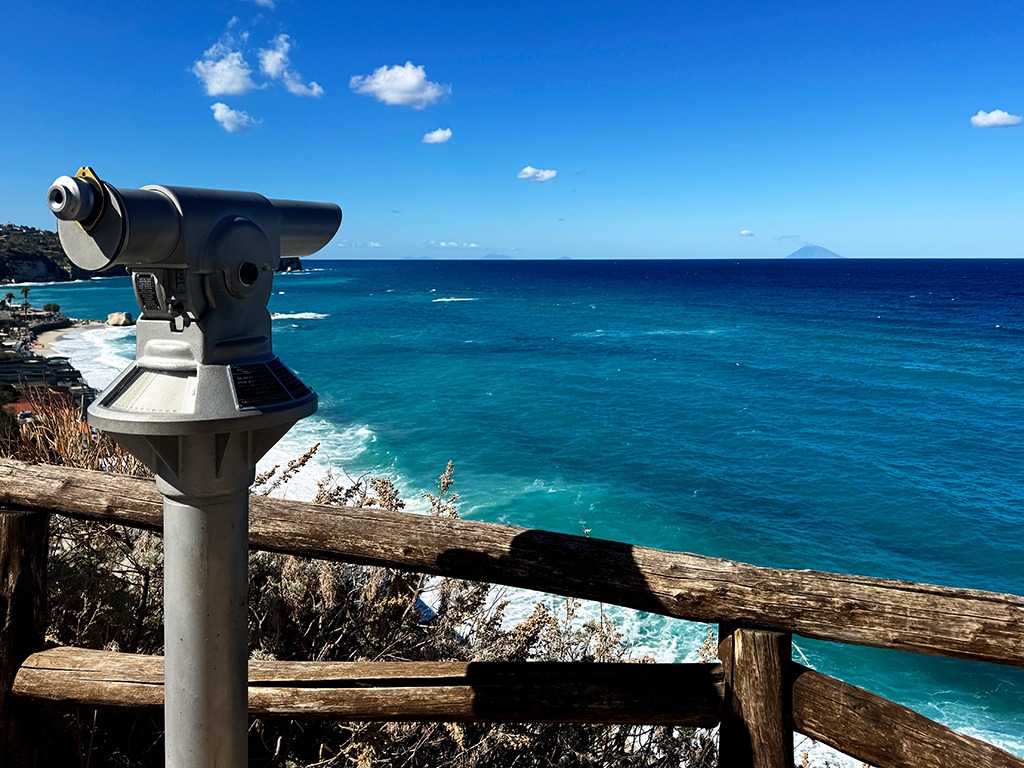
Even if the Aeolian islands are officially part of Sicily, getting to them from the mainland from towns such as Tropea, where they can be seen just off the coast, may prove more convenient
Pelagie Islands
Looking south of Sicily you’ll find this group of small islands which are geographically closer to North Africa than they are to Italy.
The main island in the group (Lampedusa) can be reached via a regular ferry connection from Porte Empedocle near Agrigento in Sicily. The journey time takes between 4-9 hours on average depending on the boat type. There are options all year round as this is an important route for locals moving between Lampedusa and Sicily.
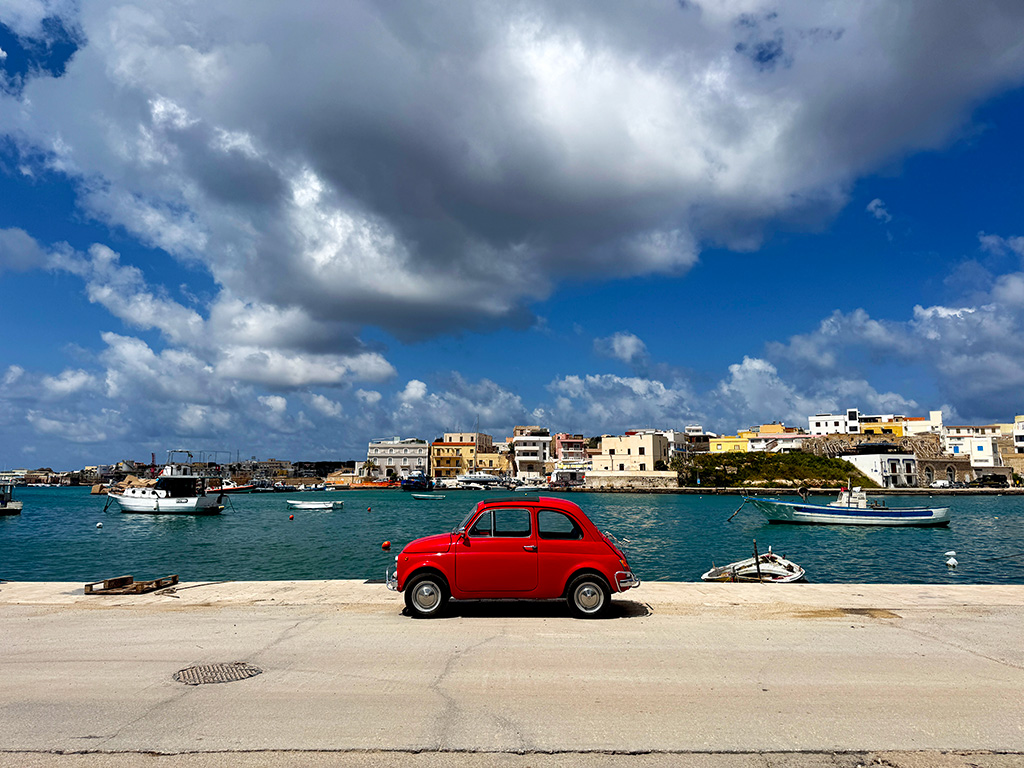
Even if getting to Lampedusa takes a little more effort than most places in Italy, it is worth it in my opinion; this is one of my favorite spots anywhere in this country
From Lampedusa you can take a further ferry to get to the second island, Linosa, with an average journey time of 1 to 2 hours.
The group’s third island, Lampione, is small, remote and uninhabited – it’s not even depicted on the Google Maps’ satellite view! So, although Lampione can’t be reached by a normal ferry, during the summer you can find some nature and diving excursions from Lampedusa to Lampione.
Planning a trip to the Pelagie Islands? Use Direct Ferries to check the ferry schedules and be sure to check out my dedicated guide to Lampedusa here:
Pantelleria
Pantelleria sits between Sicily and Tunisia, and ferries are one of the two practical ways to reach it (the other being short regional flights). The main route runs from Trapani, with both daytime and overnight crossings available throughout the year. If you’re travelling with a vehicle, or simply prefer a slower, more scenic journey, this is often the most convenient option.
Sailing to Pantelleria takes several hours depending on the service, and although the schedule is more limited outside of summer, it remains a reliable connection for locals and visitors all year round. As always, check the weather (particularly during the winter due to localised storms that can flare up in this part of the Mediterranean Sea) and book early during peak periods, as services fill quickly.
Egadian Islands
Just off Sicily’s western coast, the Egadian Islands (Favignana, Levanzo and Marettimo) are served almost exclusively by ferries and hydrofoils from Trapani. These crossings are fast, frequent, and straightforward, making the islands some of the most accessible in southern Italy for day trips or longer stays.
Journey times are short, but schedules shift noticeably between winter and summer, so it’s worth planning ahead if you’re travelling outside the high season. For visitors exploring western Sicily, incorporating an Egadian ferry crossing is one of the easiest ways to see a quieter, more nature and/or history-focused side of the region.
Getting to and from Sardinia
Since Sardinia is considerably further from the Italian mainland than Sicily, the process for travelling via ferry is a little more involved.
There are multiple points on the mainland where you can catch a ferry to cross the Tyrrhenian Sea; the principal points of departure and arrival on the Italian peninsula are Genoa, Livorno, Civitavecchia and Naples.
On Sardinia, almost all ferries that transport vehicles embark/disembark at Olbia or Cagliari (including those arriving from France and Spain). As such, be sure to research the best combination of ports for your journey in advance.
The travel time between Sardinia and the Italian mainland is usually in the region of 12 hours, meaning you should consider an overnight crossing (booking a cabin) to pass the time and arrive at your destination ready to continue your trip.
For a complete view of timetables, tickets and availability, use Direct Ferries.
Getting around the Gulf of Naples and nearby area via ferry
Naples and the surrounding area is probably the part of Italy I’ve travelled by ferry the most over the years – as such I know the network inside out:
Neapolitan Islands of Ischia, Capri, Procida
These three small islands in the Gulf of Naples can be reached via ferries from Naples and occasionally from Salerno. Outside the busy summer months it’s also possible to travel to these islands via boat with a vehicle. During the summer, only official residents of the islands may move back and forth with a vehicle. These connections are active nearly all year round, but during the winter months, can be limited or paused due to adverse sea conditions.
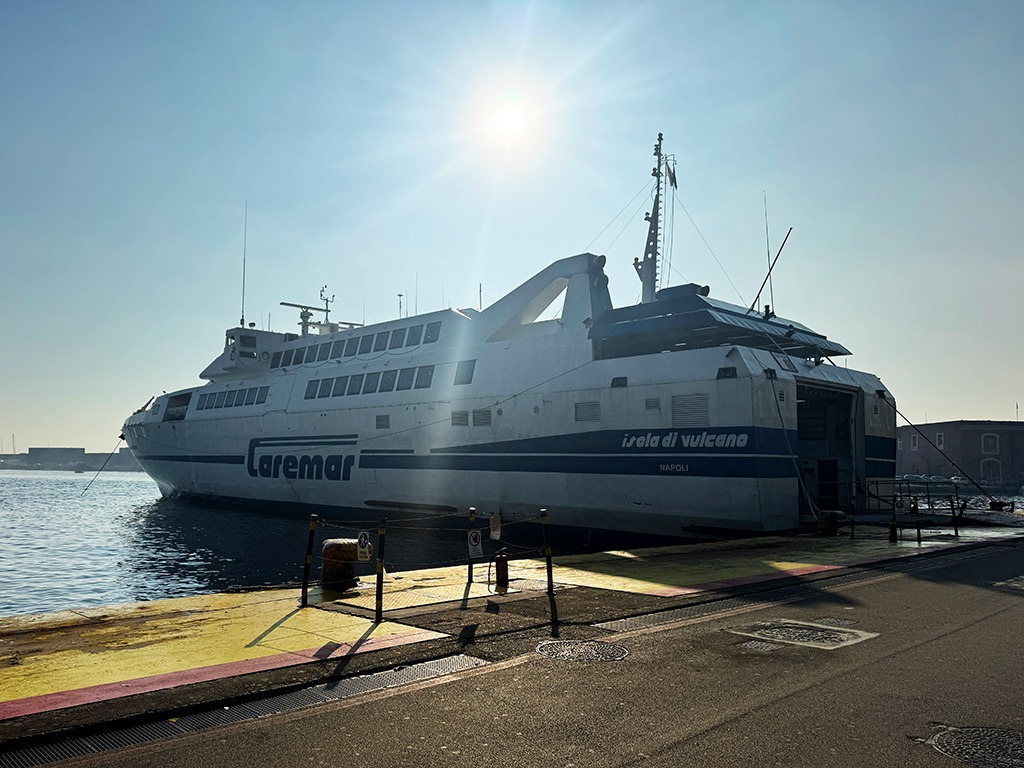
The main hub for ferry connections within the Bay of Naples is Naples’ Molo Beverello port
Sorrento & the Amalfi Coast
While the Sorrentine peninsula and the towns of the Amalfi Coast can be reached via land, taking a ferry from Naples, Salerno, Ischia or Capri makes for a much nicer experience in my opinion. The journey is typically just as fast as the train or via road, but a lot more enjoyable. You can enjoy breathtaking views of some of the most beautiful scenery in Italy (in my opinion) as you venture along the Campania coast.
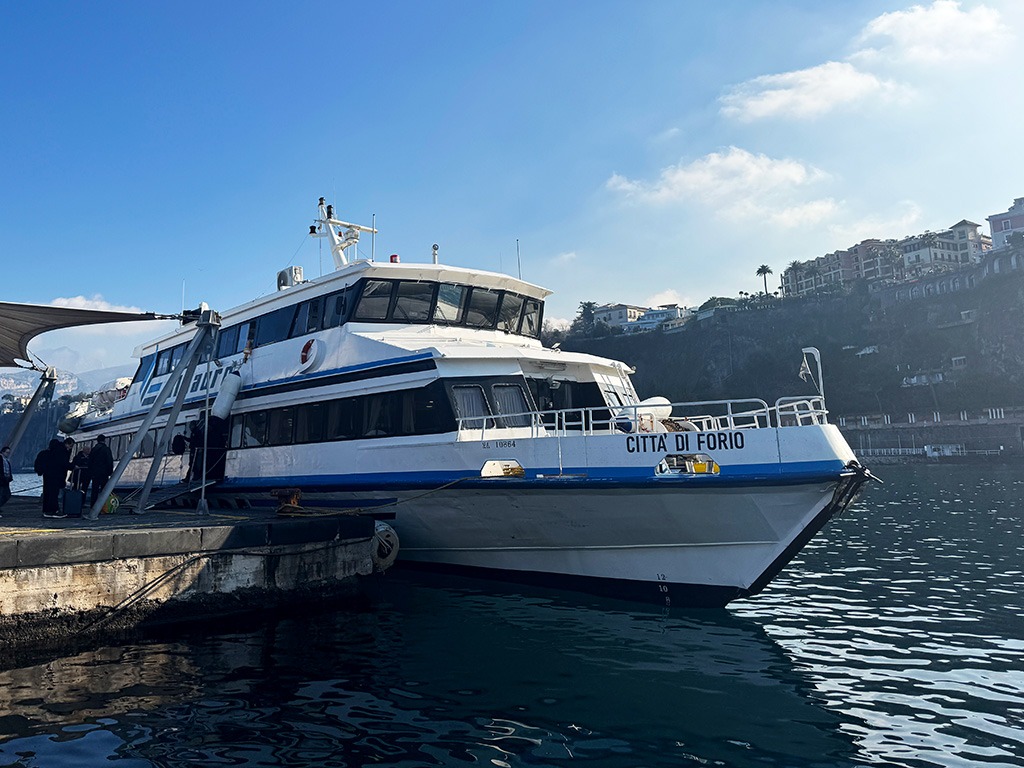
If the opportunity presents, I strongly recommend travelling to Sorrento and nearby via ferry
Ferries run all year round, but are limited in the winter due to lower demand and sometimes rough sea conditions – be sure to check in advance.
For a complete and detailed overview of travelling around Campania, and island hopping in the Bay of Naples via ferry, check out my dedicated guide here on Napleswise:
More popular Italy ferry routes
Beyond the major destinations detailed above, there are a few other noteworthy places that connect to the Italian mainland via ferry. Here are some that I think are equally worth visiting:
Pontine Islands, Lazio
The Pontine Islands (Ponza and Ventotene) sit off the Lazio coast, and ferries are the only way to reach them. Services run mainly from Formia, Anzio, and Terracina, with schedules that expand significantly from late spring through to early autumn.
These routes are extremely popular with both locals and visitors, so booking ahead is especially important from June to September. If you’re travelling from Rome, the journey works well as part of a longer trip, and the ferry crossings themselves provide amazing views as you approach Ponza’s dramatic cliffs.
Tuscan Archipelago and Elba, Tuscany
The Tuscan Archipelago includes several islands, but the most important from a transport perspective is Elba, which has one of the most frequent ferry services in Italy. Dozens of daily connections run between Piombino and Portoferraio (the main port), with additional routes to Rio Marina and Cavo.
The smaller islands of the archipelago, like Capraia or Giglio, also have ferry connections, though on more limited schedules. If you’re planning a visit outside the main season, check timetables carefully, as services may operate only on select days.
Tremiti Islands, Puglia
The Tremiti Islands are in the Adriatic Sea and are primarily linked to the mainland via Termoli in Molise, with additional seasonal departures from Rodi Garganico and Peschici. These routes operate more frequently during the warmer months, when the islands see their highest visitor numbers.
If you’re travelling in spring or autumn, keep a close eye on the weather, as rough seas can disrupt services. For more insights about visiting the Tremiti islands, check out this guide from my friend Wendy Holloway at Flavor of Italy.
Travelling outside of Italy using ferries
Italy’s ferry network extends beyond, and is connected to the networks of neighbouring Mediterranean countries – here are the key destinations that you can travel to Italy from, or get to from Italy via ferry:
Greece
Italy is exceptionally well connected to Greece by sea, with routes operating from Ancona, Bari, Brindisi, and Venice toward destinations including Igoumenitsa, Patras, Corfu, and occasionally Kefalonia or Zakynthos depending on the season. These are longer ferry journeys – often overnight – and are commonly used by travellers combining the two countries without flying, as well as those moving with vehicles.
The ships on these routes are large and equipped with cabins, restaurants, lounges, and outdoor decks, making the journeys comfortable even when they take 12 hours or more. Schedules shift based on demand, with more options between late spring and early autumn. If you’re planning a summer trip, booking well in advance is essential, especially for cabins and vehicle spaces, which are limited.
France
Several ferry routes connect Italy with France, with the most frequent services linking mainland Italy to Corsica. Departures operate from Genoa, Livorno, Piombino, and Savona toward ports such as Bastia, Ajaccio, and Île-Rousse. Crossing times vary considerably depending on your route, but many travellers opt for overnight sailings to make the most of the journey.
Seasonal routes to southern France, including Nice and Toulon, are also available at certain periods of the year. These tend to be less frequent, so planning ahead is key. If you’re combining Italy with France, ferries can be a convenient alternative to flying, particularly during the peak travel months.
Spain
Ferry connections between Italy and Spain are limited but useful. The main route runs from Genoa (and occasionally Civitavecchia) to Barcelona, typically as an overnight crossing. Because this is a long-distance journey, the vessels are large and well-equipped, with cabins, restaurants, and plenty of shared spaces to make the trip more comfortable.
If you’re travelling with a vehicle, this route can be especially practical, as it allows you to arrive in Spain without multiple long drives or flights. While not the quickest way to travel between the two countries, it’s a smooth and straightforward option when planned in advance.
Malta
This small island nation right in the middle of the Mediterranean between Italy and North Africa is connected to Sicily by ferries operated by Virtu Ferries. Virtu runs an efficient schedule of journeys where the average journey takes two hours between Pozzallo in southern Sicily and Valletta, the capital of Malta.
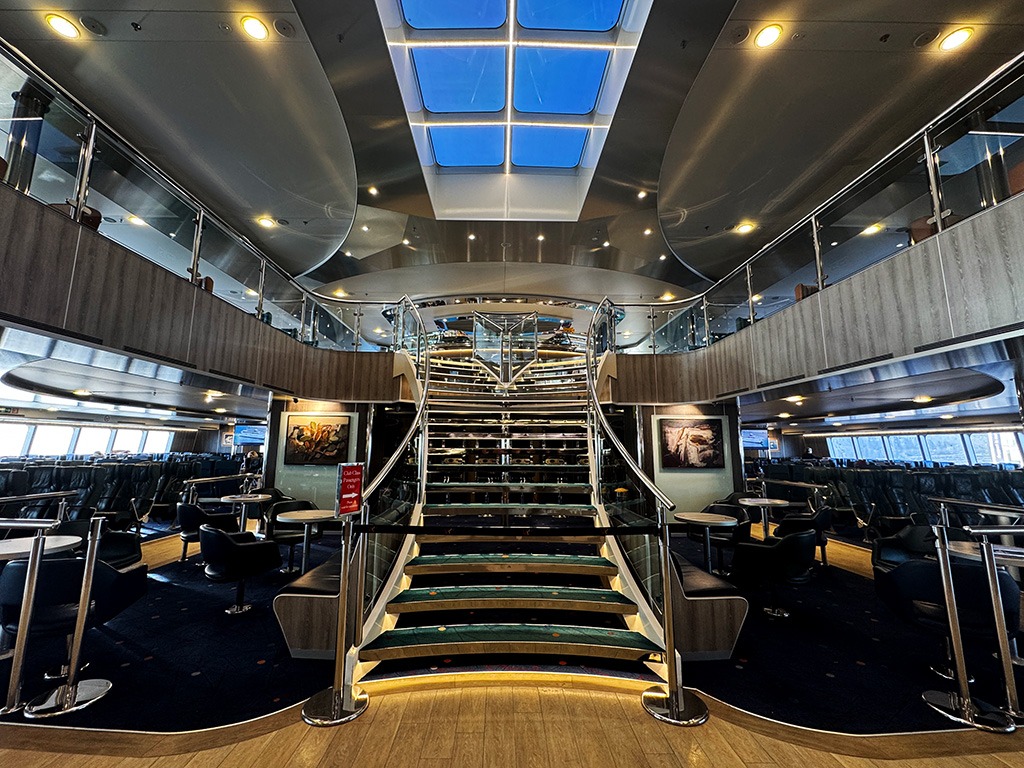
Of all of the ferry journeys I’ve taken over the years, nothing has come close to matching Virtu’s efficiency and high quality service – I highly recommend this journey as a means of getting to/from Malta from Italy!
Tunisia
Tunisia is surprisingly easy to reach by ferry from Italy, with routes operating from Genoa, Civitavecchia, and Palermo toward Tunis. These are substantial crossings, often overnight, and they serve as important links for both tourism and commerce between the two countries.
The ships used here are similar to those operating long-distance routes to Greece and Spain, with cabins, vehicle decks, and a range of onboard services. If you’re travelling during summer, expect high demand from both Italian and Tunisian travellers, so book early – especially if you need a cabin or are bringing a car. Weather can affect schedules in winter, but overall this is one of the more dependable international routes from Italy.
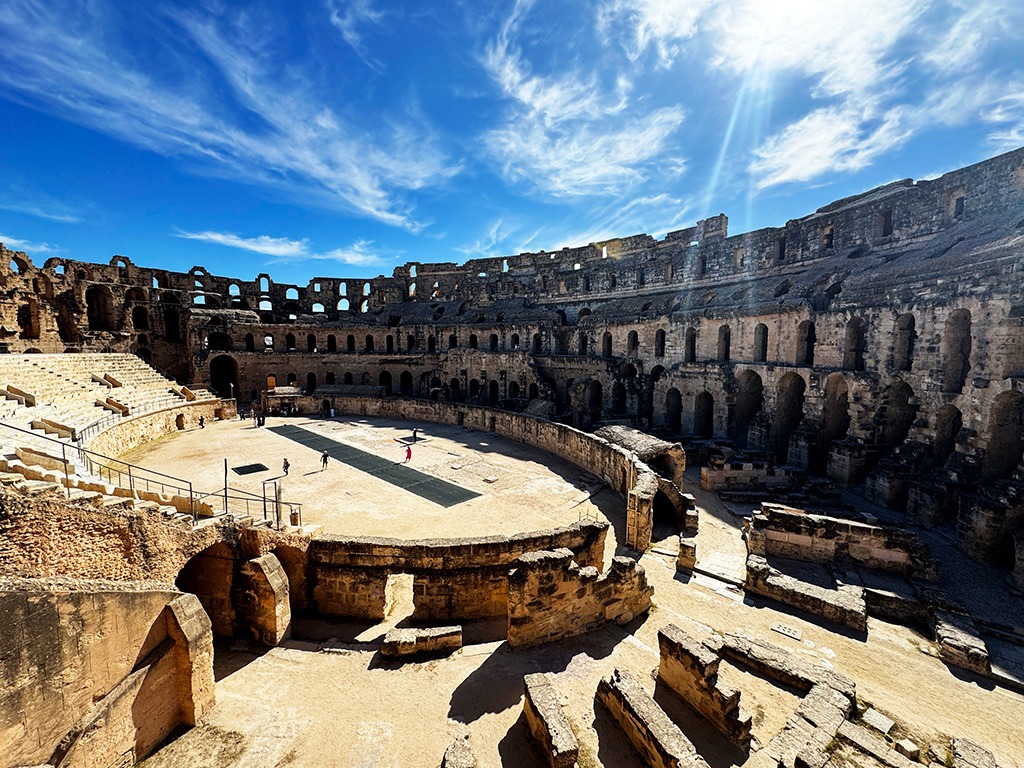
Travelling via ferry with a car is a great way to visit Tunisia, allowing you to explore significant historical sites such as El Jem wich are otherwise difficult to reach
Croatia
Italy’s Adriatic coast offers several ferry links to Croatia, with the main departure points being Ancona, Bari, and Venice. Routes typically operate toward Split, Zadar, Dubrovnik, and a handful of smaller coastal cities or islands depending on the season.
During peak season, timetables expand and additional operators run holiday-focused services. Outside of this period, schedules become more limited, so planning ahead is essential. If you’re exploring the Adriatic region, these routes provide a scenic and practical way to combine Italy with Croatia.
The timetables of these international routes are changeable, much like those of airlines, and subject to demand and weather conditions. If you’re looking to arrive in Italy from one of these countries, or wanting to travel onwards to them, be sure to check the timetables and ticket options here on Direct Ferries.
To summarise
Travelling by ferry is a more eco-friendly transport method than air travel, more relaxing in my experience, and enables you to see parts of Italy that are otherwise unreachable. What’s not to like? If you have any questions about getting to or around Italy, don’t hesitate to contact me.