Published:
September 1, 2025
Last updated:
October 22, 2026
The island of Lampedusa is Italy’s most southern territory and a real escape for travellers looking to explore somewhere away from the major cities and popular tourist spots. While Italians have flocked here for decades, Lampedusa island has remained largely off the radar for international visitors. Only recently has Lampedusa started attracting more travellers from beyond the Italian mainland and Sicily, who are slowly discovering the island’s relaxed atmosphere and stunning natural scenery.
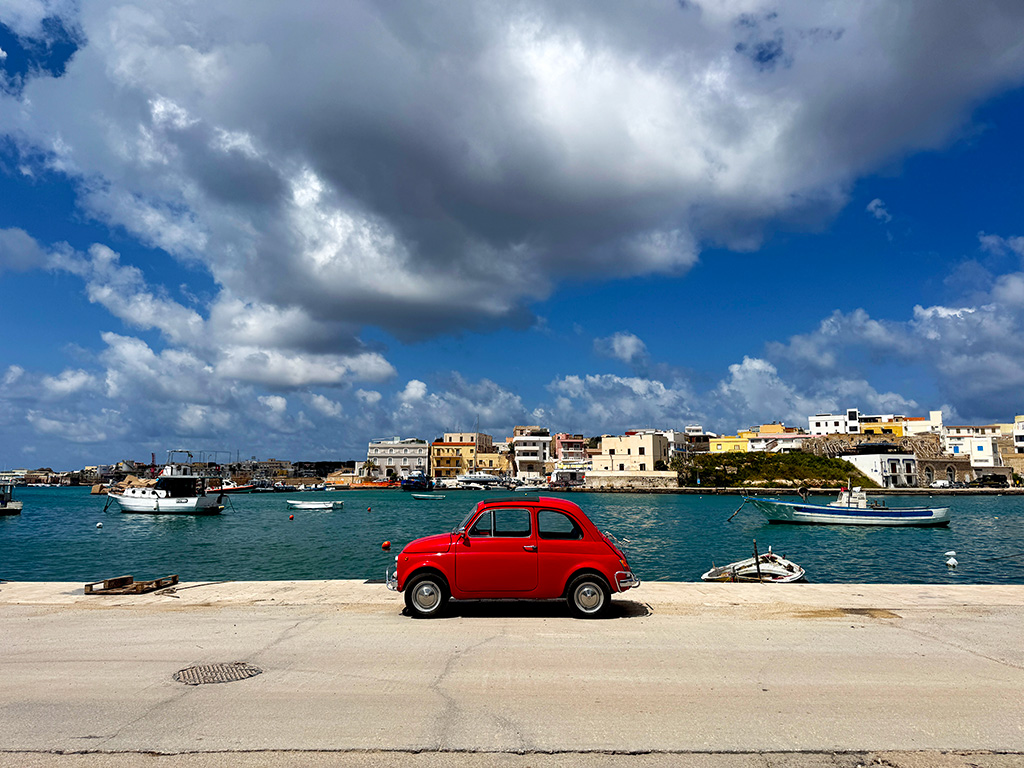
This little piece of paradise floating in the middle of the Mediterranean has quickly become one of my favourite places anywhere in Italy – let me share why
Throughout this guide, I use “Lampedusa”, “Lampedusa Island”, “on Lampedusa”, and “in Lampedusa” interchangeably. This is because the island and its main town share the same name – much like Capri in Campania – and all references point to the same place.
Lampedusa island, located off Sicily’s south coast and right in the middle of the central Mediterranean Sea, offers anyone who visits great food, fascinating cultural sites, breathtaking natural beauty and some of Italy’s best beaches. Since first visiting in early 2025, it has become one of my all-time favourite places anywhere in Italy and I now endeavour to visit as much as possible. In this guide, I’ll cover:
An Introduction to Lampedusa
Lampedusa, Italy’s southernmost point, is a small, semi-arid, and somewhat remote island located in the Mediterranean Sea. Administered by the Comune of Lampedusa & Linosa, it sits within the province of Agrigento, and is part of the region of Sicily.
Still, it is geographically closer to Tunisia on the north African coast, which is about 130km to the west (as the crow flies), versus Sicily’s south coast, which is approximately 200km to the north.
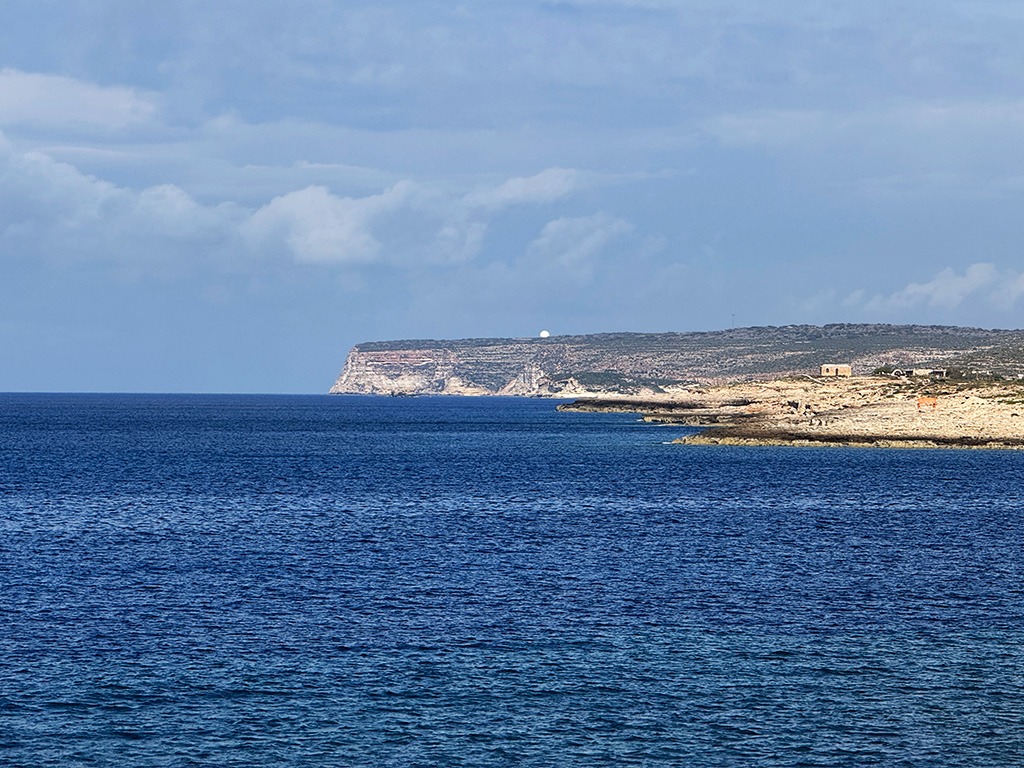
Lampedusa’s sparse and semi-arid landscape contrasts against the deep blue of this part of the Mediterranean
The island is just 12 km long and 3 km wide, with a total area of 20.2 km², making it roughly half the size of Cambridge UK or a third of Manhattan NY. Even so, it is the largest island in the Pelagie archipelago (Pelagie islands) which is made up of two further islands; Linosa and Lampione.
The island’s highest point (Albero Sole) stands at just 133m above sea level, and the scenery of the island varies from semi-deep gorges to shallow valleys, with its most famous natural feature being the numerous fine white sandy beaches, hidden coves and dramatic cliffs that line the coast.
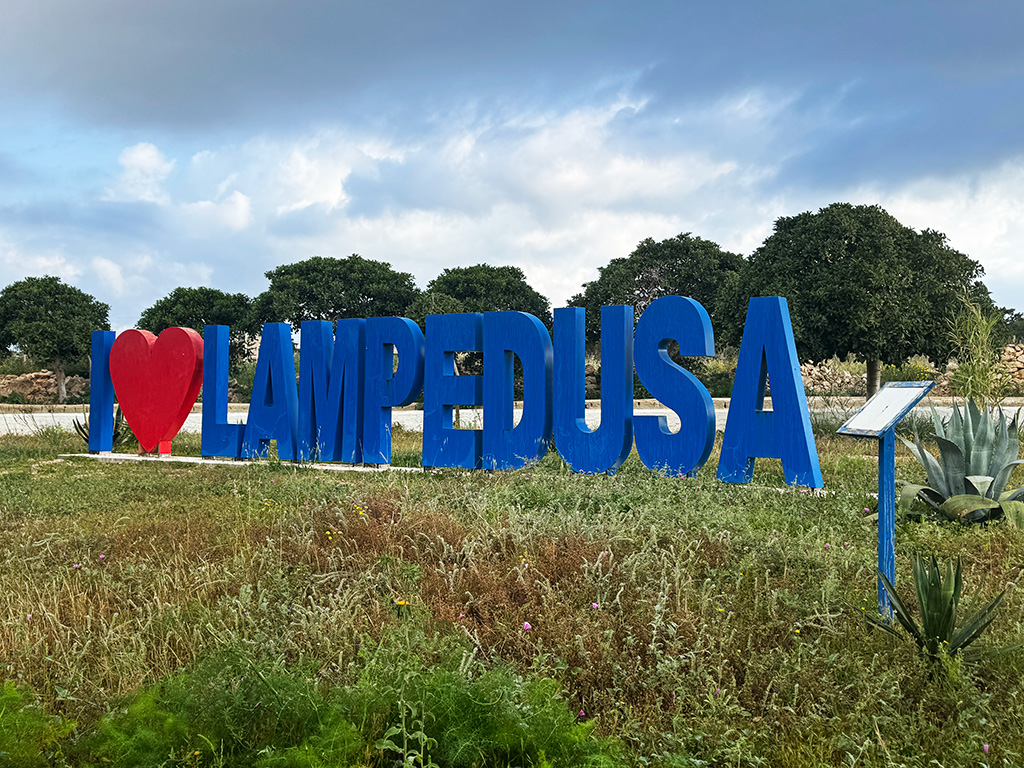
From the scenery to the people, from the food to the history, there is a lot of love on this little island
Lampedusa island’s economy is centered around tourism and fishing, and a large number of people are employed in connection with managing migration arrivals from Africa.
The most recent figures put the island’s permanent population at around 6000, but this number swells in the summer months when visitors (predominantly Italian) visit the island to holiday, reaching around 100,000 according to local estimates.
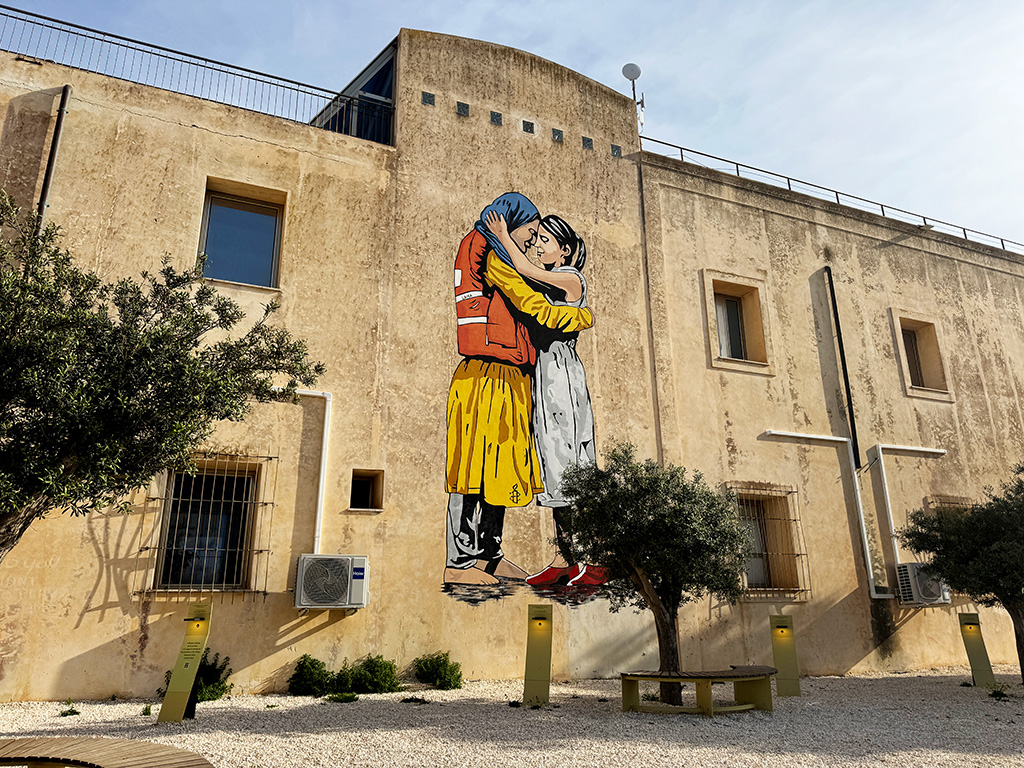
Lampedusans are famous throughout Italy for their welcoming attitude to tourists and migrants alike
In cooperation with EU partners and charities, the Italian government have intensified efforts to address the migrant crisis. Their action has resulted in crossing from the North African coast declining from their 2011 peak.
Throughout the crisis, the people of Lampedusa have welcomed refugees into their homes and have volunteered extensively to help those arriving from Africa, fostering a strong sense of community and solidarity. This hospitality earned the population a Nobel Peace Prize nomination in 2016, recognising its efforts to help those in need.
”If we want things to stay as they are, things will have to change...
from The Leopardby Giuseppe Tomasi di Lampedusa
Best time to visit Lampedusa
Life on Lampedusa is distinctly seasonal; serene and almost deserted in winter, yet bustling with visitors during the summer months. Here are the headlines to help you decide the best time to visit:
- If relaxing and enjoying the island’s famous coastline and crystal clear waters is your priority, come between June and September. Be prepared for crowds and a lively atmosphere almost anywhere, and make sure to book all experiences, transport and restaurants in advance whenever possible.
- If sightseeing or enjoying the island’s scenery is more your thing, come in May or October. These months offer warm weather, but are nowhere near as busy as the summer period and you may get lucky with the weather, when warm days can make a beach trip or boat tour viable. Generally, the weather is dry during these points of the year when the island receives only irregular rainfall.
- For the remainder of the year (November – April), you should expect a lot of the island to be closed down, except for some of the most popular bars and restaurants in the town centre (Via Roma area), and local essentials like supermarkets. Personally I love visiting at this time of year as the relaxed atmosphere encourages you to switch off and totally slow down. Be sure to note however that options for getting to and from the island limited ‘out of season’, so thorough planning is essential, and the weather can be temperamental with storms frequently rolling in from the Mediterranean Sea.
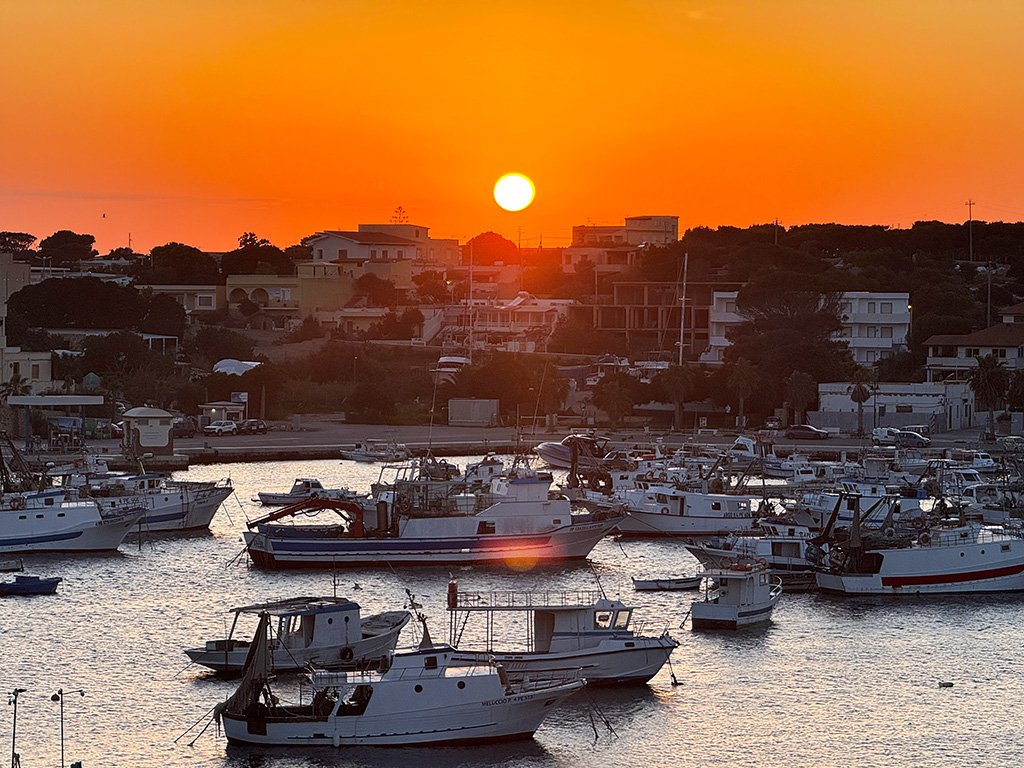
Regardless of when you are visiting, Lampedusa’s southernly position in the Mediterranean means stunning sunsets all year round
Is Lampedusa safe?
Part of travelling to any new or unknown location is understanding whether it is safe for visitors, and Lampedusa is no exception.
Lampedusa is not known as a crime hotspot, and it is not at risk of major natural disasters in the same way as other parts of Italy, such as Campania or the main Sicilian island (earthquakes, volcanoes).
That said, even though Lampedusa is a quiet and peaceful island, common sense should apply to anyone visiting, whether for the first time or the hundredth:
- Monitor your personal belongings at all times, leaving nothing unattended while at bars, restaurants, or the beaches.
- Only use licensed transport methods to get around, including registered taxis or the island’s buses (more on this below).
- Familiarise yourself with what to do in the event of an emergency in Italy. You can request assistance from the police, health services, fire brigade, or coastguard by calling 112.
- Report suspicious or illegal behaviour to the local authorities. The most central location to do so is the Carabinieri station at Via Roma 37.
LOCAL TIP
Let the Wind Plan Your Day
Because Lampedusa is a flat island in the open sea, the wind can dictate your entire itinerary, from beach conditions to boat excursions. A north wind (Maestrale) means you should head to the sheltered southern coast (like Spiaggia dei Conigli), while a south wind (Scirocco) means sticking to the protected northern or eastern shores (like Cala Creta).
Live wind forecasts can be found here:
LOCAL TIP
Let the Wind Plan Your Day
Because Lampedusa is a flat island in the open sea, the wind can dictate your entire itinerary, from beach conditions to boat excursions. A north wind (Maestrale) means you should head to the sheltered southern coast (like Spiaggia dei Conigli), while a south wind (Scirocco) means sticking to the protected northern or eastern shores (like Cala Creta).
Live wind forecasts can be found here:
Getting to Lampedusa
How best to arrive in Lampedusa will depend on the time of year you are visiting. All transport connections are more frequent between late-spring through to the autumn, but still semi-regular during the cooler months of the year – here is a breakdown of your options:
By plane
During the popular visitor season, there are direct flight options from Rome, Milan, Naples and other mainland Italian cities to Lampedusa. The flight time varies depending on your departure location, but it is generally no more than two hours.
Out of the visitor season, to arrive by air, you will first need to fly to Palermo or Catania in Sicily (which can be reached from most Italian airports and several European airports) and then take a second flight to Lampedusa. The second flight to Lampedusa from Palermo or Catania takes around to an hour, and nervous flyers should note that these are smaller propeller-powered planes seating around 40 people.
The main town of Lampedusa is about a 15–20 minute walk from the airport (both located on the southern part of the island), and can be reached on foot or by taxi – you’ll find taxis available at the rank outside the terminal or bookable through your accommodation.
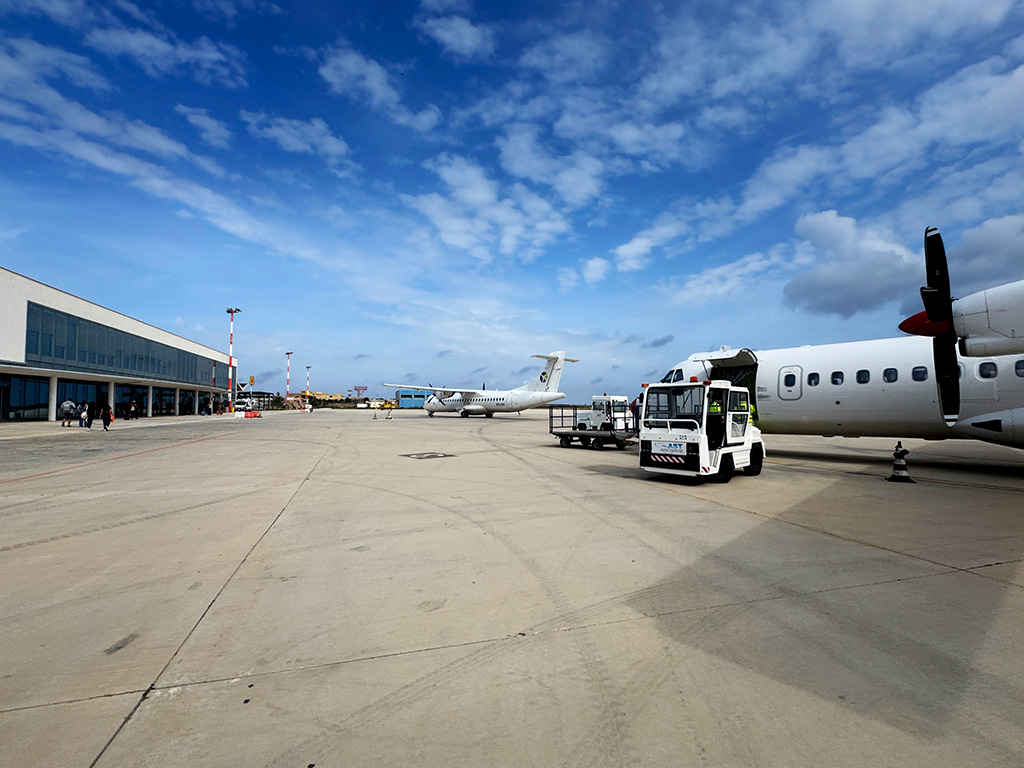
Lampedusa’s small airport is well connected to Sicily, mainland Italy and some international destinations
By ferry
Ferries from Sicily run throughout the year, with the primary point of departure being Porto Empedocle near Agrigento on the Sicilian mainland.
Passenger-only ferries take around 4.5 hours to reach Lampedusa from Porto Empedocle, and vehicle ferries take around 10 hours.
The Porto Vecchio (old port) is the arrival point for all ferries to Lampedusa, conveniently located just a 15-minute walk from Via Roma.
For more detailed information about travelling to Lampedusa, ready my dedicated guide here:
A brief history of Lampedusa
The majority of Lampedusa’s history is relatively recent, especially by Italian standards. The island has only been consistently inhabited since the 1840s, when it was decreed that a permanent settlement be set up on the island by the Bourbon royal family of the Kingdom of the Two Sicilies.
The Bourbons formally purchased the island from the Tomasi family at this time, and as the ruling power of Sicily (based in Naples) at that time, they were looking to project their power further into the Mediterranean Sea.
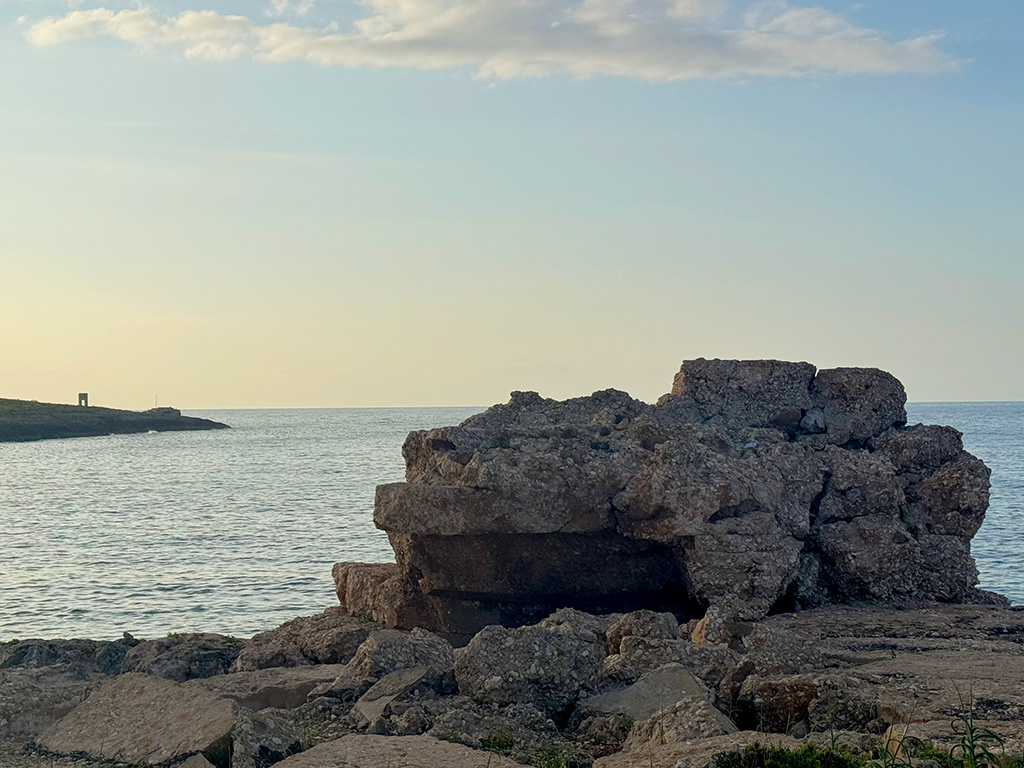
Traces of Lampedusa’s sometimes turbulent past can be found all around the island, such as this weathered World War II bunker near Cala Guitgia
Before this point, Lampedusa had been sporadically inhabited since ancient times, with the island serving as a base for merchants. In the Middle Ages, the island suffered pirate attacks from barbary corsairs – these raids led to the island being abandoned for centuries.
Following the Bourbon purchase of Lampedusa and ensuring resettlement, the island developed a strong industry. This attracted migrants from sponge-producing countries such as Greece and Turkey, where sponge grows where sponge grows abundantly along the island’s coast.
During the Second World War, Lampedusa was fortified to protect Italian interests in the central Mediterranean Sea. Allied forces liberated Lampedusa as part of the wider invasion of Sicily, with fascist forces surrendering to a British landing party in June 1943.
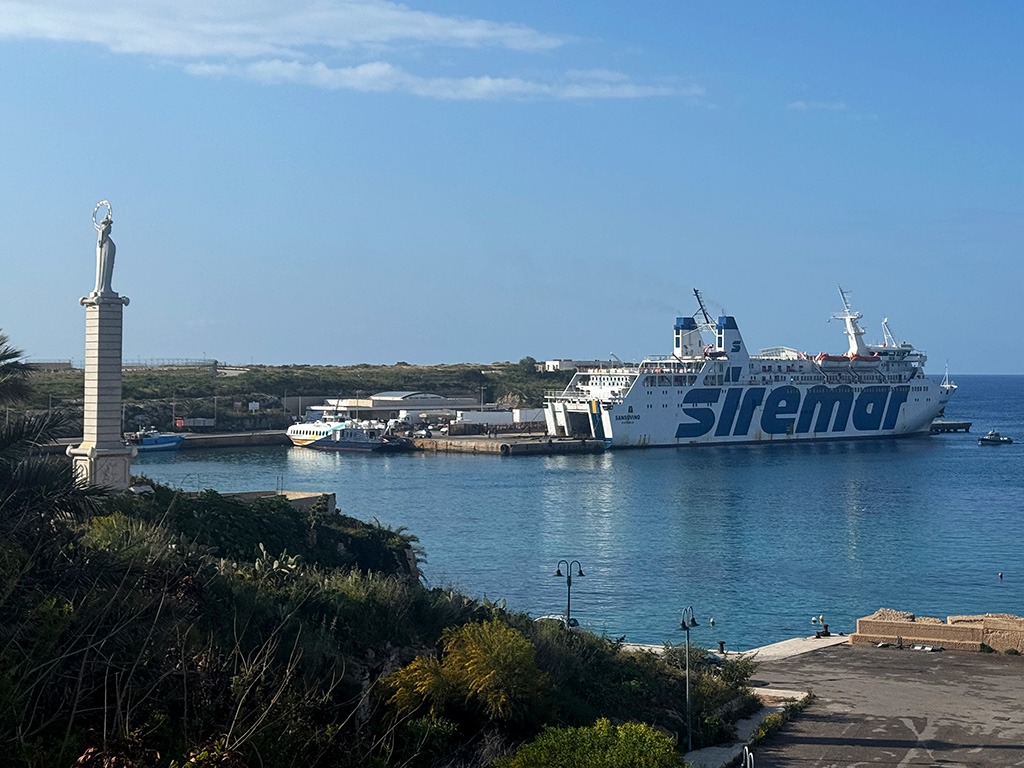
Lampedusa’s past and present is focused around its relationship with the sea
In more recent years, Lampedusa has become one of the primary entry points for migrants arriving in small boats from North Africa.
Since 2011, it is estimated that over 100,000 migrants have arrived at the island, with the highest number of arrivals – estimated to be around 45,000 – recorded in 2011. In recent years, migrant arrivals on Lampedusa have decreased, but are still frequent.
Where to stay on Lampedusa
Lampedusa is a small island, which means that wherever you stay, you’ll be close to the main sites, the best restaurants, the airport, and the port.
Note that you will not find any large hotels on the island, the biggest hotel here (Hotel O’scià) has just 24 rooms for context. Instead, most accommodation options are smaller B&Bs, such as self-catering rentals including apartments and villas.
Depending on your travel priorities, there are two main recommendations that I can share:
For sightseeing, eating and drinking
If the goal of your trip is to explore the island’s history and culture, or to spend time getting to know Lampedusa’s food and drink scene (or both, as I typically do when here) be sure to stay in the vicinity of Via Roma, Lampedusa’s main street.
Staying in the main town will also give you more direct access to the ferry port, airport and some of the island’s main beaches.
My go-to place to stay is B&B La Casa di Pino. I love this small B&B located perfectly halfway between the airport and port as the rooms are spacious and modern, and the roof terrace is a great place to relax with some privacy. Located away from the hustle and bustle of Via Roma during the summer and just 15 minutes on foot from beaches and the airport, I challenge you to find a better base in Lampedusa!
For beaches, relaxation and seclusion
The other option for staying on Lampedusa island is away from the main town in a self-catering villa or small resort complex.
This approach will provide you with more convenient access to the famous beaches of Lampedusa with increased privacy and seclusion (and the surrounding countryside). This will mean mean that you’ll need to drive, rely on taxis, or use public transport to explore other areas of the island.
Note that beyond the main town of Lampedusa, restaurant, bar and cafe options are limited. You may find that choices for eating and drinking are very restrictive if you stay somewhere more remote with just one or two options within easy reach.
Take a look at this dedicated guide to staying on Lampedusa for a more detailed run down of the main areas of the island to stay in, with pros and cons for each based on my travel experiences, plus more personal hotel recommendations:
Transport on Lampedusa
Lampedusa’s small size means that the majority of the main beaches, points of interest and best restaurants are within walking distance.
It is also easy to walk from Lampedusa airport and ferry port to the main town, which is around 15 minutes on foot to Via Roma.
To venture beyond the main town, there are a couple of small buses that run hourly, which together complete a circuit of the island:
- Circolare Rossa (Red Line) – This bus goes to the east coast and north of the island, heading toward Cala Creta, the airport, and several inland stops before returning to the main town
- Circolare Azzurra (Blue Line) – This bus covers the west and south, including the route to Isola dei Conigli and Spiaggia dei Conigli (Rabbit Island and Rabbit Beach), Cala Pulcino, and Albero Sole, looping back to Lampedusa town.
Tickets are bought on board the buses directly using Euro cash only. Note, however, that this bus can get very busy during the summer, so it is advisable to walk or organise a taxi unless you are prepared to wait for a second bus (if the first that arrives is full).
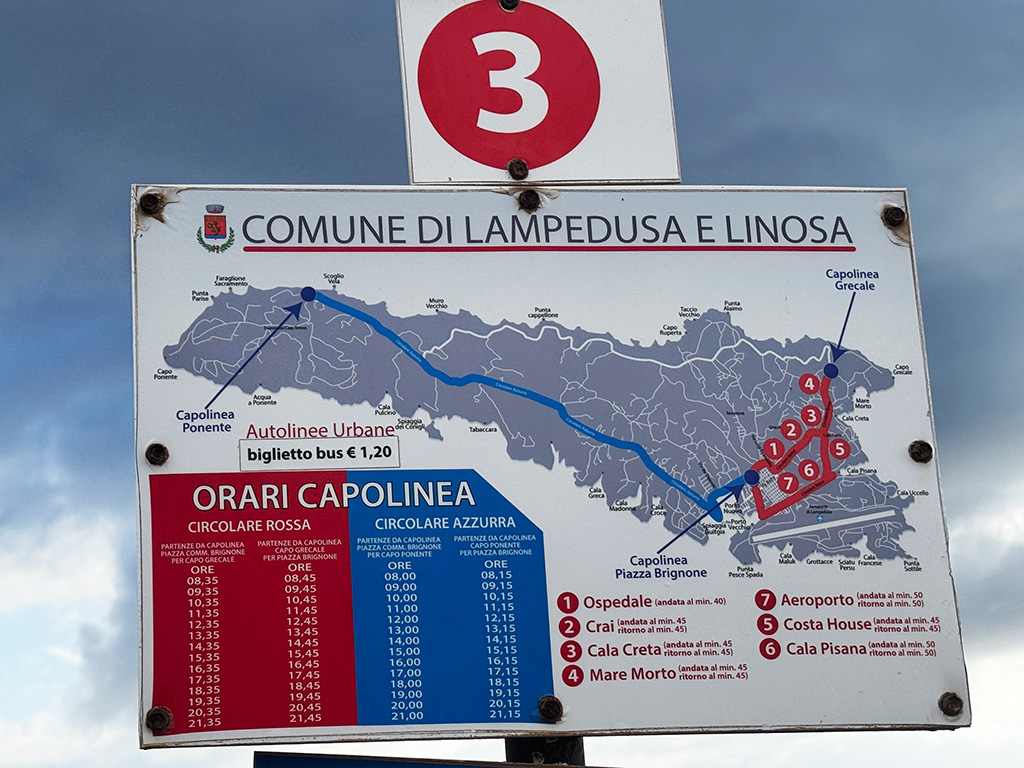
The island’s simple bus network makes getting around very easy
Taxis are limited but can be arranged through your hotel reception or accommodation host.
Another option is renting your own transport. There are several small agencies available offering scooters, cars and buggies – again, I recommend speaking with your hotel reception or accommodation host to organise this for you.
Lampedusa’s famous beaches
Speak to any Italian about this island and the first thing that they will tell you is how beautiful the beaches are on Lampedusa and how the island’s water offers great swimming.
There are both free and publicly accessible beaches, as well as paid-for beach clubs, with several of the top options being easily walkable from the main town (Via Roma area). The best beaches within walking distance from Lampedusa town are:
- Cala Guitgia, 15 minutes on foot (east of Lampedusa town)
- Cala Croce, 25 minutes on foot (east of Lampedusa town)
- Cala Madonna, 30 minutes on foot (west of Lampedusa town)
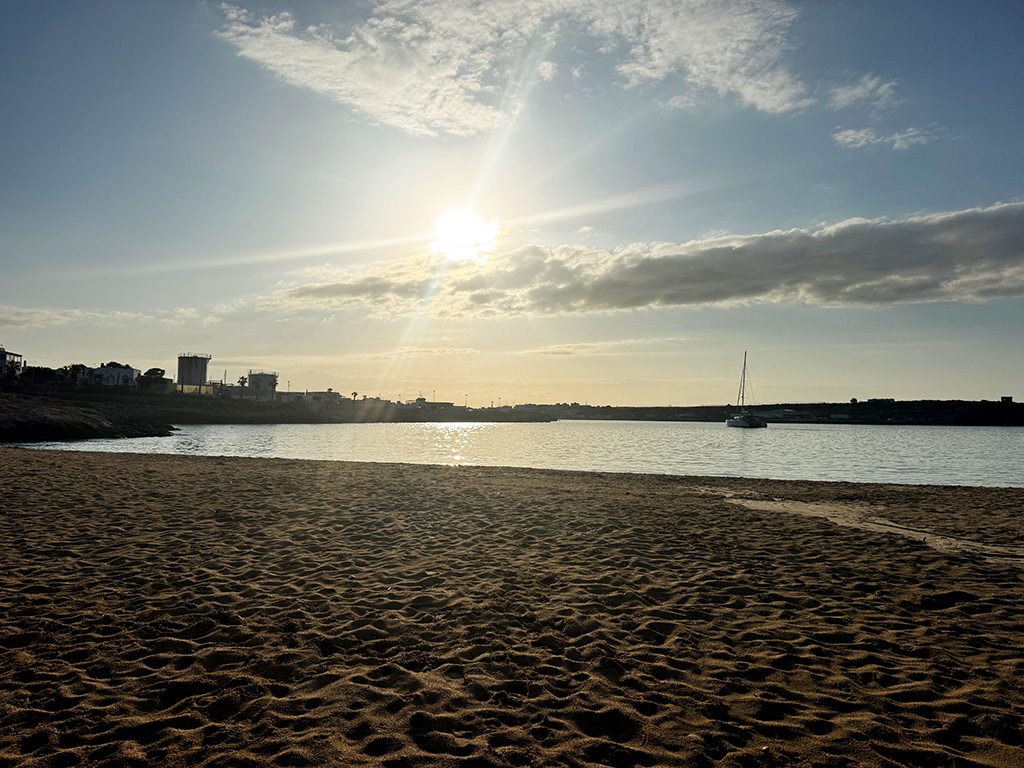
I love Cala Guitgia for its proximity to Lampedusa town, and for the fact you can easily and safely enter the water at this beach. I’m currently working on a in-depth guide to Lampedusa’s beaches – check back soon for more information and personal guidance
If you’re happy to travel a little while out of the main town to find less-crowded and even more beautiful beaches, consider visiting:
- Cala Greca, 40 minutes on foot (west of Lampedusa town)
- Cala Pulcino, 90 minutes on foot (west of Lampedusa town)
For a complete run-down of Lampedusa’s beaches including full travel logistics, details on facilities and accessibility information, take a look at my guide here:
Rabbit Beach (Spiaggia dei Conigli)
The one beach you can’t miss? Spiaggia dei Conigli & Isola dei Conigli (Rabbit Beach & Rabbit Island) – voted the world’s best beach in 2013 by TripAdvisor, is Lampedusa’s most famous beach and a favourite among locals and visitors alike, for the beautiful scenery and crystal clear turquoise waters. I bet you a spritz that when you visit this beach that you’ll agree that this beach is a slice of paradise!
During the summer season, access to the beach is controlled to limit the total number of people present at any one time. As part of a nature reserve, this is done to protect the natural environment; both the landscape and wildlife. It is possible to reserve your access in advance via the official website here, or you can arrive on the day and enter the beach if there are slots available.
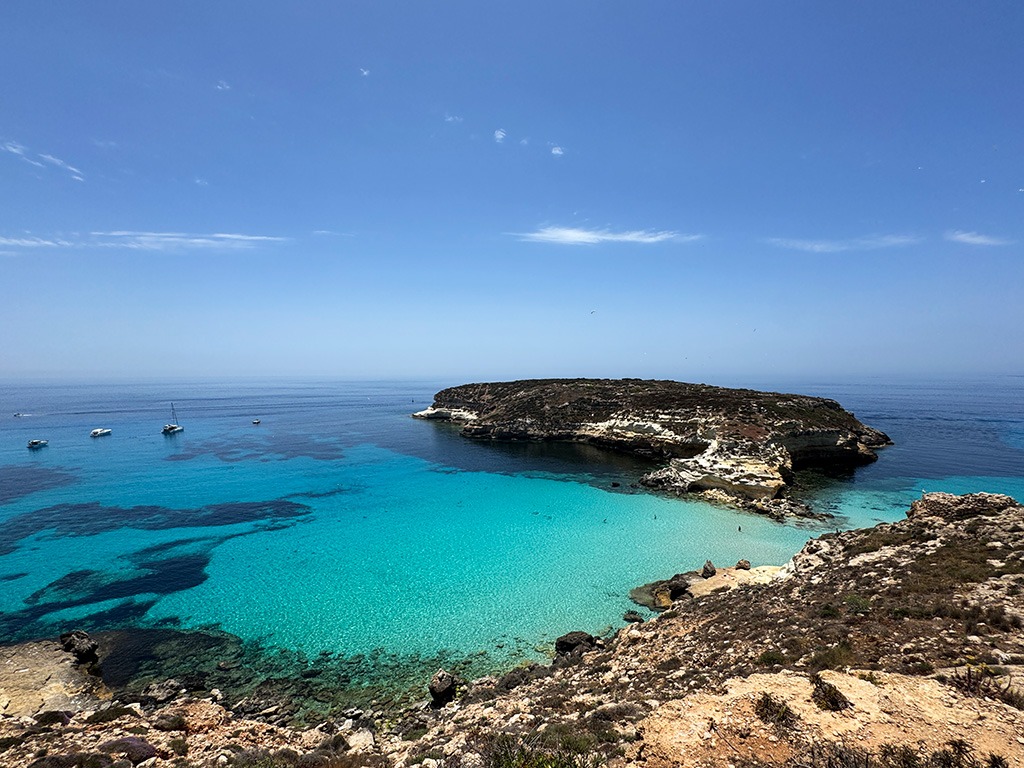
It is hard for a photo to do the breathtaking beauty of this natural landmark justice – you’ll just have visit for yourself
It is important to also note that further protective measures are present to preserve the natural beauty of Rabbit Island; visitors are not permitted to use sunbeds, chairs or similar (you may use your own beach towels and umbrellas), the usage of music speakers and drones is prohibited, and any form of smoking (traditional or electronic) is strictly forbidden.
For full details about visiting Rabbit Beach, refer to my detailed guide here.
Italian beach culture took Sara and I a while to get our heads around. After living on the Roman coast for years, we’ve now mastered how to navigate sunbed rental, dress codes, swim safety, and everything else you need to fully enjoy Italy’s beaches. We share all of this so you don’t have to learn the hard way in this detailed guide on Napleswise:
What to do on Lampedusa
You’ll find a surprising number of things to do on Lampedusa given its small size, here are the highlights:
For history and local culture
Archaeological Museum of the Pelagian Islands (Museo Archeologico delle Isole Pelagie) – This small museum is generally closed out of the busier summer months, but is worth visiting if you find it open. Inside is a small, well-curated collection of artefacts found on Lampedusa, Linosa and Lampione; the Pelagian Islands (hence the museum name). The museum is also home to an exhibition which details Lampedusa’s role as one of the main arrival points for migration into Europe from North Africa for those looking to learn more about the migration crisis.
Via Roma – Via Roma is the beating heart of Lampedusa, and was the first street constructed by the Neapolitan colonists in the mid-1850s. Along the course of the street, you’ll find information boards that detail its history – why not combine walking along Via Roma to understand Lampedusa’s past with stops in the bars and shops that line the street? During the summer and on national holidays, this street comes alive with live music and special events which can run all day and night.
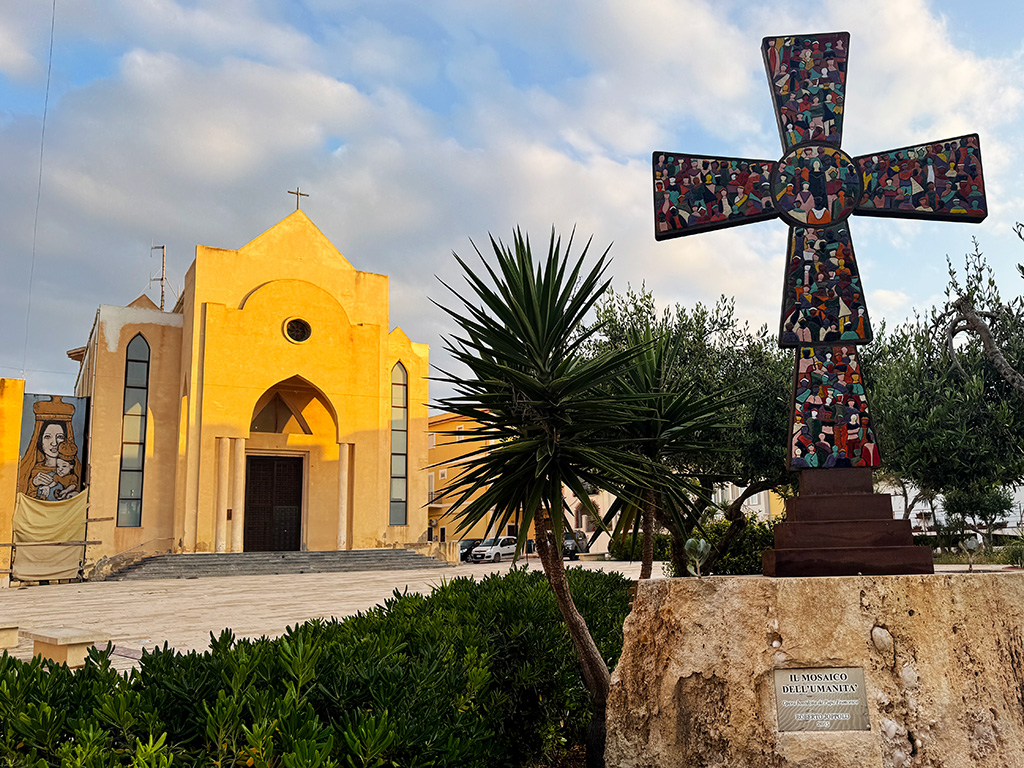
Almost all of Lampedusa’s main sites are located along, or very close to Via Roma
Gateway to Europe (Porta d’Europa) Memorial Sculpture – Located close to what is officially the most southern point of Italy, this landmark is dedicated to the migrants who have lost their lives making the perilous journey crossing from North Africa to Italy. I find visiting this memorial a powerful and emotional experience. Standing there, it’s impossible not to feel the gravity of what it represents.
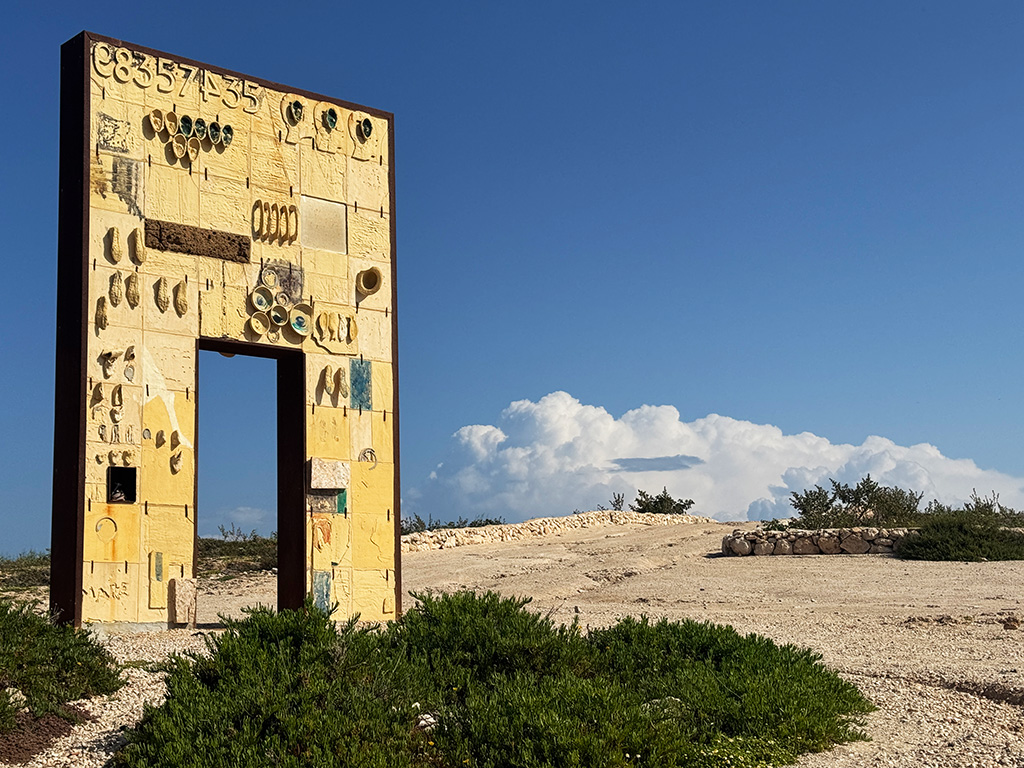
A visit to this powerful monument is a must for anyone coming to Lampedusa who is looking to understand the island’s history and role in migration crisis
Water activities
Beyond the beaches, the top pastime for locals and visitors on this island is anything water-based. You’ll find no shortage of boat trips, snorkelling and scuba experiences, and other watersport activities available.
With so much choice, it can be difficult to know what to book. Personally I’d recommend this experience, but it is also worth asking your accommodation host or hotel reception for their personal endorsements.
Shopping
Lampedusa offers a small yet great shopping scene, centred on local specialties and artisan boutiques.
This island is famous for its sponges, meaning you’ll see sponge-based items in a lot of stores here. If you’re looking for an authentic souvenir to remember your time on Lampedusa, grab something spongey or sponge-themed!
Along Via Roma and some of its side streets, you’ll find an array of clothing stores, offering medium to high-end fashion for men and women. You won’t find any big brands or large shops here. If you’re looking for clothing, take your time to visit the boutiques to pick up something special.
For details about my favourite stores, top boat tours, hiking/trekking routes and much more, take a look at this detailed guide about what to do on Lampedusa.
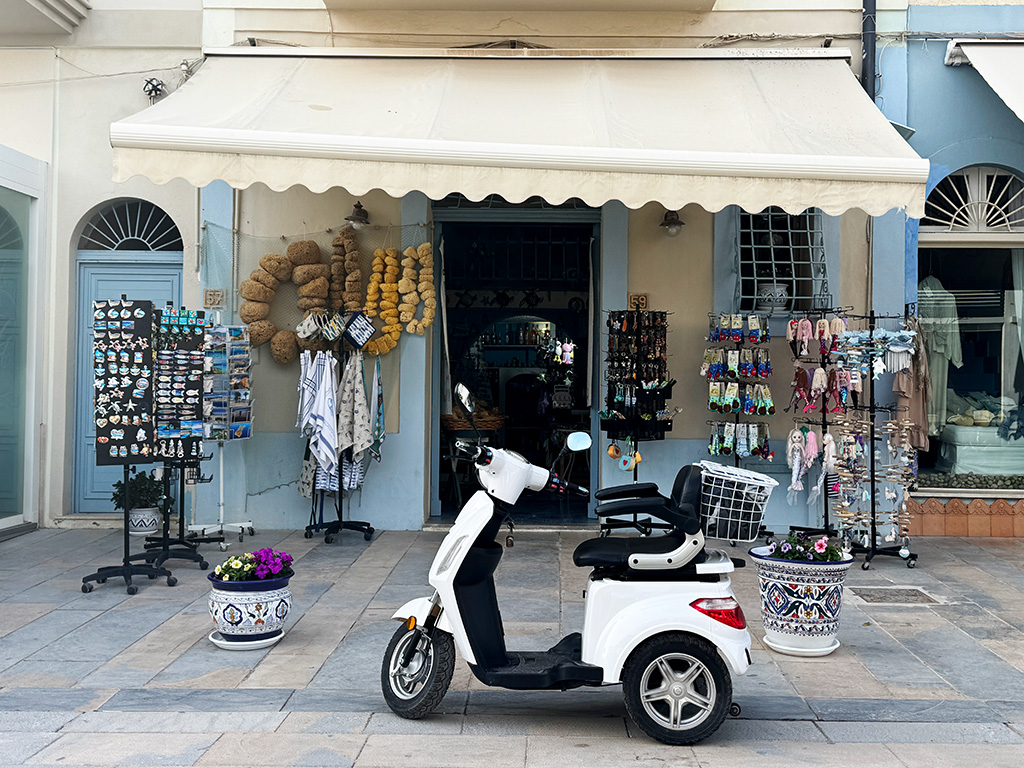
There’s no shortage of small shops and boutiques to browse if you are looking for something to remember your time here
Linosa Day Trip
Looking to explore the Pelagie islands further? Why not venture on a day trip to Linosa, the second of the archipelago’s inhabited islands.
Travelling between Linosa and Lampedusa takes between 1-2 hours depending on what ferry you take (timetables vary throughout the year).
It is possible to easily explore the whole island in a day, by hiking across Linosa’s volcanic terrain (roughly one hour from side to side), or by relaxing in the main town, enjoying the slow paced environment and fresh seafood.
For a complete overview of Linosa, including my favourite swimming spots, hiking recommendations and top places to eat, take a look at this detailed guide.
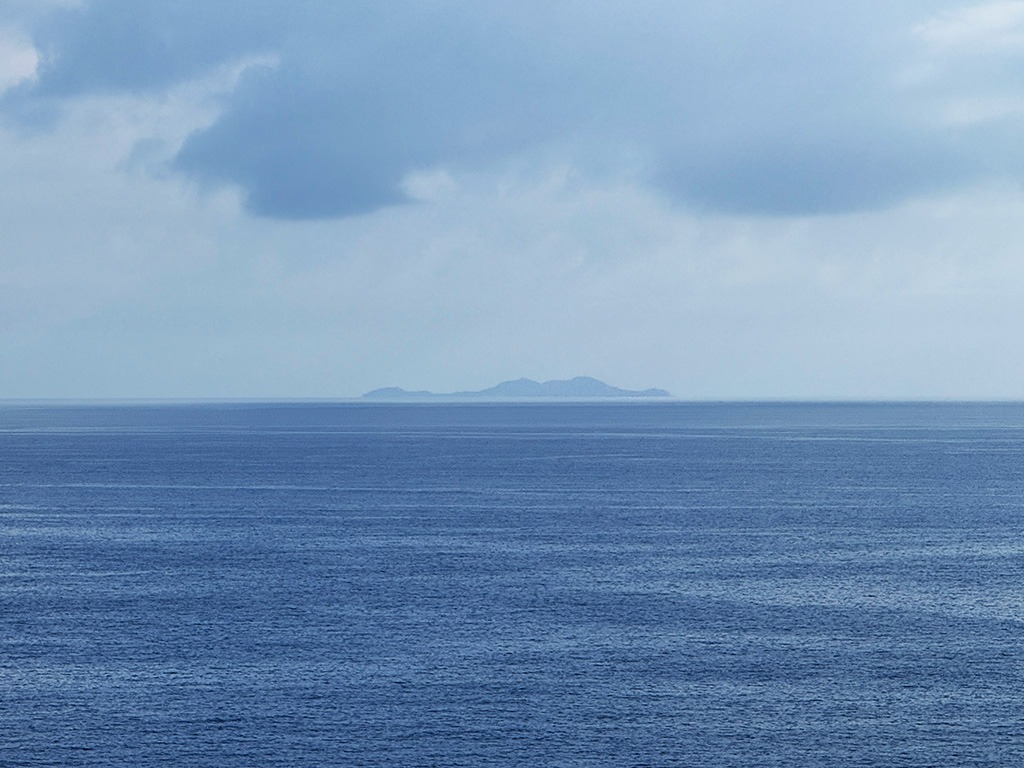
Linosa is visible from the northern side of Lampedusa on a clear day
Eating and drinking on Lampedusa
Of course, you can always spend your time eating and drinking; Lampedusa’s food scene, as part of Sicily, is based on Sicilian cuisine with a heavy focus on seafood. That said, several places will offer a selection of vegetarian and vegan-friendly options, and almost everywhere will cater to diners with gluten intolerances or allergies.
Best restaurants for lunch and dinner
If you’re looking for a sit-down, traditional Italian lunch, or an authentic Sicilian dinner, you are spoiled for choice in Lampedusa.
Almost all restaurants here are seafood-focused, and the majority also offer pizza (in the Sicilian style), making it nearly impossible not to have a great meal.
On a small island like this, competition is fierce, ensuring consistently high quality and, in my experience, reasonable prices. If I have to choose one restaurant to recommend, it has to be Trattoria Pescheria Azzurra for their high-quality fish options and authentically made pizzas.
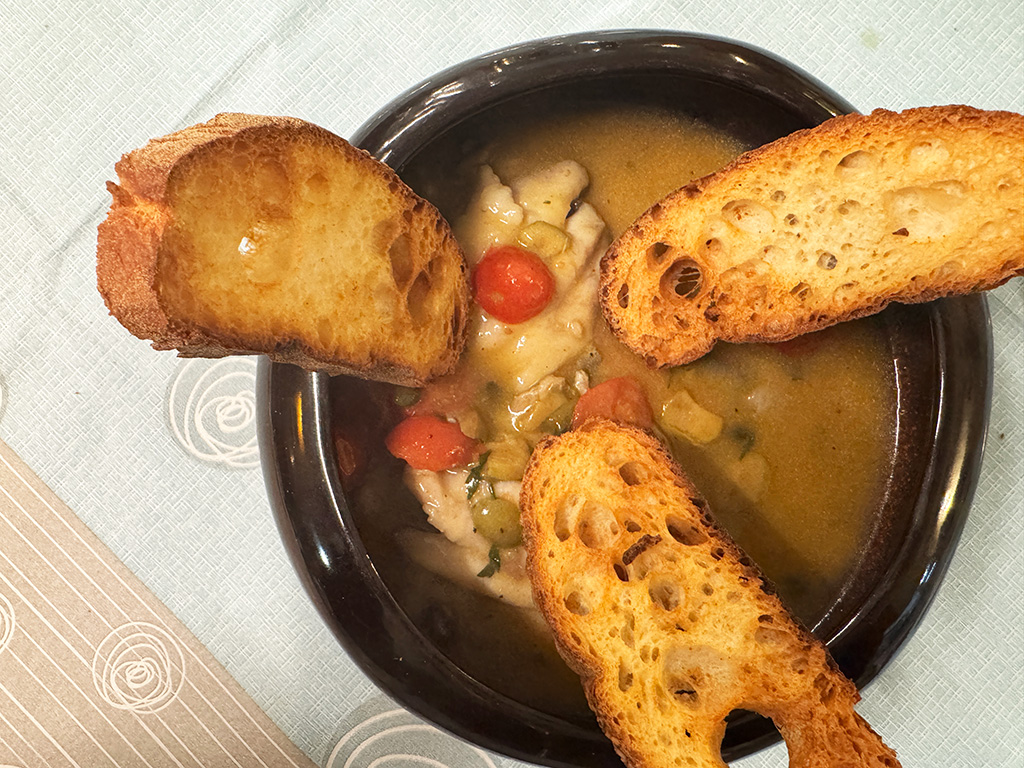
The photo doesn’t do this seafood soup justice; I still think about it many months after it warmed me on a chilly evening in Lampedusa
Beyond Trattoria Pescheria Azzurra, I can also recommend La Rotonda (seafood, pizzas), which makes for a great place to grab dinner after a beach day at Cala Guitgia, as it’s located between the beach and centre of town.
Best bars and cafes for breakfast, aperitivo and gelato
There’s no shortage of bars and cafes on Lampedusa that offer traditional Sicilian breakfasts, great value cocktails and authentic Italian gelato. Some of my favourites include the following, which are all either located on, or very close to the main thoroughfare of Via Roma:
- Gelateria o’scià – If you want real, artisan-made Sicilian granita, this is the place to go. If I am in Lampedusa, you will almost certainly find me here for breakfast. Even on the main island of Sicily, I’ve struggled to find better granita!
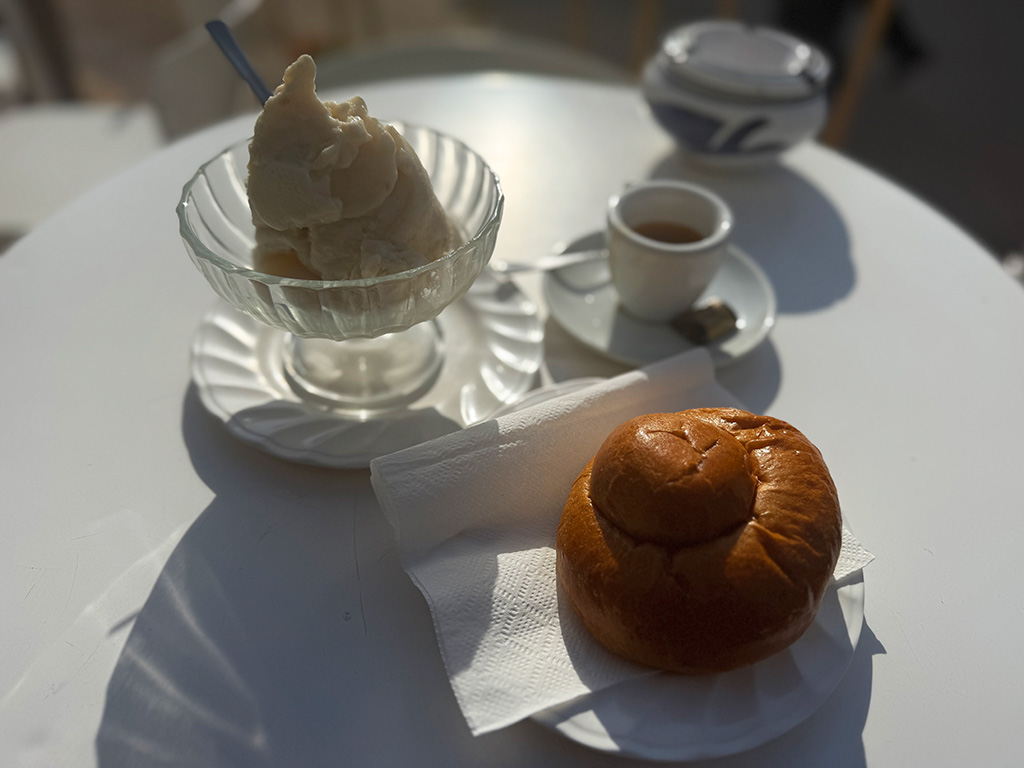
I would very happily never eat anything but granita and brioche for breakfast for the rest of my life if I had to
- Isola delle Rose – This large bar, along with Cafe Cristal opposite, are the main all-day spots on Via Roma offering breakfast, light lunches (including poke, one of the few examples of non-Italian/Sicilian cuisine available on the island) and aperitivo. If you enjoy a drink in the sun as much as I do, come here in the early evening.
- Cafè Cristal – While smaller than Isola delle Rose, you’ll find this all-day cafe offering traditional Sicilian favourites such as arancini as well as a vast range of sweets. Suppose you’re looking for an edible souvenir, or want to try something quintessentially Sicilian, get some Martorana from this bar. These sweet almond treats are made here following the same traditional methods as those famous in Palermo.
- Bar dell’Amicizia – Just a few steps from Via Roma, you’ll find this cafe/bar offering Italian and Sicilian staples (sweet and savoury) in a more relaxed setting compared to Isola delle Rose or Cafe Cristal. I enjoy coming here if I need to get work done when on Lampedusa as their terrace which has a nice view looking out over the town and out to sea.
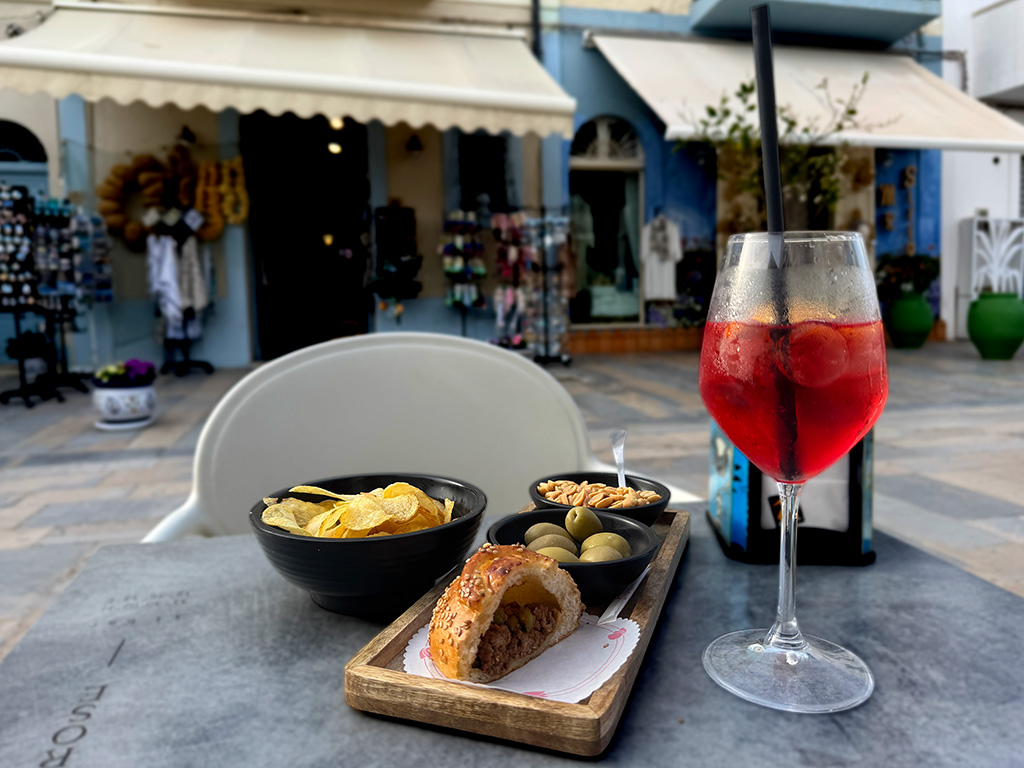
Few things beat enjoying a spritz with some local snacks, watching the world go by on Via Roma in Lampedusa
Beyond the main town of Lampedusa island, you’ll also find numerous bars dotted around the island’s coastline. These are seasonal, meaning they are only set up and open during the summer months’ when the weather and visitor numbers make it worthwhile for the owners, and therefore you should always plan ahead to avoid potential disappointment or frustration.
For a detailed overview of food and drink on Lampedusa, including more of my top places for breakfast, lunch, aperitivo and dinner, take a look at this guide:
In summary…
Lampedusa may not have the same wealth of history as Rome and Florence, or be a foodies paradise like Naples or Bologna, but for a small island closer to Tunisia than Italy, you can see from this guide that it offers visitors a lot. Have a question about visiting Lampedusa? Don’t hesitate to contact me here