

By: Warren George
Published: February 19, 2026
Last updated: August 25, 2026
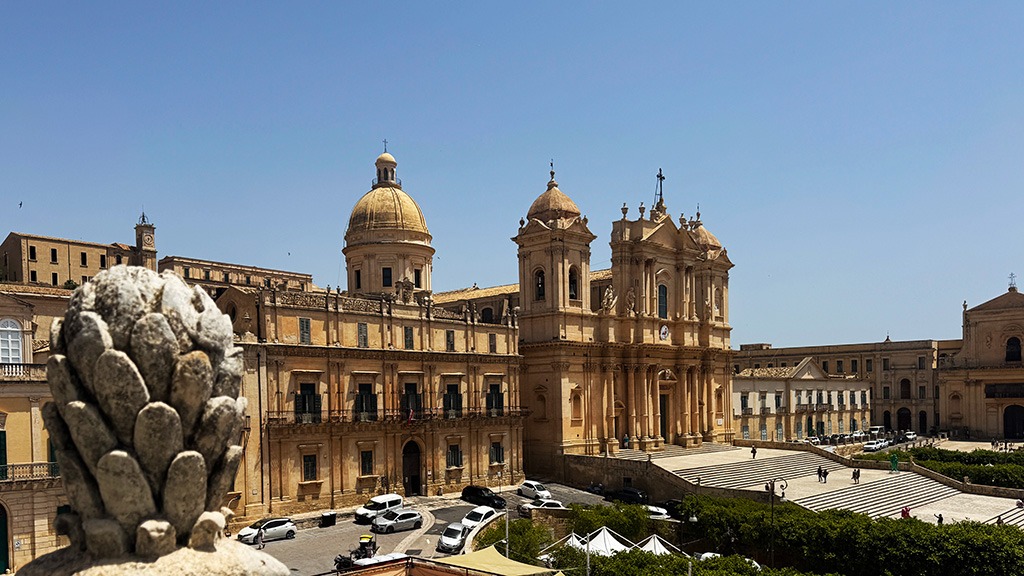
The small town of Noto, in the southeast of Sicily, and the surrounding area, the Val di Noto (a UNESCO World Heritage Site), is one of my all-time favourite places in Italy. Few other parts of this country combine delicious food and drink, thousands of years of history, and untouched natural beauty in the same way. Let me share with you what you need to know about visiting in this guide based on years of personal experience.
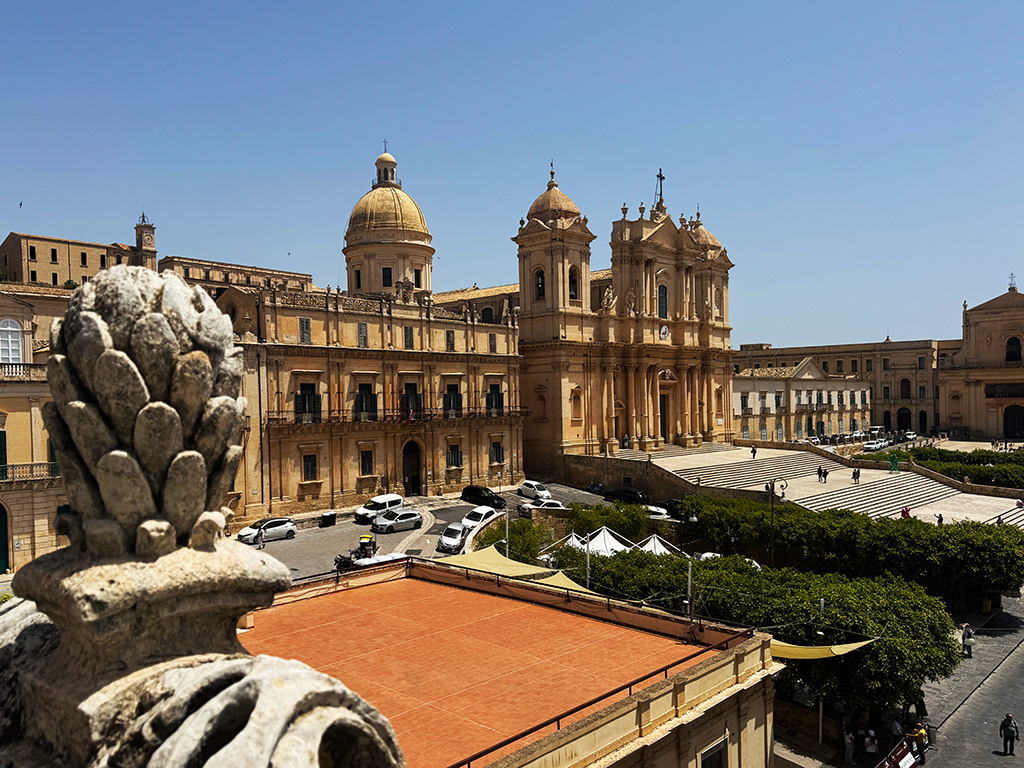
Nestled in the Sicilian countryside, this striking city is waiting for you to explore it
A definitive travel guide to Sicily’s Baroque gem
Noto is one of those places that can only be truly appreciated by visiting; videos and photos online help to showcase the city’s stunning architecture and the beauty of the surrounding area, but it’s only when you arrive here that you’ll realise that the town’s beauty and uniqueness goes far beyond social media.
Having first visited Noto, Sicily, in 2015, I’ve been back countless times over the years and have got to know the town and nearby area very well. Let me share my experience and direct insights with you in this guide, covering:
Key facts about Noto, Sicily
There’s a strong chance that if you’ve ended up on this page you’re already interested in visiting Noto or are planning to do so. Either way, if you’re looking for some Italy travel inspiration, here are some key facts and insights about the Baroque town to help provide greater context for this guide.
Where is Noto, Sicily? Noto is located in southeastern Sicily, Italy, roughly 10km inland from the Ionian Sea in the Mediterranean and 40km from the provincial capital of this part of the island, Syracuse.
Population: 25,000 residents (2022 data) in the municipal town (comune) of Noto, making it a small to medium-sized town in Sicily.
Getting around Noto: Noto’s historic centre covers a small area, where it’s possible to walk from one end to the other in around 15 minutes at a regular pace. The town is mostly flat, making visiting easier for those with mobility challenges compared to many other old Italian cities. Taxis are easy to come by at dedicated ranks, and there are a few local buses to help you get around the main town and immediate area.
Let me share with you the top things to see and do in Noto, the best places to eat and drink, options for day trips and much more in this detailed guide
A short history of Noto, Sicily
Noto’s documented history begins over 2000 years ago and has seen numerous people across this time control and influence the city. Take a few minutes to read this condensed history of Noto to better understand and appreciate why the town developed as it did, the impact of the famous earthquake in 1693, and more.
If you’re familiar with the history of Noto or are pressed for time, click here to jump to the next section.
Ancient Noto
A small settlement was founded in this area by the native Sican people in the 5th century BCE, now called Noto Antica, roughly 14km by road from the centre of the modern city. This ‘original’ Noto expanded over the centuries, and was heavily influenced by Greek migrants and colonists who had founded outposts and trading cities in southeastern Sicily, such as Syracuse – roughly 35km away as the crow flies.
You can visit the remains of the ancient and original town of Noto, something anyone looking to learn more about Sicily’s history should absolutely do.
In the second century BCE, Noto fell under Roman influence, which remained the ruling power of Sicily for almost a thousand years, with some relatively brief interludes. During this time the town was permitted special powers under Roman rule where it was free to self-govern, provided it ultimately recognised Rome’s supreme authority.
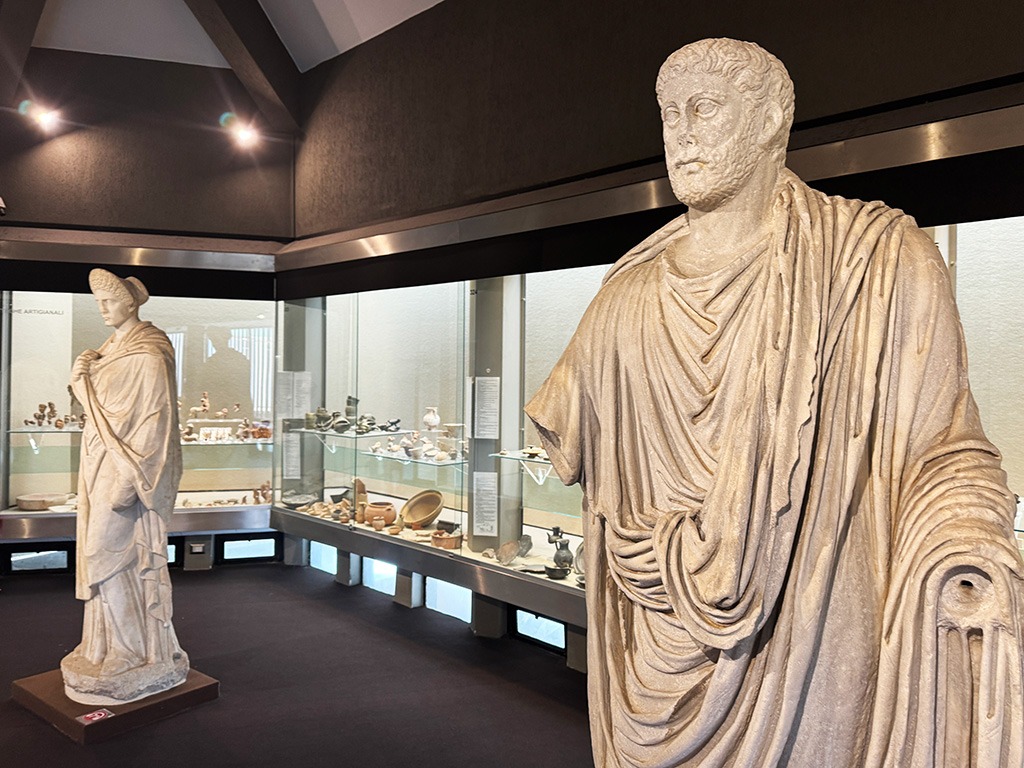
If you’re interested in learning more about Sicily’s ancient history, be sure to visit the archaeological museum in Siracusa
The Middle Ages
Roman control of Noto and this part of Sicily ceased in the mid 800s CE when Arab invaders (the Fatimid Caliphate) conquered the area, at which point it was designated as one of the island’s three administrative capitals under Muslim rule.
Fatimid control did not last long (in the grand scheme of things) – Noto was conquered by the Normans in 1091, returning the town and the rest of Sicily to Christian control which remains the case today.
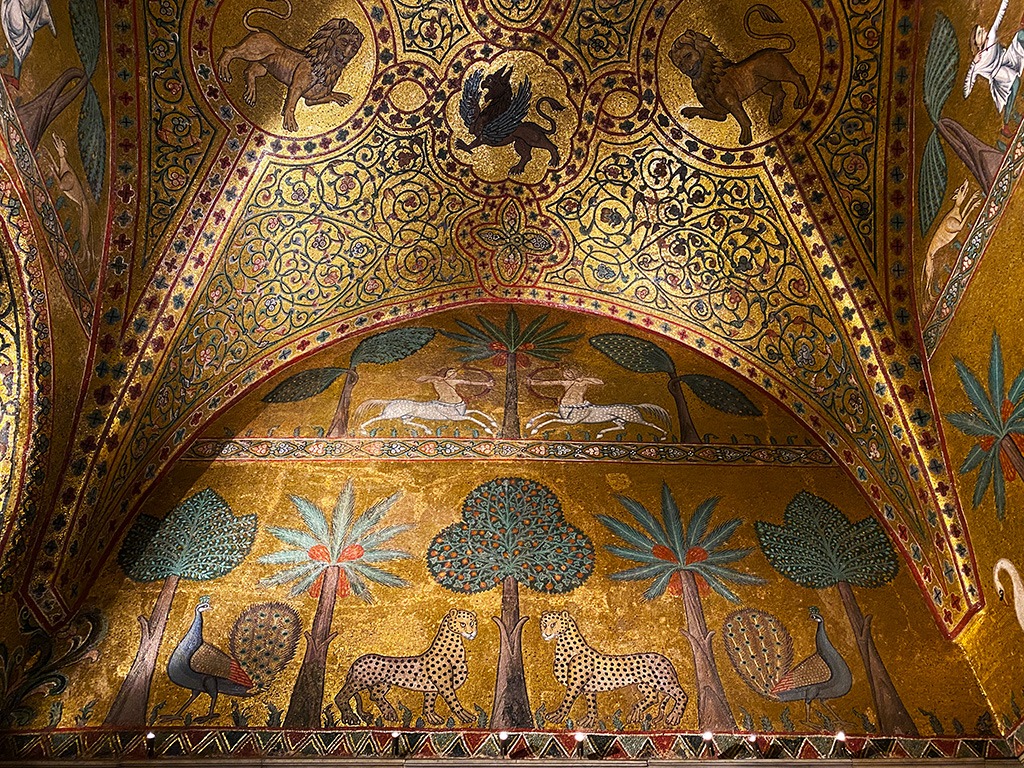
Even if Norman control did not last long on Sicily, their legacy on the island’s culture was huge – the breathtaking examples of their art and architecture at places like the Norman Palace in Palermo demonstrate this
Norman control of Noto lasted until 1198 (even less time than the Arabs), at which point the Kingdom of Sicily came under new management, this time a Holy Roman dynasty from Swabia (an area in modern southwest Germany) – the Hohenstaufen family – took control of the kingdom.
The Hohenstaufen dynasty ruled Sicily for an even shorter period (until 1266), at which point the Angevin royal family (from Anjou in modern day northwest France) invaded the island, contesting the Hohenstaufen family as the rightful rulers of Sicily.
Following the pattern, Angevin control was also short-lived, lasting just 18 years until another new power took over which was to remain the dominant force in southern Italy for hundreds of years; the Aragonese and the Spanish.
From 1282 Noto and the whole city came under increasing influence of the Aragonese (modern day Catalonia in northeastern Spain), and then ultimately the Spanish Crown. Initially an independent branch of the House of Barcelona was in charge of Sicily (1282-1412), but this was merged with the Aragonese royal family who then in turn formed a union with the Crown of Castile, creating the modern Kingdom of Spain.
The Great Earthquake of 1693
Spanish rule continued until 1700, and it was during this period that the famous earthquake of 1693 occurred in this part of Sicily. The power of the earthquake was such that it totally destroyed the original town of Noto (Noto Antica), and estimates from the time suggest that 50% of the population was killed.
”Then came an earthquake so horrible and ghastly that the soil undulated like the waves of a stormy sea, and the mountains danced as if drunk, and the city collapsed in one miserable moment killing more than a thousand people.
Eyewitness account of the 1693 erathquakevia The Genesis of Noto: An Eighteenth-century Sicilian City by Stephen Tobriner
It was decided following the quake that the new city would be rebuilt a short distance away to improve urban planning and earthquake resilience, and to make use of the area’s scenery to showcase the then flourishing Baroque style of architecture.
The reconstruction works were completed quickly, with the new cathedral taking just 10 years to complete. The town was quickly recognised as the pre-eminent example of Sicilian Baroque architecture, alongside neighbouring Ragusa and Modica.
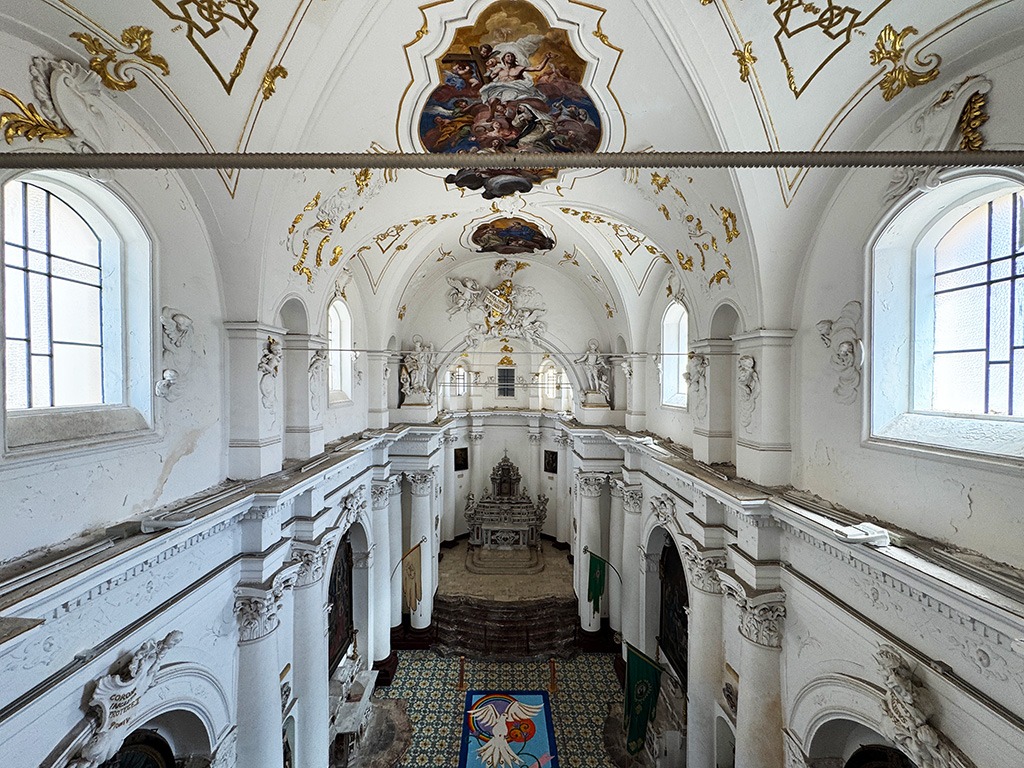
Noto’s churches, both inside and outside, are some of the pre-eminent examples of the Baroque architectural style
Over the next couple of centuries, control of Sicily and Noto passed from the Savoy royal family (from Piedmont in northwest Italy) to the Austrian Habsburgs, before returning to a cadet branch of the Spanish Bourbons, who reunited Sicily, Naples, and southern Italy as the Kingdom of the Two Sicilies in 1735. The Bourbons ruled Sicily officially until the 1860s, but had to counter various rebellions and foreign influences seeking to control the island for themselves.
Italian unification and modern Noto
Bourbon control of Noto ended in 1860 when the city rebelled, allowing the forces of Garibaldi to enter unopposed. Garibaldi held a referendum at which the people of Noto voted to join the Kingdom of Sardinia-Piedmont under the House of Savoy (who are briefly mentioned previously).
In 1861, the Kingdom of Italy was officially formed after most of the Italian peninsula had come under Savoyard control, which in turn led to the modern Italian nation.
During the 19th century, Noto continued to be recognised for its importance to Sicilian history and culture, with travellers following the Grand Tour often detouring to see the famous city and its theatre-like architecture. Thankfully, it was largely untouched by the Second World War, and through the second half of the 20th century and into the 21st Noto became increasingly popular with tourists.
In 2002, Noto, along with the towns of Caltagirone, Militello Val di Catania, Catania, Modica, Palazzolo, Ragusa and Scicli, were inscribed as a UNESCO World Heritage Site, making the Val di Noto area a must-see destination for visitors coming to southeastern Sicily.
The best time to visit Noto
Noto is a thriving town all year round, but that doesn’t mean some times of year aren’t better for visiting than others. Let’s look at what I feel are the best times to visit Noto:
May
While a very popular month with tourists looking to explore before the heat kicks in, we love coming to Noto in May as the town is alive in anticipation for summer, and the famous Infiorata di Noto flower festival is held during this month.
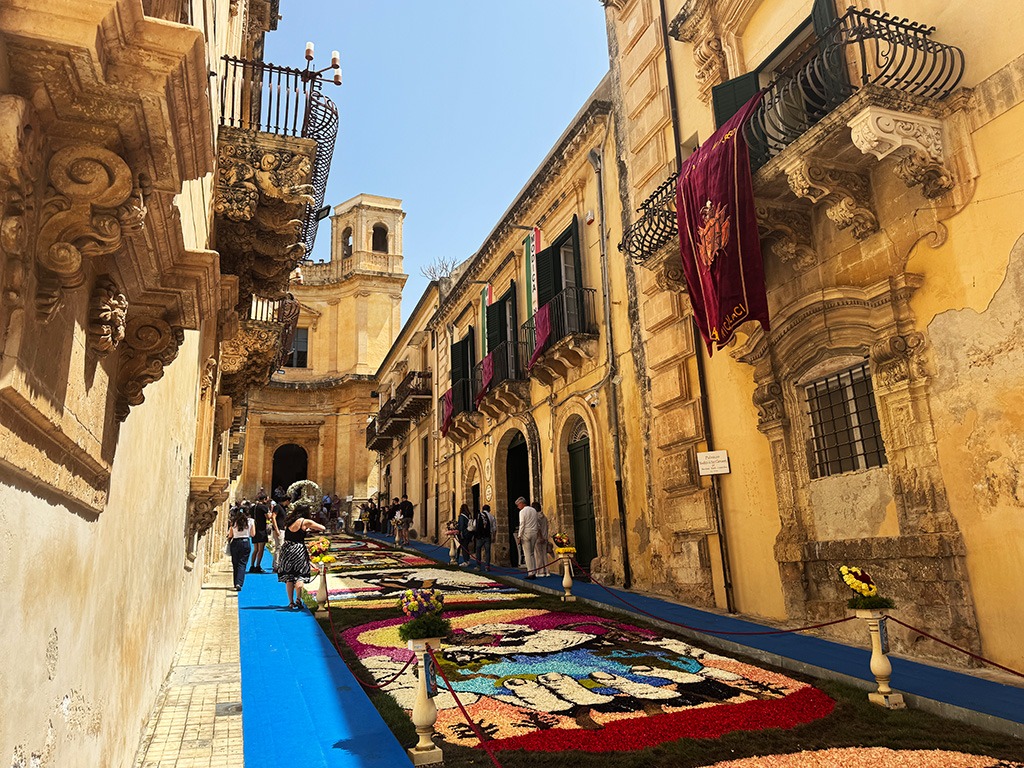
This truly one-of-a-kind event sees Via Corrado Nicolaci in the city centre (a stone’s throw from the Duomo and other key sites) transformed from a regular street into a huge outdoor work of art, adorned with works created from flowers. Seeing is believing so if you want to experience something special, May should be your first choice for when to visit Noto.
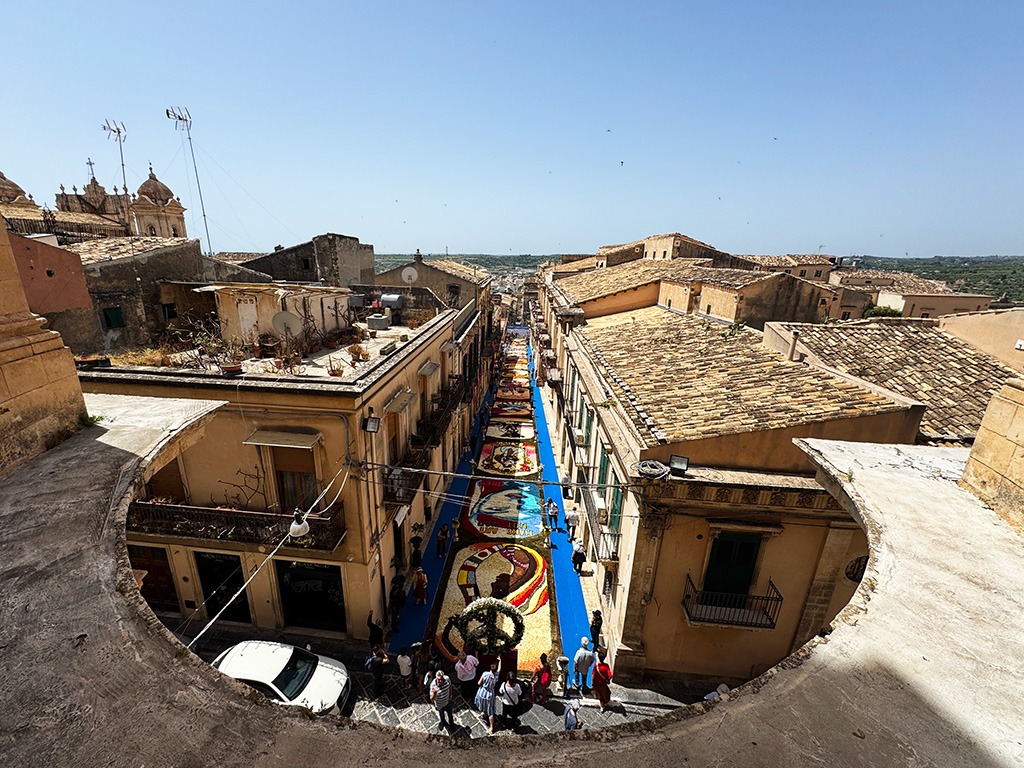
The Infiorata di Noto (seen here from the top of the Chiesa di Montevergine) is unlike any other artistic event in Italy
Temperatures in May in this part of Sicily tend to average around 20°C-25°C (70F-80F) in the daytime and dip to around 15°C (60F) in the evening and nights. The weather is generally stable, but storms can whip up from time to time so always carry a small umbrella with you!
Accommodation prices per night during May are not as high as the peak periods during the summer when Sicily fills with Italians visiting from the mainland, but are in high demand, so booking in advance when possible is highly recommended.
Late September to October
Early autumn is another fantastic time of the year to come to Noto if your priority is sightseeing in the town and wider area. While it can get busy as this is a popular point in the year for most kinds of visitors, the generally warm and stable weather makes exploring easy, and with accommodation prices not at their peak, why consider any other time of year? Well, there are reasons – let’s take a look:
Late autumn to early spring
Consider visiting between November and March if you’re looking to avoid the crowds and don’t mind that some things will be closed (as is the culture in this part of Sicily during the winter). During this period the weather is generally pretty good and accommodation prices will be lower – those that are open and available, that is.
June through to mid-September
I would not generally recommend visiting this part of Sicily between June and September unless you enjoy the heat, and are willing to be strategic with your sightseeing; getting out early and eating late to beat the high temperatures.
Daytime temperatures have been known to peak in excess of 45°C (120F) in this period, and the nights can often remain very warm which makes sleeping uncomfortable for some travellers.
There is one small window at the end of August and into the start of September that sees most Italians who are holidaying in Sicily return home (and to work), and with many schools re-opening across Europe, visitor numbers in general drop.
The weather during this period tends to be a little cooler than the summer peaks, so this combination makes it a great choice to visit Noto if you have the option.
Noto, and much of Sicily, follows the traditional rhythm of most shops and services closing in the afternoon, particularly in the summer when the heat of the day makes it unenjoyable for most people to be outside. The very first time Sara and I visited Noto in 2015 we were unaware of this, and found it to be a ghost town after lunch with just a couple of bars and gelaterie open. Therefore you should aim to visit in the mornings or evenings if you want to experience Noto properly.
How to get to Noto by air
The nearest airport to Noto is Catania–Fontanarossa Airport, around 90km away. Catania serves a wide range of routes, including numerous internal options within Italy, to and from the UK (including mine and Sara’s home city of Bristol), as well as other European destinations.
If you’re visiting Sicily from beyond Europe I’d recommend first flying to Rome Fiumicino Airport and then transferring to an internal flight to Catania. From Catania airport you have the following two options for getting to Noto:
By road
Driving from Catania airport to Noto, either independently or in a taxi, is the most direct route, taking around one hour by car. It’s a simple drive following major roads – initially along the E45 autostrada, and then the SP35. Parking in Noto is somewhat limited, but I’ve never failed to get a spot in one of the two paid (and very reasonably priced) car parks on Via Camillo Benso Conte di Cavour close to the medieval town centre.
By bus
There’s a direct connection running between the airport and Noto’s historic centre, with a journey time of around 90 minutes, and multiple departures daily. This is operated by Interbus, with a one-way ticket costing around €9. Full details, including timetables and the option to book online are available via the official website, here.

For a relatively small airport, Fontanarossa is well connected to the rest of Sicily make it a great option for arriving and departing
More options for getting to and from Noto
Train
Noto is connected to the Italian rail network with the town’s train station located around 1.5km outside of the historic centre (20 minutes on foot). The line that Noto sits on connects to nearby towns (Rosolini, Modica, Ragusa), as well as the provincial capital of Syracuse.
If you’re coming to Noto from another part of Sicily or the Italian mainland via train, you’ll first need to get to Syracuse and then take another train to Noto. Trains between Noto and Syracuse run multiple times a day, with an average journey time of around 40 minutes.
To find out more about using Italy’s efficient and reliable rail network, including tips on booking tickets, navigating major train stations and the key operators, read my detailed guide here:
Ferries and driving
You may be arriving in Sicily via ferry from the Italian mainland, crossing at Messina from Calabria (as a foot passenger or driver), or by using a longer-distance ferry from Naples (coming to Palermo), Salerno (also arriving at Messina) or possibly even Malta (arriving at the nearby port of Pozzallo). Depending on where you arrive in Sicily you’ll have different options for getting to Noto:
Driving in Italy isn’t half as bad as some of the stereotypes make out. By understanding a few fundamentals you can explore this incredible country by car, without the stress. Find out everything you need to know about getting on the road in Italy in my detailed guide here:
From Palermo
Driving from Sicily’s capital to Noto will take around 3.5 hours in a car, and take you through the majestic centre of Sicily. I’ve driven this route multiple times and each time have loved it more and more; the scenery is so vast and unspoiled it’s hard to comprehend that you’re still in Europe.
Note that there are very few places to stop on the route for snacks, bathroom breaks, etc, so make the most of any rest spots you see en route!
There is no direct public transport connection between Palermo and Noto so you’ll need to make use of multiple buses and trains – while doable in theory, it’ll take you around six to seven hours if everything goes to plan, so I wouldn’t recommend this approach unless you’re travelling with plenty of spare time.
While public transport options are available, and taxi connections plentiful, I’ve found that the best way to get around Sicily in general is by driving yourself. If you’re not coming here with your own vehicle I’d recommend a rental car for your visit so you can explore the island freely, without being restricted by bus and train timetables.
From Messina
The drive time between Messina and Noto is in the region of two hours, and tracks the E45 autostrada down Sicily’s eastern coast for most of the journey. I also love this route where you get stunning views of both Mount Etna and the Ionian Sea. This section of the autostrada is tolled, but there are far more stops to take a break.
When it comes to public transport, the best approach is to first take a train to Syracuse, and then a second train to Noto. The total journey time in this scenario is roughly four hours.
From Pozzallo
The port at Pozzallo is very simple, and offers no direct bus or train links to Noto but you can pre-book a taxi on your ferry. The journey by road, whether by taxi or driving yourself, takes around 30 minutes.
Learn more about navigating to, from and around Italy via ferry in my detailed guide. Find out how to book tickets, understand timetables and route options, and much more here:
Where to stay in and around Noto
Now that you know the history of Noto and how to get here, the next thing to decide is where to stay during your trip. There are two distinct options when it comes to choosing a base in Noto or the nearby area:
Noto city centre
Within the city of Noto itself, you’ll find a good range of small hotels, B&Bs and apartment rental options.
As the city centre isn’t particularly large, no matter where you opt to stay, you can almost guarantee that the main sights, the train station, and the best restaurants will all be within walking distance.
The quality of most establishments in the city centre is 3-4 stars, and prices are very much in line with the averages in Sicily (which are generally below the Italian average). Take a look at your options here:
For luxury travellers considering Noto as a destination, it’s worth noting that Rocco Forte is opening a new hotel in Noto later this year. Located in the iconic Palazzo Castelluccio, one of Noto’s many famous former noble palaces, it’s guaranteed to be a very special place to stay.
One important point to consider is that Noto is a very popular town with visitors, meaning that the days and nights can be busy and on the louder side for any accommodation facing the main streets.
This is especially applicable from May-September, so if you’re looking for a relaxing time while visiting the Val di Noto, consider the second option – our personal preference when in this part of Sicily…
Noto countryside (Val di Noto)
In the countryside around Noto you’ll find a number of agriturismo hotels/B&Bs, as well as small villa rentals. By opting to stay outside of the city, you’ll be able to enjoy the rustic scenery of this part of Sicily, and will generally find higher quality accommodation on offer.
Whenever Sara and I visit this area, we always (seriously, always) stay at Masseria degli Ulivi, around 12km from Noto. We first stayed here in 2015 and immediately fell in love with the secluded location, thoughtfully renovated, yet rustic, olive farm buildings, and the amazing on-site restaurant.
Most recently, we stayed here twice during 2025 and can attest that the quality has only improved, while the rates have remained very fair. If you’re looking for a relaxing base in Sicily, look no further find out more here.
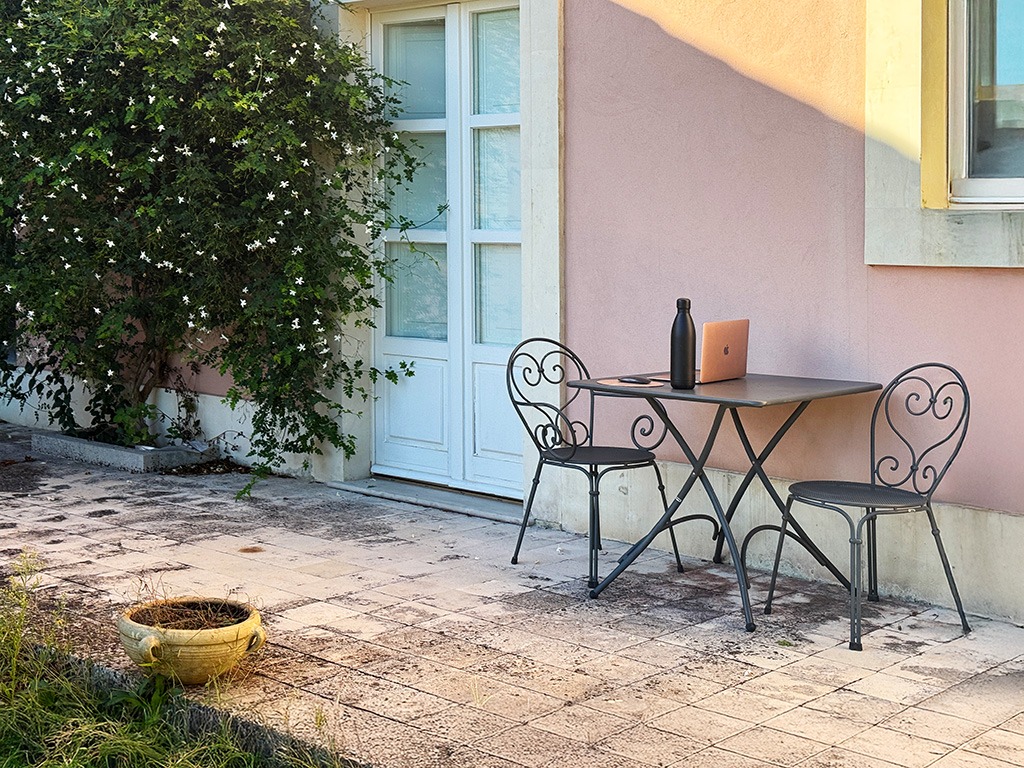
A large part of this website has been written at the Masseria degli Ulivi where I find the peaceful surroundings inspiring
One potential downside of staying outside Noto town is that getting to and from the centre can be restrictive. Having access to your own vehicle is almost a necessity, unless you’re happy to spend a large amount on taxis and transfers. Conversely, if you’re not planning to explore the area and want to focus on relaxing, this is certainly the best option for you.
If you’re interested in understand more about the best area’s of Sicily to stay in, read this detailed guide.
What to do in Noto, Sicily, and the surrounding area
Noto and the nearby area offer visitors plenty of things to do. Here’s a breakdown of the key activities including my favourites and recommendations:
History and culture
Most people who come to Noto do so to see the town’s famous Baroque architecture and landmarks, constructed after the 1693 earthquake. Most of the must-see sites are located along, or very close to, the town’s main thoroughfare, Corso Vittorio Emanuele. Starting at the eastern end and heading west, don’t miss:
San Francesco d’Assisi all’Immacolata
I consider this unassuming church the perfect introduction to Noto’s dramatic architectural style, as it fits perfectly into the surrounding urban landscape, yet dominates your view when you look at it from street level.
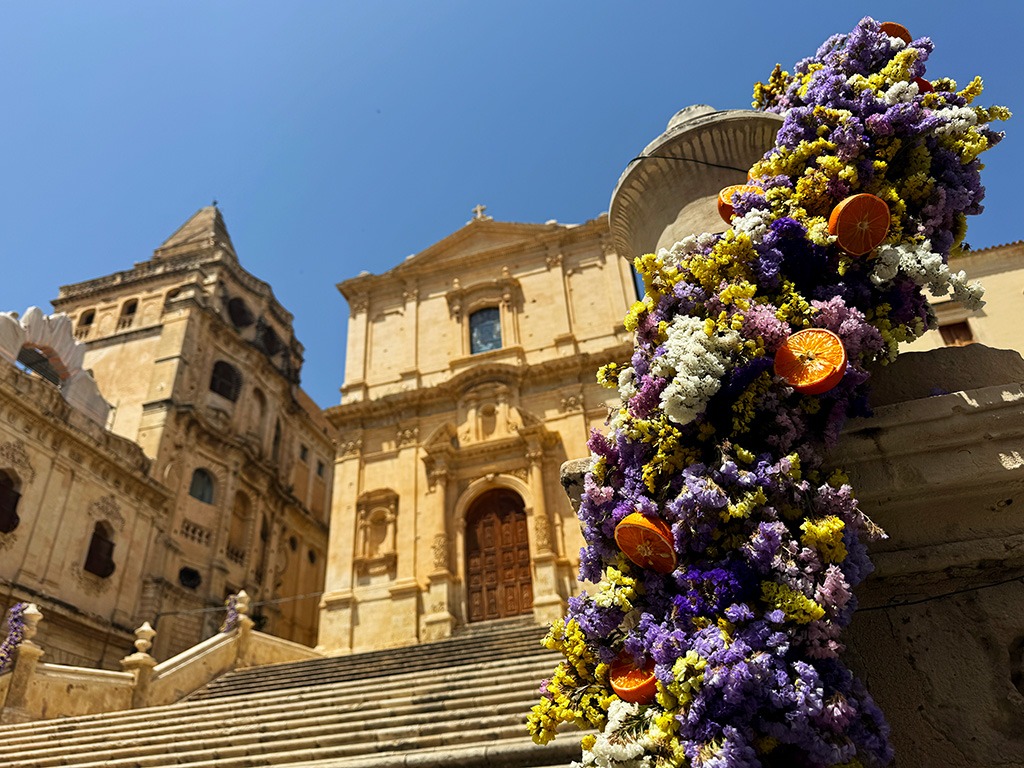
If you’re visiting during May, you can expect the exterior of this church to be beautifully decorated with flowers as part of the Infiorata festival
Noto Cathedral of San Nicolò
Noto’s Duomo is the city’s icon, and the crown jewel of the historic centre. We’ve found that getting inside the Duomo is hit or miss due to regular masses and the fact that it’s a popular spot for weddings. This said, we always try, and we recommend you give it a go while you’re here!
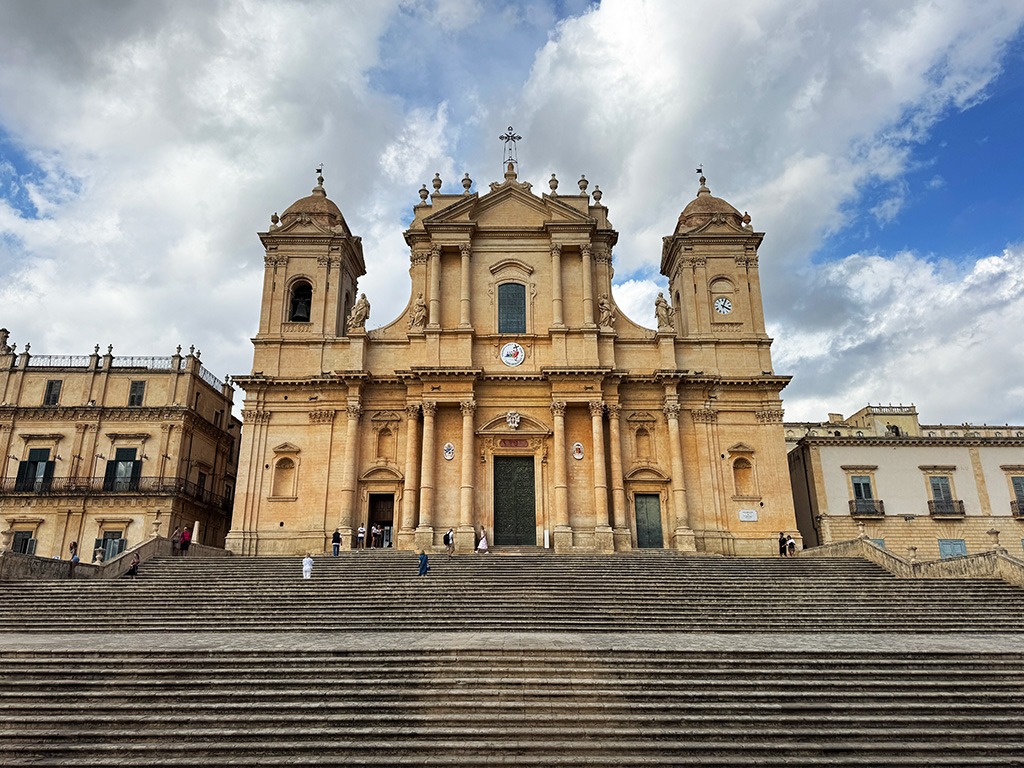
The best view of this Baroque beauty is from the steps leading up to the entrance of Palazzo Ducezio (Noto’s town hall) directly opposite the cathedral.
Church of San Carlo al Corso
Pop inside this church on the corner of Piazza del Duomo and take the steps up the bell tower (for a small fee) where you’ll be rewarded with an epic panoramic view of the historic centre of Noto and surrounding countryside.
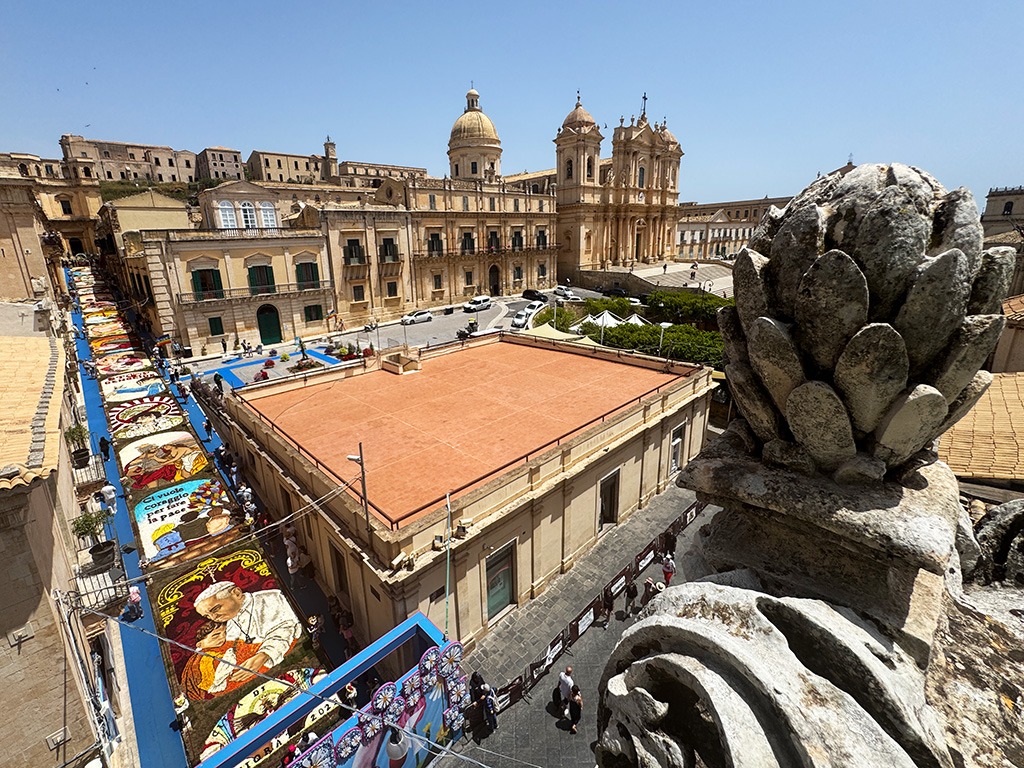
I especially recommend heading up the bell tower of San Carlo al Corso when the Infiorata di Noto festival is on, as you can get a bird’s eye view of the artwork on Via Corrado Nicolaci below
Palazzo Nicolaci di Villadorata
Located on Via Corrado Nicolaci, the street now famous for the Infiorata event, you’ll find this expansive Sicilian palace which was home to the Nicolaci family between 1737 and 1989. While the inside is remarkable for its frescoes and antiques, it’s the outside that I love; take some time to appreciate the intricate wrought iron balconies that adorn the exterior of the building.
Private Syracuse and Noto Tour | Full Day Experience
Spend a day experiencing two sides of south-eastern Sicily, pairing Syracuse’s extraordinary ancient sites with the honey-coloured Baroque splendour of Noto.

Private Syracuse and Noto Tour | Full Day Experience
Spend a day experiencing two sides of south-eastern Sicily, pairing Syracuse’s extraordinary ancient sites with the honey-coloured Baroque splendour of Noto.

Shopping
One of our favourite pastimes in Noto is shopping as the town centre is full of great stores. If you’re looking for the perfect souvenir to remember your time in Sicily or for a thoughtful gift for someone special, you’re in luck.
Skip the cheap, low-quality tourist shops, and pay a visit to Ortigia at Corso Vittorio Emanuele 97. This brand, which started out on the island district of Ortigia in nearby Syracuse (hence the name), is renowned throughout Italy for its high-quality, gender-neutral toiletries and skincare products that make use of Sicily’s rich flora and perfumed fruits.
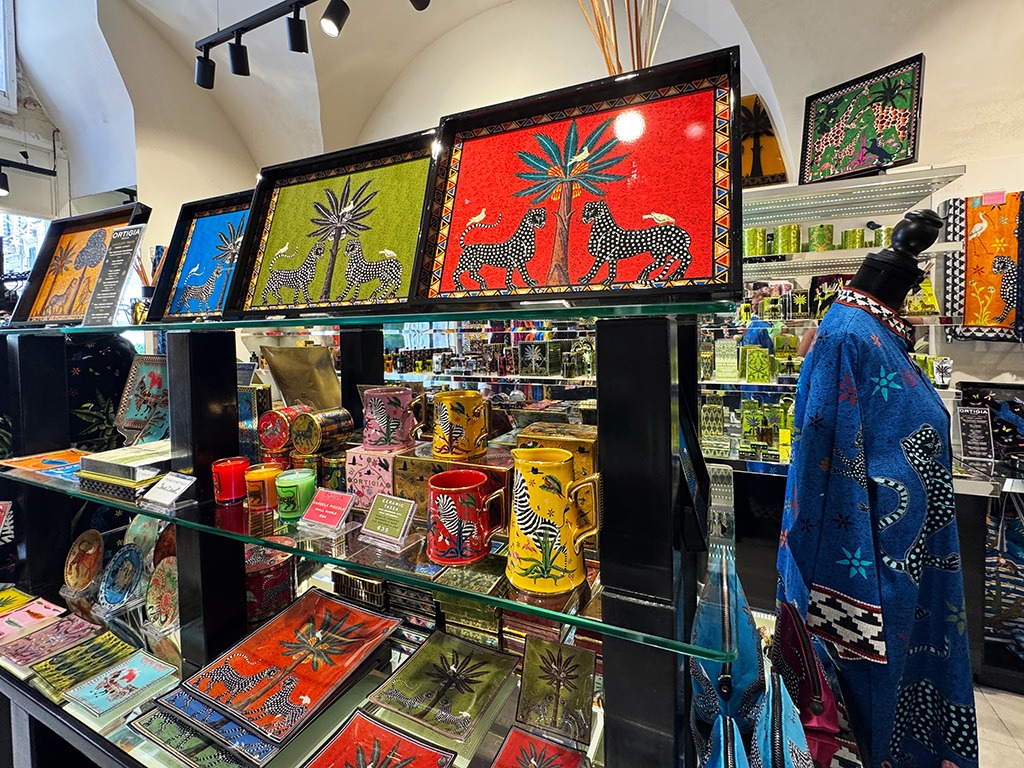
Ortigia also stocks a range of beautifully-designed homeware items and fashion pieces that draw on Sicily’s distinct design heritage
It’s also common to find markets on Noto with stalls offering local foods to enjoy, artisan creations such as jewellery, as well as antiques and more.
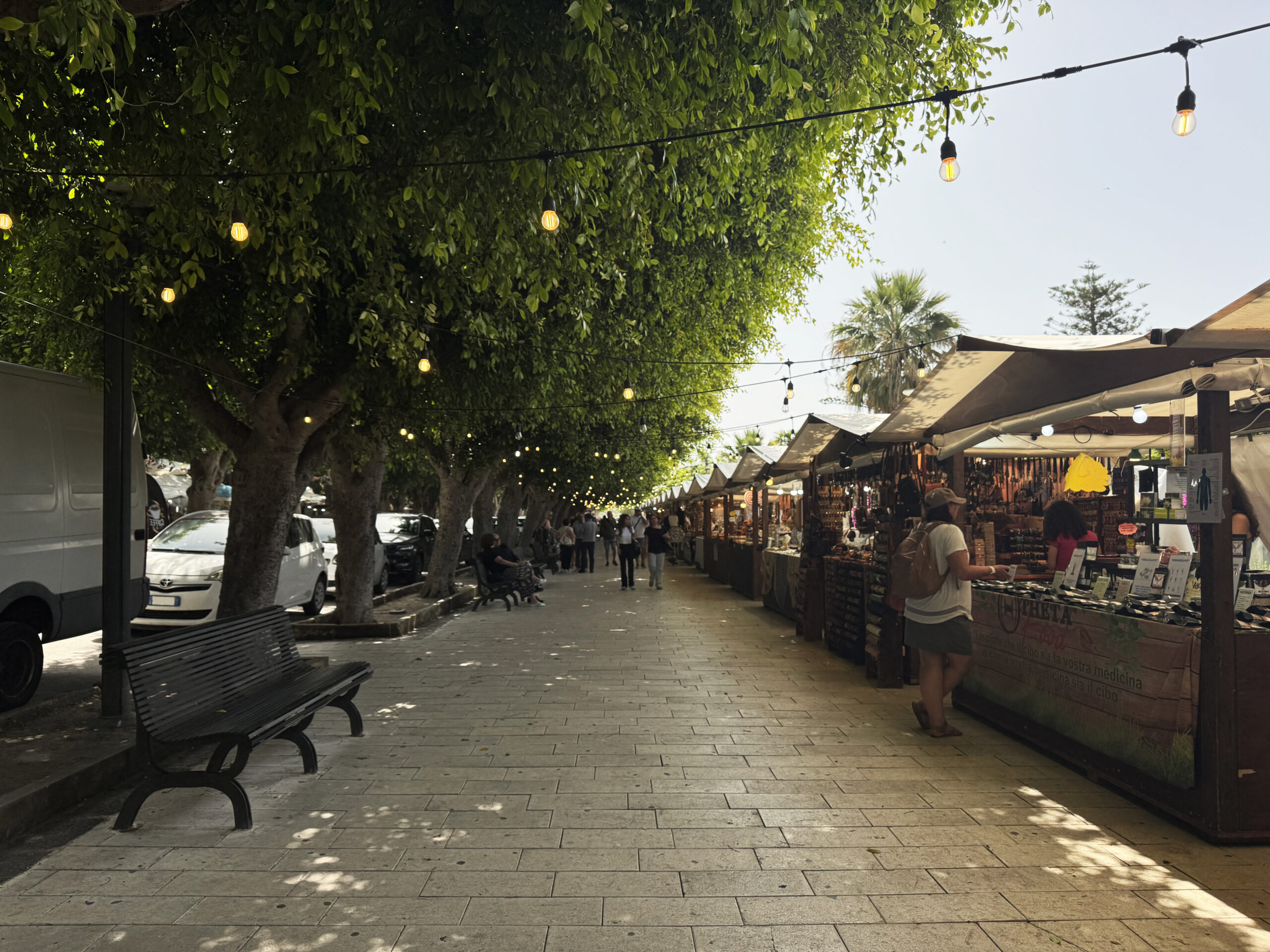
Be sure to check the park area at the eastern end of Corso Vittorio Emanuele where you’ll often find stalls (especially through the warmer months) offering everything from locally made jewellery through to traditional Sicilian food and drink
Let’s go to the beach
While this part of Sicily isn’t necessarily known for its sandy stretches in the same way as other areas (such as Cefalù or Taormina), that doesn’t mean you can’t get to the coast easily from Noto, where you’ll find some beautiful beaches.
The most convenient option for a beach trip from Noto where you can enjoy the crystal-clear waters of the Mediterranean and Ionian seas is to make your way to the nearby town of Avola. Connected to Noto via the same train line that goes to Syracuse, getting here via public transport is just as straightforward as driving, and means you can enjoy a spritz or two at the beach! From Avola train station, you can either walk, take a taxi or jump on a local bus to travel the 2km to the town’s excellent beaches.
Day trips
As Noto is centrally located and well connected by road and public transport, why not use it as a base to explore more of Sicily? Here are my top three day trips based on direct experience:
The other Val di Noto Baroque towns of Modica and Ragusa
Like Noto, these towns were rebuilt following the devastating earthquake of 1693 and feature even more opulent and striking examples of Sicilian Baroque architecture. Each town is unique and worthy of your time, with interesting churches to admire (inside and out), more cultural sites, and fantastic bars and restaurants.
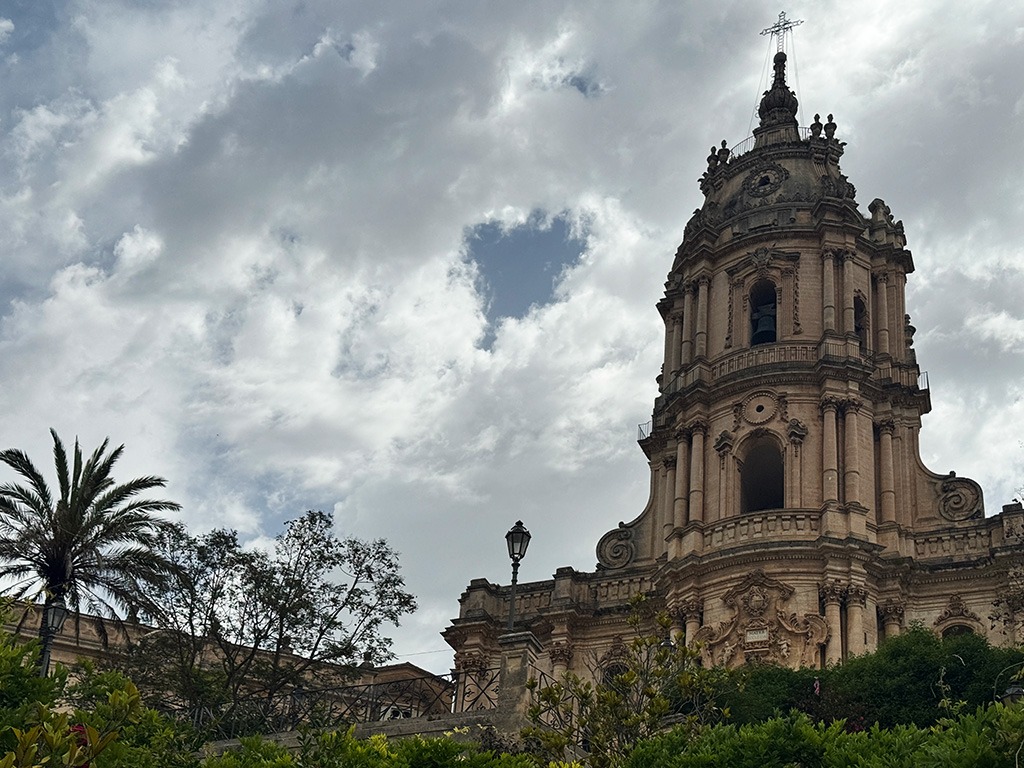
The churches of Modica and Ragusa are just as striking as Noto’s
Piazza Armerina
If you have access to a car during your time in Noto, or enjoy guided tours, take a trip deep into the Sicilian countryside to visit the remains of a sprawling ancient Roman villa. What makes this villa particularly special are the mosaics that are still preserved in situ, and they’re as vivid now as they were when they were created nearly 2000 years ago for the wealthy owner.
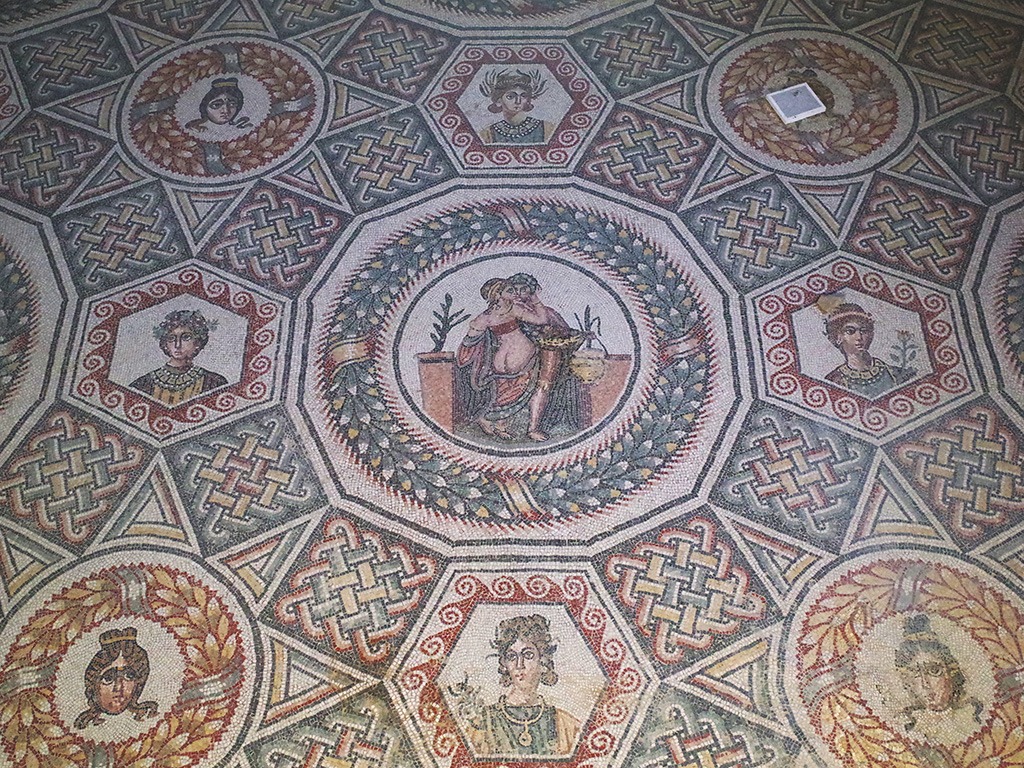
There aren’t many places that you can see such well-preserved ancient Roman mosaics where they were originally laid
Siracusa & Ortigia
Syracuse is the provincial capital and home to some of the island’s top historical sites such as the Neapolis archaeological park, as well as the picturesque and historic district of Ortigia. Layers representing thousands of years of history are still evident today where ancient remains mix with the more recent Baroque architecture to create what I believe is one of the most beautiful districts in Italy – Ortigia.
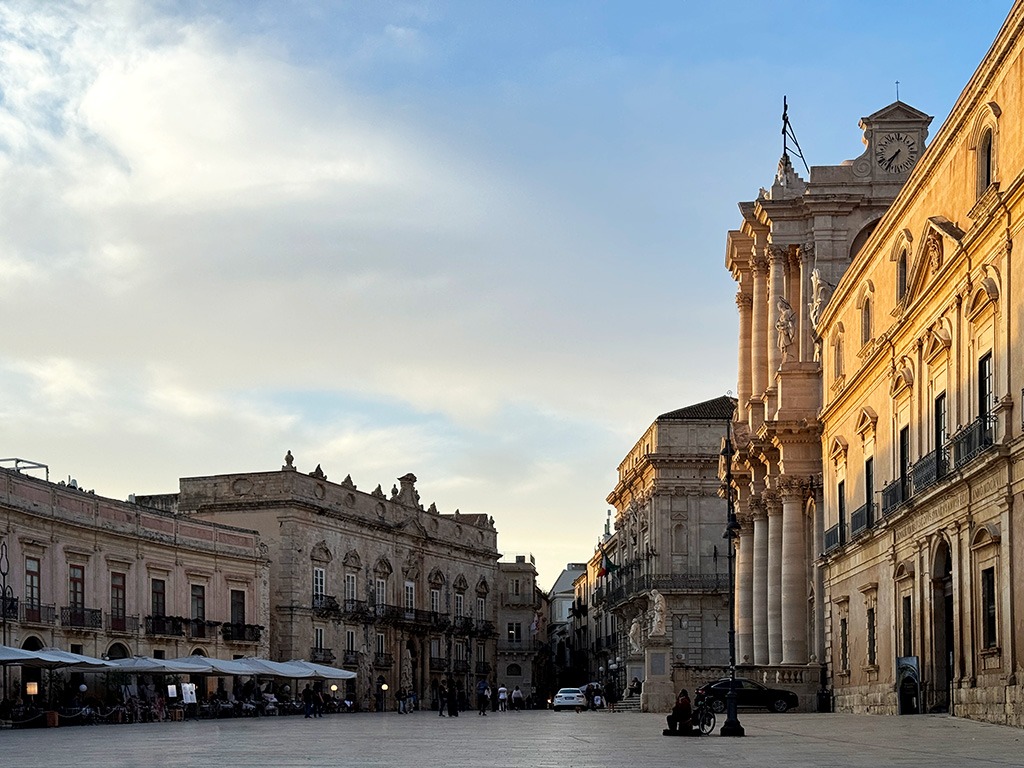
Make the effort to visit Ortigia at sunset and you’ll be entranced by the colours of the city’s sky, sea and stone
Eating and drinking in Noto, and the surrounding countryside
In our experience, the entire town of Noto is full of great places to eat and drink, as is the nearby countryside. Competition is fierce due to limited space, and this means quality is high almost everywhere. It’s hard to go wrong when selecting somewhere for breakfast, lunch, dinner, or what is my favourite meal of the day, aperitivo.
Here are our go-to places in and near Noto to get you started – and salivating with anticipation:
For breakfast
Just a stone’s throw from the famous Caffè Sicilia, there’s a bar that we much prefer over its famous neighbour. Tucked away from the hustle and bustle of Corso Vittorio Emanuele II, Caffè Costanzo is as traditional as traditional Sicilian bars get. Inside you’ll find dark wood panelling and frescoes, while the outside features comfortable seating that makes the perfect place for people watching. Beyond the classic Italian pastries you’ll find Sicilian specialities on offer, such as martorana and granita.
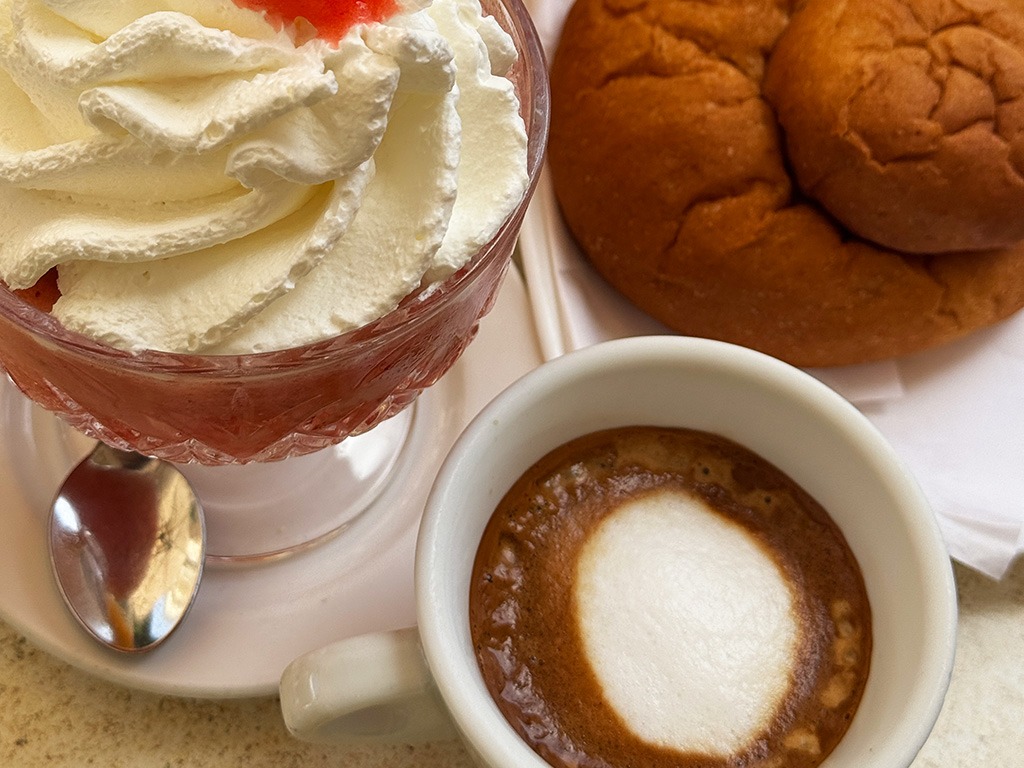
Regardless of the time of day, my go-to order at Caffè Costanzo is toasted almond granita (topped with whipped cream for extra indulgence) with an espresso
For lunch
Sara and I often seek out new places when exploring, and somewhere we found recently in Noto that we really enjoyed was Il Libertyno. This small bistro is ideally situated just around the corner from Noto’s main sites, and offers classic Sicilian and Italian dishes, as well as modern interpretations. We love the informal environment and friendly service, and we’re looking forward to returning this year.
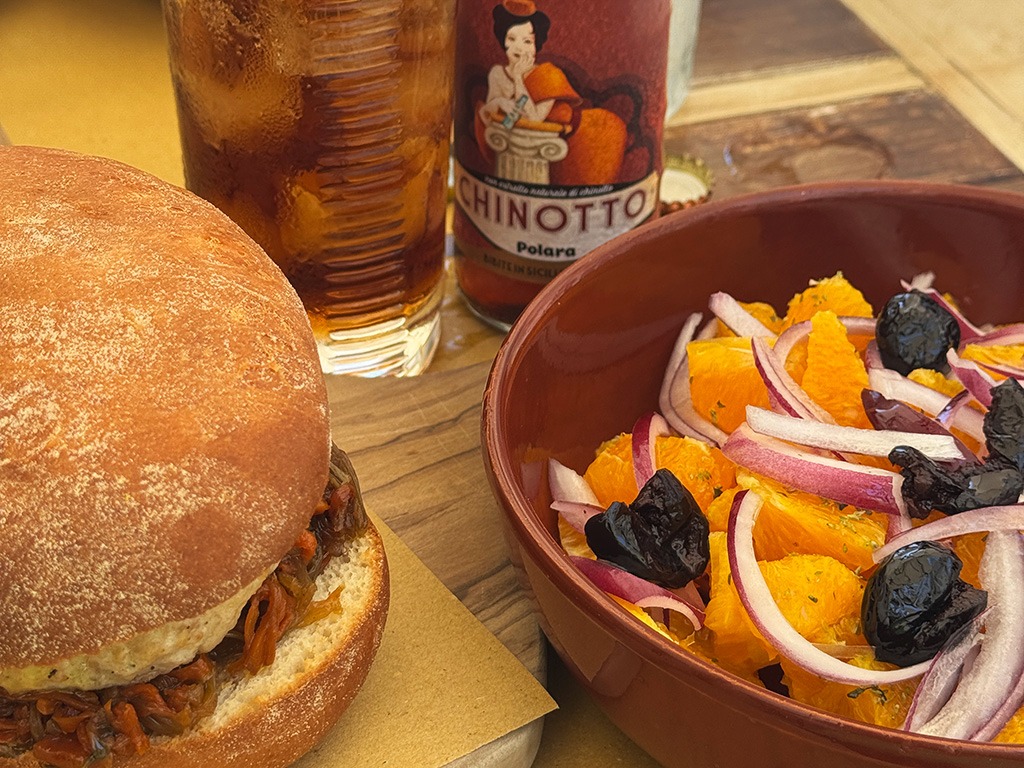
We love Libertyno’s menu that combines Sicilian classics with modern favourites
For aperitivo
If you’re like Sara and I, after a big day of sightseeing you’ll likely want to enjoy a drink before dinner. The streets of Noto are peppered with bars and cafes where you can enjoy a spritz, but we’d encourage you to venture very slightly off the main thoroughfares, and check out Enoteca Val di Noto.
At this wine bar you’ll find a great range of local wines, including the iconic (and my all-time top red wine), Nero d’Avola which is produced in this area. Grab a glass (or a bottle), take a seat in their picturesque courtyard, and embrace Sicily’s la vita lenta – the slow life.
For dinner
Our go-to place for dinner when in or near Noto is the restaurant at the Masseria degli Ulivi, an agriturismo hotel located around 12km from Noto. Hand on heart, the restaurant here has been in my top five places to eat in Italy for over 10 years. The quality of the produce, almost all of it sourced locally, combined with the presentation and service makes dining here a truly memorable experience.
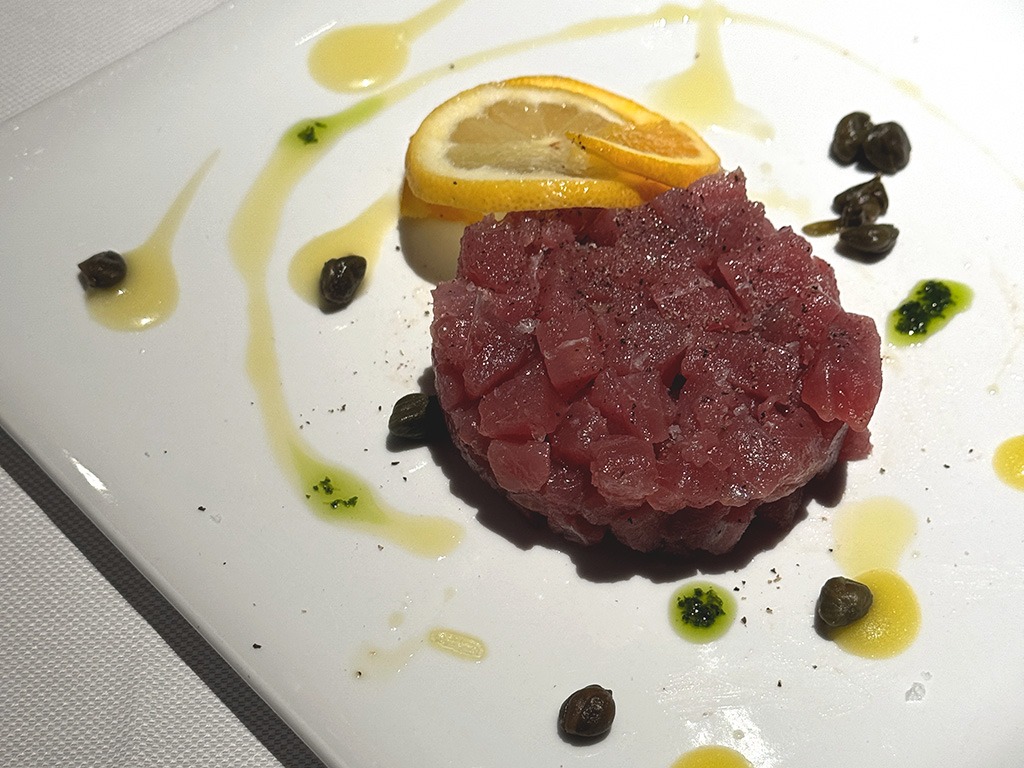
Please forgive the quality of this photo, but believe me when I say that this steak tartare at the Masseria degli Ulivi was one of the best I’ve ever eaten (it’s a go-to dish for me)
To wrap up
I hope this introduction to Noto has helped you decide whether visiting the Baroque city is right for you, and if so, given you the information you need to plan your perfect trip. Don’t hesitate to reach out with any questions about visiting Noto, the wider Val di Noto area, or anywhere else in Italy.