
By: Warren George
Published: October 20, 2025
Last updated: April 23, 2026
Alghero, on the west coast of northern Sardinia, is my favourite place on the island. And, having stayed here countless times since 2018, I can confidently share in this guide to Alghero everything you need to know about visiting. This small town offers visitors a bit of everything; beautiful nature and scenery, fascinating culture and history, delicious food and drink – what more could you want?
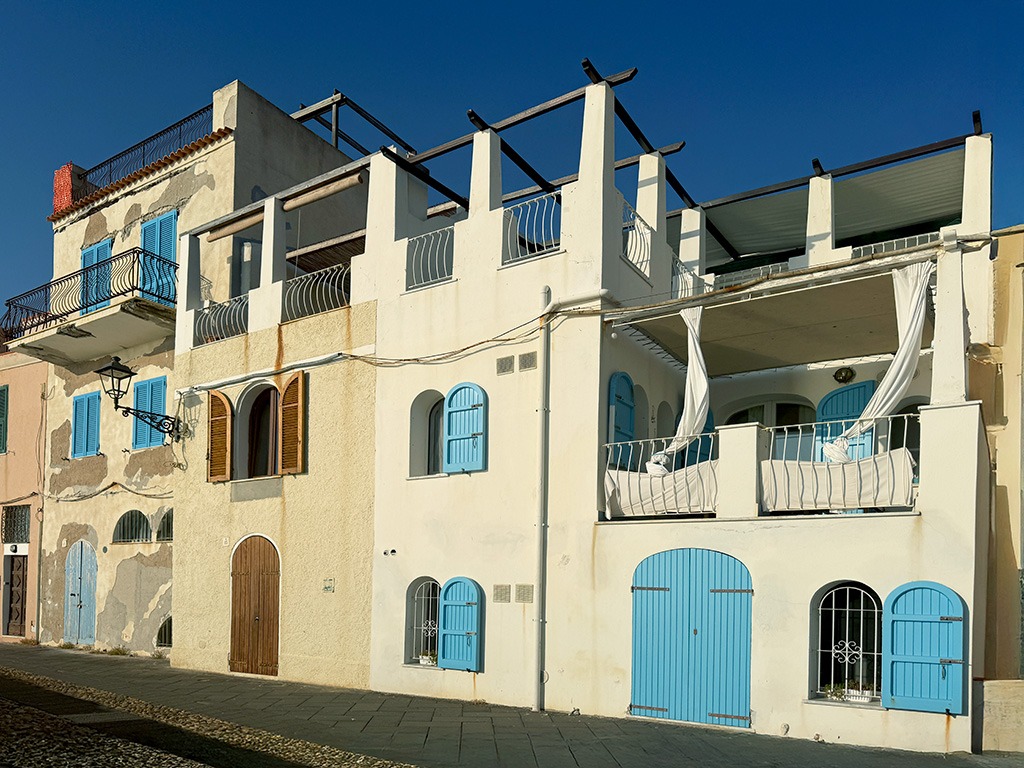
Alghero with its special mix of Italian and Catalan cultures is my favourite place in Sardinia, and one of my top destinations anywhere in Italy
If I was planning a move to Sardinia, Alghero would be my first choice. I love this town’s unique history and culture, amazing food and wine scene, and the area’s natural beauty. I’ve visited here by myself, with Sara, and with friends, and therefore have experienced several different sides of Alghero. In this guide I’ll share with you my experiences and recommendations, covering:
A brief history of Alghero
The area around Alghero is rich with evidence of human habitation stretching back more than 5,000 years. Like much of Sardinia, this part of the island was inhabited during pre-antiquity by the Nuragic people, who lived here around 1500 BCE and built the distinctive nuraghe stone towers still visible today.
The Nuragic civilisation was ultimately assimilated by the Phoenicians – a seafaring, colonising people originally from the area of modern-day Lebanon – who arrived in Sardinia in the 8th century BCE.
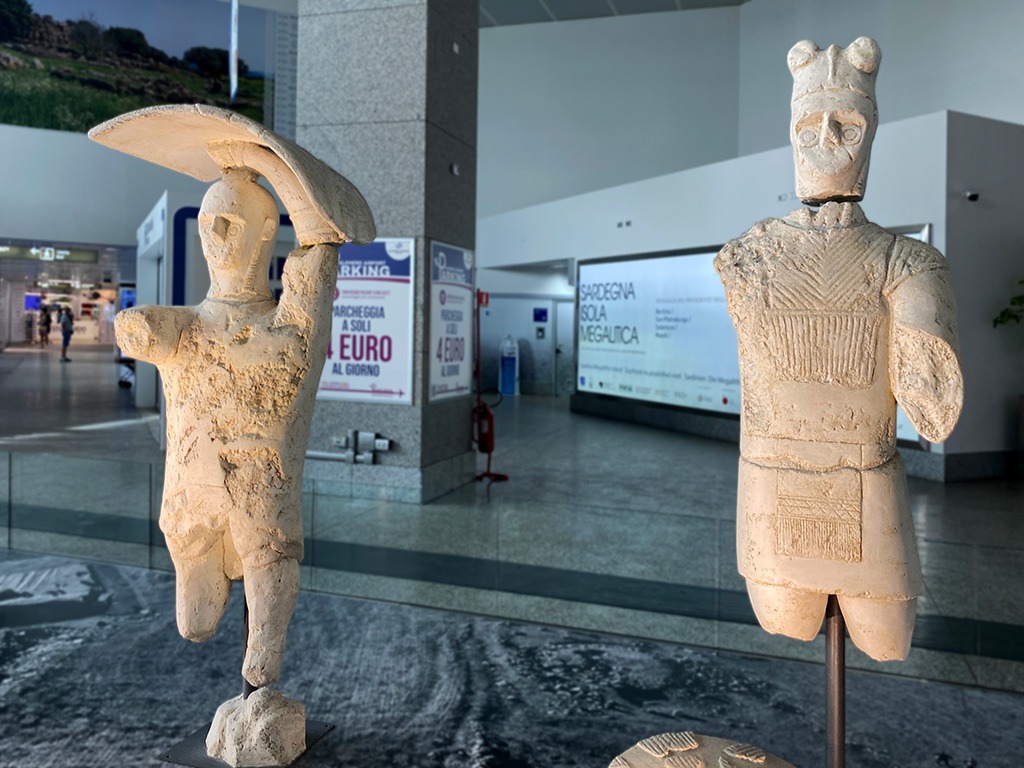
Remnants of Sardinia’s past are displayed at Alghero Fertilia airport for those interested in understanding more about the island’s history
Antiquity & Early Middle Ages
In the following centuries, Sardinia came under the control of the Carthaginians (themselves descended from Phoenician colonists), as well as the Etruscans from the Italian mainland. Shortly after Rome’s victory over Carthage in the First Punic War (264–241 BCE), the Romans took control of Sardinia, ruling it consistently until the middle of the first millennium CE.
For several centuries after the fall of the Western Roman Empire, control of Sardinia shifted between the Eastern Roman (Byzantine) Empire and local independent kingdoms known as giudicati (judgeships). During this period, the area around Alghero was frequently targeted by Berber and Moorish pirate raids.
Disputed Control
The town of Alghero was officially founded in 1102, when the Doria family, nobles from Genoa, fortified an existing fishing village to protect it from pirate attacks and assert their claim over the area. The name Alghero is thought to derive from the Latin word for seaweed, aleguerium, referencing the seaweed commonly found in the surrounding waters.
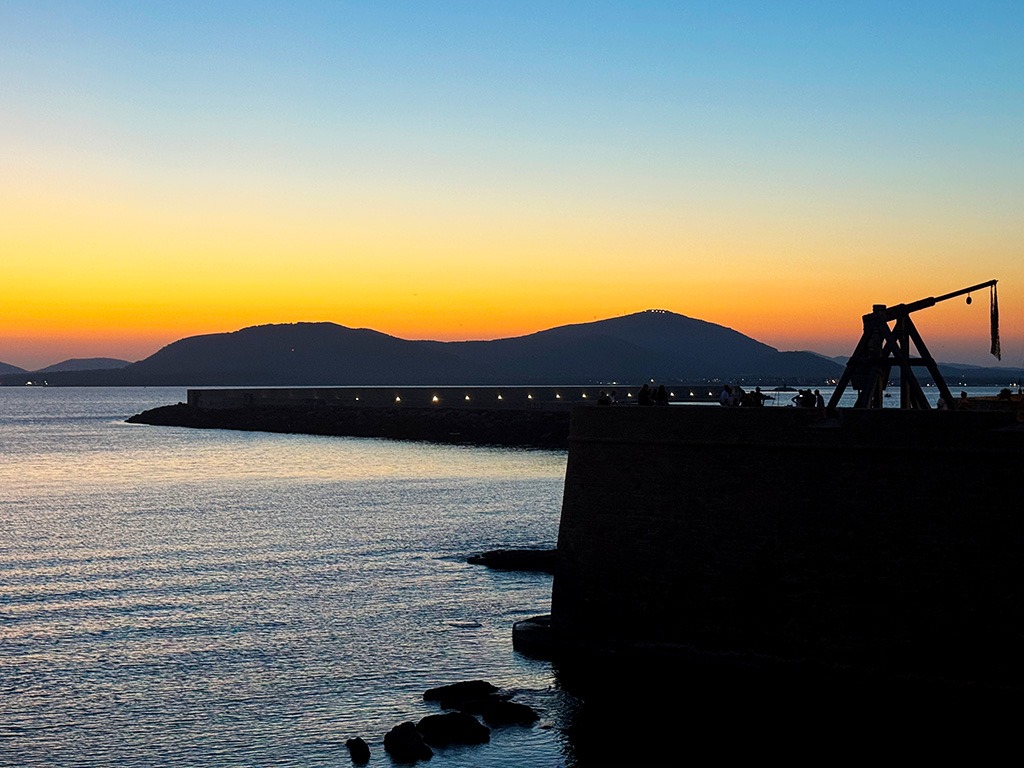
Alghero’s strategic value was recognised by multiple competing powers, who fought for control of the town for centuries
Over the next two centuries, both the Republic of Pisa (from Tuscany) and the Kingdom of Aragon (from Catalonia in Spain) contested Genoese control of Alghero. The Aragonese ultimately prevailed, and the town – along with the rest of Sardinia and much of southern Italy, including Naples and Sicily – fell under Aragonese and then Spanish rule, which lasted until the early 18th century.
During this period of Iberian rule, Spanish and Catalan customs, cuisine, and language were introduced to Alghero. These influences remain visible today; the old town is often described as a ‘little Barcelona’, with elements of Catalan culture and architecture, and some locals still speak a variant of Catalan dialect known as Alguerès.
Return to Italian rule
After the War of the Spanish Succession, control of Sardinia passed to the House of Savoy in 1720. The Savoyards would later lead the unification of Italy in the 19th century.
Since Italian unification, Alghero has enjoyed a period of relative peace and prosperity. In the 1930s, the city expanded, including the creation of the nearby town of Fertilia as part of Fascist-era land reclamation projects. Alghero suffered little damage during World War II.
From the mid-20th century onwards, tourism – particularly cultural and heritage tourism – has become a major part of the local economy. Efforts continue to preserve the area’s unique Catalan heritage, along with its archaeological sites and traditional customs.
Best time to visit Alghero
If you’re considering a trip to Alghero, you may be wondering what time of year to visit. The first thing to consider is that this Sardinian town is mostly seasonal, meaning that it’s quiet during the cooler months, and more lively during the warmer points of the year.
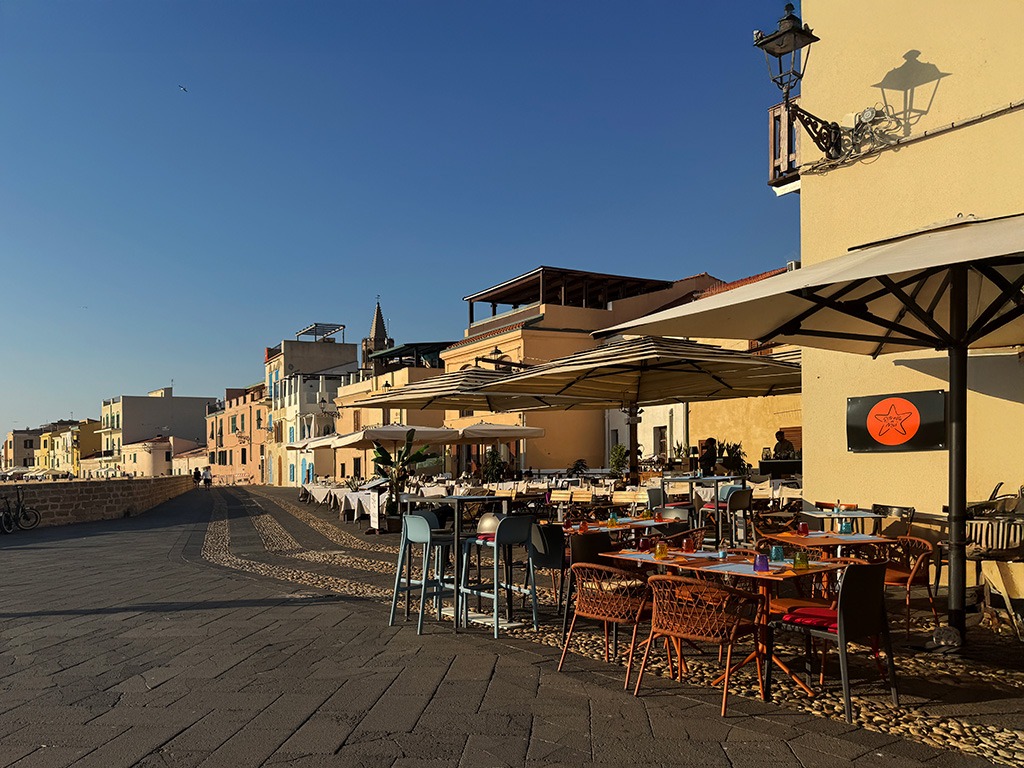
Alghero isn’t on the tourist radar in the same way that other destinations in Italy are, meaning that even during the height of summer, the town feels relaxed
This said, it’s a real town, with locals living and working here all year round, meaning you can visit at any time of year. Where you can stay and what you can do here will depend on when you visit Alghero, so let’s take a look at the main options available:
November-April
This is the ‘off season’ in Alghero, where you’ll find accommodation options are limited, and activities are subject to the weather. Alghero’s museums, shops and restaurants will, for the most part, be open, and you can access the free stretches of beach. You can also explore the nearby area more freely in the cooler weather, when hiking or cycling are at their most enjoyable.
May-October
If the above is ‘off season’, this is ‘on season’. From May, the majority of the stabilimenti (beach clubs) officially open, and remain active through to the end of October. All accommodation options will be available, as will all activities such as boat trips and kayak rental. During June, July, and August you can expect the town and surrounding area to become busy, so it’s advisable to book ahead for accommodation, activities, and transport – including tours, restaurants, taxis and car hire.
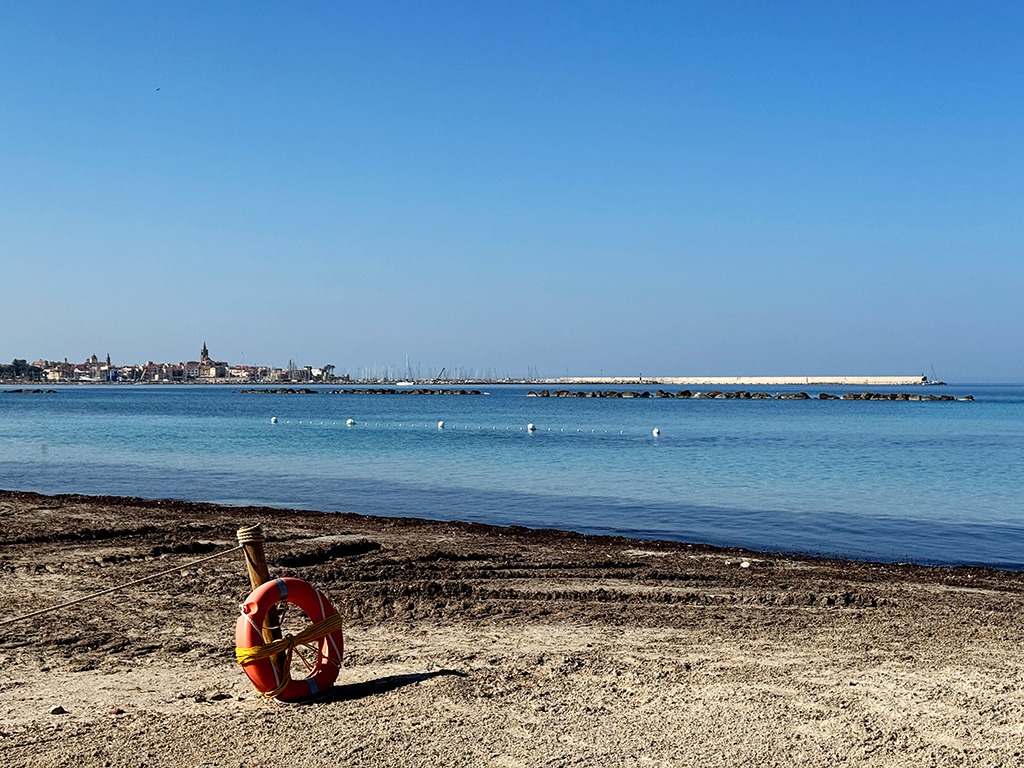
Alghero’s famous beach is accessible all year round
My recommendation
If I had to choose the best time of year to visit Alghero it would be in May, or September, during which times you can enjoy the fantastic Sardinian weather, without the crowds of the summer.
Getting to Alghero
Arriving in Alghero is simple if you are coming from within Italy, the EU, or the UK, as there is a small international airport here (full name: Alghero Fertilia airport, AHO) located roughly 20-30 minutes outside of the main town by road.
If you are coming from further afield, generally the best option for getting here would be to first fly to Rome Fiumicino airport (FCO) and then take one of the many flights connecting to Aeroporto di Alghero.
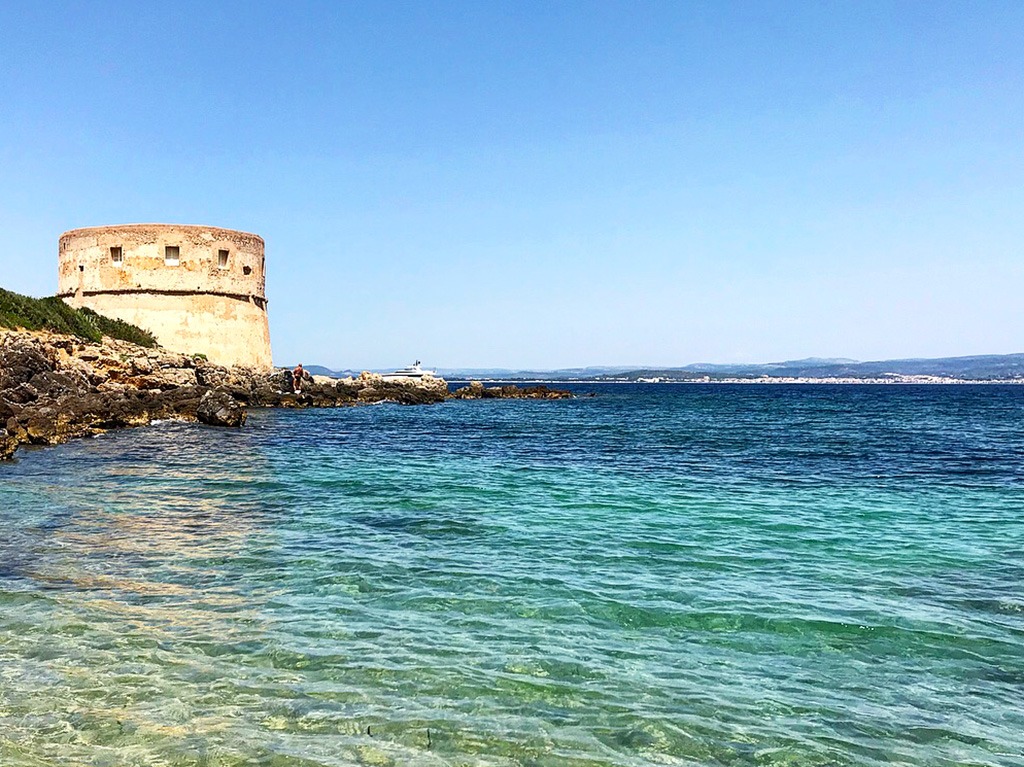
Getting to Alghero may take a little more effort, but these efforts will be rewarded with spectacular scenery, great food and drink scene as well as fascinating history
Of course, driving to Alghero is another option; within Sardinia you’ll want to head to the north-west corner, using Google Maps or following signs for Sassari. If you’re starting your journey in mainland Italy or Europe, you’ll need to get to Livorno ferry port in Tuscany or Civitavecchia in Lazio on the Italian mainland before taking a car ferry to Olbia (eastern coast) or Cagliari (southern coast), respectively.
You can also reach Alghero by train within Sardinia, where the station is connected to the provincial capital of this part of Sardinia, Sassari. Sassari in turn is connected to other parts of Sardinia including Olbia. If you plan to travel to Alghero via train I would recommend following the timetables closely, as trains can be infrequent, and in the summer months, very busy.
To find out more about using Italy’s efficient and reliable rail network, including tips on booking tickets, navigating major train stations and the key operators, read my detailed guide here:
Where to stay in Alghero
Alghero is relatively small but that doesn’t mean there isn’t plenty of choice when it comes to accommodation.
When considering where to stay, there are two main options to choose from – let me share both of these with you, plus my personal recommendations for hotels and apartment rentals:
Option 1 – Alghero town
The main town of Alghero is split into two distinct parts; the historic centre and the modern suburbs. Both of these areas offer plenty of choice for accommodation, where you’ll find a handful of traditional hotels, a large range of B&Bs, and countless apartment rentals.
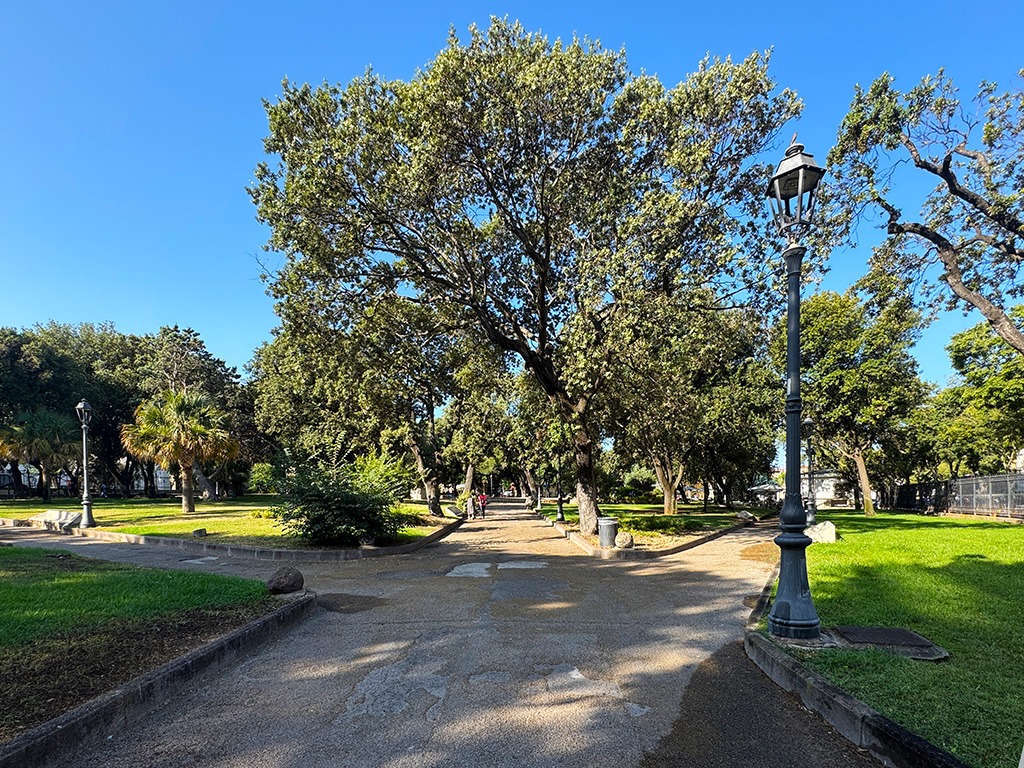
Giardini Giuseppe Manno is a great central location to start your accommodation search, providing easy access to the historic center and town’s beaches
Choosing the right area in the town for your trip will depend on what you want to do:
- If enjoying the history and Sardinian culture of Alghero is top of your list, or the town’s food and drink scene is your priority, look for somewhere in the centro storico, focusing your search around Giardini Giuseppe Manno. This will give you immediate access to the town’s excellent restaurants, bars, and shops.
- Beach goers and adventure-seekers should consider staying a little distance out of the immediate centre in La Pietraia neighbourhood. By basing yourself here you will have quick access to the numerous beach clubs in Alghero, the bus link to Fertilia, and be within walking distance of the train station.
- If you’re looking for budget-conscious options, or are not sure what you want to do during your time in Alghero, stay in the area of Pivarada just outside of the historic centre. Staying here is generally cheaper and still offers easy access to the old town, beaches, and beyond.
Option 2 – Near Alghero in the Sardinian countryside
Staying near Alghero in the countryside is a great option if you are coming here with a car, as a family, or are looking to explore the wider area more.
In the area around Alghero you’ll find a lot of ‘agriturismo’ options where you can stay surrounded by nature and enjoy some home-cooked Sardinian food. The first time I came to this area in 2018 I stayed at Agriturismo Casale Degli Ulivi Alghero and loved it – the simple rooms and authentic local meals made me really feel at home!
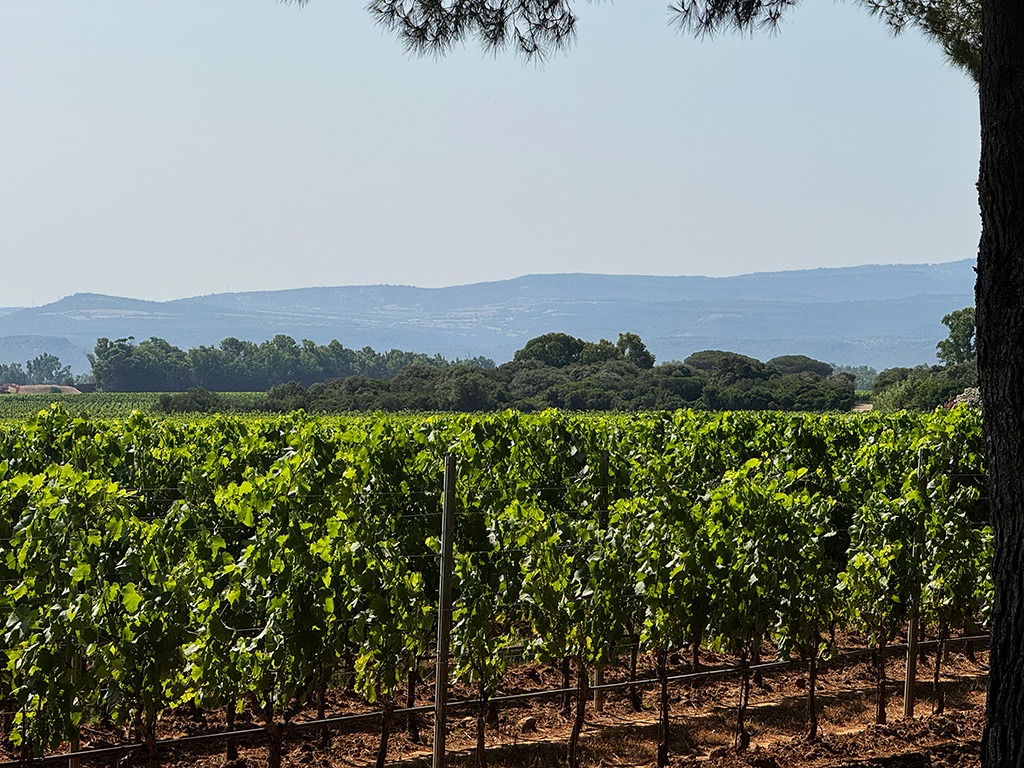
Wine lovers should consider staying at the famous Sella & Mosca vineyard, just outside of Alghero (and close to the airport)
Another great option near Alghero is Sella & Mosca winery who have a small number of rooms for guests. Staying here means you’ll be able to enjoy some of Sardinia’s best wines and food (in my opinion) without needing to worry about taxis or driving.
You’ll also find several options for camping and spaces for camper vans near Alghero.
My favourite place(s) to stay in Alghero
When Sara and I visit Alghero it’s usually to enjoy the historic centre and amazing food, and we will usually spend a little bit of time at the beach or near Fertilia for kayaking – more about both of these activities below.
As such we usually stay in the centre of Alghero, described previously. Recently we stayed at I Fiori which was the perfect base. We had plenty of space (we don’t travel lightly!), secure private parking, and two beautiful roof terraces (one with a sea view) for sunset drinks.
If I Fiori isn’t available, check out Claudia’s Home 2, especially if you are travelling as a family or small group. We have stayed here with friends previously and loved the large courtyard and barbecue set-up!
Transport and getting around in Alghero
If you opt to stay in the main town of Alghero you can comfortably walk to all of the immediate major points of interest including the historic centre and beaches. The town is mostly flat – making it also a great location for cycling – with some small inclines and the occasional set of steps providing access to the city’s famous sea walls.
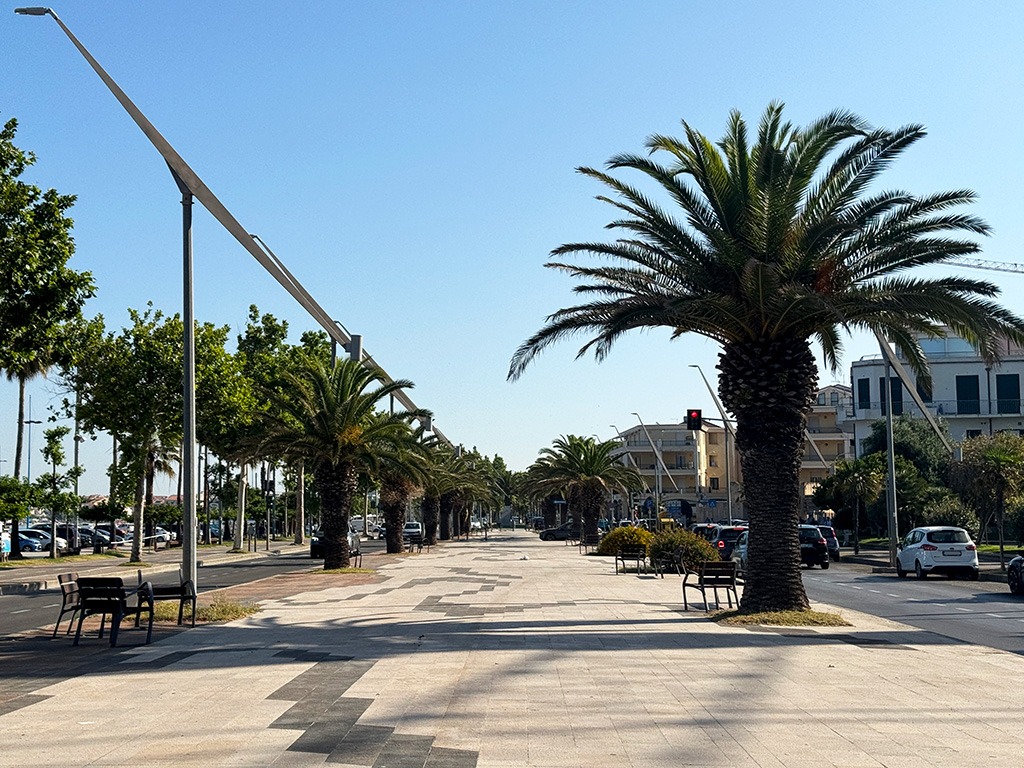
Alghero’s seafront ‘lungomare’ is wide, flat and completely pedestrianised making walking, jogging or cycling along it a nice experience at any time of year
The suburbs and area around Alghero are served by a small but efficient bus network. You can buy tickets on board with cash, so always carry some loose change if you’re planning to use the buses here. It should be noted however that some of these buses can get very busy during the summer months, particularly those that run between Alghero and Fertilia, stopping near the popular beach clubs.
There are also multiple buses that run between the town centre and Alghero airport – check the official timetable here for up-to-date information.
Alghero also has an efficient taxi network, which is fairly priced and generally available. Whenever possible it is recommended to book taxis in advance to guarantee your trip.
”Life in Sardinia is perhaps the best a man could wish for.
Fabrizio De AndréItalian Singer-Songwriter
What to do in Alghero Sardinia
For a small town, Alghero offers visitors a lot of choice of what to do when visiting. Here is an overview, plus some of my favourite and top recommended activities:
History and culture
Alghero’s past is fascinating for any history-lovers seeking to understand Sardinia’s culture on a deeper level.
Walking around the historic centre of Alghero you’ll see several impressive defensive structures; a testament to the town’s historical importance. Be sure to visit, if only from the outside, the following sites:
- Bastioni Marco Polo – This is the main fortification which faces out to sea, and where you’ll find amazing views of the coast of Sardinia, and numerous bars and restaurants along the centuries-old ramparts.
- Torre del Porta Terra – The only remaining part of Alghero’s land-based fortifications, the rest of which were dismantled in the 1860s as Italy unified.
You’ll also find two great museums in Alghero which are the ideal places to learn about the history of the area:
- Alghero Archaeological Museum – This small but nicely organised museum houses artefacts that have been discovered locally, including objects salvaged from Roman and medieval shipwrecks.
- Coral Museum (Museo del Corallo) – Housed in a historic palazzo, the collections here documents the area’s famous red coral, explaining how it develops and thrives, before going on to showcase items produced by local artists and artisans.
Lastly, don’t miss the city’s cathedral (Duomo di Alghero), which dates back to the 16th century and is a beautiful example of Catalan-Gothic architecture – truly unique within Italy.
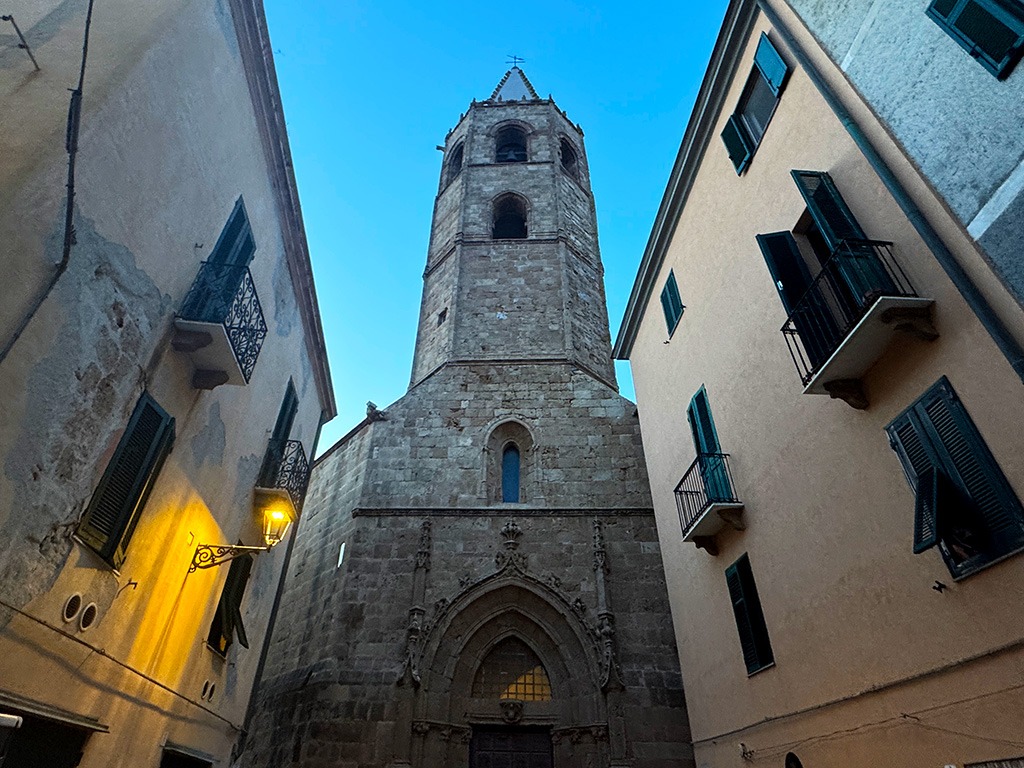
It is easy to walk past Alghero’s Duomo tucked away in the historic centre, but anyone interested in history and architecture should make a detour to see what is one of Italy’s most unique cathedrals
Shopping
Alghero sits on a stretch of coastline known as the Riviera del Corrallo, or Coral Riviera. The abundant coral in the nearby waters make the city and surrounding area one of the best places in Europe to purchase authentic coral items, including artisan jewellery and home decor.
The use of coral in products is strictly controlled to protect the environment, meaning that prices for larger and more intricate items can be on the higher side, but you can explore the artisan shops in the centre of Alghero knowing that everything has been ethically sourced.
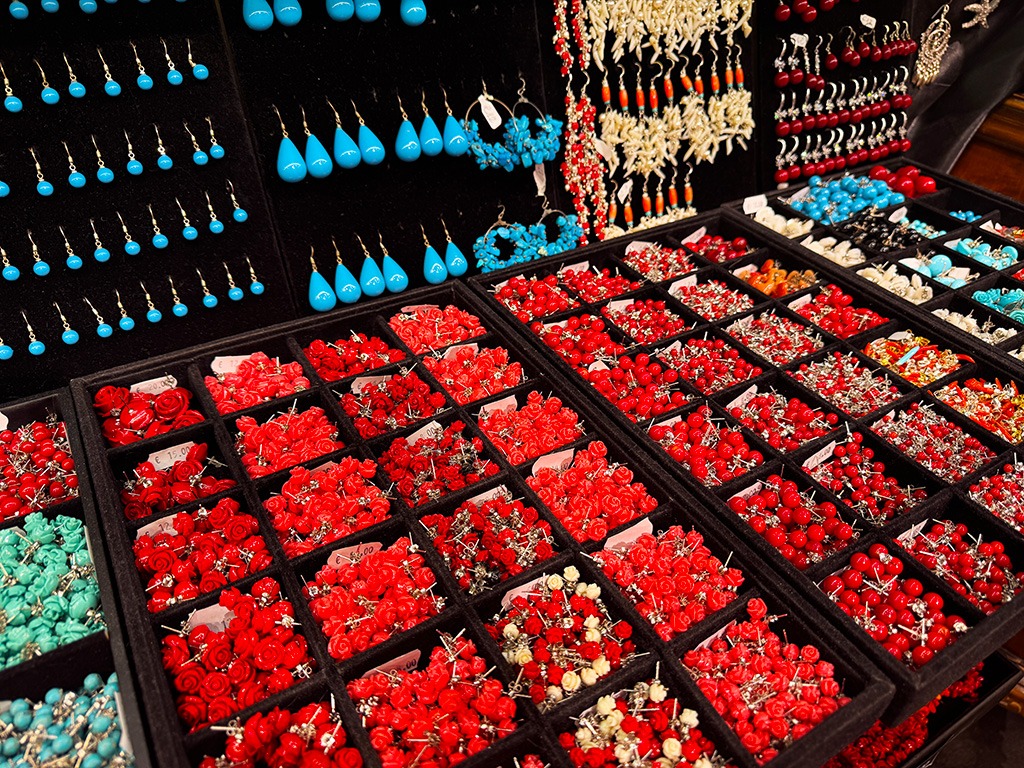
Coral jewellery is the perfect souvenir from any trip to Alghero, or a great gift for someone – Sara now expects me to return with something coral-based whenever I come back
Let’s go to the beach
Alghero is famous for its long beach which starts near the old city and extends all the way up to Fertilia. The sand here is light and fine, and the water shallow and clean, making it a beach-lovers paradise for visitors and locals alike between late spring and early autumn.
You’ll find several beach clubs along the ‘lungomare’ of Alghero, catering to different budgets and priorities. Some clubs are geared towards families, others towards couples, some are wellness spots, and rest are a mix of styles.
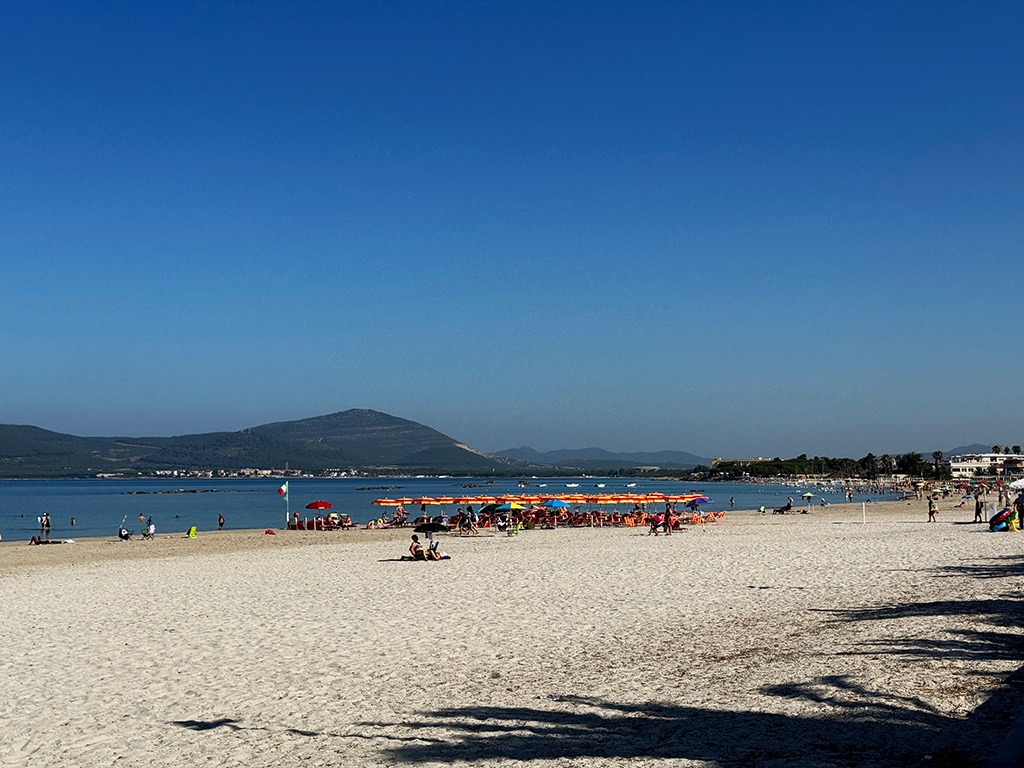
Fine white sand, clear waters and blue skies; welcome to the beach in Alghero
All paid beach clubs feature bathrooms, showers, and changing facilities. Most also have an adjoining restaurant and bar, meaning you can easily stay a whole day without needing to leave. Our favourite is Rafel located at Via Lido 20, where they offer high quality beds on the sand, a remote ordering system for refreshments, and their partner restaurant serves some of the best seafood I’ve eaten in Alghero.
There are several sections of ‘free beach’ along Alghero’s seafront where you can set up on the sand without cost. The facilities along these parts are limited (bathrooms, showers, etc) but you are never far from a bar or restaurant.
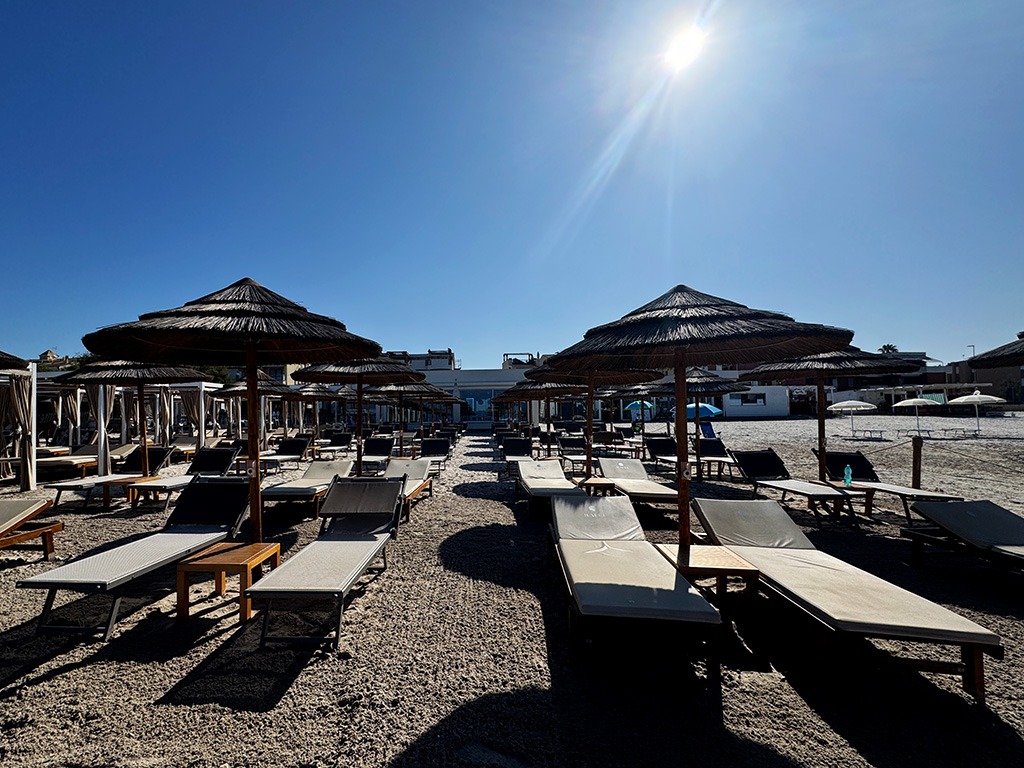
We love Rafel which is near the end of Alghero’s beach, where you’ll find comfortable sunbeds and great service waiting for you
If you would prefer to visit more secluded or natural spots on Alghero’s coastline or the nearby area, consider taking the trip out of town to the following beaches:
Porto Conte – This stretch of the coast, south of Alghero, is punctuated with various beaches and bathing spots. Some can be hiked to from the city, but it is generally recommended to drive or take a taxi.
La Pelosa Beach – North of Alghero and close to Stintino, this large beach is known throughout Italy for its fine white sand and perfectly clear waters. Getting here using public transport can be a challenge, so consider a rental car or cab.
Italian beach culture took Sara and I a while to get our heads around. After living on the Roman coast for years, we’ve now mastered how to navigate sunbed rental, dress codes, swim safety, and everything else you need to fully enjoy Italy’s beaches. We share all of this so you don’t have to learn the hard way in this detailed guide on Napleswise:
Water sports and boat trips
This area is known for all things water-based, and it was in fact on a kayaking trip that I first came here back in 2018. You only need to do a quick search online, or walk along Alghero’s seafront, and you’ll see there are near-endless operators offering boat tours. These cover the nearby coastline and Riviera del Corallo, visiting popular landmarks like Neptune’s Grotto.
One of our favourite excursions is to the Asinara National Park (typically departing from Stintino) to swim in the turquoise waters of the nature reserve, see the local wildlife up close and personal, and explore further the local history of this part of Sardinia. Check out some recommended experiences and tours here.
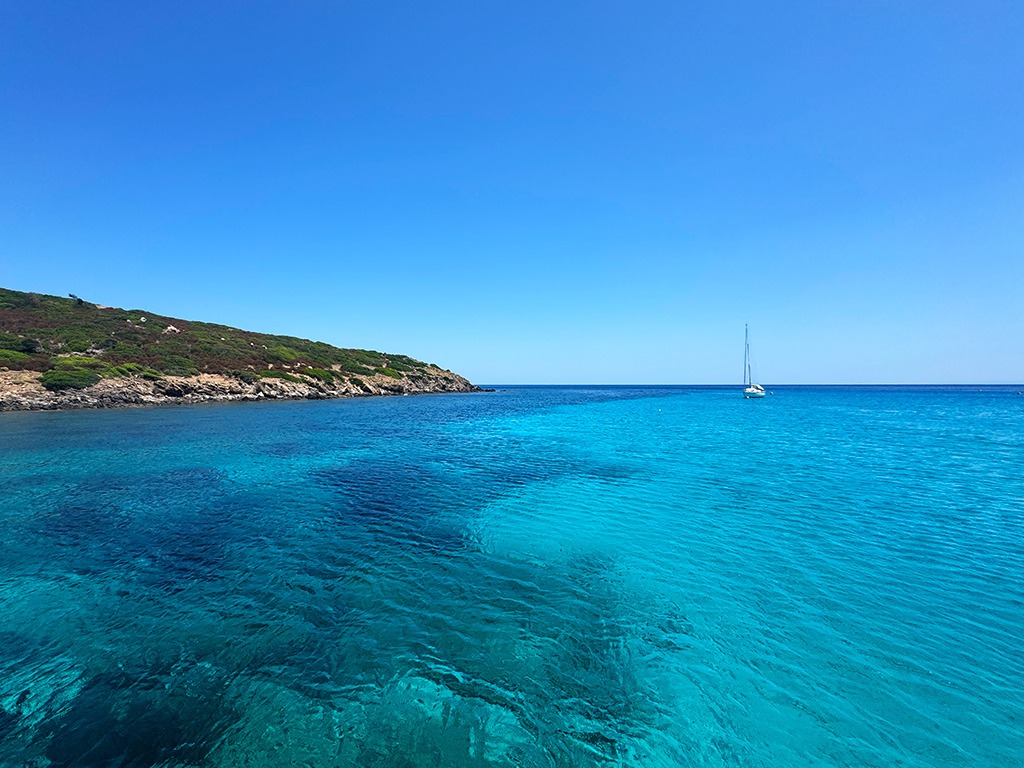
Take a boat trip to Asinara and you’ll be rewarded with access to some of the bluest waters in Italy
Being at the heart of the Coral Riviera (Riviera del Corallo), Alghero and nearby is renowned for offering some of the best snorkelling and diving in Italy.
Several operators offer all inclusive experiences departing from Alghero port, or if you are more independently-minded, you can rent a boat directly and make your own way to the designated dive areas.
As mentioned above, the very first time I came here in 2018 it was on a kayaking trip with colleagues. I’ll never forget that trip as the views of local landmarks like Punta Giglio and the Capo Caccia promontory were truly incredible from the water, along with the fun stops we had in secluded bays for swimming and snorkelling.
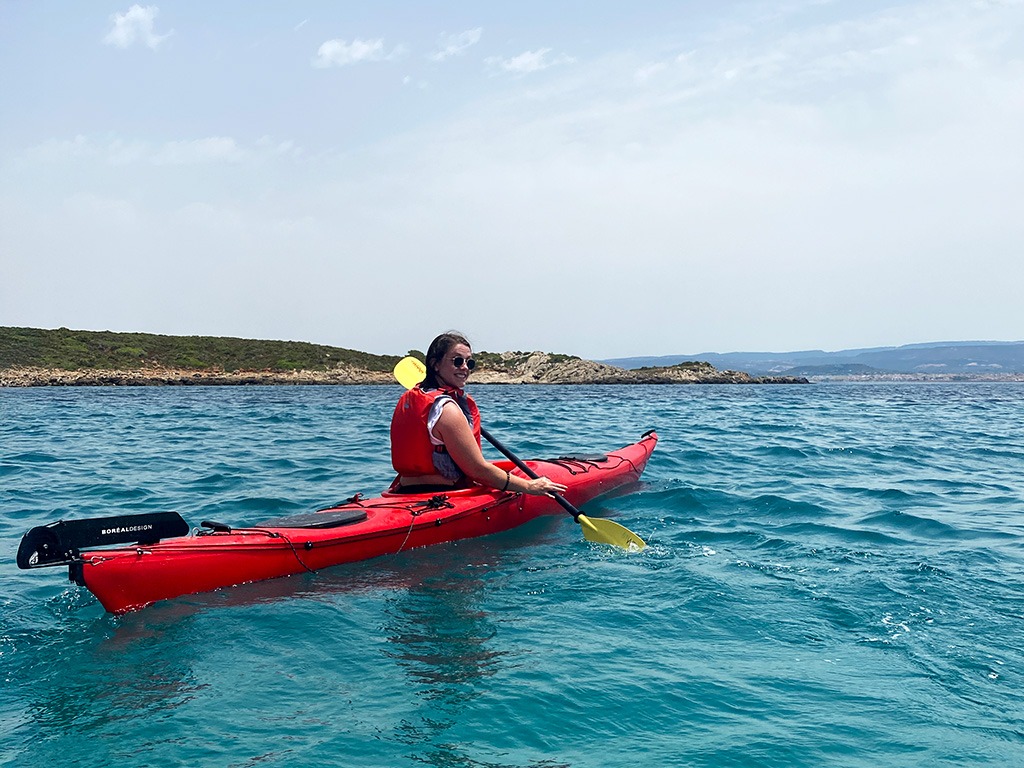
Some of my favourite memories of time spent in Alghero are from kayaking with friends
As far as I’m concerned there is only one operator you should consider kayaking with in this part of Italy; Sea Kayak Sardinia, who start most of their excursions from Fertilia. Getting to Fertilia is easy – just take the AF bus from Alghero main town where you’ll find Sea Kayak Sardinia waiting to take you on a memorable adventure!
An important consideration however, is that Alghero is a seasonal destination, where a lot of activities (and some accommodation and restaurant options) close during the winter. As such, if you are planning to visit during the spring or autumn, be sure to confirm that anything you want to do is definitely available.
Day trips
With so much to do in Alghero it’s possible you won’t have time to explore further, but if you find yourself wanting to see more of Sardinia, consider the following locations:
Stintino
I mentioned Stintino previously, as the departure point of our favourite tour of the Asinara marine park, but the town is a destination in itself. The small but pretty marina is a great place to unwind away from the energy of Alghero, and you can reach the famous beautiful beaches of La Pelosa easily from Stintino.
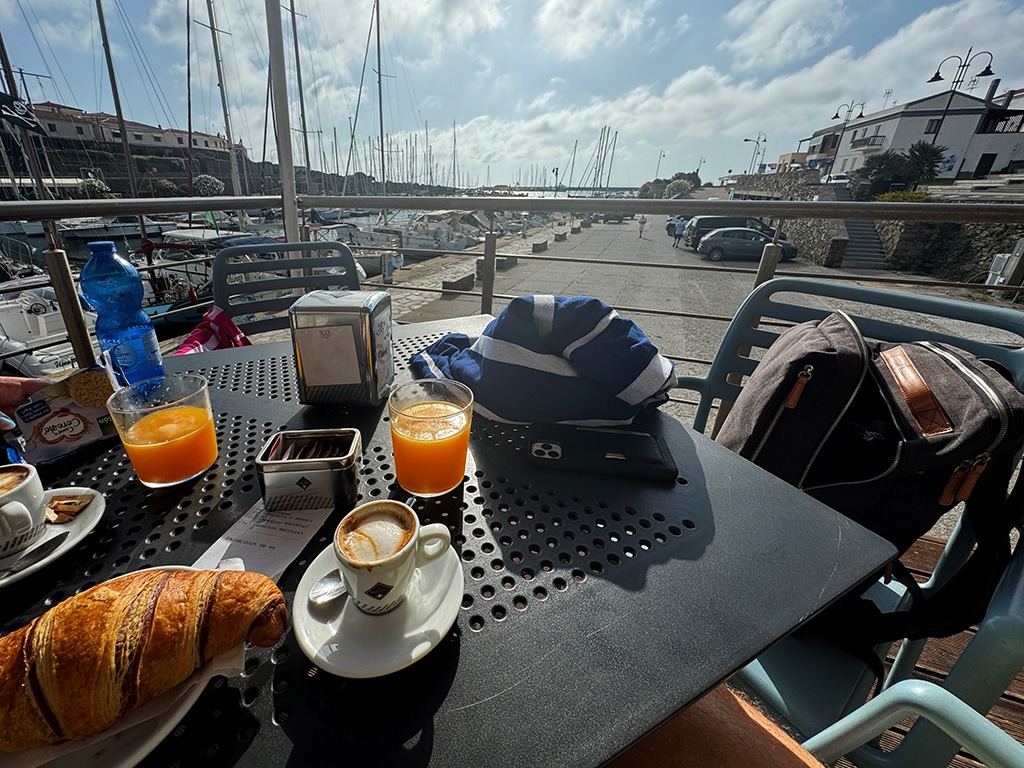
We love passing time in Stintino and will pause to enjoy breakfast or aperitivo at the port before or after beach days and boat excursions
Bosa
Nuraghe Palmavera
History-lovers should consider visiting here, where, as one of Sardinia’s premier archaeological sites, you can gain insights to some of the island’s earliest inhabitants.
Where to eat and drink in Alghero Sardinia
Alghero, Sardinia is a foodie paradise, with the streets of the city lined with great restaurants, bars, and cafes. It’s hard to go wrong here when it comes to finding somewhere to enjoy a drink or meal, but, as always, Sara and I have our favourites that we return to regularly and recommend you consider for your trip:
Ristorante Mabrouk – If there is one thing this part of the coast of Sardinia is known for, it’s lobster. This restaurant has been an institution for decades, where it serves spiny lobster in Catalan style. Their dinner menu also provides guests with an authentic taste of local cuisine across several (generously portioned) plates, accompanied with Sardinian wine.
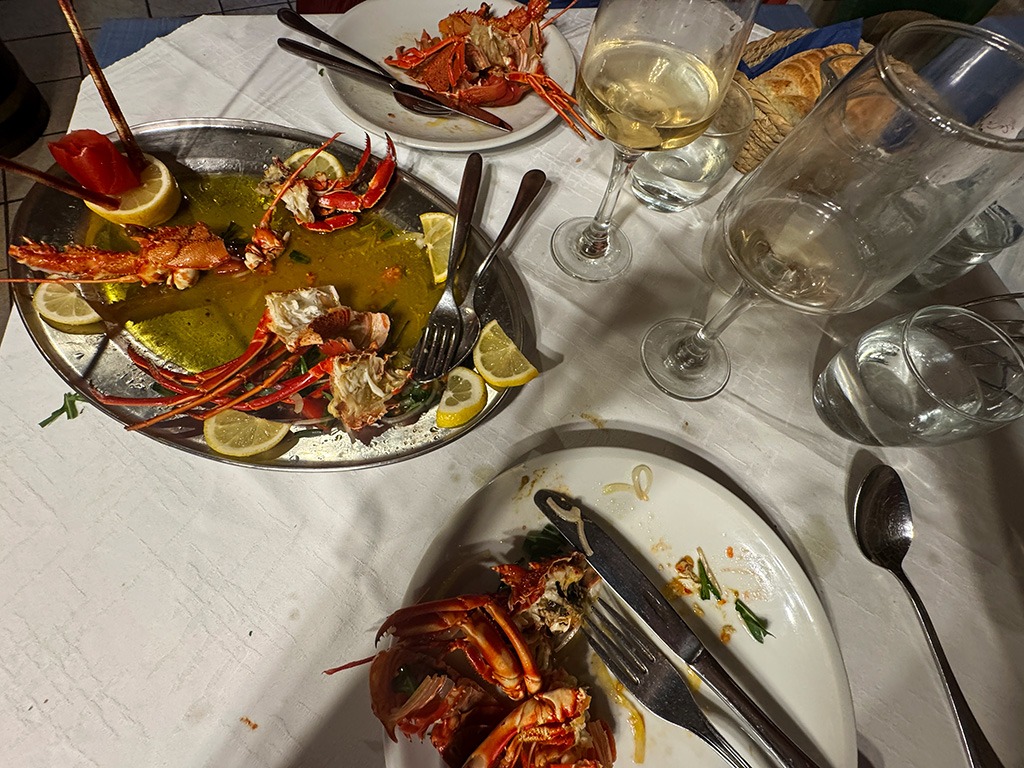
Please forgive the messy table, but the last time we went to Ristorante Mabrouk we were so excited to eat the lobster that photos were low on the priority list!
Sella e Mosca – Beyond being one of our favourite wine producers in Italy, Sella e Mosca is also one of our top places for a relaxed meal or winetasting (with food pairings) in Alghero. Located about 20 minutes by taxi/car outside of Alghero, it’s worth making the trip to enjoy local food and wine with a view of Sella e Mosca’s vineyard. You can even stay here, meaning no trips in and out of Alghero, and full immersion in the peace of the Alghero countryside.
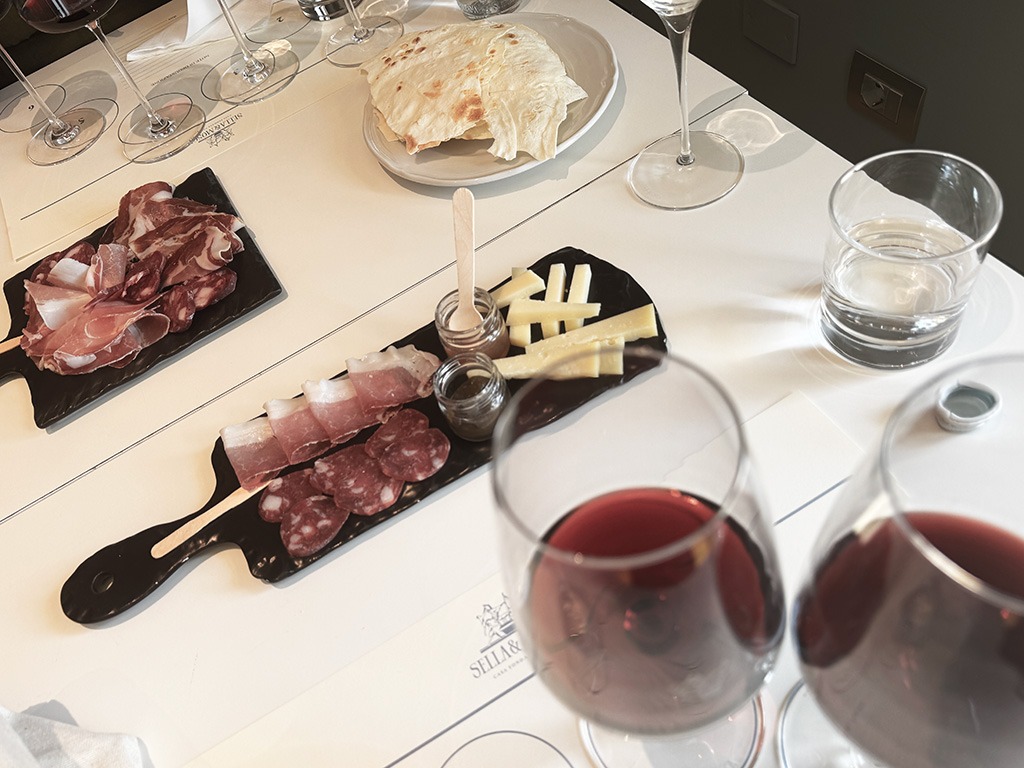
One of the best things we have done in Alghero recently is Sella&Mosca’s winetasting and vineyard tour experience
L’Antica Fortezza – For a more informal meal, or as a takeaway, consider this casual restaurant and pizzeria set back from the city centre. One of my all time favourite memories of being in Alghero was dropping in here one hot July evening after a boat trip to Asinara to grab takeaway pizzas (and beers) for Sara and I. After a long day out on the water and in the sun, Fortezza’s pizzas really hit the spot! We also recommend this place on the basis that they offer all pizzas gluten-free, eat-in, or takeaway.
Let’s wrap up…
As you can see, if you’ve made it to the end of this guide, there is a lot to do Alghero, no shortage of amazing places to stay, eat and drink, and endless opportunities for exploring northern Sardinia’s history and culture. Curious to know more about visiting Alghero? Don’t hesitate to contact me, here.