
Published:
September 15, 2026
Last updated:
September 16, 2026
A visit to the cathedral of Palermo is a must for anyone coming to Sicily’s capital, whether to admire the grand exterior, the serene interior, or to venture up to the roof terrace for a birds eye view of the city below. Use this detailed guide to understand how to visit Palermo’s duomo easily, based on personal experiences, as well as the equally as famous Norman cathedrals nearby in Cefalù and Monreale.
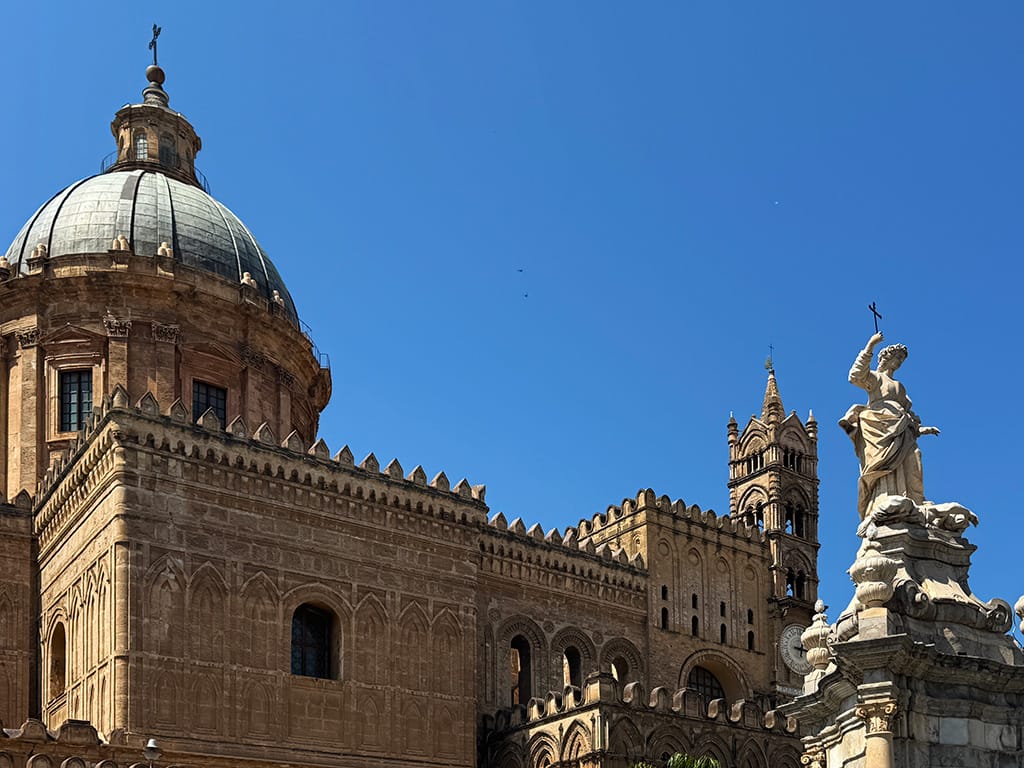
No trip to the Sicilian capital is complete without a stop at the city’s cathedral
A first-hand guide to visiting the Norman Cathedral of Palermo
It would be nearly impossible to miss the duomo of Palermo on a visit to the Sicilian capital: it sits at the centre of the bustling city and it’s eye-catching architecture never fails to grab attention.
But should you visit it? The answer is a resounding ‘yes!’ in my opinion. This building symbolise everything that makes Palermo one of the most unique cities in Italy: it combines nearly a 1000 years of history in to a single space, showcasing Sicily’s diverse and fascinating past.
While a deep dive in to the past might not be to everyone’s travel taste, I wholeheartedly recommend that anyone coming to Palermo take even just a few minutes to appreciate what is one of the most interesting structures on the entire island.
Use this guide to plan a trip to Palermo’s catterdale based on mine and Sara’s direct travel experiences from across the years. If you’re looking for something specific, use the links below to jump to the relevant section, or click here to start reading the complete guide.
Who is this guide for?
This guide has been written for anyone looking to visit Palermo in Sicily and wanting to understand more about the city’s cathedral. Below you’ll find the most up to date information about how to visit the duomo (last updated September 16, 2026), including the roof terraces, as well as bonus guidance on how to see the other main Norman cathedral churches near Palermo at Cefalù and Monreale. For more general guidance on visiting Palermo, click here;
A brief history of Palermo’s Cathedral
The city of Palermo’s main church, officially known as Cattedrale metropolitana della Santa Vergine Maria Assunta (Metropolitan Cathedral of the Assumption of Virgin Mary) has been at the heart of life in the Sicilian capital for centuries since it’s consecration and dedication in 1185.
Construction had started only a year prior, where the Archbishop of Palermo at the time, English-born Walter Ophamil, had ordered the destruction of an older church on the site to make way for the new cathedral we see today.
The site itself had in previous centuries hosted a muslim mosque, a Byzantine church, Greek/Roman temples and even Pheonician places of worship that show this was considered as an extremely spiritual spot ever since people first settled in the Palermo area.
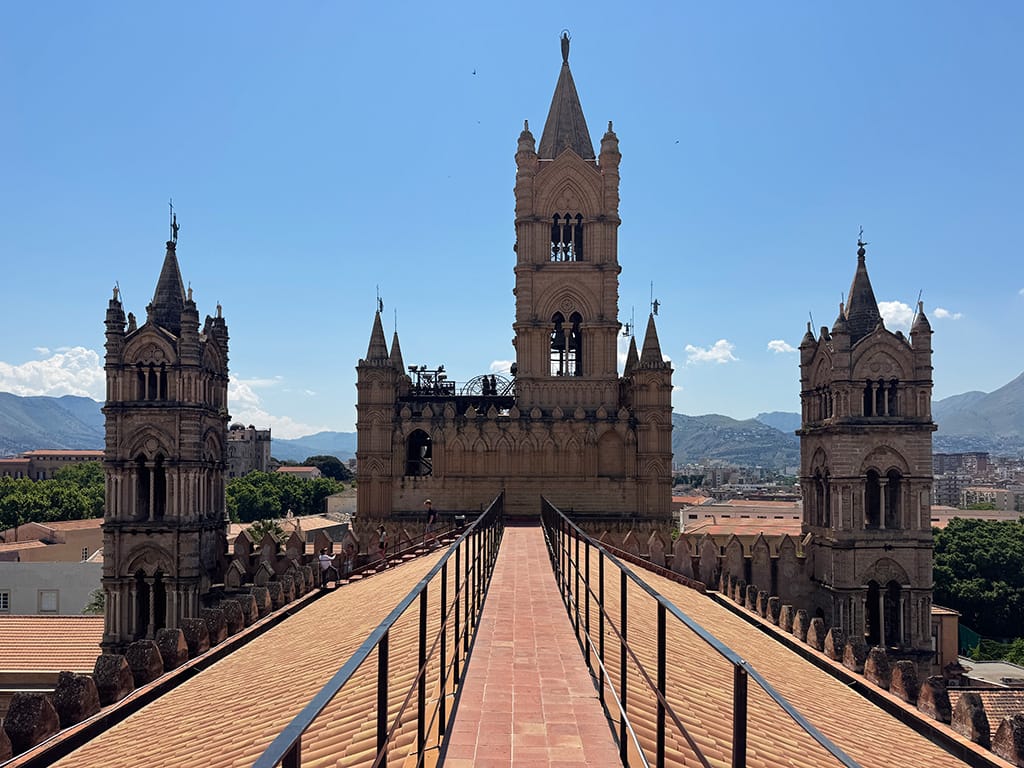
One of the best ways to see the most beautiful elements of this building by heading up on the roof terraces – more on this below
Over the centuries since its original construction the cathedral has been expanded and adapted. The first major expansion occurred in the 14th and 15th centuries when corner towers were extended upwards (pictured above). This was followed by the addition of the southern portico/porch, which is where you’ll find one of the churches most curious architectural elements – keep reading to find out more.
The most recent significant works were carried out between 1781 and 1801 when the interior was entirely redesigned inline with the ‘neoclassical’ style popular in Italy at the time, and the huge dome along with the smaller ones covering the aisle ceilings were added.
Now Sicily’s main duomo sits at the centre of the multi-site Arab-Norman Palermo UNESCO site, which alongside the cathedrals at Monreale and Cefalù and other major churches such as San Cataldo showcase the island’s legacy of cultural exchange.
How to visit the Duomo di Palermo
Now you know about the history of the cathedral, let’s take a look at how to actually visit:
Open hours and mass timings
Palermo’s cathedral is open daily – as of September 16, 2026 the following schedule applies, but this is always subject to change. For the most up to date information, refer to the official website.
Monday-Saturday, 07:00-19:00
Sunday 08:00-19:00
Masses and ceremonies are held regularly at the cathedral which may impact access to parts of the interior or even the whole church for non-worshippers. For the latest schedules check the duomo’s website here or the notice boards at the cathedral entrance if you’re in Palermo already (some times the old school methods are the most reliable!).
Getting to the cathedral
The cathedral is located on Piazza della Cattedrale in the heart of Palermo’s centro storico (historic city centre).
Many of the roads and streets leading to the cathedral are either pedestrianised or offer limited vehicle access. Therefore the easiest way of reaching the duomo is on foot, and where Palermo is flat and largely follows a grid layout, getting here is straightforward. From the following landmarks/points of interest you can anticipate the following journey times on foot:
- Quattro Canti crossroads/intersection – 10 minutes (550m)
- Teatro Massimo opera theatre – 12 minutes (850m)
- Norman Palace – 15 minutes (1km)
- Ballarò Market – 15 minutes (1km)
- Palermo Centrale train station – 30 minutes (2km)
- Palermo port (for ferries and cruise ships) – 50 minutes (3.5km)
I’d recommend using Google Maps to plot the easiest route from your exact start location. You’ll also be given live public transport options based on that days’ timetables and traffic conditions.
Are you ready for Palermo?
Best Hotels
Find your perfect base in the Sicilian capital, whether near the energy-filled markets or at one of the city’s luxury, old-world hotels. Book with confidence with Booking.com
Top Attractions
Reserve your entrance to Palermo’s cathedral, Norman Palace and Botantical Gardens, or join expert-led cuisine tours to indulge in the city’s famous food and drink:
Insider Tips
Benefit from our many years of Sicily travel experience, making the most of our insider knowledge to save you time, money and stress when travelling
Are you ready for Palermo?
Best Hotels
Find your perfect base in the Sicilian capital, whether near the energy-filled markets or at one of the city’s luxury, old-world hotels. Book with confidence with Booking.com
Top Attractions
Reserve your entrance to Palermo’s cathedral, Norman Palace and Botantical Gardens, or join expert-led cuisine tours to indulge in the city’s famous food and drink:
Insider Tips
Benefit from our many years of Sicily travel experience, making the most of our insider knowledge to save you time, money and stress when travelling
Ticket options
First and foremost, anyone can enter the cathedral using the main entrance on Piazza della Cattedrale or the side entrance on Via dell’Incoronazione completely free of charge.
You’ll be able to explore the interior of the cathedral, admiring the striking neoclassical styling and other fascinating elements such as the royal tombs – more on these below.
If you wish to explore more of the cathedral including the roof terraces, treasure repository, and crypt, you’ll need to pay for an enhanced ticket.
While these tickets can be purchased online from the official website here, personally I’d recommend going to the small ticket office at Via Matteo Bonello, 3, just a few steps from the church entrances. Normally I am an advocate for booking online and in advance but in this instance, unfortunately, I’ve found the digital process unreliable. Going to the ticket office also means that you can pick up a copy of the excellent official guide book to enhance your visit.
There are multiple ticket options and combinations available:
- ‘Full’, giving access to all areas of the cathedral: the crypt, the Pozzo della Maddalena (an underground area dating back to early Norman period), the roof terraces and apses
- ‘Full minus roof’, giving access to everything above except the roof terraces
- ‘Terrace only’, giving access to the roof of Palermo’s Cathedral, and not the other extra areas detailed above.
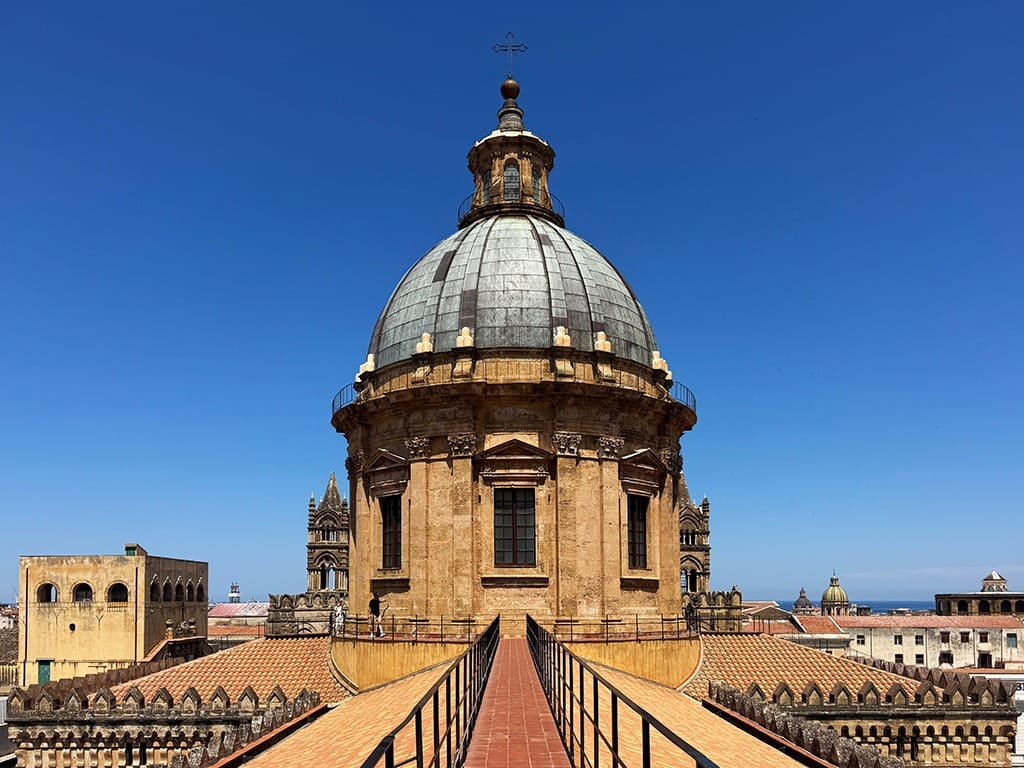
The highlight of any visit to Palermo for me is to get up on the duomo’s terraces, enjoying a unique perspective of the cathedral and city below
At the ticket office, and online if you prefer, you can also purchase tickets to the nearby museum at Palazzo Arcivescovile (Le Stanze dei Vescovi), the ex palace of Palermo’s archbishops which now houses religious artwork spanning the 12th-18th centuries. You can combine tickets for Palazzo Arcivescovile and the cathedral, saving money, which is a perfect option for history lovers looking for a deep dive in to Palermo’s religious history.
For the latest pricing information and details about discounts refer to the official website.
Tours and experiences
I am a big fan of guided tours when exploring anywhere, but especially if I am some where new or unfamiliar. If you want to learn as much about this monument as possible during your time in Sicily, consider joining a tour of Palermo’s cathedral.
Tours are often combined with visits to the nearby royal palace (Norman Palace) which together with the Cathedral are the definitive way to understand this city’s multi-layered history.
Beyond boosting your knowledge of the cathedral and any other sites you might visit, tours are a great way to save time and energy on booking tickets as your guide will take care of everything. All you have to do is show up at the meeting point.
Staying near Palermo’s cathedral
If coming to see Palermo’s duomo is a high priority for your trip to the city, then staying as close to it as possible makes sense to maximise your visit time. The area around the cathedral is one of the best parts of the city to stay in based on our experience.
This isn’t just for easy access to the main monuments, but also because you’ll find some of the top places for eating and drinking in Palermo, as well as the city’s best shops. Use the map below to check accommodation availability and options close to Palermo duomo in realtime:
What to see in Palermo’s cathedral
History lovers and architecture aficionados could easily spend a whole day getting to know Palermo’s main church. That said, most visits to the cathedral take between 1-2 hours in my experience, making it a great option for those looking for a short activity during a day trip to Sicily’s capital, or for anyone arriving in Palermo and searching for an introduction to the city’s past. Let me next outline the key things to see outside, inside and on top of the cathedral so you can decide how best to explore Palermo’s duomo during your time here:
The cathedral exterior
The exterior of Palermo’s cathedral can be admired best from the manicured grounds of Piazza della Cattedrale. If you’re not planning to go inside the cathedral, I would recommend sitting in this little urban oasis for a few minutes to admire the cathedral’s cocktail of architectural styles.
What you’ll see is a combination of Norman, Romanesque, Gothic and Baroque elements, with a sprinkling of Arabic and Byzantine influence. I am yet to visit another structure, let alone a cathedral, that takes so many influences and somehow manages to balance the myriad of styles in a way that doesn’t overwhelm.
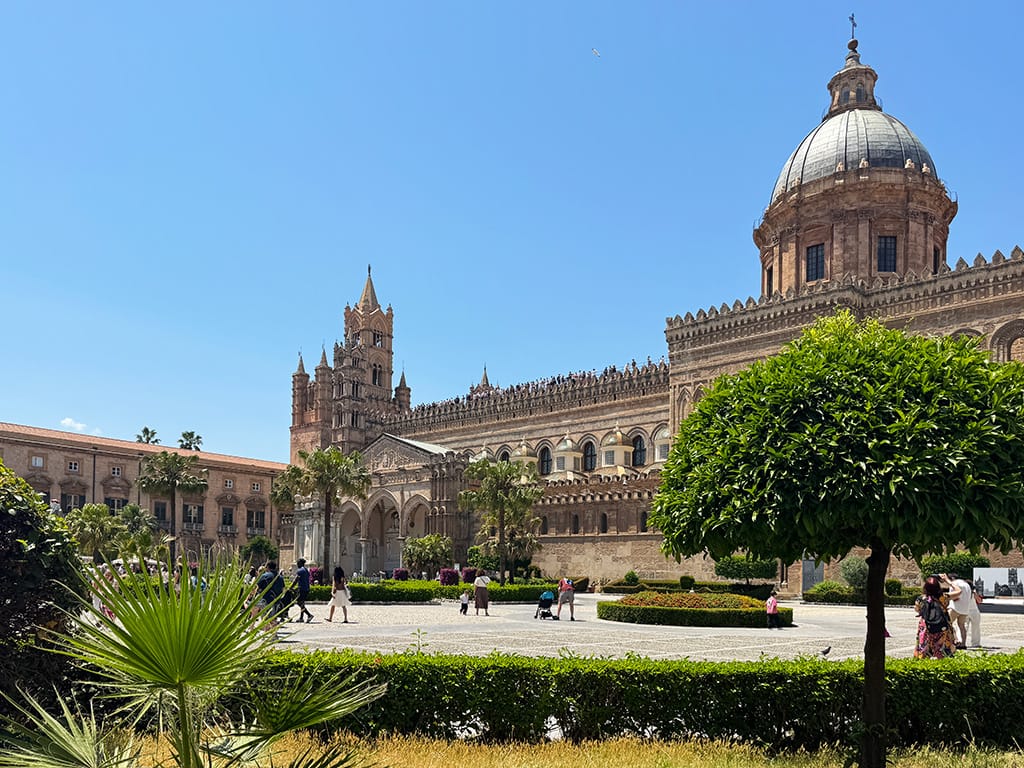
Piazza della Cattedrale is the perfect place to appreciate the cathedral’s exterior from and I will regularly stop here to sketch elements of the electic structure
One of the most interesting elements of the exterior of Palermo’s cathedral for me, is not the colourful ‘mini’ domes or the famed marble portico (pictured centred above), but a small carved plaque on a column near the entrance. What makes this plaque special is the fact that it displays a verse from the Quaran, suggesting (although unproven yet) that it came from the mosque that stood here during the period when Sicily was under Islamic rule.
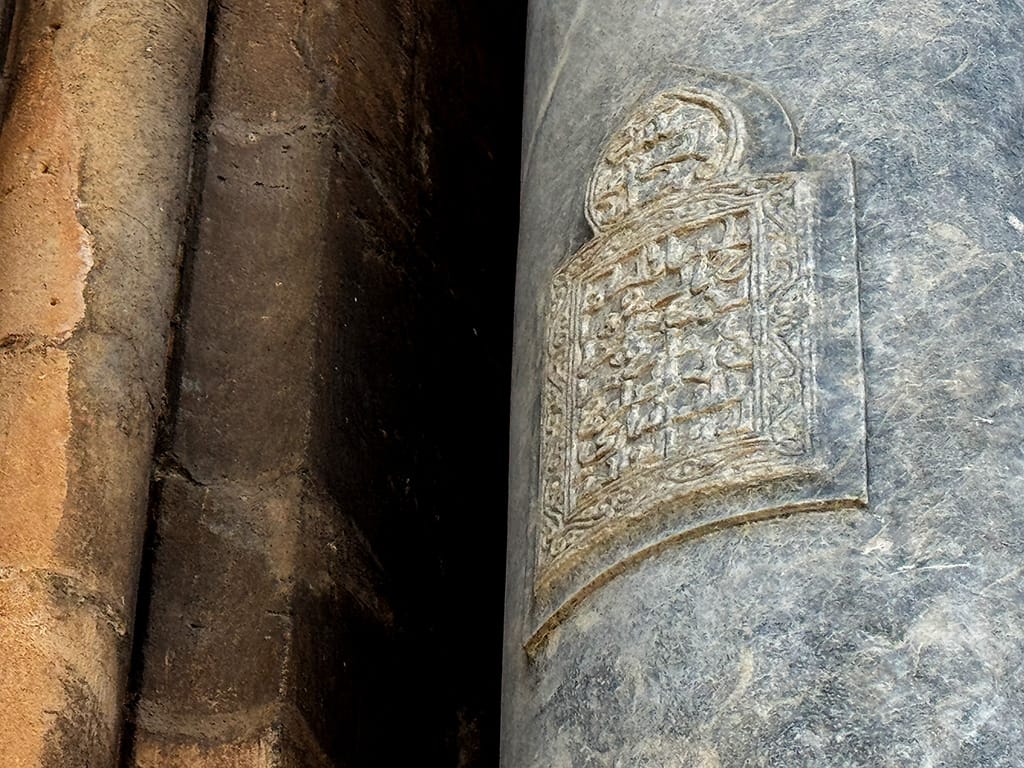
The column itself is of Roman original, which when combined with the Arabic inscription, demonstrates vividly the mix of cultures that came and went in Sicily in the late antiquity/early medieval period
For another perspective, take 10 minutes to walk around the outside of the cathedral to see how it integrates with the wider urban landscape of Sicily’s capital. If you haven’t already walked down Via Matteo Bonello to the ticket office detailed previously, I’d recommend the short detour to marvel at the buttresses that link the ex-palace for Palermo’s archbishops (now the Palazzo Arcivescovile museum) to the cathedral in their distinct Gothic style.
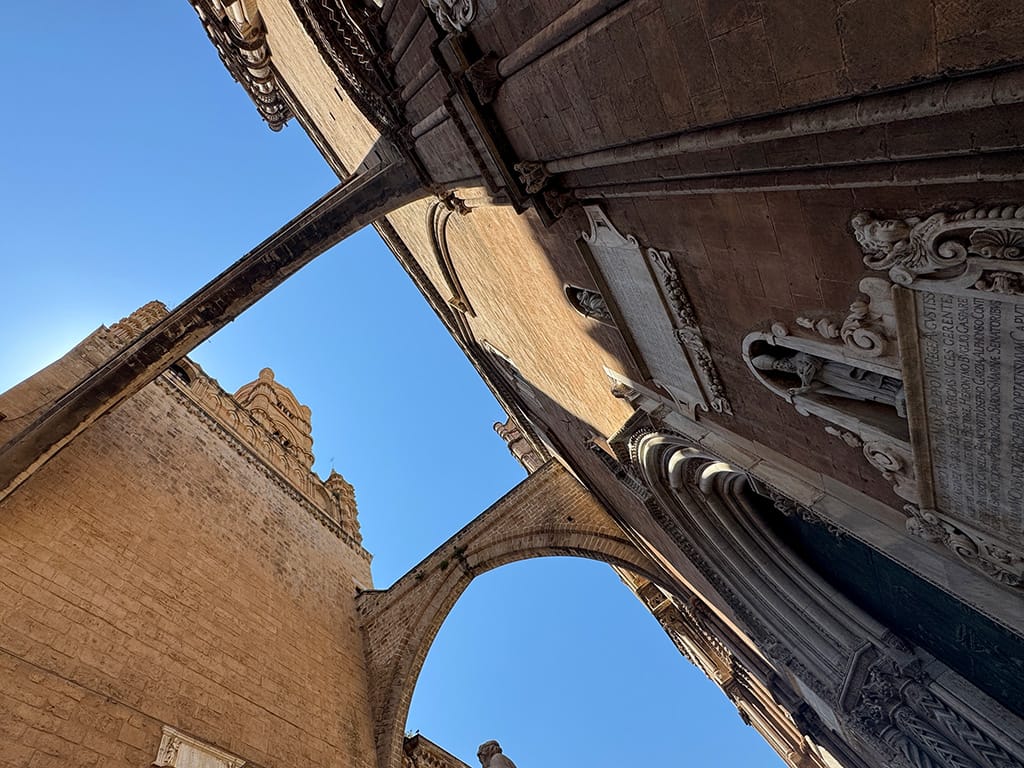
These somewhat indulgent architectural elements are another testament to Palermo’s past prominence: the scale and intricacy of the cathedral complex as a whole is unmatched anywhere south of Naples in Italy
Inside the cathedral
On entering the cathedral the first thing you’ll notice is that the interior is a lot ‘cleaner’ than the exterior. The outside is predominantly a mix of architectural styles infusing Arab and Byzantine opulence with Norman practicality and austerity, where as the inside is strictly light, simple, and very much Italian.
The current interior of the cathedral dates from the end of 1700s when it was remodelled in line with the tastes of the time. After taking in all of the details of the exterior, arriving inside almost catches you off guard where your brain expects the interior to be equally as rich and varied. Personally I like this juxtaposition, and believe it or not, the choice to redesign the interior of the cathedral, removing the older medieval decorations, is still a much-discussed topic in Palermo some 200+ years later.
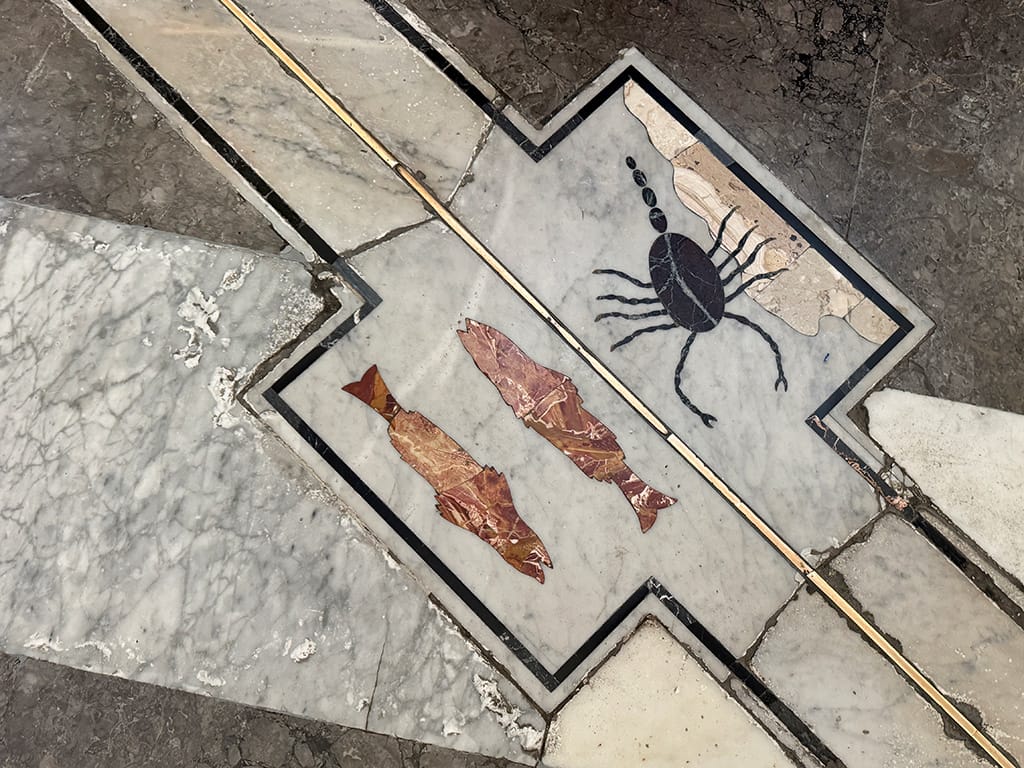
Don’t miss the meridian line that runs through the cathedral with its beautiful zodiac signs inlaid with marble
Within the interior of the church, beyond the main nave and alter, there are the following highlights to consider visiting if your are interested in deepening your understanding of this building:
Royal Tombs
Off the main central nave of the cathedral you’ll find numerous side chapels and annexes. One the most significant is on the immediate left side of the main entrance as you come to the duomo. Here you’ll find the monumental tombs of some of Sicily’s past rulers from the middle ages including Frederick II, Roger II and Henry VI.
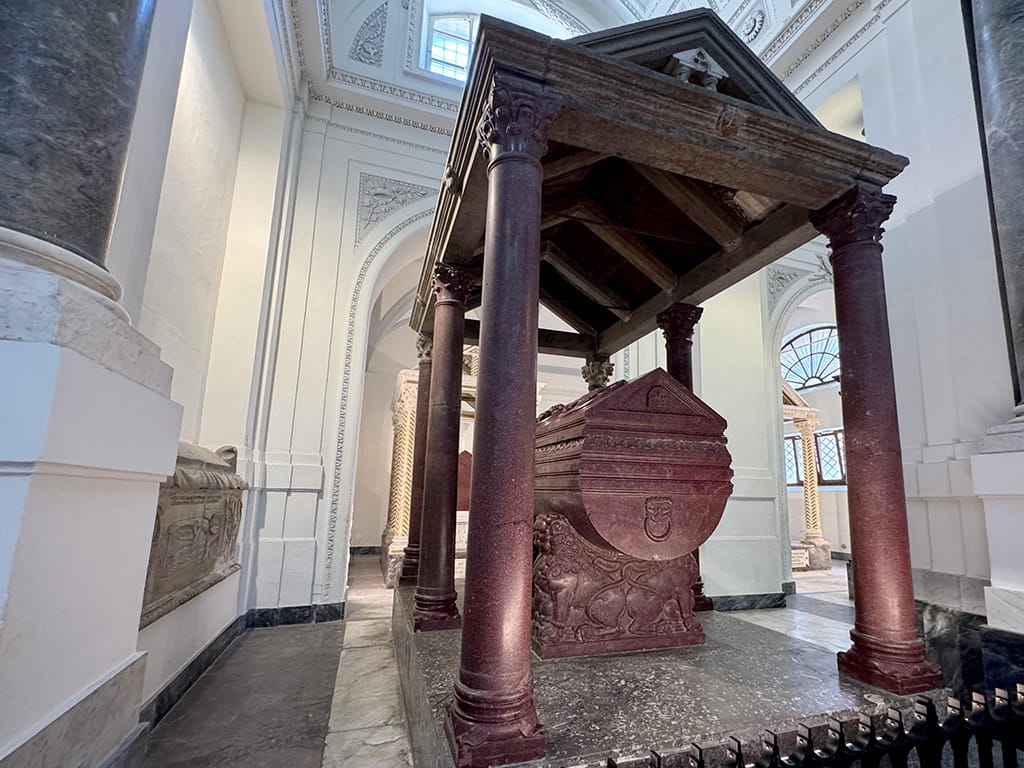
Some of the key figures in Sicily’s history rest inside Palermo’s cathedral
The Treasury
Like many major cathedrals in Italy, Palermo Duomo features a treasury where invaluable religious relics and liturgical items are out on display for visitors to marvel at. One of the standout objects here is the crown of Constance of Aragon who acted as regent of the Kingdom of Sicily between 1212 and 1220. The bright gold, intricately bejewelled headpiece is yet another testament to the wealth and significance of Sicily during the medieval period.
Crypt
This is the final resting place of over twenty of Palermo’s previous archbishops, including the cathedral’s mastermind, Walter Ophamil, who was interred here following his death in 1191. You’ll also find a collection of sarcophagi dating back to the Roman and Byzantine periods, reused in later burials.
Pozzo della Madellena
The so-called ‘Well of Magdalene’ is a subterranean structure that dates back to the cathedral’s earliest days in the Norman period. Originally a burial crypt for some of Palermo’s earliest Norman rulers, this structure later became a shrine to Mary Magdalene (hence the name) and features distinct medieval architectural elements, enriching any visit for someone looking to go deeper – both physically and in terms of knowledge – during their visit to Palermo cathedral.
For these areas you’ll need one of the ‘full’ enhanced tickets with the exception of the Royal Tombs which can be seen freely inside the public area of the cathedral.
Visiting the roof terraces of Palermo cathedral
I’m a sucker for a view, and whenever I go anywhere, I will seek out higher points for the best vistas. In Palermo this happens to be by venturing up on to the roof the cathedral.
The first time I did this, finding information about how to visit the roof was difficult to pin down online. In the end it was only by going to the cathedral directly and checking the information boards that I discovered the information I wanted to know.
Luckily I can share with you what I found out so you have everything you need to know to visit the roof of Palermo’s cathedral smoothly:
1) You will need to purchase a ‘full’ or ‘terrace only’ ticket online or from the office at Via Matteo Bonello, 3.
2) Present your ticket to the attendant inside the cathedral, following the signs for the roof access. They will gesture for you to proceed where an almost secret door in one of the side annexes gives out to the passageway that lead up to the terraces.
3) Follow the signage as you ascend within the interior of the structure until you arrive on the first terrace. Here you can get up close with the smaller, brightly tiled cupoline (small domes) that are one of the hallmarks of Palermo’s cathedral.
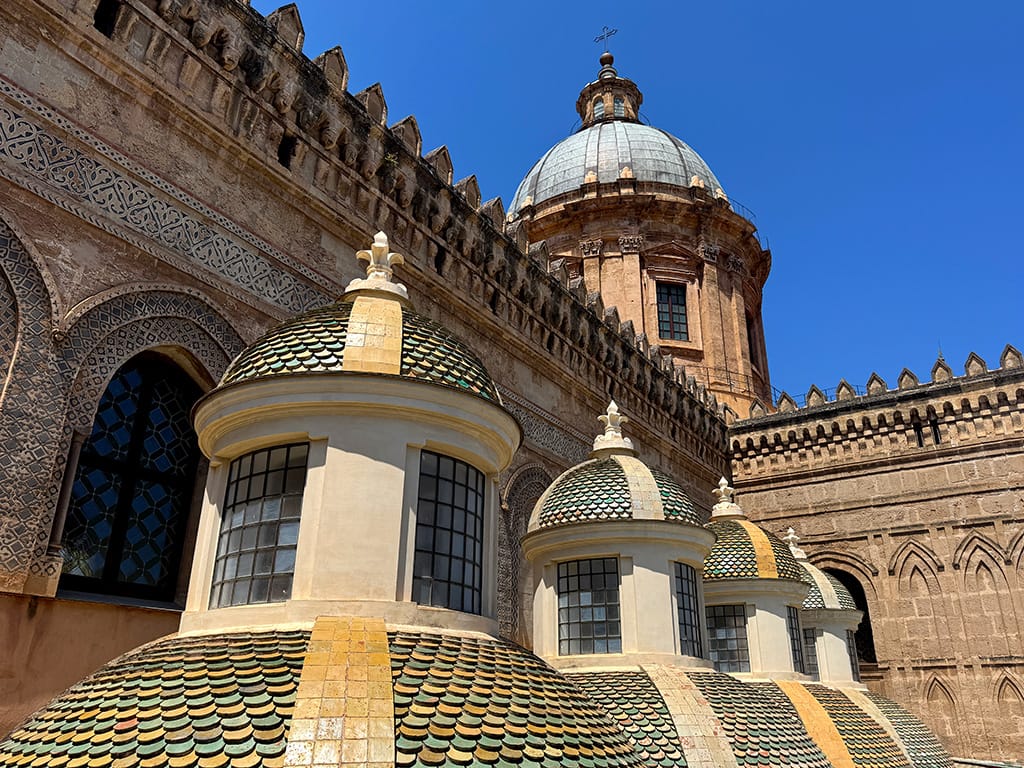
Not only can you appreciate the beautiful cupoline of Palermo’s cathedral here but also the intricate, Arab-inspired decorative elements that adorn the duomo’s exterior (pictured here on the left)
4) While I would not consider most of the staircases particularly narrow (unlike those up to the top of St Peter’s Basilica in at the Vatican in Rome for example), the final set of stairs up to the highest-accessible point of the roof are a tight spiral staircase which may prove challenging for those with mobility restrictions or claustrophobia.
Once on the roof terraces, you can take your time admiring the main dome and enjoying the unparalleled views of the city below, the sea to your north and the mountains that surround Palermo.
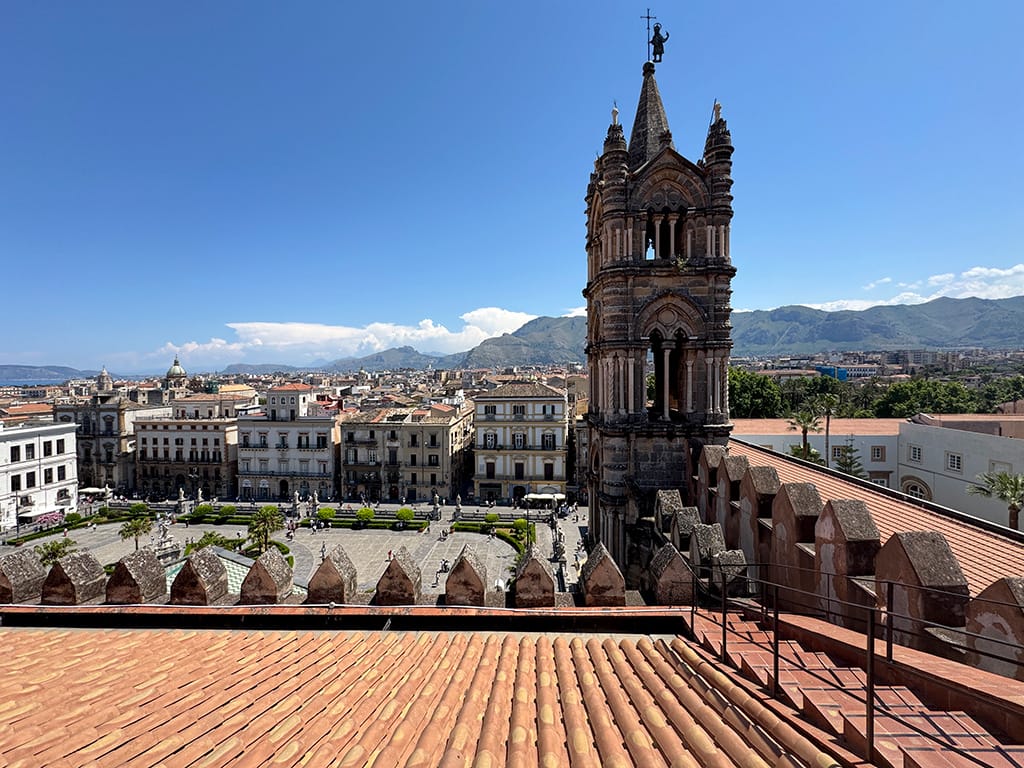
Soak in the views – your visit is not timed
While the number of people permitted on the roof at any one time is limited to ensure safety, you will not be rushed to complete your visit. Once you’re done, make your way back to the staircase where you came up to the roof and wait until the staff member present signals that you can do down.
You won’t go back the way you came: you’ll descend the spiral staircase to ground level where you’ll exit on to Via Matteo Bonello. If you haven’t already visited the interior of the cathedral remember that if you opted for a ‘full’ ticket you can also visit the crypt, underground area and treasury by re-entering the duomo.
Bonus: Other Norman cathedrals near Palermo
Palermo and the northern coast of Sicily was the Norman power base on the island and with this they built multiple impressive cathedrals in the area. Close to Palermo you’ll find two other significant sites which alongside Palermo’s Cathedral together constitute a UNESCO World Heritage Site recognising cultural interweaving.
All three churches showcase the distinct layered mix of Western Romanesque, Byzantine, and Islamic architectural styles that are so unique to this part of Italy. Here’s what you need to know if you’re curious about visiting Sicily’s other major Norman cathedrals:
Cathedral-Basilica of Cefalù (Duomo di Cefalù)
Starting with the oldest of the three, the first stone of this cathedral was laid on June 7 1131 under King Roger II after he survived a shipwreck, washing up on this part of Sicily’s north coast. He vowed to thank his Holy Saviour by building an impressive church, and even declared that Cefalù would be his final resting place and that of his dynasty.
This didn’t come to fruition however as Roger II died before the cathedral was completed, and the two sarcophagi that he had placed ready in Cefalu in his mausoleum were reused by King Frederick II decades later for his own burial, and that of his father, in Palermo cathedral.
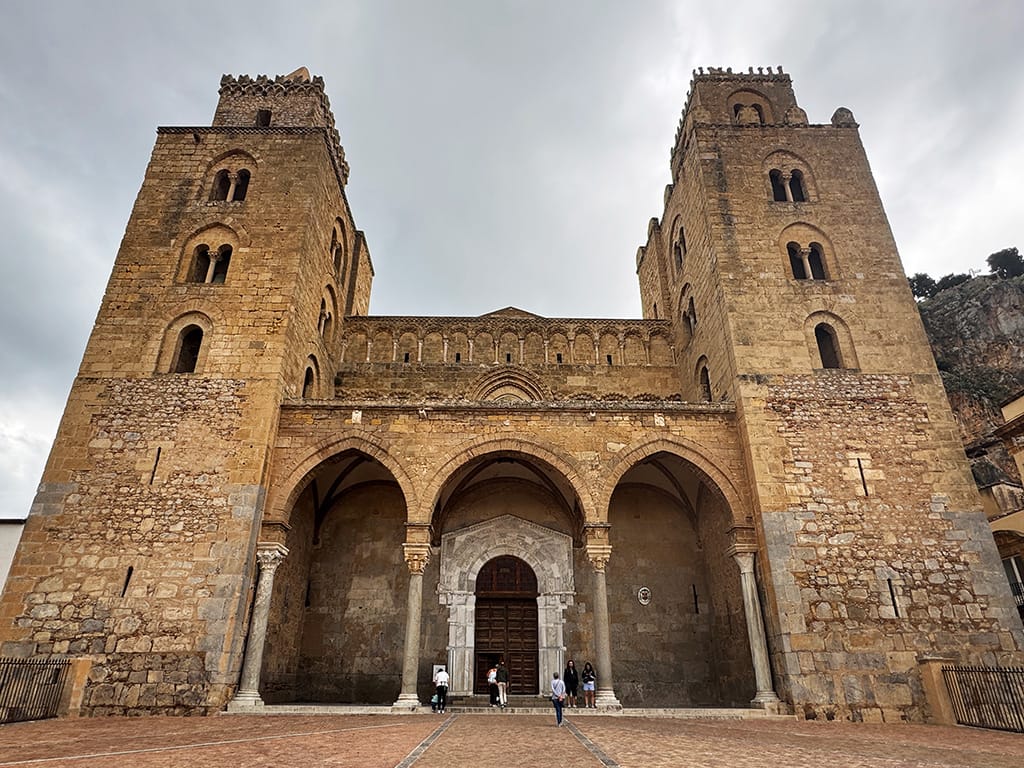
Cefalù cathedral symbolizes Roger II’s authority and ambition as a Christian kingdom at a time when Europe was re-conquering territories under Islamic control
As we’ve seen with Palermo cathedral, the exteriors of the Norman cathedrals have fortress-like proportions and imposing twin-towered facades and this is no more evident than in Cefalù. This cathedral is perfect example of this very specific architectural format; if you look directly at the façade when standing in Piazza del Duomo (pictured above) you’d be forgiven for thinking this duomo is not in fact a church, but a castle.
Cefalù cathedral’s interior layout is a traditional latin cross, divided into three naves, and features 600 m² of Byzantine mosaics created between 1148 and 1166. While Cefalu’s mosaics are less extensive in coverage than Monreale’s duomo (more about this below), they are no less impressive.
One of the best ways to appreciate these mosaics is to opt to visit the cathedral’s roof terraces as you’ll need to pass through the upper interior levels of the structure before getting outside. From up here you can see the mosaics almost from eye level – pictured below, something you cannot do in Monreale cathedral.
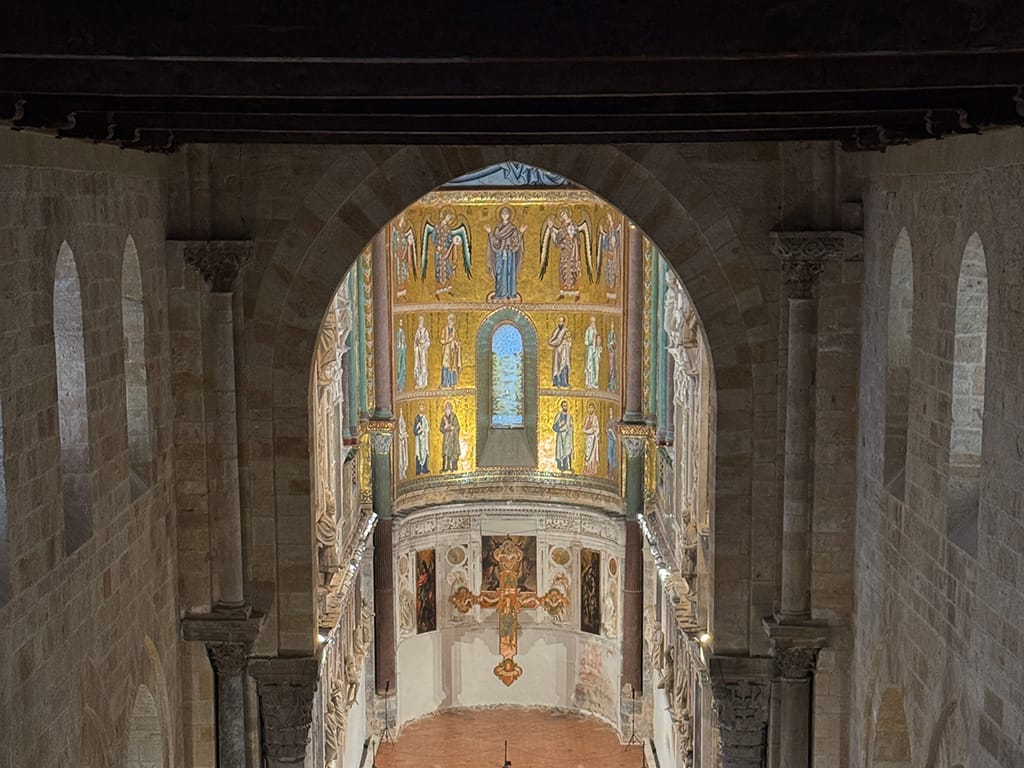
The Byzantine mosaic decoration in Cefalù was completed before 1170 but looks as fresh today as it did all those centuries ago
Key information about Cefalù cathedral:
- Location: Piazza del Duomo, 10, 90015 Cefalù PA
- Getting here from Palermo: Train (55 minutes on average, direct from Palermo Centrale to Cefalu train station) + 15 minutes walk. Driving (1 hour), parking at Parking Historical Center Dafne Cefalù
- Entrance and tickets: Open daily 08:30-12:30, 15:30-18:00. Free entrance to main cathedral with enhanced tickets available providing access to the towers, treasury and other special areas. Refer to the official website for full information.
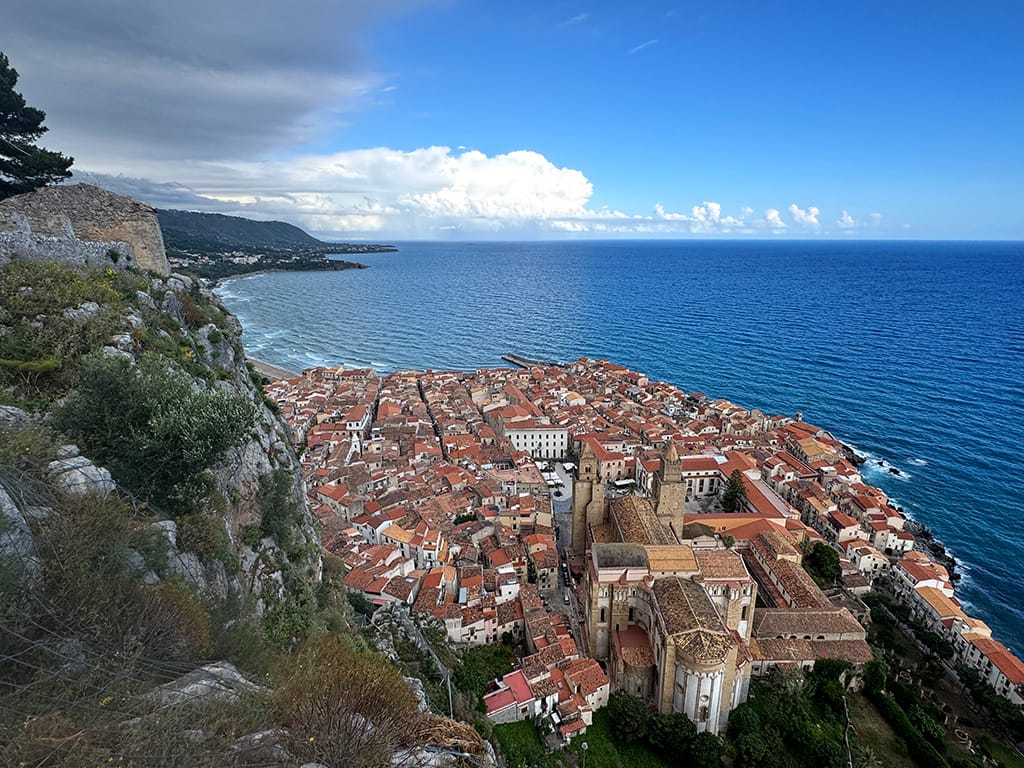
Want a one-of-a-kind view of Cefalù cathedral? Hike up to the top of La Rocca, the famous mountain that overlooks the town and look down. Allow 2 hours for a round-trip and don’t forget comfortable shoes
Monreale Cathedral (Cattedrale di Santa Maria la Nuova)
Not wanting to be outdone by his successors (or possibly in rivalry with the then-bishop of Palermo who was planning to build Palermo’s new church), the Duomo di Monreale was commissioned by King William II of Sicily.
The story goes that the king fell asleep under a carob tree while hunting when the Holy Virgin appeared, inspiring him to have a cathedral built on the same spot.
Construction started in 1174 and was completed in 1267 and now is possibly the best example of Norman architecture meets eastern (Arabic, Byzantine) decoration.
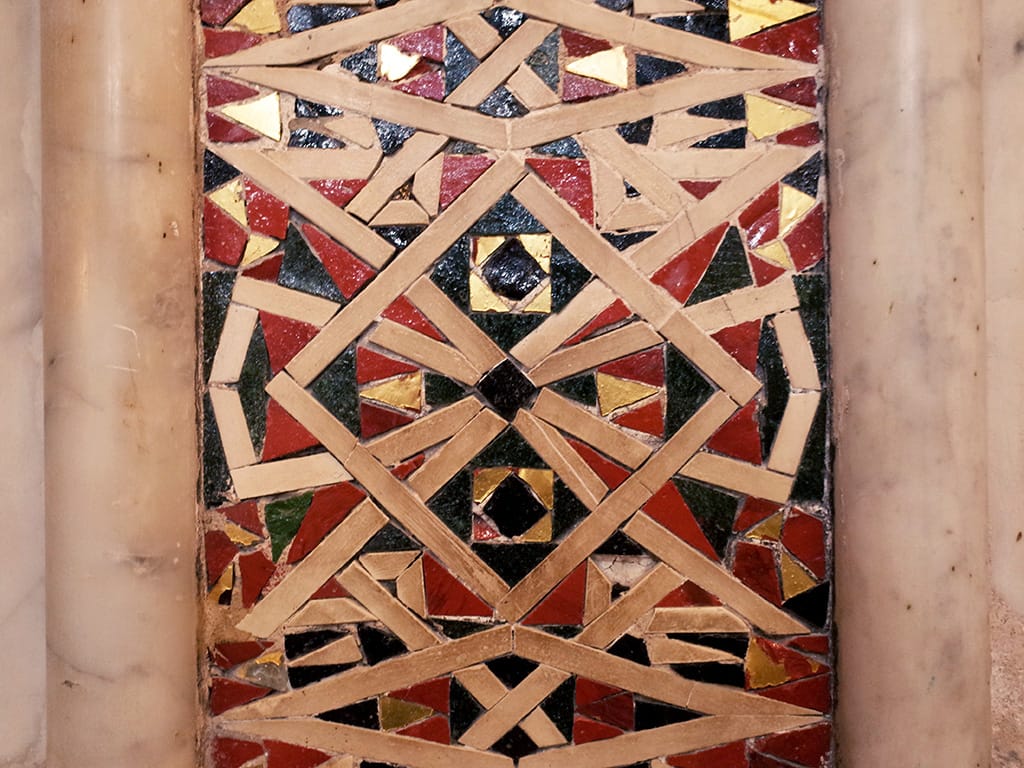
Craftsmen from diverse backgrounds collaborated on the cathedrals, illustrating cultural exchange. This is evident in the beauty of the geometric mosaics throughout the cathedral that are far more North African in style than Italian/Latin
Before entering the cathedral take a moment to appreciate the beautiful bronze doors at the main entrance (under the three arches in the finely decorated marble portal at the front of the duomo), dating from 1200s, these depict biblical scenes from the Old and New Testaments across 42 intricately decorated panels.
Heading inside, your eyes will be instantly drawn to the end of the main nave and above the altar where the Christ Pantocrator is the dominant figure in Monreale’s mosaics. In total, an astonishing 6,340 square meters of mosaics cover the interior of Monreale cathedral – equivalent to almost 14 entire Sistine Chapel ceilings.
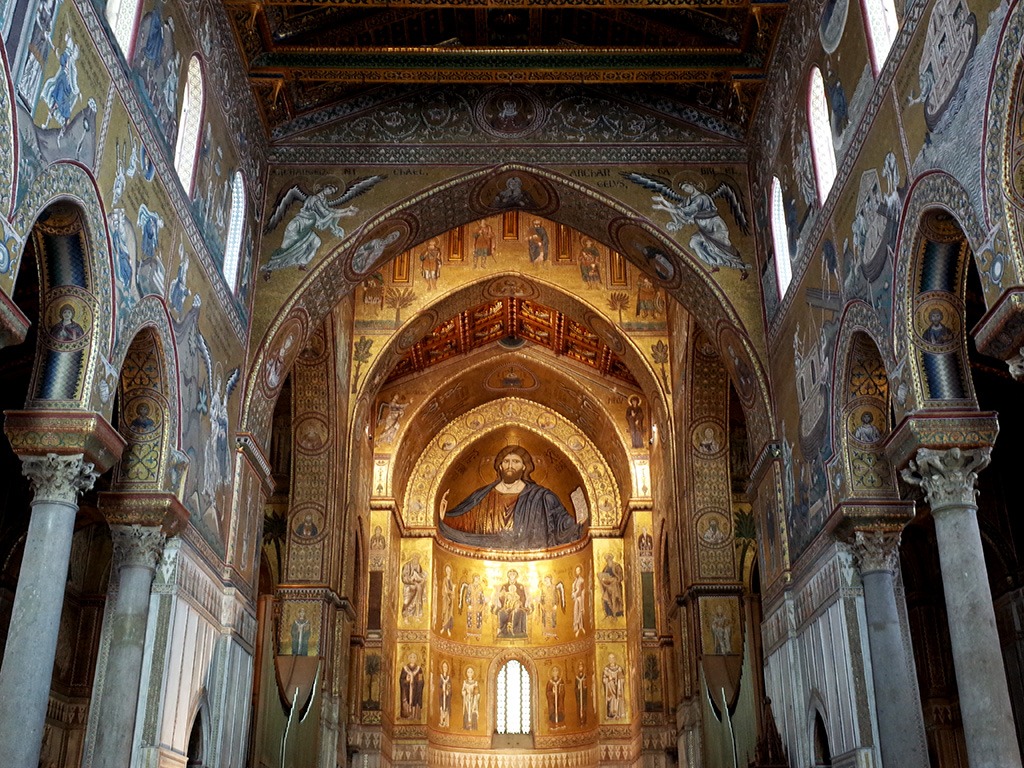
The central apse displays the Christ Pantocrator mosaic – made up of thousands of gold tiles, it is impossible to miss
Key information about Monreale cathedral:
- Location: Piazza Guglielmo II, 90046 Monreale PA (adjacent Piazza Vittorio Emanuele)
- Getting here from Palermo: Bus 389 (45 minutes on average, direct from Piazza Indipendenza to Fontana Del Drago, Monreale) + 10 minutes walk. Driving (30-45 minutes), parking at Parking Monreale Duomo
- Entrance and tickets: Open daily 09.00–13.00 (excluding Sundays), 14.00–17.00 (including Sundays). The main church is free to enter, and enhanced tickets offer access to the terraces and cloister. Check the official website for full details and latest pricing.
To summarise
If you’ve made it this far you now have everything you need to visit Palermo’s Norman duomo, and also the nearby cathedrals in Monreale and Cefalù. The importance of these monuments cannot be understated, and hopefully this guide proves useful in planning your Sicily itinerary. If you have any further questions about travelling in Italy, reach out here.