
Published:
July 23, 2026
Last updated:
August 30, 2026
Linosa is one of the most remote places in Italy open to visitors, and one of the country’s least inhabited islands. Famous for its volcanic landscapes, untamed nature and peaceful atmosphere, it feels a world away from the version of Italy most people know. In this article I’ll share everything you need to know about visiting and exploring Linosa based on my personal travel experiences.
First time visitor to Linosa or returning traveller? This guide shares what you need to know for any trip.
Visiting Linosa island in Sicily, made easy
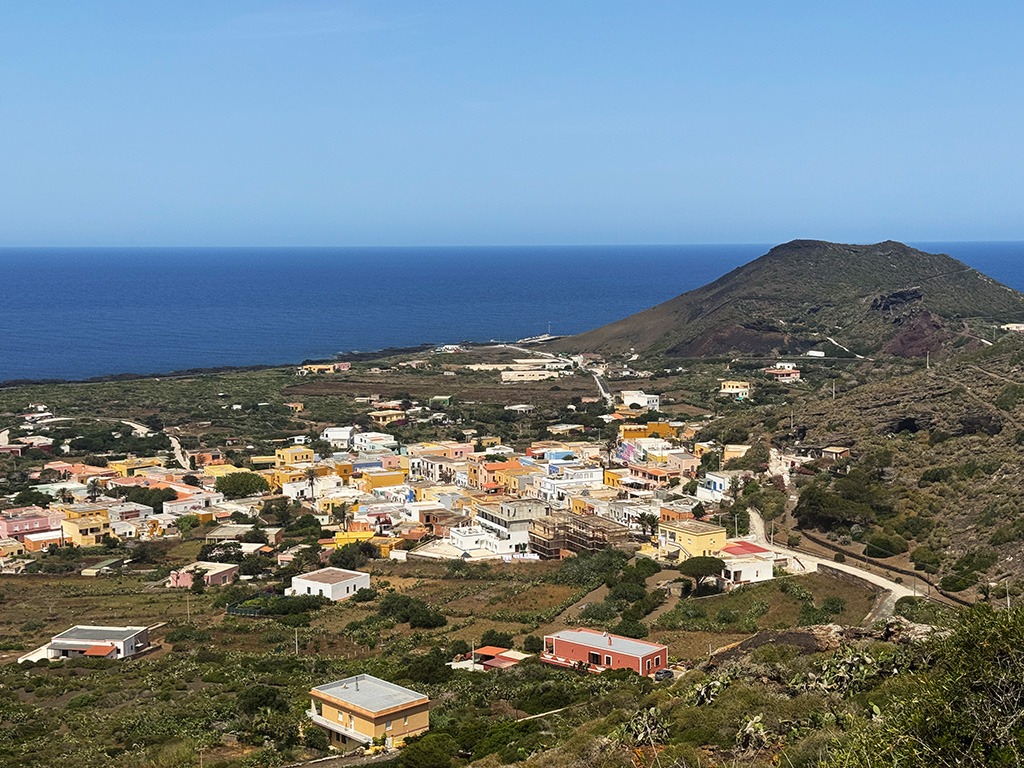
The island is characterised by dramatic contrasts: deep black volcanic rocks and dark sand beaches are framed by abundant and bright Mediterranean scrub and the pastel-coloured houses of the main village. Because of these unique physical characteristics, Linosa is widely regarded as a living open-air museum of geology and nature, entirely untouched by mass tourism. Curious to understand more about this island? Let me share with you:
Who is this guide for?
This guide has been written for those interested in travelling to Linosa island in Sicily, either for the first time, or as a returning visitor looking for up-to-date information. The information included in this guide will make planning a trip to Linosa straightforward, regardless of the time of year you’re looking to visit. For more guides about visiting Italy’s Pelagie islands, click here:
Quick facts and frequently asked questions about Linosa
Finding reliable and up-to-date information about Linosa in English can be surprisingly difficult. As such, below are some quick facts and the answers to common questions about Linosa, but if you’re already familiar with the island you can click here to skip this section.
Where is Linosa?
Linosa island is situated in the Sicily channel of the Mediterranean, 175 kilometres from the southern coast of the main island of Sicily and 165km east of Tunisia; almost exactly halfway between Africa and Europe. The island is second largest after Lampedusa (which sits 45km to the south) in the Pelagie archipelago, and is administered by the Comune of Lampedusa and Linosa, part of Agrigento province.
How big is Linosa?
Linosa is a small island, covering an area of 5.4 square kilometers (2.1 square miles). If you’d like to picture that, it’s roughly 1.5 times the size of Central Park in New York.
What is the population of Linosa?
Around 433 people live permanently on Linosa according to the most recent estimates, mostly around the island’s main village and immediate surrounding area.
Why visit Linosa?
Linosa is somewhere that travellers who enjoy isolation and remoteness should visit. The island’s interior and surrounding sea are among the most pristine natural environments in Europe, making Linosa a draw for hikers, divers and nature lovers alike.
Is Linosa a volcano?
The island is volcanic in origin, having been formed by multiple eruptions that began around 1 million years ago. This activity created the island’s distinct volcanic cones and craters (such as the one pictured below), with activity ceasing roughly 500,000 years ago on the island. The nearby underwater active volcanic complex extends significantly beyond the land area where there are over 20 individual underwater eruptive centres.
Can I pay with credit/debit card on Linosa?
Until recently, shops, restaurants and accommodation on the island only accepted (Euro) cash due to the island’s limited internet infrastructure. However, now many businesses accept card payments. While I had no issue using my card on my most recent visit (June 2026), it’s still wise to have cash with you during your visit to pay for small transactions.
Is Linosa car free?
Linosa is not car free. Residents use cars to get around the island, and when travelling to Lampedusa or Sicily via ferry. Non-residents are not permitted to bring vehicles onto the island during the summer, but may do so outside of the busiest periods.
When is the best time to visit Linosa?
Linosa is the definition of a seasonal destination. Getting here and exploring the island can be difficult from late autumn (October/November) until late spring (April/May). As such, trips to Linosa should be planned for June through September when the weather is fair (the heat peaks in July and August), ferry timetables are at their most reliable, and all of the island amenities and activities are operational.
What is the weather like on Linosa?
The island experiences a warm Mediterranean climate with hot, dry summers. Temperatures start to climb around late-April/May and come down again in late October/November. During the winter months, weather can be unsettled as the island’s remote position makes storms common. This can impact ferry and hydrofoil connections to Linosa (more on this below).
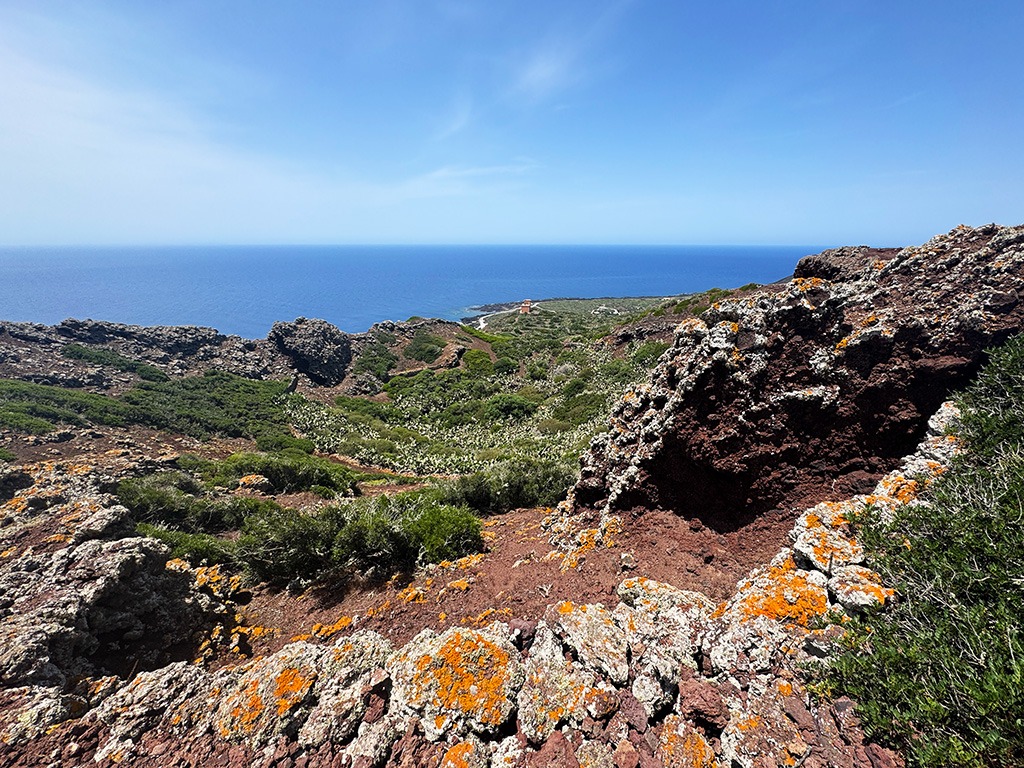
I love Linosa for it’s dramatic nature, black-sand beaches and relaxed place
A brief history of Linosa
Much like its bigger neighbour, Lampedusa, much of Linosa’s history is very recent in Italian terms; only since 1845 has the island been permanently inhabited and the island officially named ‘Linosa’ since 1849.
Prior to this, various peoples used the island as a temporary base, recognising its strategic value in the waters between Sicily and north Africa. The Romans used the island as a base for their naval forces, which began as they faced down the Carthaginians during the Punic Wars between 264-146 BCE. Evidence of Roman settlement includes roughly 150 cisterns cut into Linosa’s volcanic stone to collect rainwater which was used to resupply ships and sailors.
Small archaeological finds discovered on the island over the years, including coins and terracotta fragments, suggest that Linosa may have been used as a waystop for traders crossing the Mediterranean during antiquity.
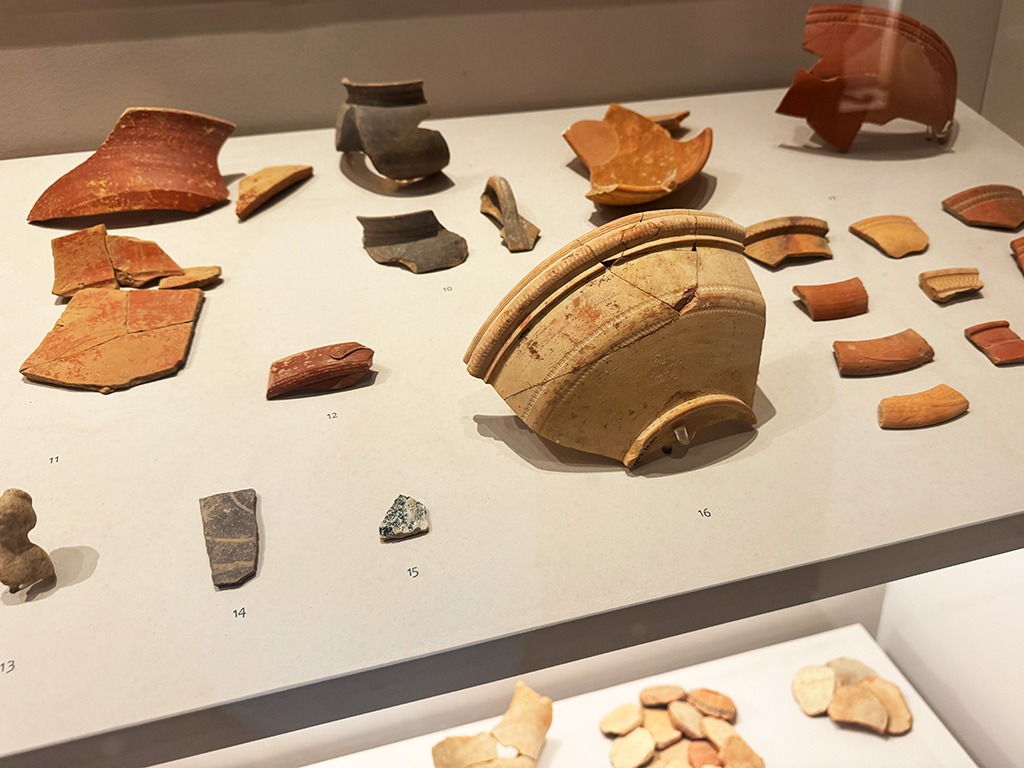
Archeological finds from Linosa are displayed at the Museum of the Pelagian Islands on Lampedusa
During the middle ages, Barbary corsair pirates from north Africa used the island in much the same way: treating it as a conveniently placed pit stop for resupplying during raiding campaigns in Sicily and southern Italy.
In 1667, ownership of the island, alongside Lampedusa, was granted to the Tomasi family by King Charles II of Spain, the then ruler of Sicily. However, no attempt to permanently settle the islands was undertaken at this point as their remoteness and lack of fresh water sources would have made long-term habitation on Linosa and Lampedusa impossible.
This changed in the mid 1800s when the Kingdom of the Two Sicilies, the ruling power of Sicily by this point, decreed that both Linosa and Lampedusa should be settled permanently. The Kingdom bought the islands from the Tomasi family, avoiding the risk that they might sell them to other interested parties such as the British Empire who by this time had a strong presence in nearby Malta, and set up a program of settlement/colonisation.
Modern settlement in Linosa began in 1845 with a population of just 30-40 skilled workers who were paid to relocate from Sicily to Linosa. Despite the island’s fertile soil, enriched by Linosa’s volcanic origin, these initial settlers and those who followed in the years after struggled to maintain a sustainable foothold on the island.
Over time and as technology advanced, the situation on Linosa stabilised with the island becoming less reliant on supplies from Sicily. Following Italian unification in 1861, Linosa became part of the Kingdom of Italy and was administered as part of the same comune (local government) as neighbouring Lampedusa.
During WW2, utilising its semi-remote location, the island was used by the Italian government as an internment location for political dissidents. Axis forces also used the island’s strategic position between Africa and Europe to monitor allied shipping and air activity in the Mediterranean sea. Thankfully the island escaped major involvement in the war however, ultimately surrendering to a British destroyer on 13th June, 1943 without a shot being fired.
Today, Linosa is known for its remote geography, unique wildlife and relaxed living. Nature lovers from across the world make the somewhat long-winded trip here (more on this below) to hike this volcanic island’s interior, relax on the black sand beaches and dive in the wildlife rich waters.
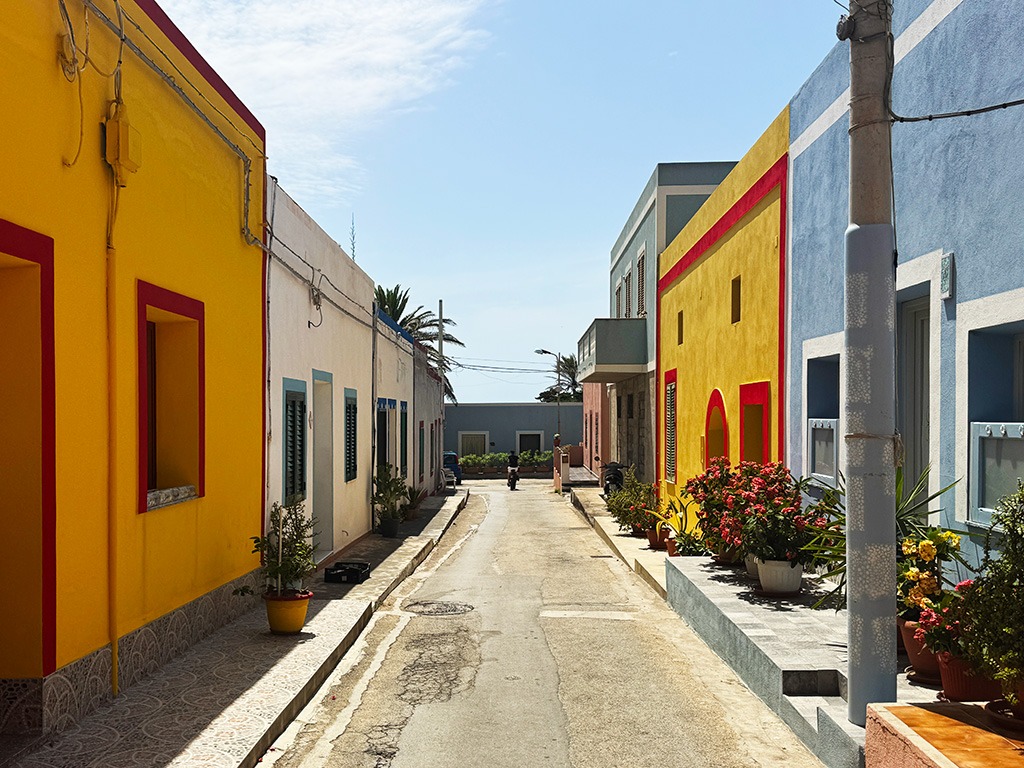
Any visitor to Linosa quickly falls for its old-world atmosphere and brightly painted houses, which contrast beautifully with the island’s dark volcanic landscape.
Getting to Linosa
Arriving on Linosa takes some effort – maybe more than any other Italian destination I’ve visited.
There’s no airport on the island (but there is a helipad, used in the event of emergencies), so travel to Linosa is undertaken via hydrofoils or ferries from Lampedusa or Sicily, or private boat charters/tours. Let’s take a look at each option:
Ferries to Linosa from Lampedusa
Between the two inhabited Pelagian islands you’ll find two operators offering connections; Liberty Lines and Siremar (part of Caronte & Tourist group).
- Liberty Lines handles ‘foot passengers’ only (those travelling without a vehicle) with an average journey time of one hour between the islands.
- Siremar handles residents and visitors travelling with vehicles, as well as cargo, with an average journey time of 2.5 hours.
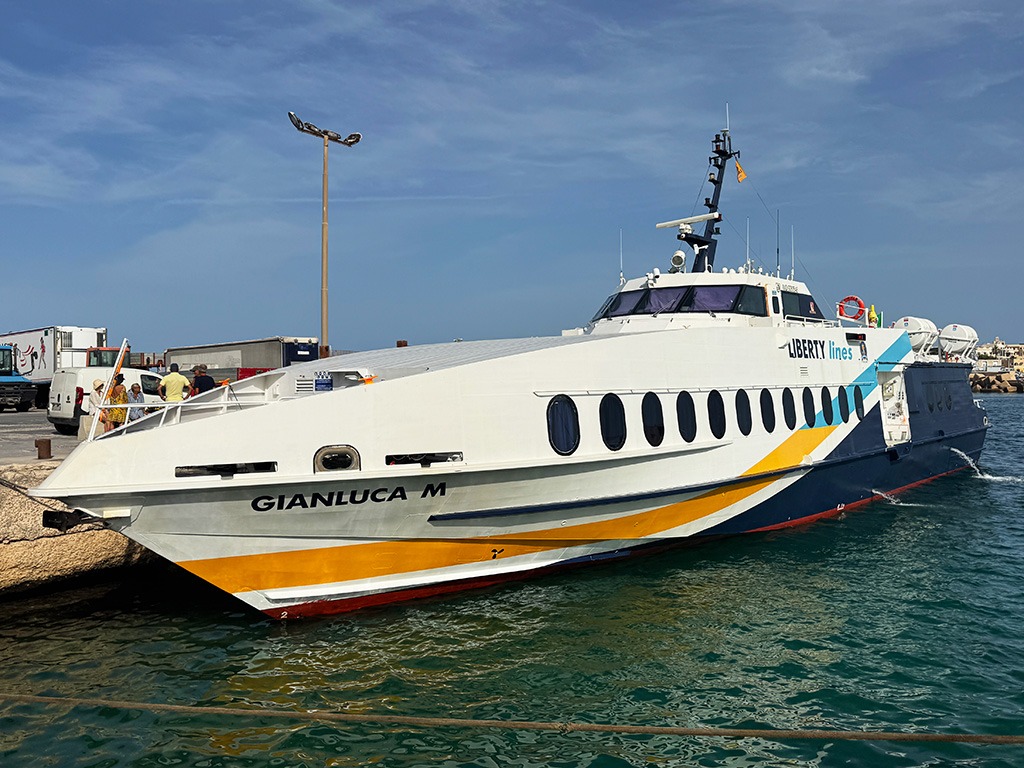
These hydrofoils operated by Liberty Lines are the quickest mode of transport available for reaching Linosa
Ferries to Linosa from Porto Empedocle (Agrigento)
Linosa is also connected to Sicily via ferries from Porto Empedocle near Agrigento. These ferries take around seven hours to transport foot passengers, vehicles and goods from the main Sicilian island to Linosa.
While on Linosa itself, if you haven’t pre-booked your ferry ticket for the end of your stay (generally recommended for peace of mind and to make transit on your day of travel stress-free), you can find the booking office (biglietteria) halfway up Via Re Umberto covering both Liberty Lines and Siremar.
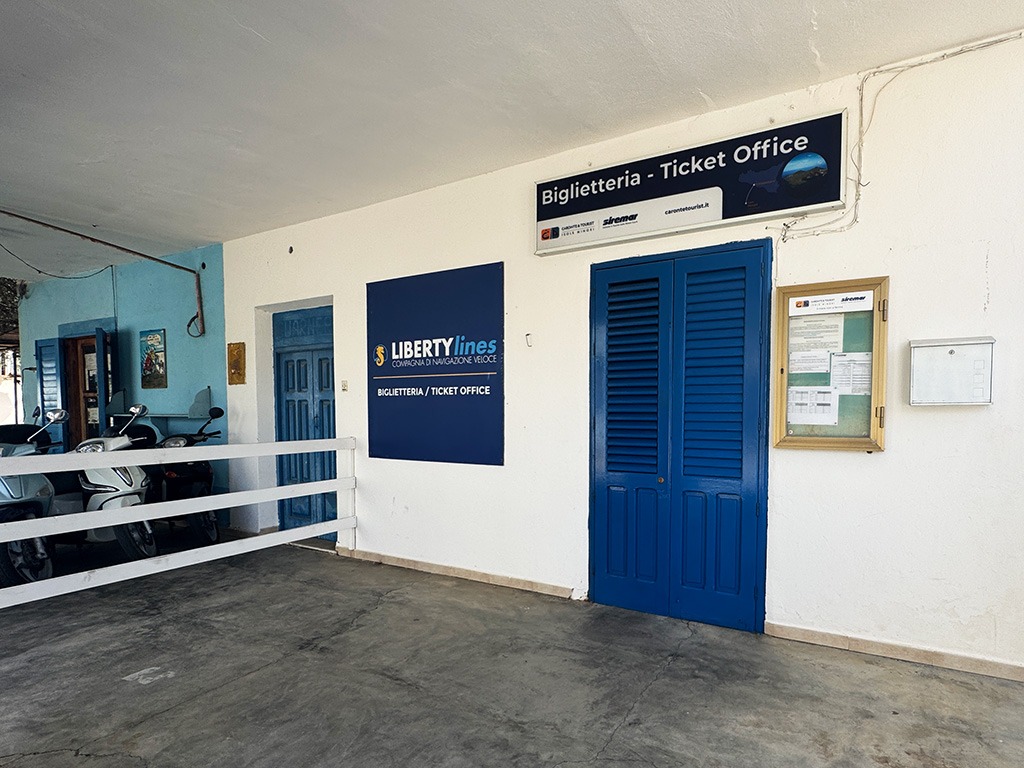
If you find the office closed, refer to the notice board seen here on the right of the blue shuttered doors – this displays opening hours and contact information
The timetables of these ferries shift with the seasons, following demand from visitors and residents, as well as the weather. You’ll find far more connection options during the warmer, popular vacation months from May through October. For real-time schedules and ticket pricing, take a look at DirectFerries, my preferred platform for booking ferries in Italy.
Private charters and boat tours to Linosa from Lampedusa
During the summer you have the option to charter a private boat or take a pre-arranged boat tour to Linosa from Lampedusa.
These excursions provide enhanced flexibility when it comes to timings, which of course means you’ll pay more compared to an independently organised trip using the ferries/hydrofoils, but might be better suited to your travel plans.
Due to the somewhat specialist nature of these experiences/rentals, you won’t find many options available for advance booking online, with the exception of the one featured below. Instead, make your way to Lampedusa port (Porto Vecchio) where you’ll find several skippers and operators offering their services for your trip.
Staying on Linosa
Even if Linosa can be explored and appreciated comfortably on a day trip from Lampedusa (subject to ferry times), those who appreciate nature and la vita lenta (the slow life) may want to stay a bit longer.
Doing so means you’ll be able to explore the island’s untouched scenery at leisure, eat and drink at most, if not all of the restaurants and bars here, and generally slow down to such an extent you might find it hard to return to reality.
Almost all of the island’s accommodation options are focused around the main town and port area. You’ll find a handful of small hotels and B&Bs, as well as apartment rentals.
Personally I’d recommend staying in this area so you can easily walk or cycle to the majority of the food and drink options as well as access the hiking paths for the island’s now extinct volcanoes and iconic black sand beaches.
If you’d prefer to go truly off-grid, the areas outside of the main town offer limited options but you’ll find some small villas and home rentals available – take a look at your options here:
Getting around Linosa
The island’s culture emphasises walking or cycling over vehicle use. Its small size means getting around is totally achievable entirely on foot or by bike with the two furthest points being around 3.5km apart (roughly 45 minutes walking at an average pace).
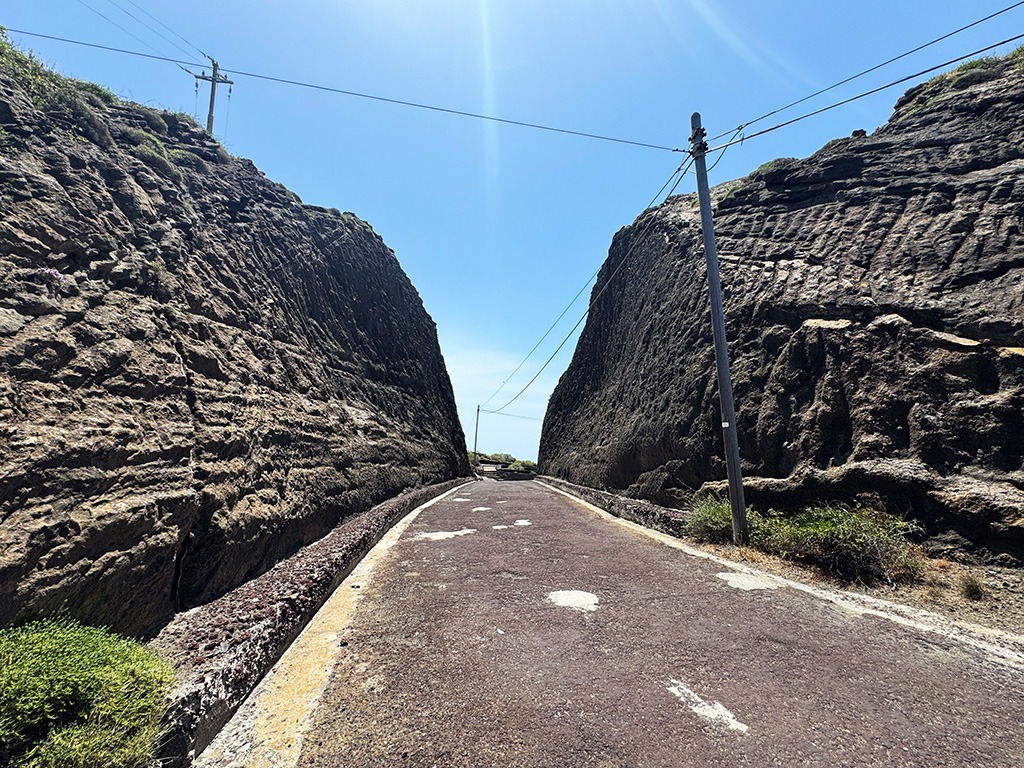
While the roads and routes between the town/port, main beaches and swimming spots are largely flat, they offer little shade which can make walking them in the summer heat quite laborious.
With very few cars on the island and no bus service, cycling is a safe and efficient way to get from A to B. There are several outlets offering rentals on the island – many of these will be waiting at the port when the morning ferries from Lampedusa and Agrigento arrive to promote their services. Alternatively, you can head to the small outlet at Via Re Umberto, 43 right next to the ferry ticket office.
What to do on Linosa
Linosa is a nature-lover’s dream. All activities on the island, whether self-arranged or guided via tours/experiences, are focused around appreciating the island’s breathtaking and unspoiled landscape. Let’s take a look at the principal things to do on Linosa:
Hiking on Linosa
Starting with the big one, literally, hiking around the island’s three ancient volcanic craters that give Linosa its unique shape and landscape is a must for anyone coming here. The peaks are as follows:
- Monte Vulcano (195m)
- Monte Rosso (186m)
- Monte Nero (107m)
Ambitious/seasoned hikers could comfortably complete all three in a single day, but if you’re looking to do just one, my recommendation would be the highest of the three, Monte Vulcano.
The ascent starts from just outside the main town and takes intermediate/medium level hikers around 1.5 hours to complete, taking you up to the volcanic crater and back down again.
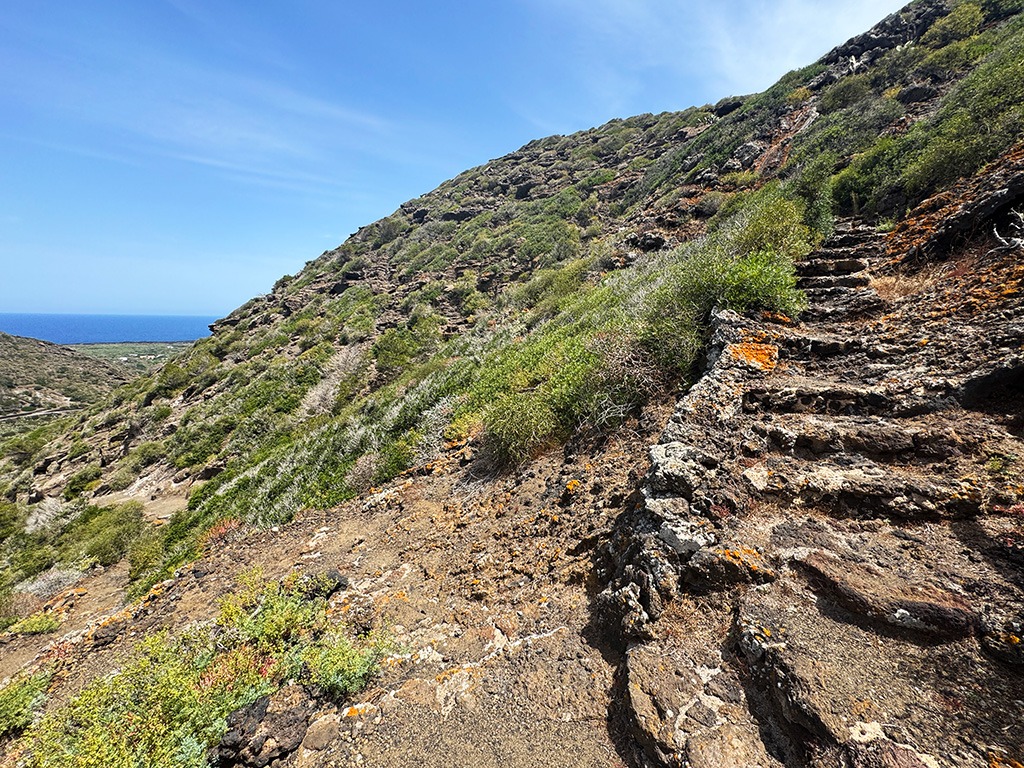
The paths range from rough, unrefined slopes and man-made steps, to wide gravel stretches which the occasional vehicle uses to get up here for management of the natural park.
As you climb you’ll be rewarded with panoramic views of the island, and on a clear day you’ll even be able to see Lampedusa 45km away. At the summit, the ring of the now-extinct volcanic crater can be clearly seen. At the very top you’ll find a natural panoramic terrace that is the perfect place to take a break and appreciate the views before beginning your descent.
A personal highlight for me the first time I visited Linosa was being able to do a full loop of the crater, and then step down into it, something you cannot do at other volcanoes in Italy such as Etna in Sicily and Vesuvius in Campania (for the obvious reason that they are in fact still very much active!).
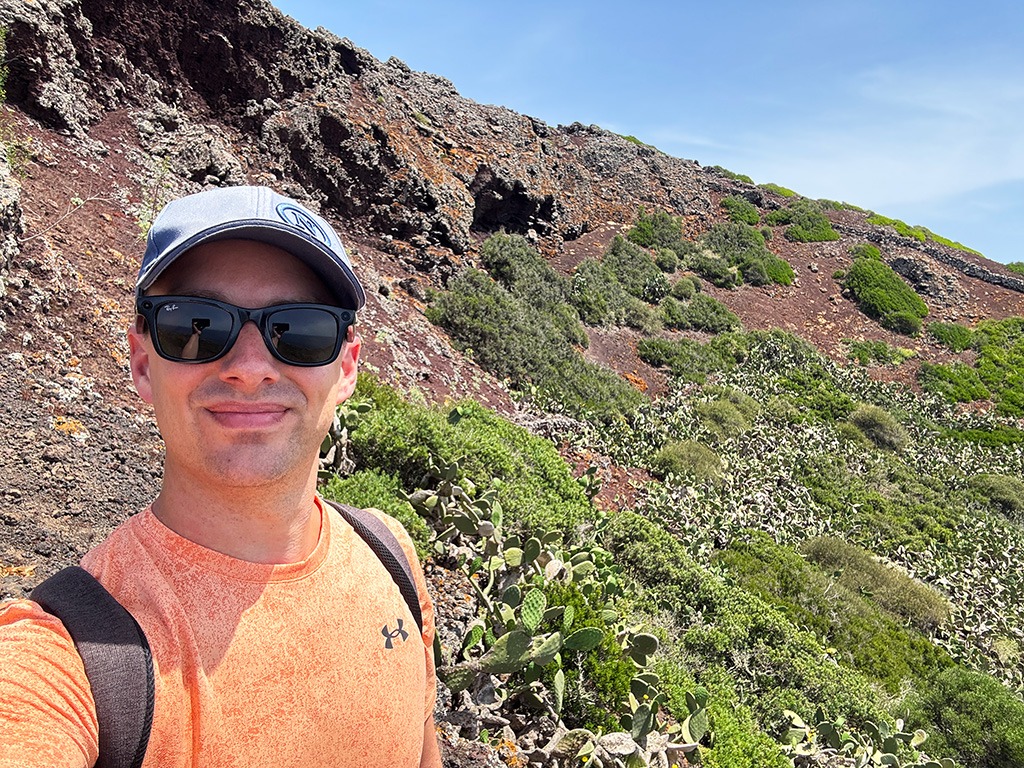
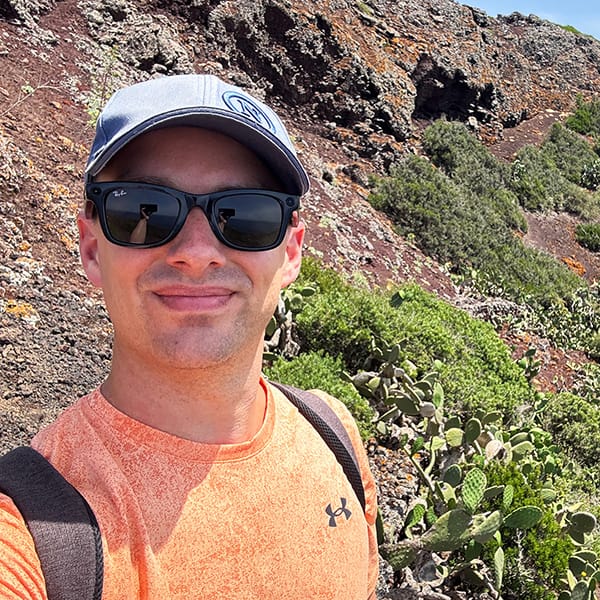
Not usually one for selfies, reaching Linosa and then being able to stand in the crater of Monte Vulcano was something I wanted to mark. Visiting the island had been on my bucket list for a long time!
Climbing the other two peaks on the island – Monte Rosso and Monte Nero – are less time intensive, with each taking around an hour maximum to complete on a similar mix of pathways to the ones you’ll find on Monte Vulcano.
In all cases appropriate footwear is essential. I recommend something that covers/encloses your entire foot as the fine volcanic material will quickly find its way into sandals and cause all matter of discomfort.
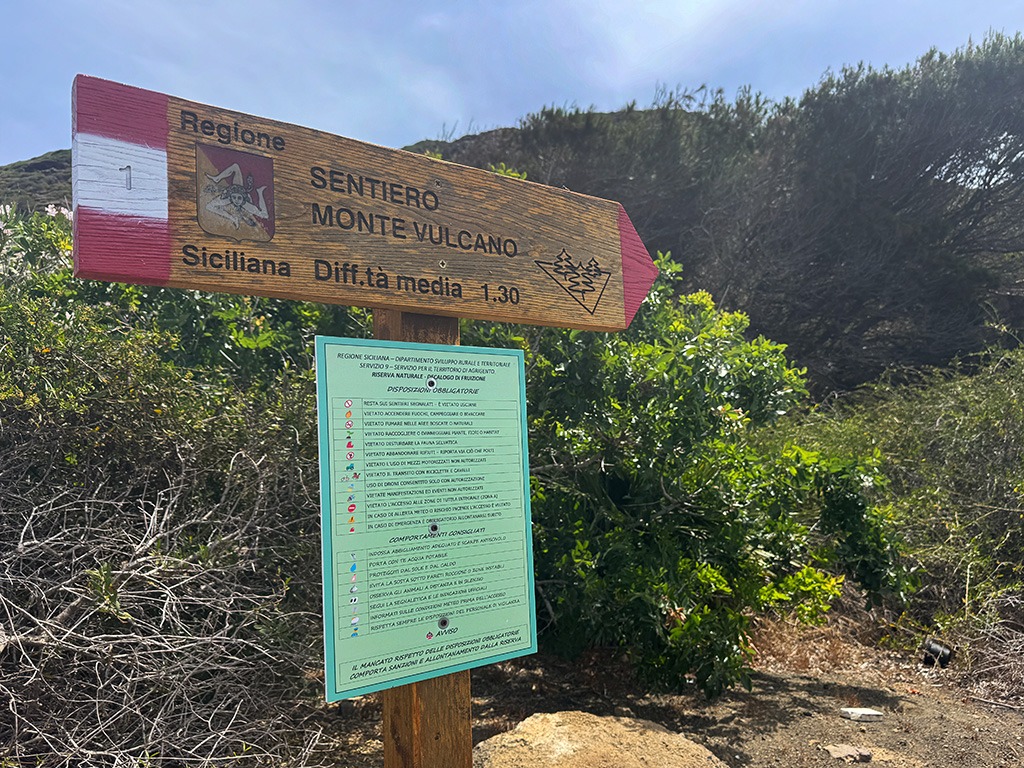
I wouldn’t recommended relying on Google Maps to guide you on these treks: limited data and information means the routes are unreliable. Instead, follow the signs like the one pictured here that you’ll find at the start of the ascents and throughout the routes.
Beaches on Linosa
A major draw for a lot of visitors coming to Linosa are the island’s secluded and unspoiled natural beaches, coves and inlets.
Beyond the fact that almost all of Linosa’s coastline is untouched by development, the island’s volcanic past means the sand and rocks here are a deep black: something you rarely find in Italy, other examples are the island of Pantelleria, and on Stromboli in Sicily.
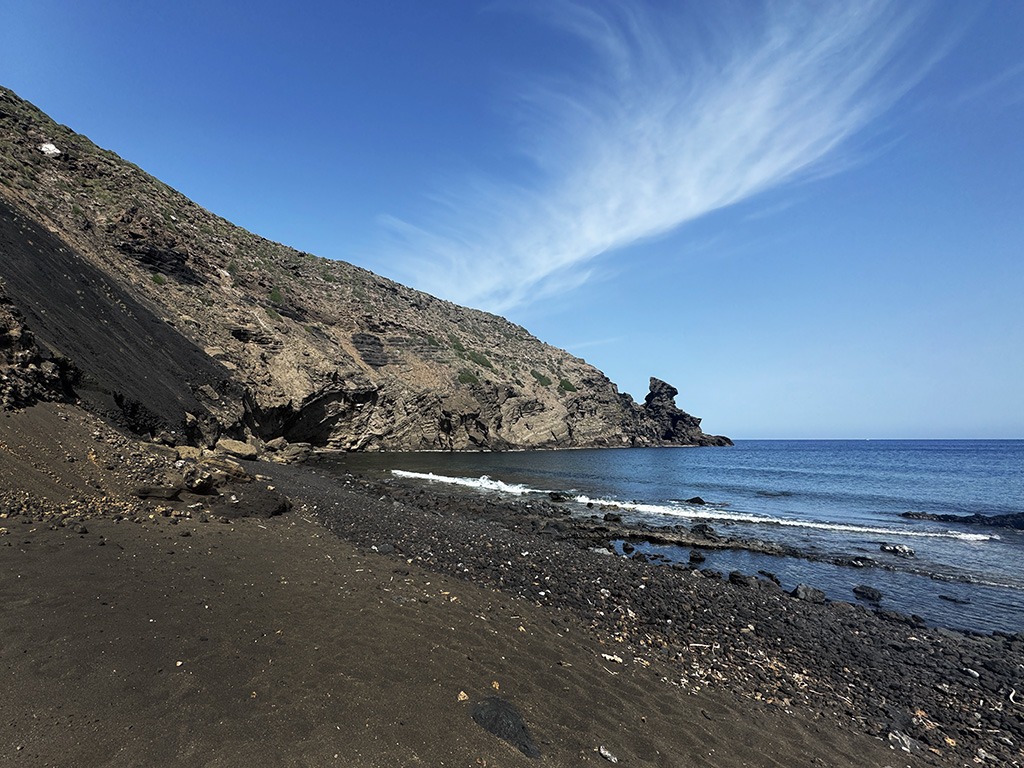
Linosa’s dark, coarse sand might not be to everyone’s taste, but it does produce striking landscapes.
Linosa’s natural beaches are intended to be enjoyed with minimal disruption to the environment, so you won’t find beach clubs on the island that offer services such as sunbed and umbrella rental.
If you enjoy the unspoilt nature of Linosa’s beaches, my favourite stretch is right near the main town and port area: head right (east) as you exit the port and walk along until you find a spot that appeals. At the very end of the path, just beyond where it disappears into the landscape, you’ll find a secluded cove with amazingly clear water – possibly the clearest I’ve encountered anywhere in Italy.
Wildlife on Linosa
Linosa is a haven for wildlife, both on land and at sea, and is a major driver of tourism for the island. Many visitors combine trekking and diving with animal spotting, so look out for:
Loggerhead Turtles: A main reason many wildlife lovers visit Linosa is to see Cala Pozzolana di Ponente beach, a critical nesting site for loggerhead turtles. Known in Italian as Caretta caretta, they lay their eggs in the black sands of the bay which acts as a vital natural sanctuary for this endangered species.
Scopoli’s Shearwater Seabirds: For birdwatchers, the island is famous because it hosts a large colony of Scopoli’s Shearwater (Berte Maggiori). Thousands of these birds gather on the water at sunset, creating a unique spectacle as they call out before returning to the cliffs.
Marine Fauna: The crystal-clear waters surrounding the island are abundant with fish and other marine life. Thanks to the protected marine reserve and volcanic drop-offs, divers routinely spot groupers, parrotfish, and dolphins.
Volcanic Flora: On land, the fauna is relatively limited, but the flora is incredible. Linosa is home to over 250 flowering plant species, many of which are endemic, thriving beautifully in the mineral-rich volcanic soil alongside the island’s famous (and delicious) wild capers.
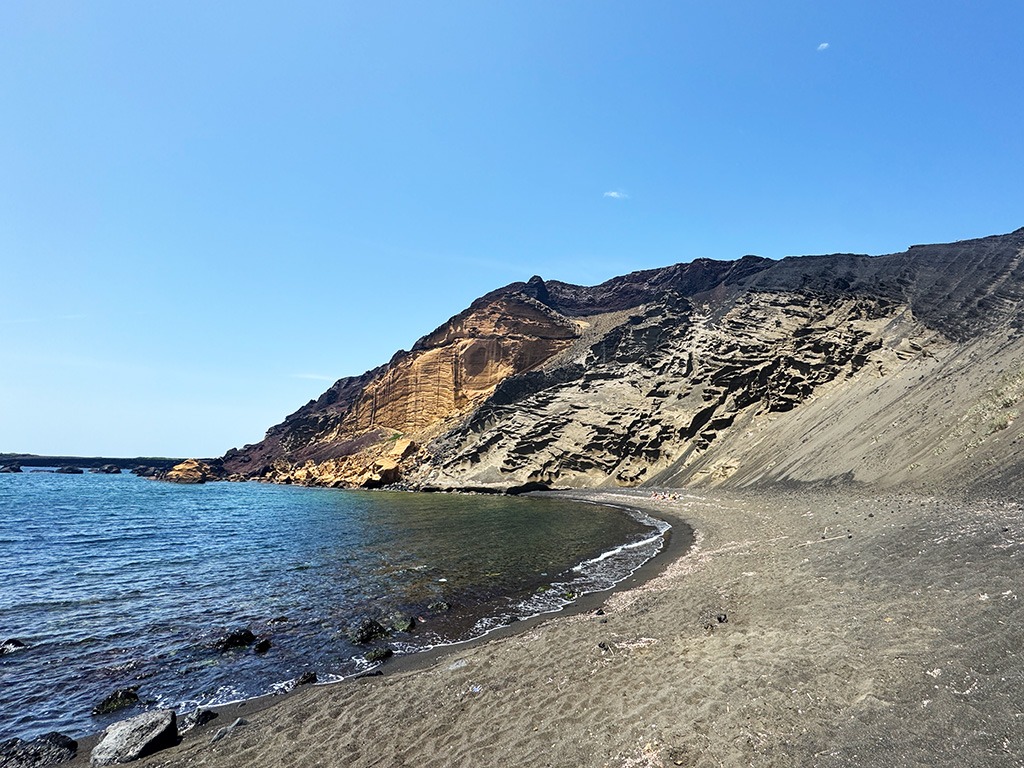
Linosa’s famous Pozzolana, beyond being naturally breathtaking, is home to some of the island’s most unique wildlife
Diving/snorkelling in Linosa
Linosa, much like Lampedusa (and the third uninhabited Pelagian island, Lampione) is renowned for its diving and snorkelling. The protected waters, combined with the natural geography of these islands; a mix of shallow, protected inlets and deep and steep cliff descents where coral and wildlife thrives, make them a mecca for underwater explorers.
Aside from private, self-organised trips for those with experience, excursions can be organised via local operators. Many of these are actually based in Lampedusa’s porto vecchio (old port) where trips can be booked in person based on live weather conditions, but you will find some experiences online that can be organised in advance:
Boat tours on Linosa
If all of the above sounds far too energetic for you and you’d rather really embrace Sicily’s famous ‘vita lenta’ (slow life), you can opt to appreciate Linosa from the water on a boat tour.
Like scooter and bike rentals, many of the island’s boat tour operators will be waiting at the port for ferry arrivals from Lampedusa and Porto Empedocle. The operators are easy to find and make getting out on the water remarkably straightforward. Simply choose the operator/experience that appeals to you the most and follow them to the boat. The joy of this old-school method is that you can be on your tour boat within minutes of getting off the ferry.
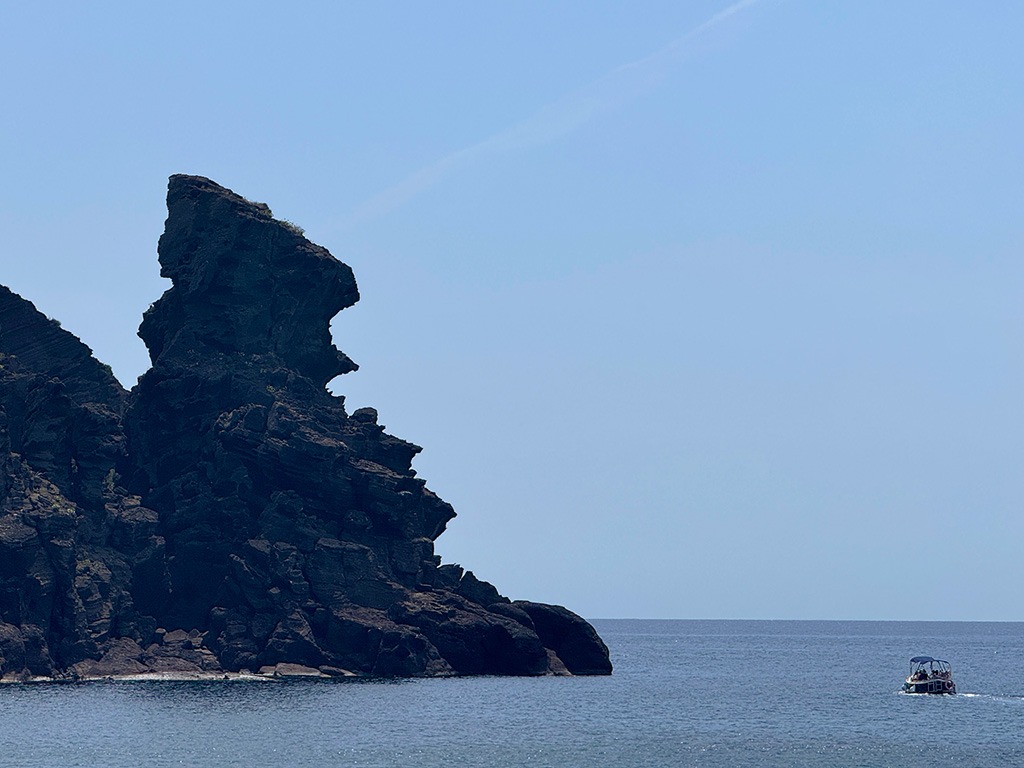
Get out on the water for a special perspective of Linosa’s stunning coastline
These tours typically circumnavigate the island across the course of the tour, highlight Linosa’s main landmarks and sometimes provide refreshments (depending on the exact experience you opt for). Many will stop at famous locations like the Faraglione and Pozzolana to allow you to swim in the famously clear waters, before ultimately returning to the port.
Eating and drinking on Linosa
By now it should be abundantly clear that Linosa is not a densely populated urban centre with lots going on. With this in mind, food and drink options on the island are limited but there’s more than enough to enjoy some local cuisine on a day trip or short stay.
Linosa produces exceptional lentils, capers, figs, grapes and prickly pears due to its volcanic soil – all things to look out for at menus at the following locations on the island:
Bars and cafes on Linosa (for breakfast, light lunches and aperitivo)
Starting in the port/main town area, there are two traditional bars that offer all the regular options of a day-to-day cafe in Italy. Bar del Porto and Bar Errera make for convenient spots to grab something before and after a ferry (located a stone’s throw from the jetty), open throughout the day for breakfast, light lunches, takeaway, and aperitivo.
You’ll also find small kiosks offering light refreshments near some of the island’s famous coastal beauty spots and beaches. However, these are seasonal and subject to visitor numbers, so can’t be relied upon in my experience. It’s best to grab something to eat and drink at the aforementioned bars when needed.
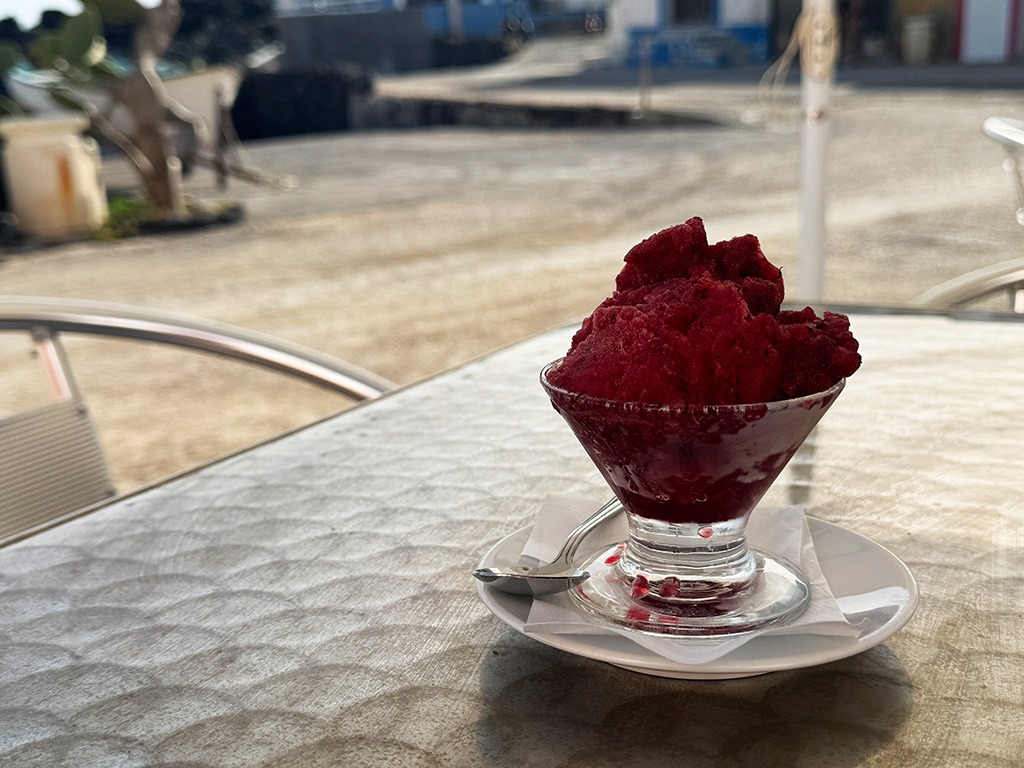
Both of these bars also have mouthwatering selections of gelato and granita, meaning I will almost always find myself at one of them before a return ferry at the end of a day on Linosa
Restaurants in Linosa (for lunch and dinner)
In the main town of Linosa you’ll find a similarly limited number of restaurants to enjoy a sit down lunch and/or dinner at. That said, the following spots offer ever-changing menus, so across the course of a short stay you’d be able to try most things and experience some of the island’s top specialities. Here are your options:
- La Loggia – This is my go-to place for a relaxing lunch or dinner as I love their shaded terrace and the homely service. The menu features signature items including Linosa’s delicious wild capers, and seasonal dishes based on not just on the time of year, but also general availability. Some items are brought to Linosa from Lampedusa or Sicily, so depending on the ferries (and the weather), you’ll never know what will be on offer. One thing’s for sure; round off any meal with a measure of their homemade liqueur produced from gelsi (mulberries in English), this sweet and soft digestivo has come to be the taste I associate with Linosa following my most recent visit to the island.
- Ristorante Errera – Part of the same building in the port where you’ll find the bar, this restaurant offers whatever has been brought in fresh that day by Linosa’s fishermen. Sitting on their terrace looking at the port, it’s a spot fun to watch the comings and goings of the boat tour operators, ferries and divers.
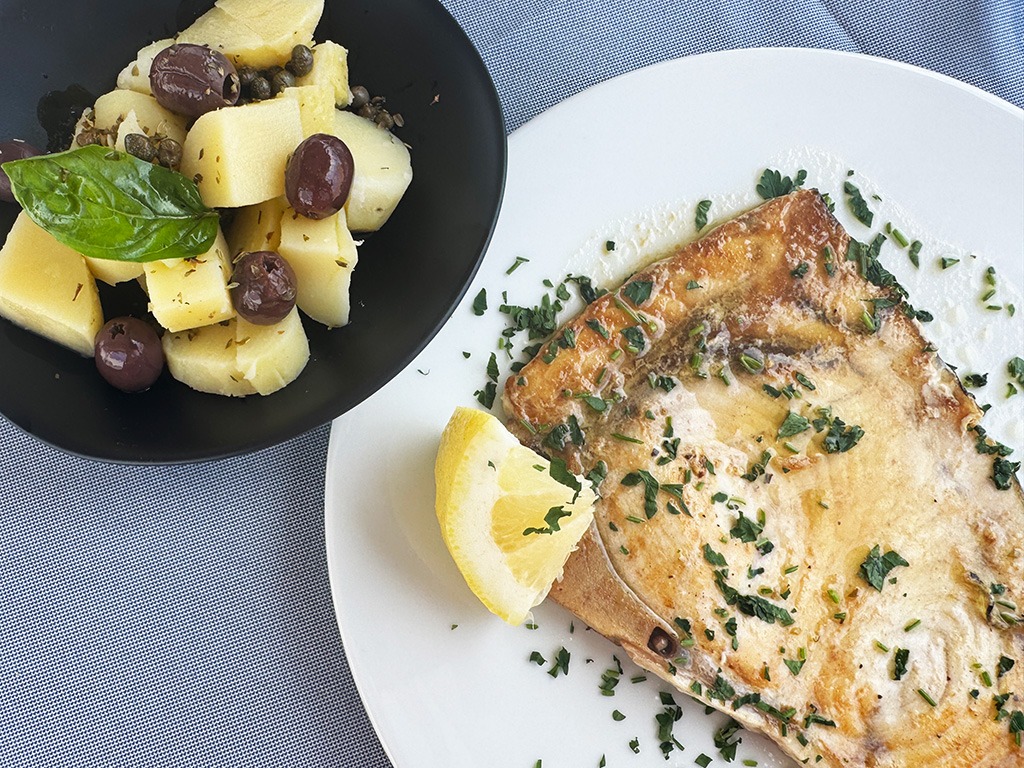
My favourite meal on Linosa was this simple lunch at La Loggia of grilled swordfish with a side of olives and potatoes, accompanied by some of the island’s famous capers
Let’s wrap up
Linosa island is one of Italy’s most remote spots, which rewards nature lovers who make the effort to reach it with spectacular scenery and unspoiled nature. You won’t find the same level of history or wealth of choice as you will on the main island of Sicily, or even on Lampedusa, but if exploring somewhere remote and truly off the regular tourist path sounds appealing, Linosa is for you. Have a question about travelling in Linosa, elsewhere in Sicily or on the Italian mainland? Contact me here.