Published:
August 29, 2026
Last updated:
August 30, 2026
Whenever I recommend someone visit Palermo, the capital of Sicily, I am often asked in turn, “Is Palermo safe for tourists though?” Outdated information and perceptions continue to make potential visitors believe the city is unsafe. The short answer is “yes, Palermo is safe” and this guide debunks the myths, sharing everything you need to know about safety in Palermo, based on reliable data and real experiences.
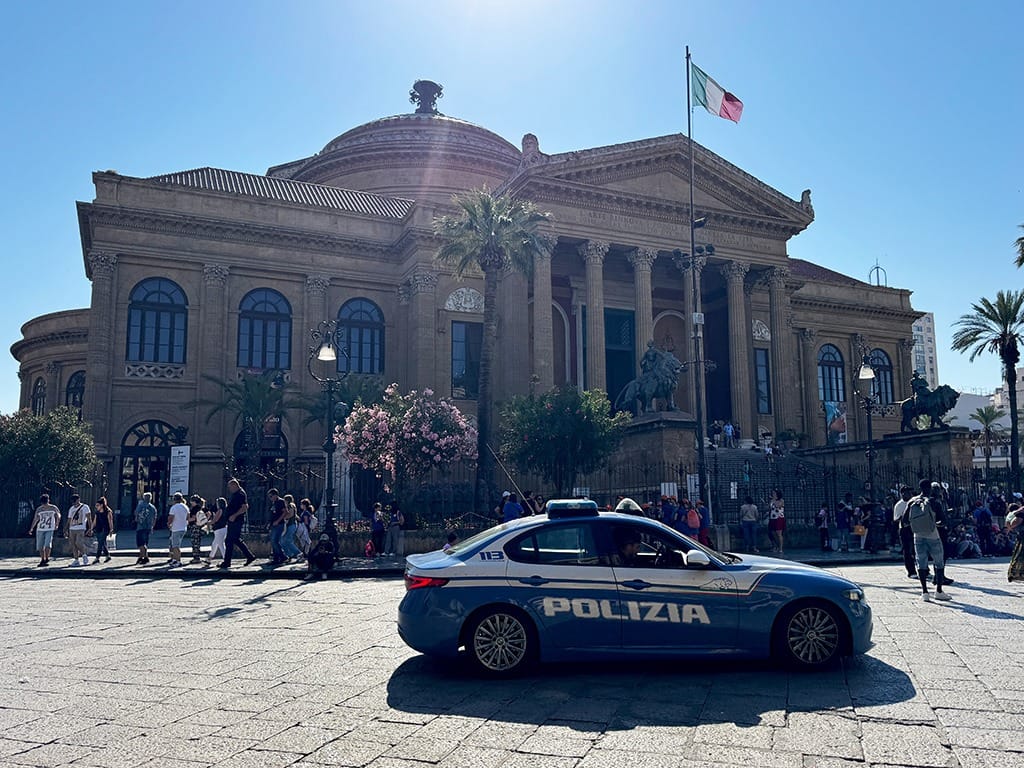
Is Palermo a safe city to visit? I hope by the time you’ve read this guide you’ll feel safe visiting this beautiful city
Palermo Sicily Safety – A Real Rundown on Crime, Earthquakes and More
Visitors to Sicily are surprised to learn that Palermo is statistically safer than many other major Italian cities (more on this below), and those who I speak to after visiting the city often tell me how much they felt at ease here.
So why does a perception that Palermo is dangerous exist? The fact that you’ve found this page shows this is a valid question and is what led me to create this guide. I’ve spent a lot of time looking into the data available about crime from reliable sources, speaking to locals, and researching other risks that anyone in Palermo could (in theory) face, including earthquakes.
Combining these insights with mine and Sara’s own direct experiences in the city, let me share with you:
- The headlines about safety in Palermo
- Palermo safety versus other Italian cities
- Key Palermo safety tips & street smarts
- Palermo transport and driving safety
- Safety for solo female travelers
- Earthquakes in Palermo
- The best (and least best) areas of Palermo to visit and stay in
- Common scams and hustles
- What to do in the event of an emergency
Who is this guide for?
I’ve written this guide with first-time visitors to Palermo in mind who are unsure about the city’s safety, whether crime-related or concerning other areas such as earthquakes. Returning visitors to Palermo who have not visited for some time will also find the information in this guide useful, where everything detailed below is correct as of August 30, 2026. For more insights about visiting Palermo, click here:
The Headlines About Safety in Palermo
Cutting to the chase, Palermo is not considered a dangerous city these days, neither based on crime statistics compared to most other major Italian cities, nor in the general imagination of Italians.
Why, therefore, has the question “Is Palermo Safe?” become a common query from travellers coming to Sicily?
Like Naples, this unfortunately tracks back to the city’s association with organised crime and mafia-related violence. While it would be wrong to say that the mafia is no longer active in Sicily, in recent decades, the regional Sicilian and national Italian governments have been more proactively pursuing organised crime networks compared to historical efforts.
Most famously, these efforts were brought to the forefront of Italian politics and public attention after prosecutors Giovanni Falcone and Paolo Borsellino were killed via a bomb attack not far from Palermo in 1992. Falcone and Borsellino were prominent figures in the fight against the Sicilian mafia (Cosa Nostra), leading prosecution and investigative efforts.
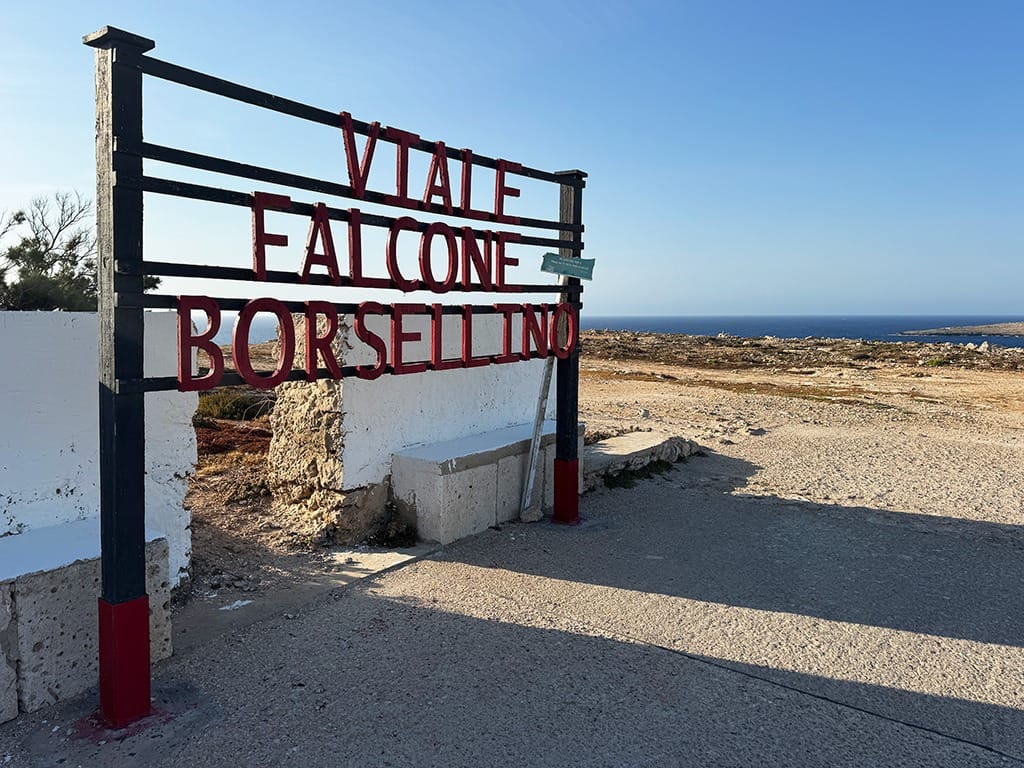
Giovanni Falcone and Paolo Borsellino are now immortalised across Sicily, with Palermo’s airport named after them and other landmarks and roads throughout the region honouring their memory
Their deaths galvanised official and public anti-mafia sentiment in Palermo and across the island, which has led to vast improvements in the general safety of the city and the wider island, where mafia-connected activities have been systematically dismantled and pushed completely away from tourist infrastructure.
Palermo now ranks as one of the safest large cities in Italy – let’s take a look at this in a little more detail:
Palermo Safety versus Other Italian Cities
According to Statista, a reliable data website that pulls information from verified and official sources, Palermo does not rank within the top 15 cities in Italy for recorded petty crime and serious incidents.
Cities including Rome and Milan all appear within this list based on recorded incidents. This data is not based on overall population (where some of these cities are much larger than Palermo), but instead on a ratio of recorded crimes per 100,000 inhabitants.
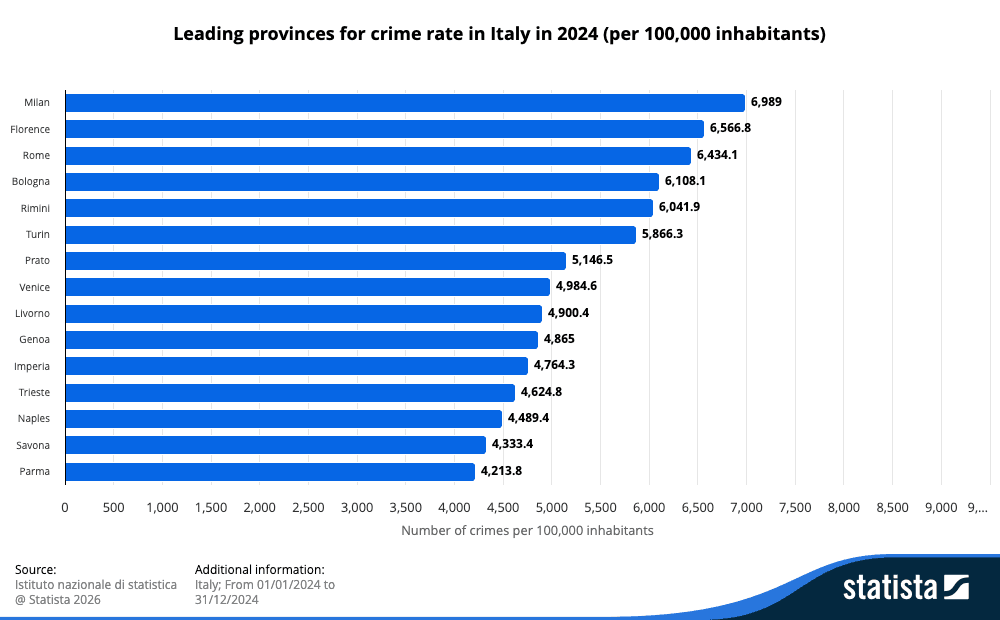
Leading provinces for crime rate in Italy in 2024 (per 100,000 inhabitants) | Crime rate in Italy 2024, by province | Source: statista.com
Digging deeper, this is the same case when it comes to recorded thefts and home burglaries, which are considered a good indicator for overall crime levels.
Palermo doesn’t rank within the top 10 Italian cities, with other locations – including Turin and Florence -featuring in the most recent data. This trend continues for other areas including violent crime. For more insights and data, visit Statista here:
Of course, Palermo is not free of crime, and like any major city, there are certain things any visitor should consider when in the city to mitigate the chances of something bad happening – let’s explore these next.
Key Palermo Safety Tips
Let’s jump in – here are our top travel tips for staying safe in Palermo:
1. Monitor personal belongings when in public
Palermo is a busy city, all year round and at all times of the day. The hustle and bustle, while part of the city’s charm, provides opportunists with the cover needed to pickpocket or steal items from those not paying attention. Be sure to always secure your items, keep bags closed, and never leave items sitting out on table edges when dining and drinking outdoors.
2. Limit the use of headphones when in new/unfamiliar environments
3. Avoid using cash (and therefore carrying it) unless entirely necessary
It is now mandatory for all shops, taxis, and bars to accept payment via card in Italy, removing some of the most common instances where cash was used historically. Eagle eyed opportunists target anyone (visitor or local alike) using cash, where it presents an easy opportunity for theft or pickpocketing. Simply opting for card over cash significantly drops the likelihood of any mishaps on your trip.
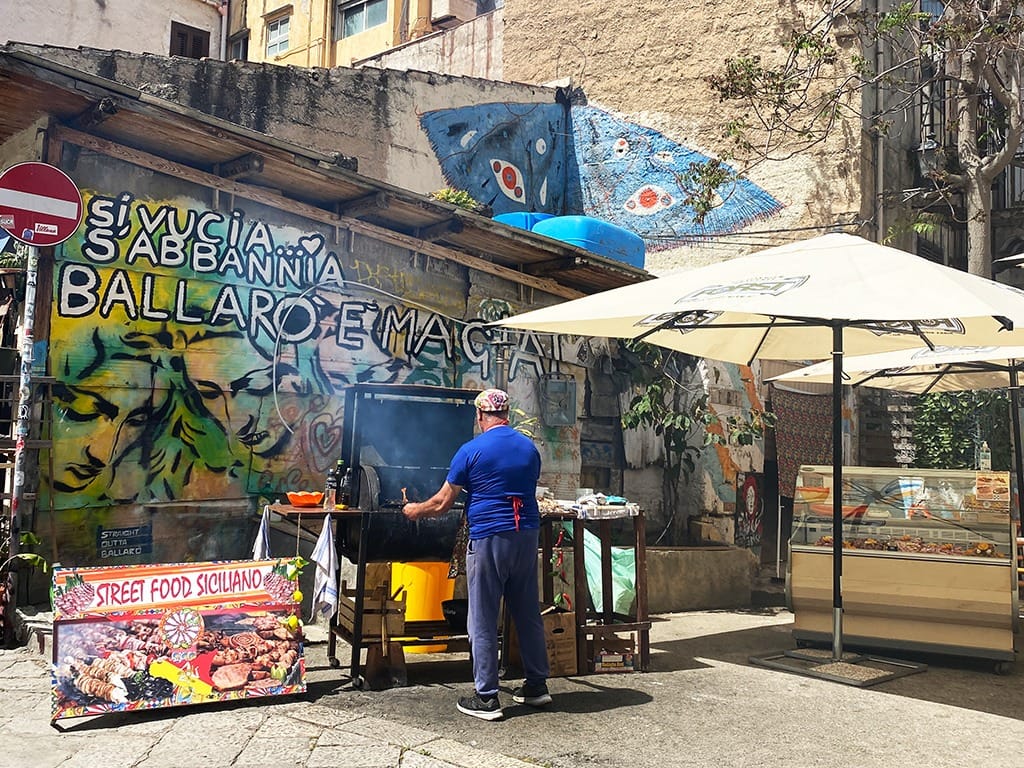
Even small street food vendors are obligated to offer the ability to pay with card
Beyond the above recommendations which could be applied anywhere in the world, here are two top Palermo specific safety and cultural insights:
4. Stick to the main streets
Palermo’s historic centre quickly becomes a warren of residential side streets and alleyways. Getting lost in these is not only stress inducing, but could enhance the chance of a negative experience where petty criminals are on the lookout for confused visitors. This can be avoided by sticking to the main pedestrian and lit routes through the city.
5. An observation on local culture and behavior: The “Palermitano Stare”
My final insight for this section is less of a tip and more of an observation/curiosity to be aware of. The people of Palermo are known to stare at visitors, much like Neapolitans.
While often mistaken as a threat or attempt at intimidation, this is born out of curiosity. Palermitani are fascinated by everyone and everything (possibly an effect of their diverse cultural heritage), so they will look at visitors inquisitively and often.
Once I learned this, I immediately felt more at ease as I understood locals were not attempting to unsettle me.
Are you ready for Palermo?
Best Hotels
Find your perfect base in the Sicilian capital, whether near the energy-filled markets or at one of the city’s luxury, old-world hotels. Book with confidence with Booking.com
Top Attractions
Reserve your entrance to Palermo’s cathedral, Norman Palace and Botantical Gardens, or join expert-led cuisine tours to indulge in the city’s famous food and drink:
Insider Tips
Benefit from our many years of Sicily travel experience, making the most of our insider knowledge to save you time, money and stress when travelling
Are you ready for Palermo?
Best Hotels
Find your perfect base in the Sicilian capital, whether near the energy-filled markets or at one of the city’s luxury, old-world hotels. Book with confidence with Booking.com
Top Attractions
Reserve your entrance to Palermo’s cathedral, Norman Palace and Botantical Gardens, or join expert-led cuisine tours to indulge in the city’s famous food and drink:
Insider Tips
Benefit from our many years of Sicily travel experience, making the most of our insider knowledge to save you time, money and stress when travelling
Palermo Transport & Driving Safety
I talked previously about monitoring your belongings on public transport in Palermo to deter pickpockets; by simply staying attentive, the risk of falling victim to theft while on a bus or tram in Palermo is low.
Beyond that, it’s important to consider the following when moving around Palermo to ensure your wellbeing:
On buses/trams in Palermo
The parameters of personal space are far more intimate in Sicily compared to the rest of Italy which means that buses and trams can get extremely crowded during peak periods.
If you’re using public transport in Palermo during busy times of the day, take your time to get on and off, finding a seat or something to hold onto in the event you need to remain standing. Wear backpacks on your front inside vehicles, and keep your hands over zipper pockets. Pushing and rushing increases the risk of an accident happening – better to take your time than ruin your trip.
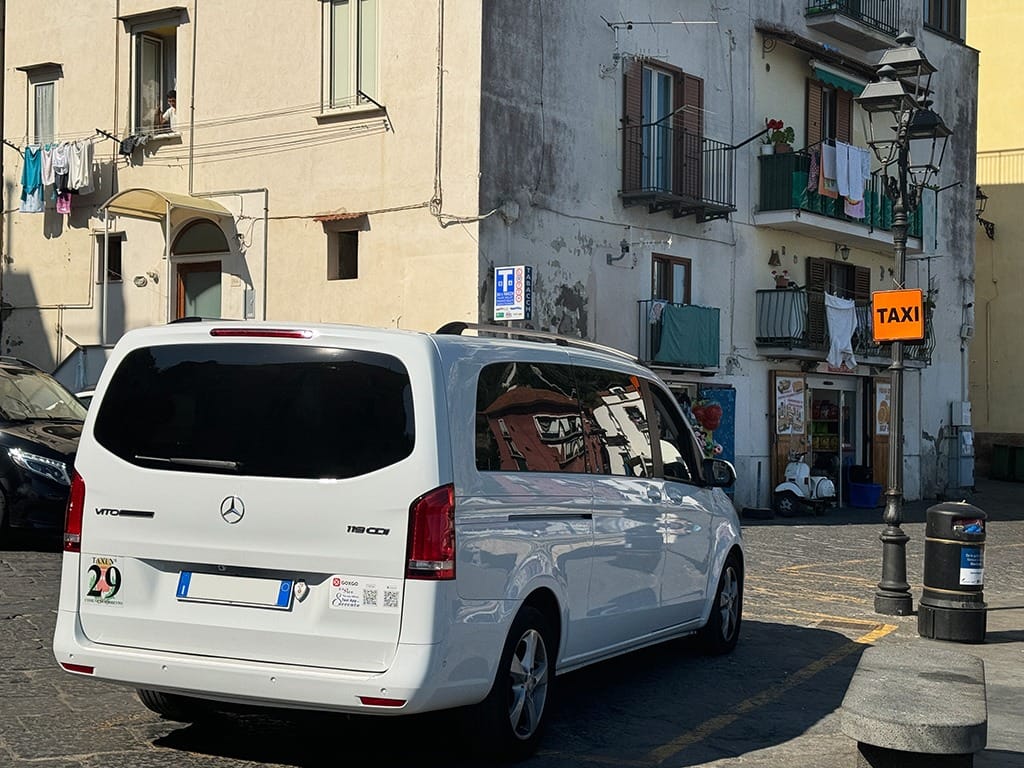
When it comes to taxis, visitors should use only official transport (white cars with their official registration clearly displayed) to prevent possible price gouging or inflated rates from unregistered drivers. This photo is of a vehicle in Sorrento, Campania, but taxis are identical in Palermo (and across Italy for that matter)
Driving in Palermo
This city is where the stereotypes associated with driving in Italy ring most true in my experience; confident and assertive Sicilian drivers can make the roads in Palermo feel chaotic and intimidating, even if you’ve driven in Italy before.
If you plan to drive in Palermo, try to do so outside of rush hours (8:00– 10:00, 16:00–19:00) and avoid the historic centre altogether as this is a ZTL (Zona a Traffico Limitato / Limited Traffic Zone). Only local residents, taxis, delivery drivers, and emergency services are permitted to drive within the ZTL, and contravening this will result in a heavy fine.
Driving in Italy isn’t half as bad as some of the stereotypes make out. By understanding a few fundamentals you can explore this incredible country by car, without the stress. Find out everything you need to know about getting on the road in Italy in my detailed guide here:
Walking around Palermo
Palermo’s non-stop energy means that the main streets in the historical centre are almost always full of people and traffic. With this in mind, stay alert to the movements of both pedestrians and vehicles as you explore the city. Note especially the large proportion of scooters in Palermo. Locals use them to zip around traffic, and it is common practice (though still officially illegal) for riders to jump traffic lights and crosswalks.
When crossing any road in Palermo, or anywhere else in Italy, the key is to make direct eye contact with the approaching driver while stepping out with clear, confident intent. Hesitating on the curb often causes drivers to keep going, ignoring foot traffic, but locking eyes and maintaining a steady pace ensures they’ll acknowledge you and adjust their speed accordingly.
Is Palermo safe at night?
Nothing in data sources states that Palermo is more, or less, dangerous at night. If you’re exploring the city after sunset, I’d recommend sticking to well lit main streets, not using headphones, and minimising how much you have your phone out – the same common sense approaches anyone should apply when in a major city at night.
Is Palermo safe for solo female travellers?
When it comes to women’s safety, numbers only tell half the story; street level feel and lived experiences matter far more. The consistent feedback from my female friends who live in or travel to Palermo, is that the city feels accessible and safe, provided you are prepared for its intense street energy.
Here is Sara’s personal experience and her advice on what to expect in the city:
“I’ve done a lot of solo travel and have never felt unsafe anywhere in Italy, including in Palermo. The city is one of my favourite places to visit, with an amazing energy and so much to do – I think that if you are not used to this it can feel a little overwhelming, but the best thing to do if it feels too much is find a place to sit down, order a drink, and give yourself a moment to adjust to the fast pace.
The things I always like to know before a solo trip are can I travel into my destination safely, and do I need to be cautious when out exploring alone. In Palermo, the airport and train station are both easy to navigate when you arrive, as well as being well-lit and with plenty of staff around even in the evenings.
I walk everywhere in Palermo, and have never felt unsafe. As in any big city, I stay aware of my surroundings and stick to main routes rather than wandering in residential neighborhoods at night – booking accommodation in the historic centre is the easiest way to avoid this.
Finally, one thing that took me a little while to adjust to is that it’s completely normal for Italians to stare at you. They do this to everyone and there is very rarely any intent behind it, it’s just something they do so you can ignore it if it happens to you.”
Earthquakes in Palermo
Palermo and the rest of Sicily are within an active earthquake zone, where the Eurasian and African tectonic plates converge nearby.
Through the course of the island’s history, there have been major earthquakes that caused destruction across Sicily, such as the devastating events of 1693 in the southeast. However, Palermo is situated further from the primary fault lines that run along the eastern coast. The last major earthquakes near Palermo were in 2002 and 1968.
That doesn’t mean the authorities are complacent. Sicily, including Palermo, is one of the most monitored parts of the world when it comes to the movements of tectonic plates, overseen by Italy’s National Institute of Geophysics and Volcanology (INGV).
In the event that experts believe a major quake is imminent, thorough evacuation plans for the city and affected areas will be initiated. Statistically, based on historical data, there is a small chance of an earthquake powerful enough to cause disruption during a typical visit to Palermo.
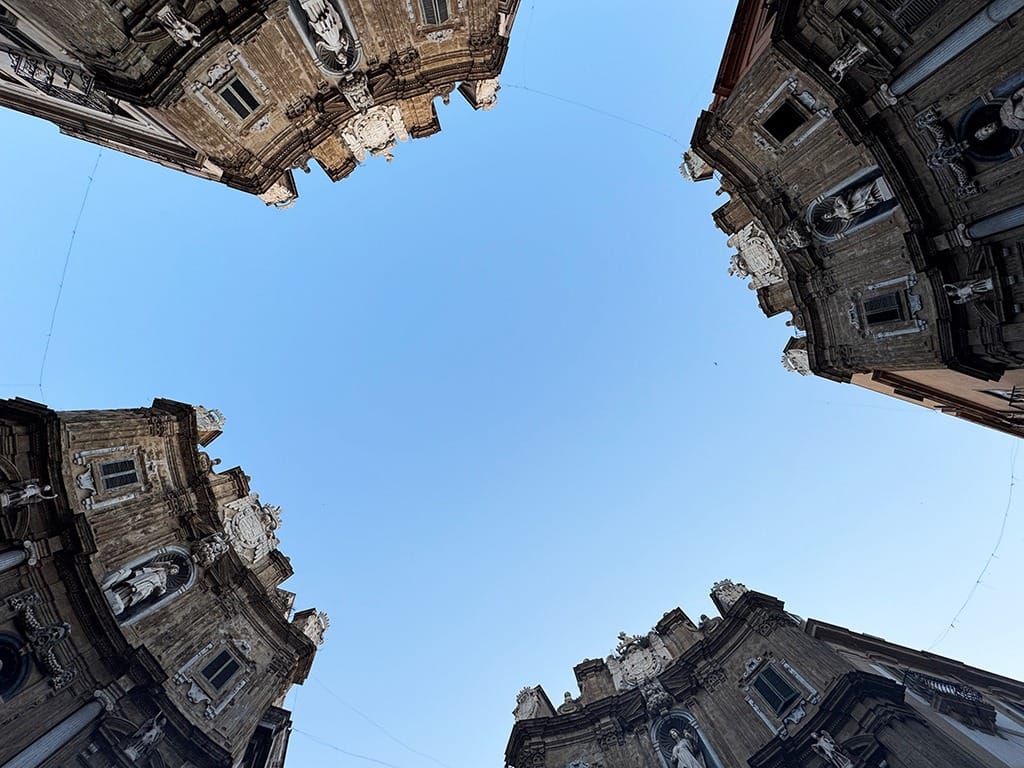
Over recent decades, much of Palermo’s iconic architecture has been reinforced to protect against possible earthquake damage
Safest Parts of Palermo (and Least Safe)
Returning to the theme of crime, you may be wondering if there are parts of the city that are safer than others. While data online is spotty on specific neighborhood breakdowns, relying on firsthand experience and local knowledge is a reliable indicator to understand the best areas in Palermo.
The Safest Areas in Palermo
The tourist areas and central neighbourhoods around the Quattro Canti, Duomo, Norman Palace, and Teatro Massimo are widely considered the safest parts of the city, alongside the modern Politeama and Libertà shopping districts. The authorities and local businesses keep a close eye on things, ensuring that anything that could negatively affect tourists is avoided.
The Least Safe Areas in Palermo
Moving off the beaten track, away from the old town and the famous touristy areas, locals will tell you that the outer residential neighbourhoods of Palermo are less safe for visitors (such as ZEN or Brancaccio).
While there is little public tourist data on these areas, I will always defer to local knowledge. As these peripheral parts of the city carry no tourist sights and have far fewer pedestrians, tourists stand out more and can become easy targets for petty crime.
A Note on Street Food Markets & Beaches
Some travel blogs I have come across during my validation of the facts advise that the city’s famous street food markets, such as Ballarò or Vucciria, can be unsafe, particularly at night. Like many urban myths about Palermo, there is no hard evidence to back up these claims. Applying common sense, securing your belongings in tight crowds, and staying alert will eradicate almost entirely the chances of something bad happening. At night, Vucciria turns into a rowdy nightlife hub, but basic street smarts are all you need.
The beach area at Mondello is one of the city’s most desirable areas and Palermo’s main stretch of coastline. Mondello is well managed and extremely safe for a day on the sand and in the water in my experience.
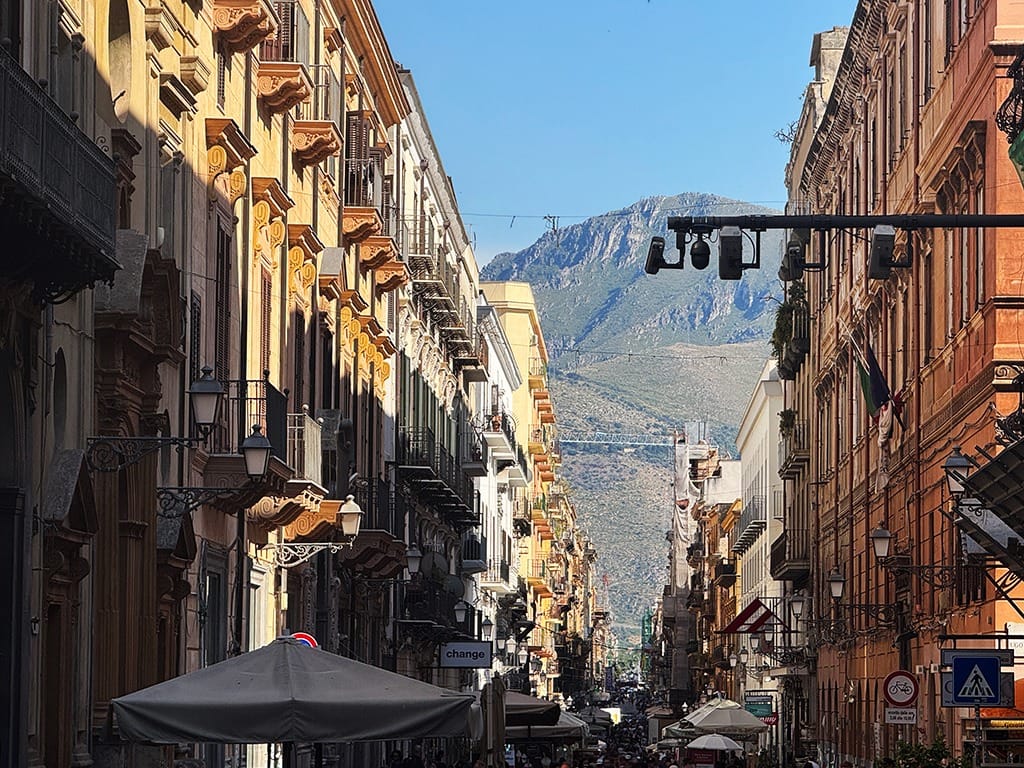
While the historic center might be one of the most crowded areas of Palermo, this is the part of the city that Sara and I typically stay in, we have never once felt unsafe
About the area close to Palermo’s train station
Like most major European cities, the immediate area surrounding Palermo’s main train station (Palermo Centrale) is not recommended as somewhere to stay or spend prolonged time in, especially late at night. Beyond there not being much of interest in this part of the city after hours, the transit hub is a magnet for petty theft and would-be scammers. Speaking of…
Common Scams and Hustles in Palermo
1. “Free” gifts from street vendors
If you are approached by a street seller promoting something you are not interested in (typically you’ll see flowers, simple jewellery, or phone accessories), the best approach is to say “No, grazie” firmly and walk on. Some will say it’s a free gift, and if you accept, they will then insist on a payment in return as thanks. In this instance, it can be difficult to refuse, so it’s best to be clear upfront without stopping.
2. Discounts on food and drink
This one is a lot less common than it used to be, but I did overhear it happen on a visit to Palermo where lower-rated restaurants try to entice visitors in with verbal discounts on food and drink, only to retract these when it comes to the final bill. I’d recommend staying clear of places that aggressively offer verbal discounts on food and drink as a primary means of getting business, and instead look for places with clear, printed menus.
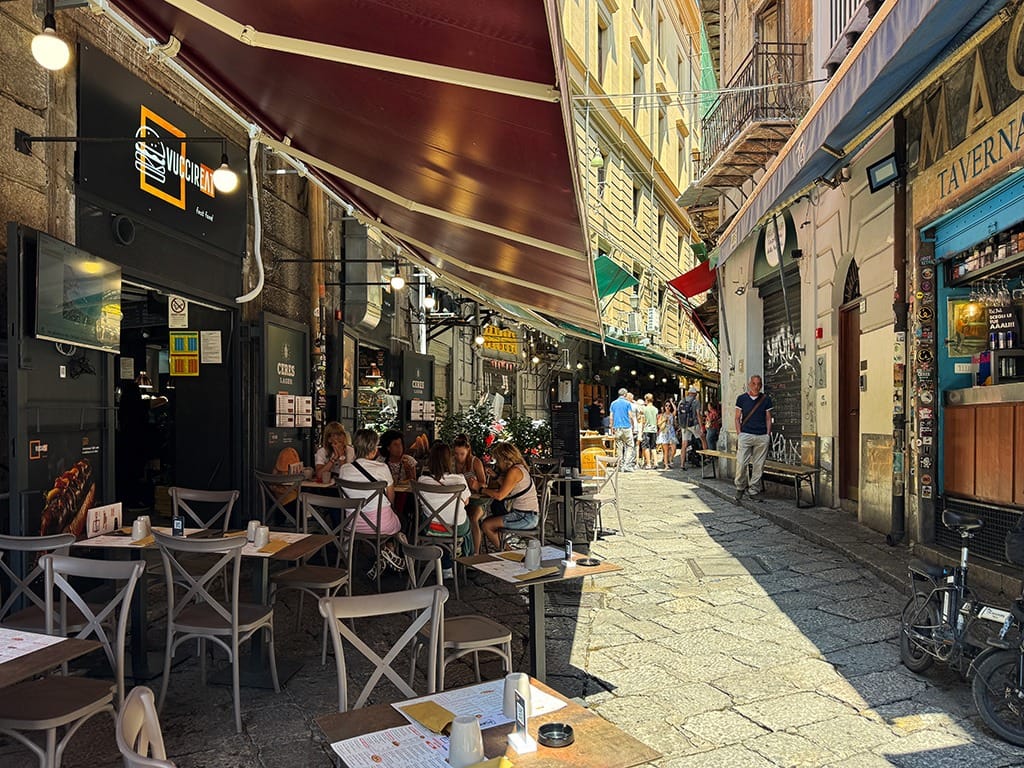
Palermo is a city overflowing with high quality and affordable places to eat – don’t be tempted by the offer of free food or drinks
3. Unofficial parking charges (“Parcheggiatori Abusivi“)
I personally feel this is less of a scam/hustle and more a case of cultural misunderstanding. In many large public parking lots or street parking areas, it’s common for there to be someone guiding drivers to available parking spaces. These are almost always unofficial “attendants” (referred to locally as parcheggiatori abusivi).
Where they are providing a service (which personally I find useful as it saves me searching for a spot in tight lots), there is an expectation of a small payment. Visitors often mistake them for official council workers. Handing them 50 cents or one euro is sufficient, and you’ll find the recipient grateful – one of the few instances where it’s useful to have small coins on you.
What to Do in the Event of an Emergency
If you find yourself in an emergency needing immediate help from the authorities while in Palermo or anywhere else in Italy you should call the Universal Emergency Number on 112 (free from any phone, available 24/7, with English-speaking operators).
Depending on your situation, the 112 central dispatch will route you directly to the police (Carabinieri / Polizia di Stato), medical emergency services (Ambulanza), fire service (Vigili del Fuoco), or coastguard (Guardia Costiera).
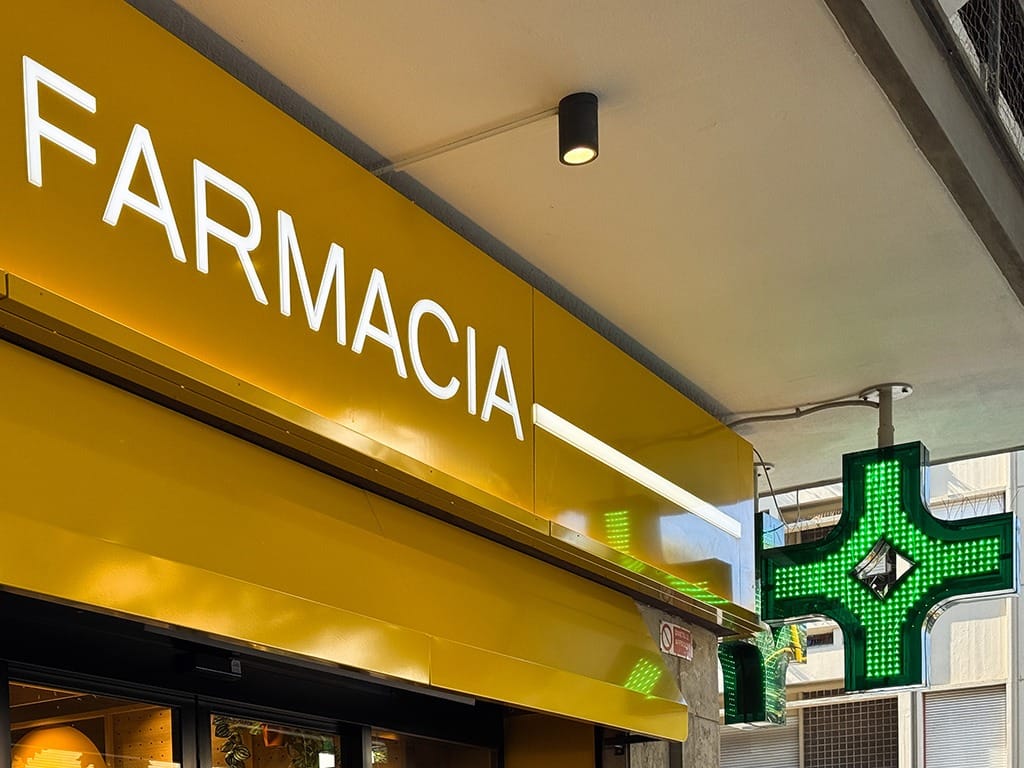
If you’re not feeling 100% during your time in Palermo you can also visit a pharmacy which are staffed by medical professionals ready to help you with common ailments
Requesting Help in Person
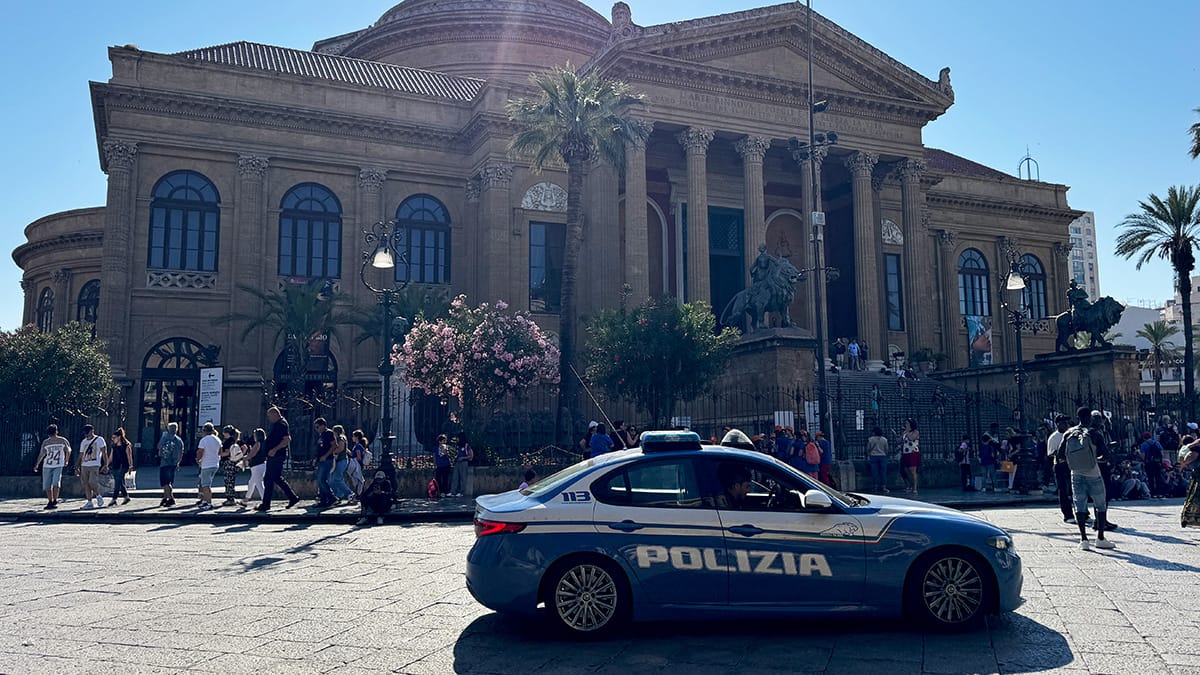
You will routinely see uniformed police officers patrolling the streets of Palermo’s centro storico, particularly along main thoroughfares like Via Maqueda and near major landmarks.
If you need to go directly to a police station or require medical attention, the main central locations include:
- The state police station, within walking distance to Quattro Canti
- The transport police at Palermo Centrale train station
- The emergency/A&E room (pronto soccorso) at the Civic Hospital of Palermo
Closing Comments About Palermo Safety
I hope this guide has shown you that Palermo, Sicily, is a city undeserving of its reputation as somewhere “unsafe”. The city’s busy streets and crowded markets may feel intimidating at first glance, but my overriding opinion based on years of coming to Palermo is that this is a safe destination to visit.
The statistics back this up, placing Palermo well below other major locations in Italy, and the environmental risks are thoroughly monitored.
Find yourself with follow-up questions about the capital of Sicily? Maybe you’re interested in where to stay in Palermo, or exploring the smaller towns nearby such as Cefalù or Monreale? Contact me here