

By: Warren George
Published: February 27, 2026
Last updated: May 7, 2026
Getting from Malta to Sicily is remarkably straightforward. The two Mediterranean islands are separated by just 60 miles (97 km), or 52 nautical miles, and with regular high-speed ferries and year-round flight connections, traveling between them is both simple and efficient. Having done this journey myself, let me share with you everything you need to know to plan your transport between Sicily and Malta.
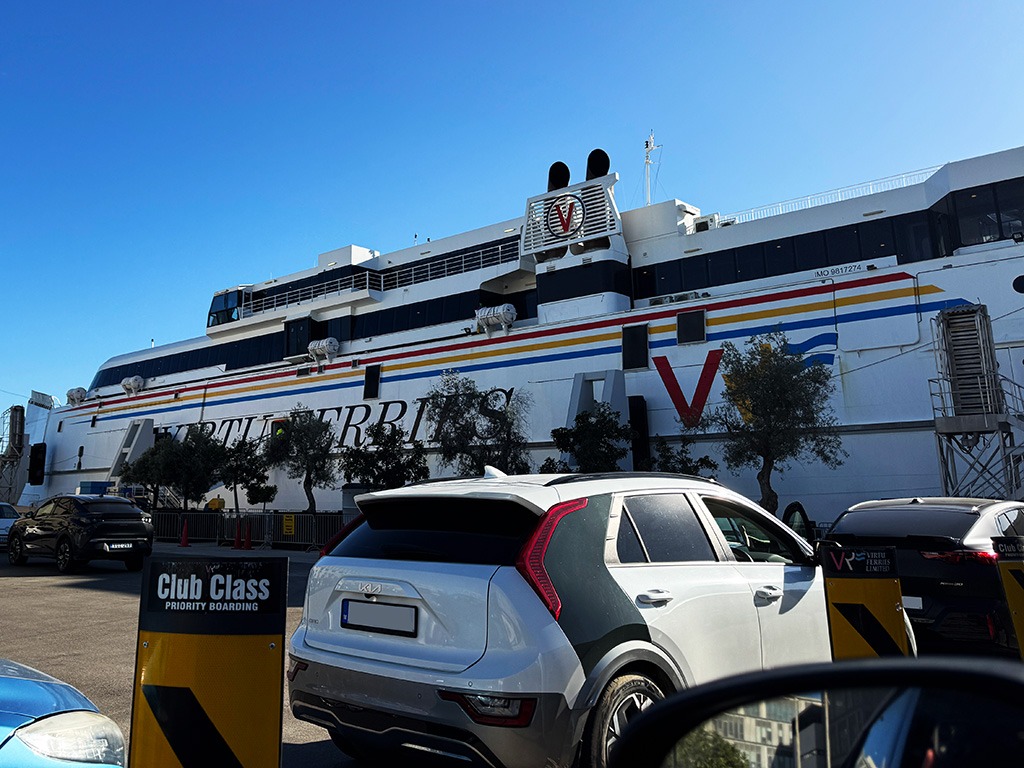
Flights and ferries – let me share the best options for getting between Sicily and Malta
How to Cross the Mediterranean Sea from Malta to Sicily
In this guide, I’ll walk you through exactly how to get from Malta to Sicily (and back again), covering ferry routes, flight options, arrival logistics and ideas for day trips and short breaks. All recommendations are based on my direct personal experience traveling between the two islands. Navigate to the section that interests you most by clicking below, or continue reading here.
- What You Need to Know Before You Travel
- Malta to Sicily by Ferry Overview – Valletta to Pozzallo
- Booking the Malta to Sicily Ferry
- Ferry Boarding and Onboard Experience
- Arriving in Pozzallo, Sicily Port
- Arriving in Valletta, Malta Port
- Malta to Sicily by Plane – Catania Flights
- Ferry or Flight – Which Is Better?
- Sicily Day Trips & Short Breaks from Malta
Who is this guide for?
This guide is for travellers planning a trip to Sicily from Malta, or vice versa, who need to understand the various travel options available. Below you’ll find a breakdown of flights and ferry options, as well as travel tips for trips between the islands based on my own direct experience.
Malta to Sicily – What You Need to Know Before You Travel
Before booking transport between Malta and Sicily, there are a couple of important considerations to keep in mind:
Both islands sit in the heart of the Mediterranean, between North Africa and mainland Italy. While this creates beautiful scenery and rich culture, it also means storms can occur at any time of year, particularly in spring and autumn. Rough seas can lead to ferry timetable changes, and strong winds occasionally cause flight delays.
The calmest months tend to be from May through September, and, conversely, the most disrupted months of the year are November through February. Where possible, I recommend building some flexibility into your itinerary, especially if you have onward connections.
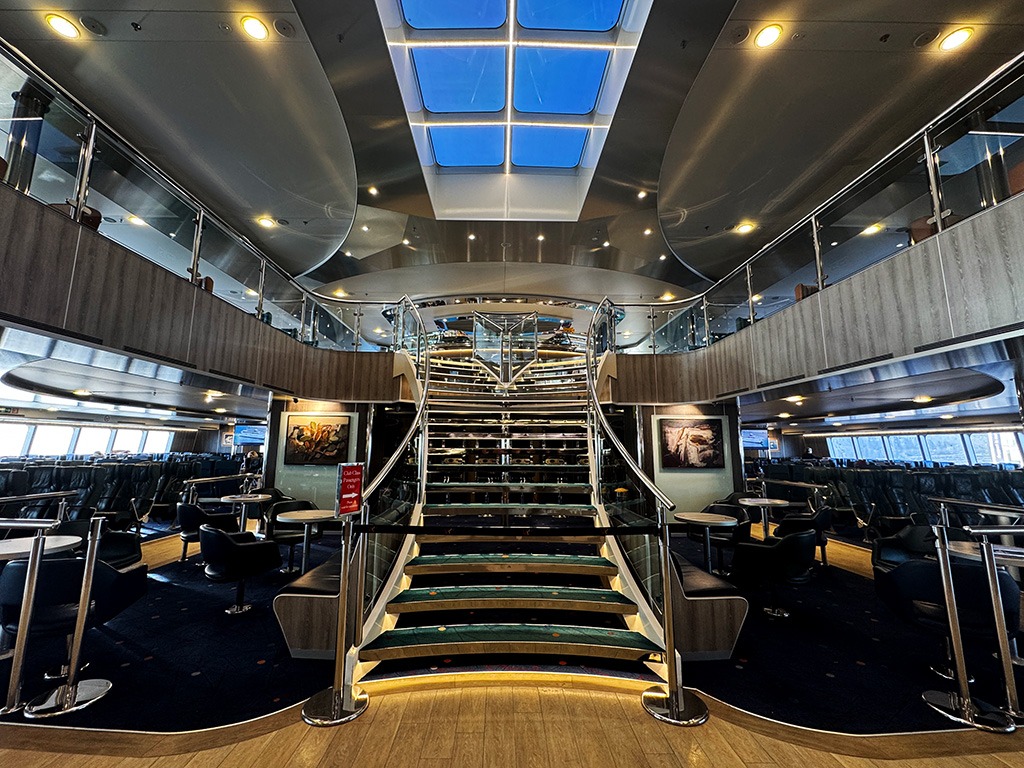
Ferry is my preferred method of transport between the islands – find out why in this guide
Although Malta and Italy are both part of the Schengen Area, you should not treat this like a domestic journey if you are an EU or Schengen resident. A passport or a valid travel ID is required, and boarding a flight or ferry will most likely be refused without it.
On a trip last year, we overheard ferry passengers in Valletta being denied boarding because they did not have their passports. All non-EU travellers should also have their passports for journeys between Malta and Sicily, as well as any relevant visas, depending on their citizenship and residency.
Malta to Sicily by Ferry Overview – Valletta to Pozzallo
My preferred way to travel between Malta and Sicily is by ferry, and I share some of my reasons a little further in this guide. The route connects Valletta, Malta’s capital, to Pozzallo on Sicily’s southern coast.
The service is operated by Virtu Ferries, a Maltese-registered company running two high-speed catamaran ferries between the two islands. The crossing takes approximately two hours, making it an efficient and enjoyable way to travel. There are typically multiple departures per day, although timetables vary depending on the season and sea/weather conditions.
During late autumn, winter, and early spring, there are typically two ferries in each direction daily, with departures in the early morning and evening.
Through the summer, additional routes and times are added to meet increased demand. During peak periods, there are two departures in the morning and two in the late afternoon/evening.

These vessels carry foot passengers, vehicles and cargo, and are used year-round by residents, commuters and visitors alike
Booking the Malta to Sicily Ferry
All travelers should book ferry tickets in advance either through Virtu Ferries’ official website or via an approved third-party platform such as DirectFerries, my go-to website for ferry tickets.
I strongly recommend not arriving at Valletta or Pozzallo ports without a confirmed ticket, particularly during summer or holiday periods, when sailings can sell out. This is especially the case when travelling with a car, as there is limited garage space on the boats.
You can expect the following prices, though these are subject to change at any time based on demand and schedule changes:
- Foot passengers (no vehicle): 50€–65€, per adult, per journey
- With a vehicle: 120€–140€ per vehicle (including one driver), per journey
Tickets for children between the ages of three and thirteen range from 15€–25€ each way, and for kids under three years old there is no additional charge.
For animal adventurers, there is a small surcharge of 15€–25€ per pet, per journey, unless they stay in your vehicle in the ferry’s garage.
Ferry ticket prices tend to peak in the summer months and are around 20–30% more compared to off-season rates.

This special pass available from Virtu comes with a lot of perks – find out more about it below
Ferry Boarding and Onboard Experience
Standard guidance is to arrive at the port 60–90 minutes before departure. Sara and I usually travel with a car and book Virtu’s Club Class add-on (typically 20€ extra per person, per journey), which allows earlier/priority boarding. This makes a noticeable difference, especially in summer, when shade at both ports is limited.
Early boarding gives you time to settle into the lounge, find a good seat, step out onto the deck, and ease into the journey. Without the add-on, you may remain in the loading area until shortly before departure.
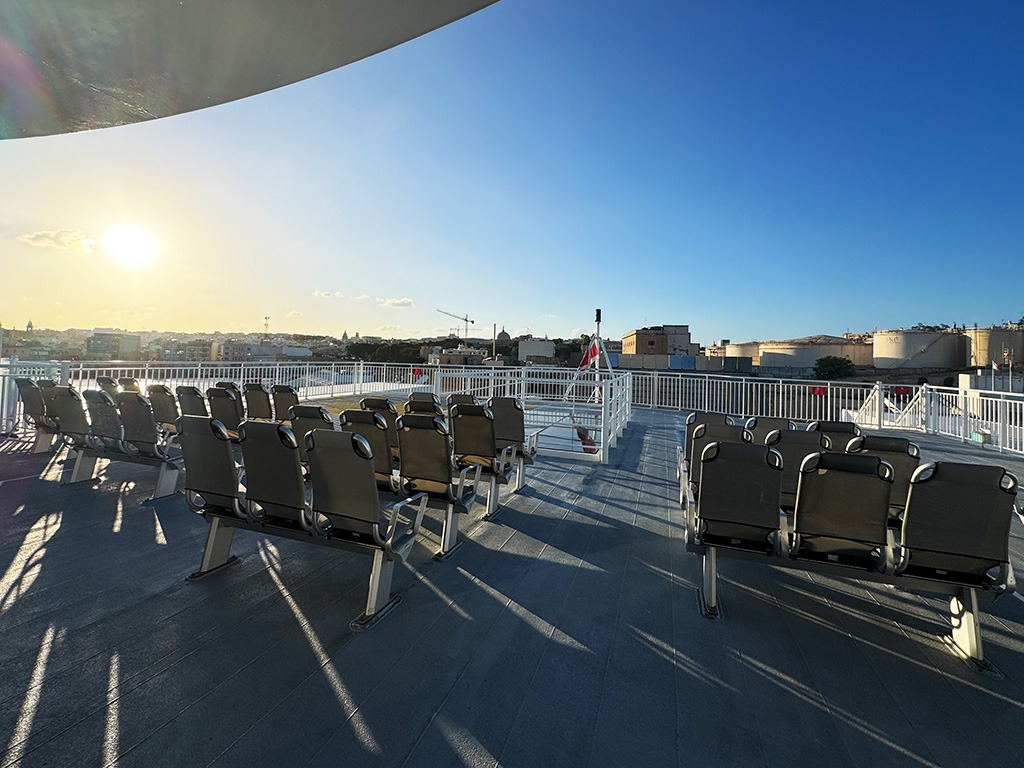
Grab a seat on the outdoor deck if conditions permit to enjoy the fresh Mediterranean air and blue seas
The ferries themselves are modern, clean and well-equipped. All passengers are guaranteed a seat, and onboard facilities include indoor lounges, outdoor deck areas, bars serving drinks and snacks, multiple bathrooms, and a small shop selling Maltese and Sicilian produce, souvenirs and travel essentials.
Reliable Wi-Fi is available onboard (at no extra cost for those travelling in Club Class), there is plenty of space for luggage and bikes, and neither luggage nor bikes incur an extra charge.
I suffer a little from seasickness on most ferries, but have never done so on Virtu’s catamarans between Malta and Sicily. I put this down to the spacious, clean interiors on board, and while I can’t guarantee that you’ll be OK if you typically feel queasy on boats, I thought I’d share this observation to provide a little reassurance.
Arriving in Pozzallo, Sicily
Pozzallo’s port is easy and simple to navigate
For foot passengers, there is a bus to Pozzallo town, but it runs infrequently, and I would not recommend walking as the route lacks pavements and is poorly lit at night.
If you are not travelling with a car, I’d strongly recommend booking a taxi in advance. This can be done via the shop onboard Virtu’s ferries, or you can plan to get one at the port (though there is no guarantee of availability) to take you either to Pozzallo train station (around 2.5km from the port), or onwards to your destination in Sicily.
Learn more about navigating to, from and around Italy via ferry in my detailed guide. Find out how to book tickets, understand timetables and route options, and much more here:
Arriving in Valletta, Malta
Valletta’s port is significantly better connected than Pozzallo’s. There are regular bus connections nearby, and taxis are readily available (including local drivers and services such as Uber and Bolt).
The historic centre is a short journey away, and even walkable if you have time and minimal luggage. If you are continuing to other parts of Malta, you should have no difficulty arranging onward transport from the port area.
On previous trips to Malta, I’ve used Google Maps to plan my journeys and found the information on buses and other connection options to be consistently reliable.
You’ll find plenty of amenities at Malta’s ferry port, or close by
Malta to Sicily by Plane – Catania Flights
If ferry travel is not suitable for your plans, flying between Malta and Sicily is an alternative.
Direct flights operate between Malta International Airport (MLA) and Catania–Fontanarossa Airport, also known as Vincenzo Bellini Airport (CTA).
This route is operated year-round by Ryanair in collaboration with KM Malta Airlines. With multiple departures daily and a flight time averaging 50 minutes from take-off to landing, these short flights make getting between the islands easy.
I almost always use Skyscanner to book flights on unfamiliar routes. Of course, you can also book directly with Ryanair/KM Malta Airlines Ltd.

Catania airport is well connected to the rest of Sicily making onward travel easy
Ferry or Flight – Which Is Better?
Choosing between a ferry and a flight depends largely on your itinerary and travel preferences.
The ferry is ideal if you are travelling with a car, staying in southern Sicily, or prefer a slower and greener mode of transport. It also allows you to avoid airport formalities and baggage restrictions.
Flights, on the other hand, may be more convenient if you are traveling without your own transport, and/or are short on time. Let’s take a look at the comparative costs and impact on the environment to help you decide which option is best for you:
Cost comparison
Taking a real example with figures from DirectFerries and Skyscanner for a couple traveling in May this year (the beginning of the high season in both Malta and Sicily), let’s review the costs:
Ferry (foot passenger)
Return journey in Euro Class: 200€
Taxi to Noto city center from Pozzallo, two ways: approx. 120–150€
Total: 320–350€
Flights
Return journey with hold luggage*: 140€
Taxi to Catania city center, two ways: 50€
Total: 190€
In both cases, I’ve omitted upgrades such as Virtu’s Club Class or premium seating on the flights. This comparison includes checked bags with the flights, as baggage is included by default on the ferries. This comparison is purely illustrative, and in either scenario, the costs could be higher or lower based on schedule changes or shifts in travel demand.
Environmental impact comparison
One of the reasons I prefer traveling via ferry is that it is considerably less impactful on the environment — here are the average carbon dioxide outputs in kilograms (kg) for both options, based again on two people making a return trip between Sicily and Malta:
- Flying: 126 kg (based on icao.int)
- Ferry: 10–30 kg (based on thrustcarbon.com)
As you can see, ferry travel is much kinder to the environment than air travel. Both of these figures are the most reliable estimates available and are subject to fluctuations based on the exact route taken, the fuel type used, and other factors. If you are interested in learning more, refer to this article, which uses data and insights from the UK government.
It’s worth noting that traveling by ferry from Malta to Sicily with a car increases the environmental impact compared to traveling without a vehicle. In this instance, the CO₂ output for a round-trip between the islands would be approximately 16 kg, still considerably lower than flying.
Neither of these figures accounts for taxis/onward travel from Valletta and Pozzallo ports, which are largely comparable.
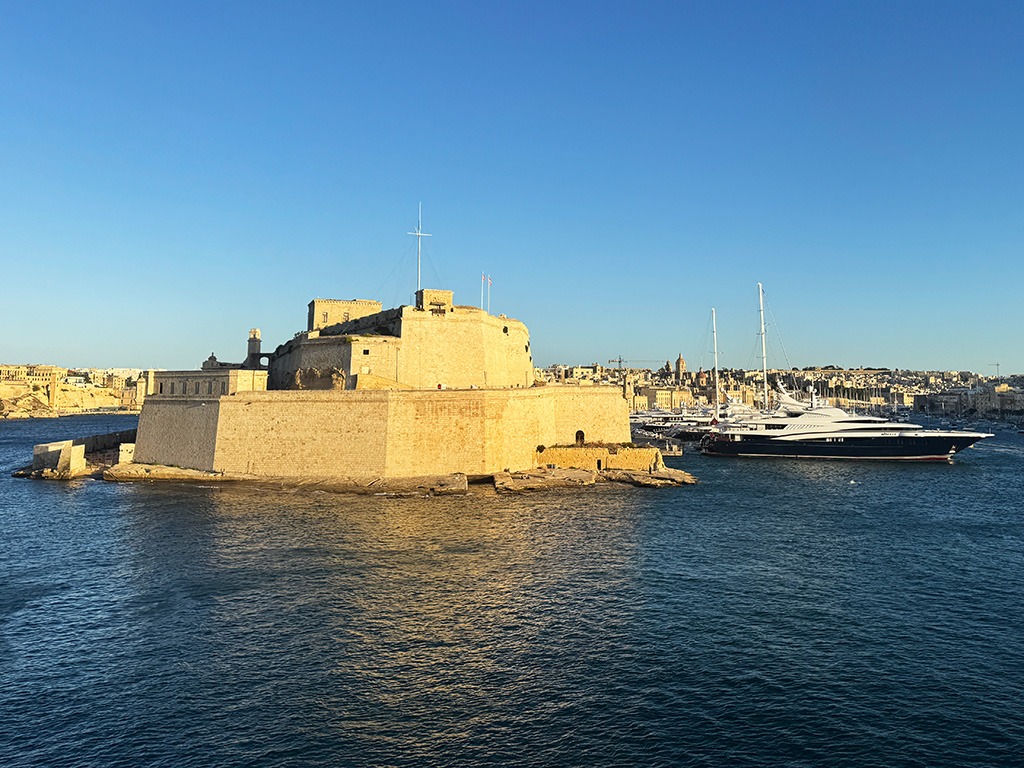
Another reason to love ferry travel? The views of the ports and cities, especially during evening voyages
In my experience and opinion, flying to Sicily from Malta is cheaper and faster, whereas the ferries are greener and more enjoyable.
Both options take about the same amount of time overall. Consider that for flights, you’ll need to be at the airport 2 hours before for security checks, etc., and you will likely spend a bit of time waiting for your baggage to arrive at the other end. For ferries, while the actual journey is longer, this is offset by the quick embarkation and disembarkation.
Sicily Day Trips and Short Breaks from Malta
With two efficient transport methods between the islands, day trips and short breaks to Sicily from Malta are entirely achievable. Here are my top two recommendations:
Noto/Val di Noto
Around 30 minutes by car from Pozzallo, Noto and the surrounding area is one of my all-time favourite places in Sicily – honestly, in Italy.
I won’t go into full detail now, as I’ve covered everything you need to know about Noto in my dedicated guide here, but it’s an excellent choice for a day trip or short break when arriving by ferry. This part of Sicily is also a fantastic base for a longer trip exploring the eastern side of the island, including Syracuse and Taormina.

The best of Sicilian food, wine, architecture and history combine in Noto
Catania
For a fast-paced city break, head to Catania, located on Sicily’s east coast, either by flying to CTA airport or by driving from Pozzallo (1.5 hours via road) if coming to Sicily via ferry.
The historic center, with its striking baroque architecture and famous views of Mount Etna, is a microcosm for Sicily, where you’ll find buzzing markets, Catholic traditions and some of the island’s best food waiting for you.
If you’re feeling adventurous, you could even visit Mount Etna in a day from Malta, Europe’s largest and most active volcano. This requires careful planning due to weather and volcanic activity, but it is entirely achievable. During the warmer months of the year, there are even excursions and tours from Malta to Etna with transport included.
Is It Worth Visiting Sicily from Malta?
In short, yes.
The short distance, reliable ferry schedules, and quick flight times make Sicily a natural extension to any Malta itinerary or an easy trip for locals. Whether you’re looking for a day trip, a long weekend, or a longer road trip across the island, the logistics are manageable with a little planning.
The best time of year to visit this part of the Mediterranean is May through early June or September through early October, in my experience. You’ll generally find good weather, which is perfect for sightseeing, beach days, and outdoor activities such as hiking and cycling. If you’re interested in learning more about the best time to visit Sicily, read my full guide here:
Travelling between Malta and Sicily is easier than many people realise. With a little planning around weather, timing and transport connections, the journey itself becomes part of the experience.
If you’re looking for more detailed advice on visiting Sicily — including where to stay, how to structure your itinerary, and which areas to prioritize — explore my dedicated Sicily guides here or get in touch with your questions.