By: Warren George
Published: September 3, 2025
Last updated: August 25, 2026
I first visited Italy in 2013, and it quickly became my go-to holiday destination. Not long after this initial trip, I started working with my first clients in Rome and began spending more and more time here. Skip forward to 2019, when I moved to Italy permanently with Sara, living near Padova in Veneto until 2021. In the summer of 2021, we moved to Ostia in Rome, where we live next to the beach and just a short train journey to the centre of the Eternal City.
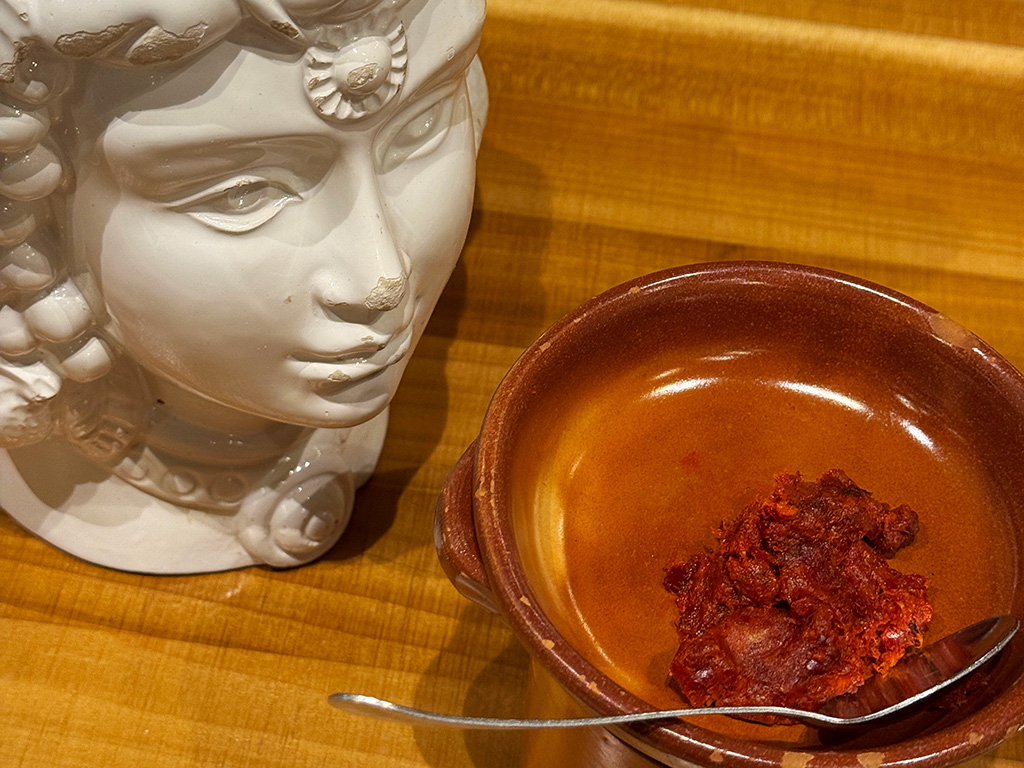
Food is such an intrinsic part of Italian culture that understanding even some of the particularities surrounding it will help you have a better time
Ever since that first visit in 2013, I have made it my mission to understand Italy – the country, its culture, its history, its national personality and its people – as much as possible so I could relax and enjoy my time here to the fullest.
It was this mission which, in part, inspired Sara and I to visit every one of Italy’s twenty regions, along with the Vatican and San Marino in 2025 so we could experience the variation of this incredible country from north to south, east and west, and everything inbetween.
The purpose of this series of guides is to share with you some of what I’ve learned across the years, so you can also feel more at ease here, and while some things are trivial, others are fundamental.
One of the most loved subjects for anyone in Italy, resident or visiting, is food and drink. As such, several questions often come up when we’re hosting guests in Rome, or travelling with friends and family – let me share some of the most frequent, and their answers with you now:
Can you drink a cappuccino after 11am?
There’s no denying that Italians are proud of their food and drink customs. A huge part of Italian culture is centered around eating and drinking, and therefore there is a vast array of dos and don’ts that you will come across.
One of the most frequently asked questions about drinking is whether it’s correct to have a cappuccino (or other milk-heavy coffee) after 11am. Most Italians would say ‘no!’, and this is based on a cultural belief that milk inhibits digestion – i.e. your stomach should be free to digest in the afternoon, in preparation for dinner.
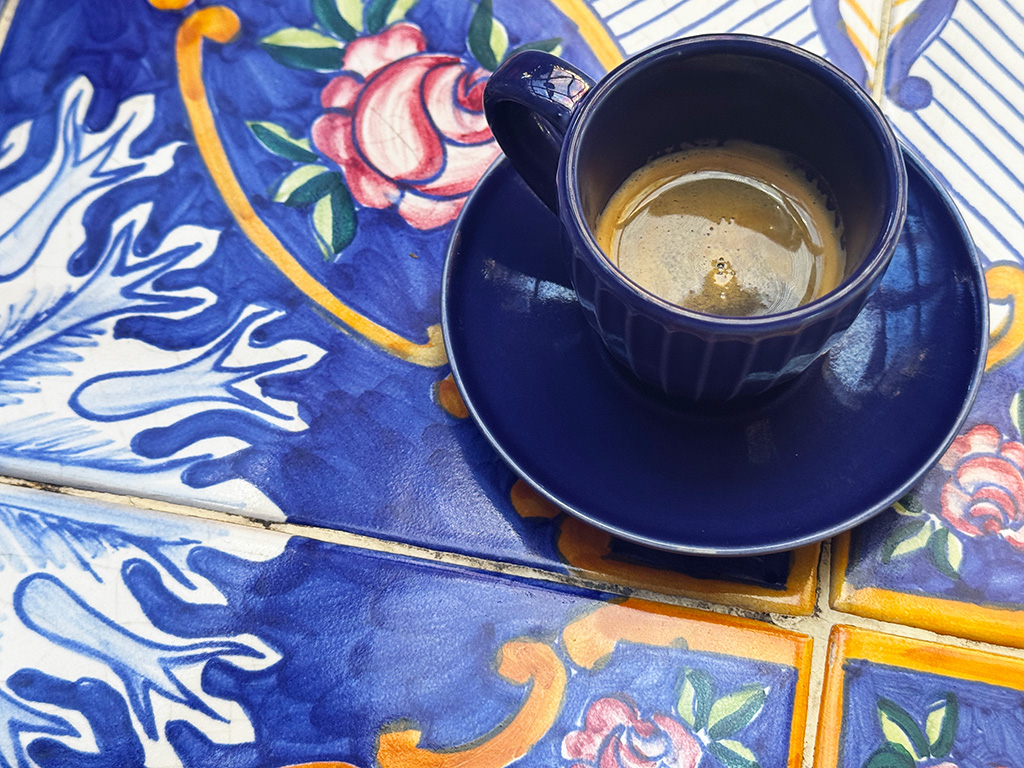
The go-to in Italy for a coffee, no matter the time of day, is an espresso
However, I am a firm believer that you should do what you want if it means you’ll enjoy your time travelling more. If you wish to have a cappuccino in the late morning, at lunch time, in the afternoon, at aperitivo, at dinner or after dinner, do it! No-one is going to refuse this request if it’s what you want.
On a related note, I’ve often heard travellers complain that when they order a ‘latte’ at a café in Italy, they’re handed a simple glass of milk. This isn’t a mistake on the barista’s part – latte literally means milk in Italian. Not every Italian will know that, in the English-speaking world, ‘latte’ refers to a coffee drink, just as many English speakers don’t realise that espresso is never pronounced ‘eXpresso.’
If you want a latte like you can get in the English-speaking world, ask for a ‘caffe latte’ which translates as ‘coffee milk’ – the ‘caffe’ is the crucial distinguisher here.
Can you get tea in Italy?
On another hot drink note, Italians generally do not drink hot tea as English speakers know it. Of course, some do, but it’s rare. Therefore, if you are an avid tea drinker, bring tea bags with you from home to enjoy at your hotel or apartment. You’ll find tea in local supermarkets, but take Sara’s word for it (as I rarely drink tea) – it’s just not the same.
Why can’t I get iced coffees anywhere in Italy (other than at Starbucks)?
Back to coffee, and I wish this wasn’t a question, as I genuinely believe iced coffees could be very popular in Italy if more places offered them (in the same way they are in other parts of the Mediterranean, such as Turkey and Greece).
Trends are slow to catch on in Italy (not always a bad thing), so if you are craving a cold coffee, there are generally three types which are commonly available:
- Caffè Freddo, pronounced kaa-feh freh-doh, is an espresso that has been left to cool down and then chilled further in the fridge, or an espresso served with an ice cube. When ordering, you’ll be asked if you want it amaro (aa-mar-roh), meaning (in this context) without sugar, or dolce (doll-cheh), meaning sweet.
- Caffè Shakerato, pronounced kaa-feh shak-ker-raa-toh, is a double measure of espresso shaken with ice vigorously in a cocktail shaker (hence the name), which lengthens the drink and produces a creamy top. Often served in a martini glass, it’s an upgraded version of a caffe freddo.
- Crema di Caffe, pronounced cray-ma dee kaa-feh, is a mix between plain gelato and coffee, which is constantly mixed throughout the day in a caffe/bar, creating a smooth and delicious summer treat. This is especially popular in Naples, where you you’ll see it available from spring through to the autumn.
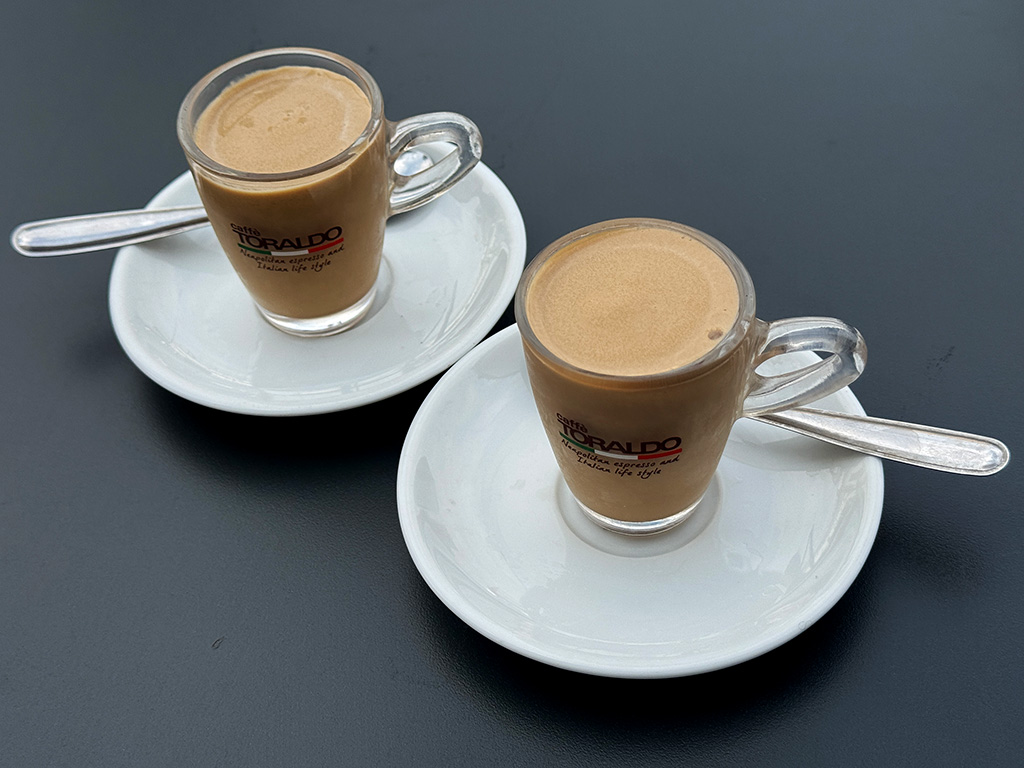
Sara and I love a crema di caffe in the summer as a little pick-me-up
Why are certain products hard to find in the supermarket?
Unlike in the UK or US, Italian supermarkets don’t typically stock everything year-round. Much of the produce sold here is grown locally, meaning availability changes with the seasons.
This is not based on some kind of food nationalism/a dislike of foreign produce; it’s based on the practicalities of transport and an ingrained heritage of using the land and sea to sustain oneself naturally.
If you are a foodie and looking to come to Italy to experience something specific – for example, the famous Sicilian pistachios or truffles from Piedmont – consider travelling according to the harvest seasons.
Check out the following guides from my friends over at Casa Mia Tours on what things are in season in Italy throughout the year:
What exactly is an aperitivo?
There are a few answers to this question officially:
- Most commonly, aperitivo refers to the period of the day between (roughly) 6pm and 8pm, where cold drinks are enjoyed with light foods before dinner.
- More specifically, an aperitivo can refer to a pre-dinner drink, typically alcoholic, which is enjoyed as a means of relaxing after work and to stimulate your appetite in preparation for dinner.
Increasingly, you may also see around Italy, and/or on social media, the term aperi-cena – this is a hybrid word, combining aperitivo and cena, being the word for ‘dinner’. An aperi-cena is a reinforced aperitivo (and to dive even deeper, you may come across the phrase aperitivo rinforzato, with ‘rinforzato’ being a translation of ‘reinforced’), where it can be considered as a light dinner with equal focus on drinking and eating.
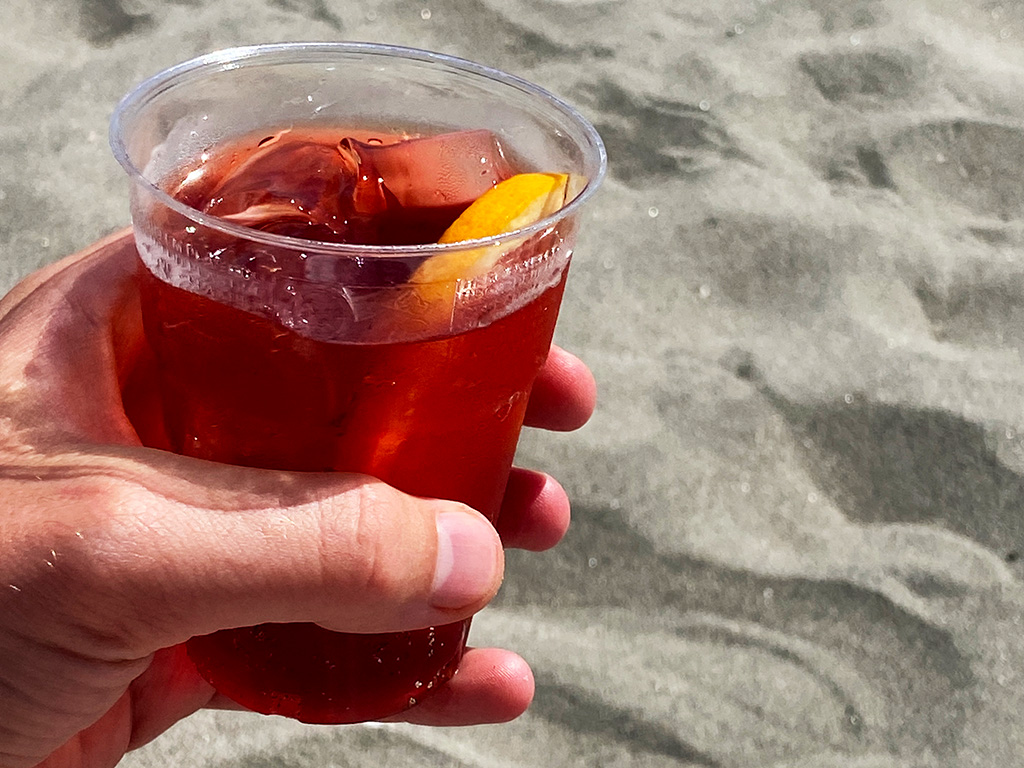
Make mine a Negroni at the beach per cortesia
Are there nightclubs in Italy?
The short answer is ‘yes’.
However, Italy does not have the same late-night culture as a lot of the English-speaking world, where the focus of the hours post-dinner (referred to commonly as dopocena) is most widely used to relax with an amaro to aid digestion after dinner and before bed, or with cocktails if you are planning on staying up later.
(I’m grouping this in with food and drink even if not strictly, directly related.)
Not all pizzas are equal
I have to be careful here, as talking about pizza can be contentious.
Pizza, as we know it, was created in Naples in the late 1800s. The legends say that locals were looking for a way to honour the then Queen Consort of Italy, Margherita, when she visited Napoli. The idea was born to present a flat bread to the Queen, showcasing the area’s famous San Marzano tomatoes, buffalo mozzarella, with a touch of basil – these three ingredients representing the colours of the Italian flag. The Queen loved the pizza so much that the recipe was named after her, and has been referred to as pizza margherita ever since.
It wasn’t until after World War II that pizza became popular in the other parts of Italy. However, other regions of Italy have their own variations and styles of pizza-like creations, which have since fused with the traditional Neapolitan style.
For example, if you order a pizza in Veneto, it will most likely feature a very thin base and crust, where the bread used is related to the famous piadine sandwiches of the Adriatic coast.
In this scenario, I’d advocate for trying pizza in or around Naples if you can, so you can experience the most authentic version of it. That isn’t to say that Neapolitan pizza is the best, although it is my favourite style.
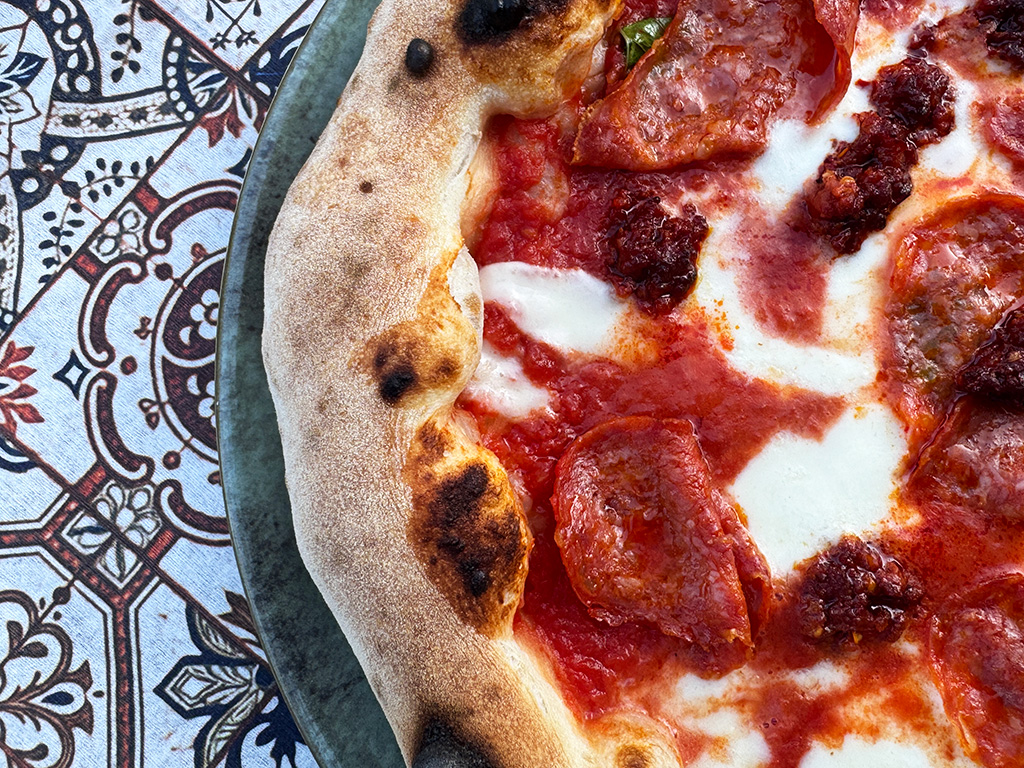
Neapolitan pizza is recognisable for its thicker crusts and bases like the one in this photo, versus Roman-style which is much crisper and thinner
The comparison would be trying Haggis in the south of England over the Scottish Highlands, or Gumbo in Seattle instead of in New Orleans.
The same applies to other famous Italian dishes that are regional specialities, such as Florentine steak or Sicilian caponata.
Of course, you’ll find speciality restaurants and shops around Italy, so if there is something you want to try and want to be as authentic as possible without travelling, do your research.
Is pasta a main course?
Yes and no.
Traditionally, pasta is offered as a ‘primi’ – a first course.
However, this only applies officially in a scenario where you are opting for a multi-course lunch or dinner.
Therefore, if you want to order pasta by itself, or with some starters beforehand, this is totally OK. You don’t have to then order a huge steak, fish main or salad to follow up as your main (secondi) out of cultural expectation, but obviously, do it if you want to!
”Everything you see I owe to pasta.
Sophia LorenActress
What is the difference between a caffe/bar/bistro/osteria/trattoria/restaurant?
Italy’s food and drink traditions don’t just cover cuisine – friends and family routinely ask us to clarify the difference between establishment types when visiting:
Café – Any place that advertises itself as a café focuses on offering coffee, but will likely also offer alcoholic drinks and light snacks. Most café are open all day, from breakfast through to, and including, aperitivo.
Bar – A bar is not too dissimilar from a café, and often the names are used interchangeably. Strictly speaking, a bar focuses more on alcoholic drinks (but still offers coffees), and will stay open into the late night. You’ll find light snacks and take-out options at most bars, overlapping with cafés. Some bars also offer a ‘tavola calda’, which is a counter where you’ll find cooked and prepared food options at set prices that change daily – these are common throughout Italy, and offer locals and visitors a quick, fast and good quality meal.
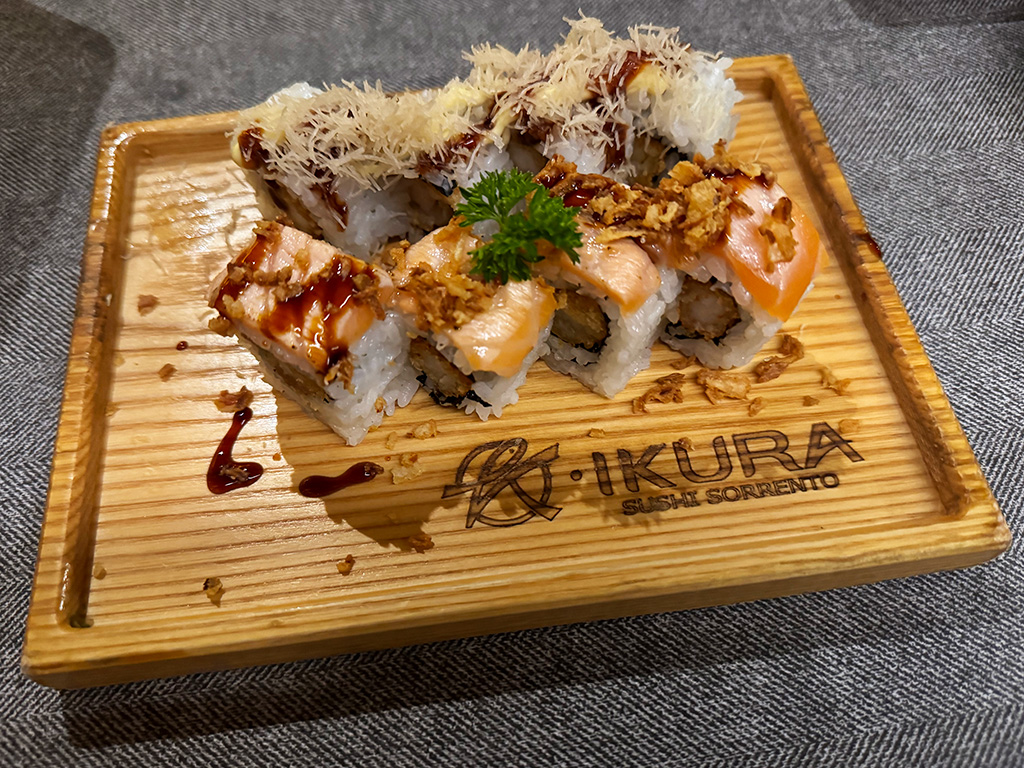
Non-Italian food is becoming increasingly popular across Italy, especially Asian cuisines
Bistro – While not strictly, traditionally Italian, the concept of bistros has become popular here in recent years. An Italian bistro is often styled like a bar but will offer an enhanced menu beyond basic snacks.
Osteria – Osterias were originally the Italian equivalent of an inn, where travellers could rent a room and have something to eat and drink – the word shares its origin with the English word ‘hostel’. Over time, most osterie have ceased offering lodgings, but have retained the name and focused instead on providing food and drink in a casual setting.
Trattoria – These establishments were very similar to osterie, where many offered rooms to rent, but typically focused on providing a wider range of food and drink options to patrons. Like osterie, trattorias now rarely offer accommodation and are usually less formal places for a lunch or dinner.
Restaurant – Restaurants in Italy are like those in the UK, US and across the world; the mainstay establishment for eating a sit-down meal. In Italy, the service level and quality of a ‘restaurant’ is not fixed, so you will find very casual spots through to luxury dining locations using the name ‘Restaurant’ or ‘Ristorante’.
Keep in mind that Italian food and drink venues usually stick to tradition: you’re unlikely to find fine wines in most cafés or bars, cocktails in upscale restaurants, or takeaway from a trattoria or osteria.
Should you tip in an Italian restaurant?
This is a fairly nuanced topic, but as a headline, there is no obligation to tip in Italian restaurant, osteria, trattoria, ever.
Italian hospitality staff are paid set wages weekly or monthly, and do not rely on tips for income like in other countries such as the United States.
You can by all means give a tip if you feel the service or quality deserves it following a meal, but there is zero obligation.
Visitors often confuse service charges and cover charges that routinely appear on Italian bills with tips; these are fees added by restaurants to provide services and elements in connection with dining. Service charges are optional by law (so if you have a bad experience you can opt to not pay these), whereas cover charges are mandatory and should always be paid unless agreed otherwise with your waiter.
Take a look at this detailed guide to tipping in Italy to understand more, as well as the protocols and expectations with tipping in hotels, taxis and other areas.
In the end…
I hope this post was useful and if nothing else, made you hungry or thirsty. Curious about Italy’s food and drink culture? Click here to send me your questions