

By: Warren George
Published: March 24, 2026
Last updated: July 17, 2026
Genoa is one of Italy’s most historic port cities and the capital of the region of Liguria, sitting at the heart of the Italian Riviera. Nestled between mountains and the Ligurian Sea, with a vast medieval old town, grand palaces, and a bustling port, deciding where to stay in Genoa can be less straightforward than it first appears. This guide breaks down the key areas of central Genoa (along with options beyond the city), providing insights and recommendations based on my own experience, to help you decide where to stay in Genoa Italy.

The city of Genoa is shaped by its geography, with steep streets, narrow alleys, and distinct neighbourhoods that each offer a different experience depending on where you base yourself
What is the best part of Genoa for you to stay in?
Choosing the best area or neighbourhood in Genoa for you will depend on your personal travel style, preferences, budget, and plans for your time in the city and wider region of Liguria. Most visitors prioritise staying in the historic centre (including myself, more on this below), within walking distance of Genoa’s main attractions and cultural landmarks, while others prefer a more practical base near a train station or a quieter residential neighbourhood on the sea.
In this guide I share the main options of where to stay in Genoa and nearby, along with my perspective on who they suit best based on my own personal experience. If you already have a specific area in mind, you can jump directly to that section below, or continue reading to compare all options and decide the best place to stay in Genoa for your trip.
- What to know before choosing where to stay in Genoa
- Staying in Genoa’s historic center (Molo) – My recommendation
- San Vincenzo neighbourhood – modern Genoa
- Portoria – between modern Genova and the historical center
- Carignano – local and residential
- Castelletto – for views and nature
- Staying by the sea in Genoa (Nervi & Boccadasse)
- Bonus: Staying in Liguria – Diano Marina
Who is this guide for?
This guide is for travellers looking to understand where to stay in Genoa, whether you are visiting the Ligurian capital for the first time or returning to explore the city and surrounding coastline in more depth. If you are looking for a more general introduction to Genoa, including what to see and do, transport tips, as well as my top restaurants and bars, take a look at this guide:
What to know before choosing where to stay in Genoa
Before looking at specific neighbourhoods, it is important to understand how Genoa is laid out, as this will directly impact your experience in the city.
Unlike many Italian cities, Genoa is long, narrow, and built vertically between the sea and the surrounding mountains. Streets can be steep, distances can feel longer than they appear on Google Maps, and moving between areas is not always as straightforward as it might seem.
Within the historic center in particular, you will encounter narrow alleyways (caruggi), uneven surfaces, and buildings without lifts. If you are travelling with heavy luggage, this is something to keep in mind when choosing your accommodation.

Genoa’s unique make-up is part of its character, but something to consider when planning your trip
I believe this is one of the reasons why accommodation in Genoa – regardless of where you stay – tends to be very reasonably priced almost all year round. When I first visited Genoa, I was pleasantly surprised at how low the nightly rates were, especially when compared to the Italian average. As a side note, this makes Genoa a great option for travellers seeking a more affordable trip within Italy.
Staying in Genoa’s historic heart – the Molo district (my favourite area)
I’m going to start this guide with my personal favourite part of the city to stay in, and the area that most travellers should consider initially when planning a trip here: the historic centre, referred to often as Molo.
The Molo district is the heart of Genoa’s old town (centro storico in Italian), one of the largest medieval historic centres in Europe. This area includes many of the city’s main attractions such as the Cathedral of San Lorenzo, the Palazzi dei Rolli (a UNESCO World Heritage Site), as well as the Porto Antico, where you’ll find the Acquario di Genova.
This is also the part of the city where Genoa’s cultural wealth is felt most acutely, with historic palaces, churches, and layers of maritime history linked to figures such as Christopher Columbus and Andrea Doria.
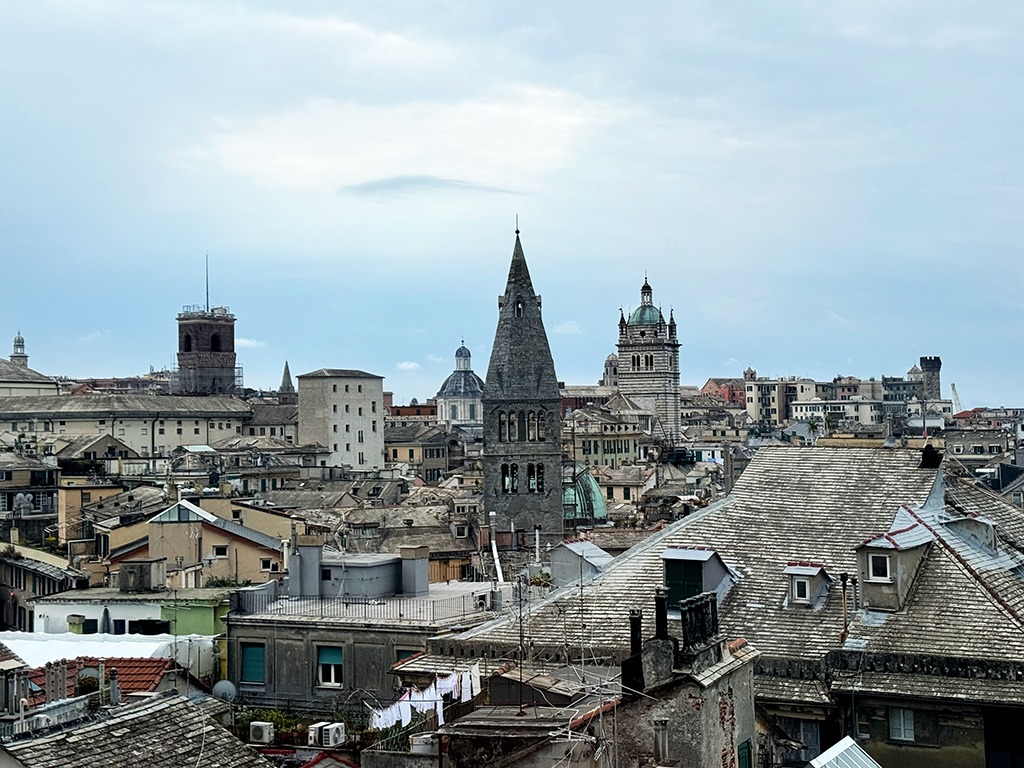
Looking out across Genoa’s historical centre you can clearly see the city’s distinct medieval style
Staying here places you within walking distance of key landmarks, as well as one of the city’s main train stations, Genova Piazza Principe, making it a great base for a day trip beyond Genoa or for travellers arriving by train rather than via Cristoforo Colombo Airport. Walking end to end of Genoa’s historical centre takes around 30 minutes on average in a direct route (approximately 2km from Piazza Principe train station to Porta Soprana).
Because of its central location and historic significance, this area offers the most authentic version of Genoa that travellers can experience. You will explore a labyrinth of narrow caruggi, centuries-old palazzi and churches, and a dense urban layout built during the period when the city was one of Italy’s major maritime powers.
Accommodation here tends to include:
- Boutique hotels in historic buildings
- Apartment rentals within medieval palazzi
- Small guesthouses and B&Bs
- A handful of higher-end properties and luxury hotels such as the Grand Hotel Savoia Genova (Curio Collection)
On a recent trip I stayed at La Piccionaia, right in the heart of Genoa’s centro storico. This apartment was the perfect setting for enjoying the city, located at an equal distance from Piazza Principe train station and the main historic sites. The owner, Andrea, was on hand with excellent recommendations and ensured I had everything I needed. I travel frequently, and this was one of the best-equipped apartment rentals I’ve ever stayed in. I was travelling solo, but La Piccionaia would also be perfect for a couple or small family – find out more here.
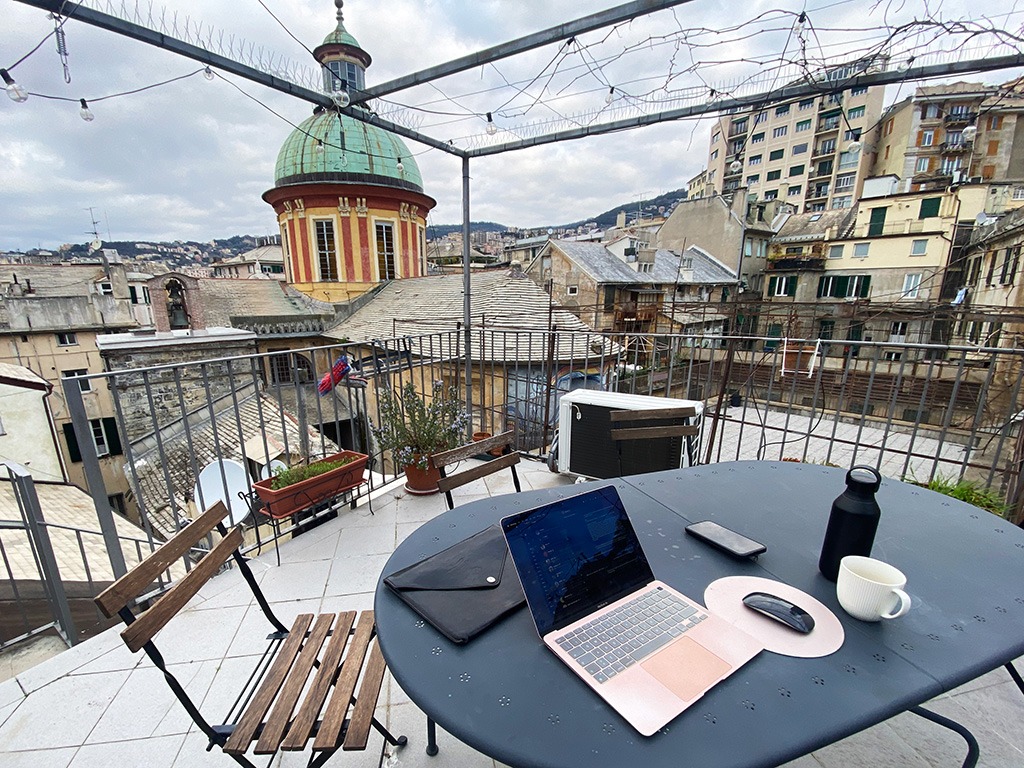
I loved my stay at La Piccionaia, enjoying the views form the roof terrace between museum visits and enjoying one of my favourite regional cuisines
Beyond the historical and cultural sights, this part of the city is also the main place to enjoy Genoa’s food and drink scene, with endless dining options for traditional Ligurian dining, international restaurants, bakeries, and small cafés throughout the historic centre. This is by far the best area to try local specialities such as Genoa pesto, focaccia, and farinata, the famous Ligurian flatbread made from chickpea flour.
A potential drawback of staying in Molo is that, due to the historic architecture and ancient layout, access to some accommodations can be challenging. Lifts/elevators are not common, which is an important consideration, especially for those with mobility challenges or travelling with a lot of luggage.
On the theme of access, if you are travelling by car, it is also worth noting that much of the historic centre is a ZTL (limited traffic zone), meaning access and parking can be restricted. I’d recommend parking at Porto Antico – Autosilo, which will put you within a 10–15 minute walk of most of the Molo area.
Average accommodation cost: Moderate to high (relative to Genoa, but still very reasonable in my experience)
Best suited for:
- First-time visitors to Genoa
- Travellers interested in history and culture
- Short stays focused on sightseeing
- Luxury travellers
Staying in San Vincenzo
The San Vincenzo district is one of Genoa’s main commercial areas, centred around Via XX Settembre, the city’s primary shopping street. This neighbourhood overlaps with Portoria (more on this in the next section), and on the eastern edge of San Vincenzo you’ll find the Genova Brignole train station.
Because of its central position, San Vincenzo offers good access to both the old town (10–15 minutes walking distance, approximately 1km) and transport connections within Genoa, Liguria, and beyond via regional trains. It is also a good option for visitors who want to be centrally located without staying directly inside the maze of the old town.
Unlike the historic centre, the streets in this area are wide and easily accessible (there is no ZTL here), and with more modern buildings, lifts/elevators are more common.
Beyond being a practical neighbourhood to stay in, San Vincenzo is considered Genoa’s main shopping zone and is also a magnet for food lovers. Here you’ll find plenty of restaurants and bistros, as well as the famous Mercato Orientale, a large covered market and food hall with near-endless options for local and international food and drink.
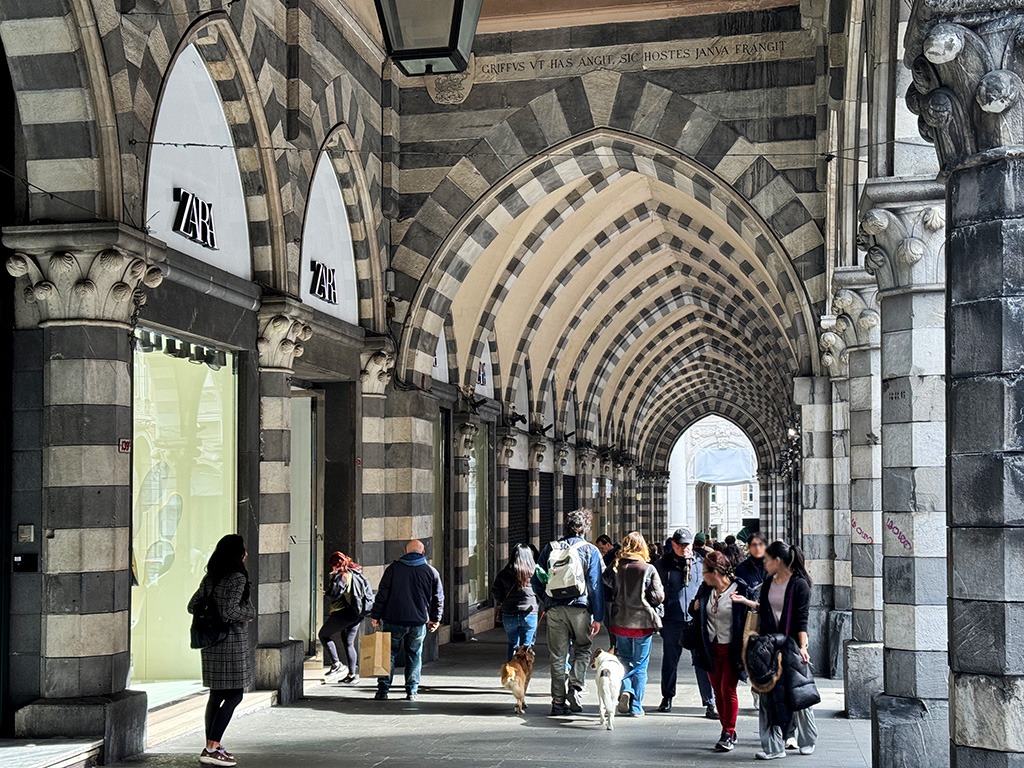
Even if this is Genoa’s more modern neighbourhood, it doesn’t mean it isn’t without character
Accommodation here tends to include:
- Contemporary-styled hotels
- Modern apartment rentals
- Smaller independent properties
Average accommodation cost: Moderate, lower than the historic centre on average
Best suited for:
- Repeat/returning visitors
- Travellers looking for a central but less tourist-heavy area
- Business travellers looking for easy access to transport
- Travellers with mobility challenges
Portoria neighbourhood
Acting as a transition between the historic centre and the more contemporary parts of Genoa, this area is a good choice for anyone looking to experience everything Genoa has to offer.
Portoria is nestled between my favourite area, Molo, and San Vincenzo (detailed above), offering those who stay here a mix of history, culture, and contemporary Genovese life, while remaining well connected to transport options.
The area’s heart is Piazza De Ferrari, the city’s main square, which is a hub for visitors and locals alike. Here you’ll find the Carlo Felice Theatre, Galleria Giuseppe Mazzini, and the start of Via XX Settembre, Genoa’s main shopping street. This is also one of the best parts of the city center for anyone wanting to be conveniently located between sightseeing, shopping, and the main transport links.
Via the De Ferrari metro stop, the city’s two main train stations are within just a few minutes’ reach, and walking to and from the main sights will take most people around 15 minutes. From here, places such as Palazzo Ducale, San Lorenzo Duomo, and the Porto Antico are all within easy reach.

Escape the hustle and bustle of the city centre in the Galleria Giuseppe Mazzini, which frequently hosts artisan markets and special events
Accommodation in this area typically includes:
- Mid-range hotels
- Contemporary properties
- Apartment rentals
Average accommodation cost: Moderate to slightly elevated, close to the city average
Best suited for:
- Longer stays for those looking to explore Genoa more fully
- Those with an interest in shopping
- Visitors prioritizing convenience over immediate access to all of Genova’s historic sites
Carignano area
The Carignano area, located southeast of Molo and south of San Vincenzo, is a more residential neighbourhood set away from the main tourist attractions of Genoa.
Life in Carignano centres around the modern port and Galliera Hospital, which give it a strong local feel. While there are still plenty of places to stay here, you’ll find fewer options for eating and drinking compared to other areas of the city.
Carignano is still well connected to the rest of the city via metro and bus links, and getting to and from the historic centre, Porto Antico, and main train stations is viable on foot. The furthest distance you’d need to walk, for context, would be approximately 45 minutes (3km) from the furthest edges of the area to Piazza Principe train station.
An advantage of staying here is that it is quieter compared to the areas mentioned previously, and the cost per night for most accommodation is well below the city average. This makes Carignano a good choice for longer stays in Genoa, offering a slower-paced and more relaxed base. It may also appeal to those looking to save money while still remaining within relatively easy reach of the centre.
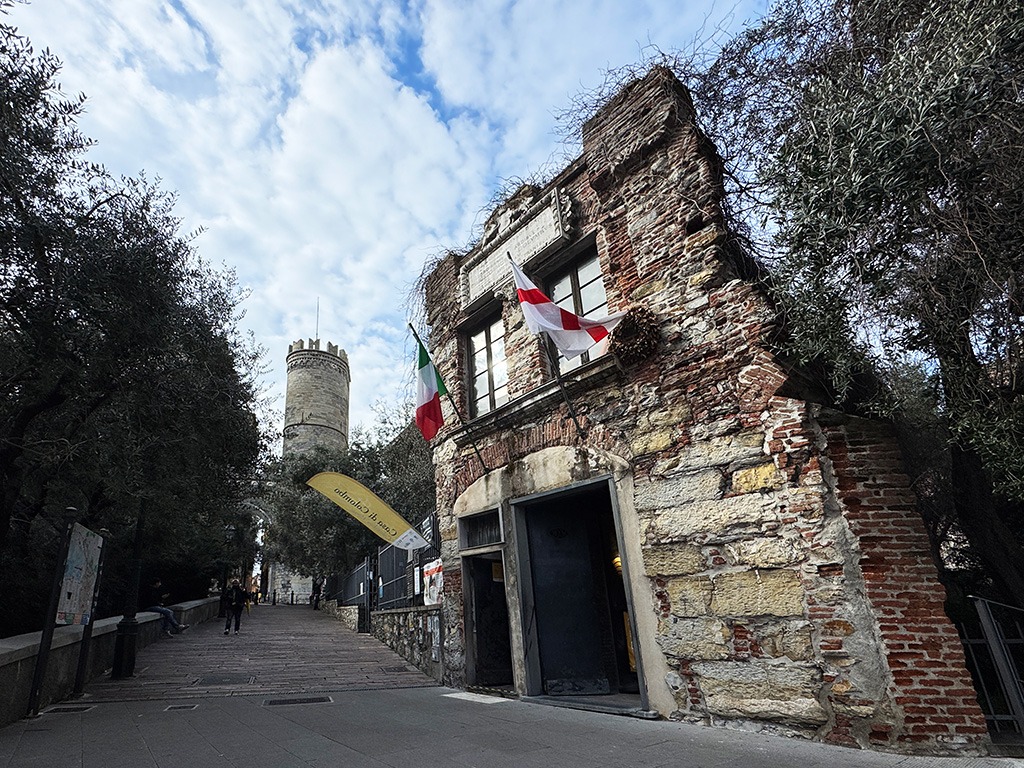
Historical sites like Porta Soprana and the House of Chrisopher Columbus are only 10-15 minutes away from Carignano on foot
Accommodation here typically includes:
- Mid-range hotels
- Apartment rentals
- Larger properties suited to longer stays
Average accommodation cost: Moderate to low
Best suited for:
- Those who prefer quieter areas and a slower pace of travel
- Longer stays in Genoa
- Visitors looking for a quieter neighbourhood
Staying in Castelletto
Located above the historic centre, Castelletto is one of Genoa’s most desirable residential areas, known for its elevated position and sweeping stunning views over the city, port, and Ligurian coastline.
This large area is a noticeably quieter and more local part of Genoa, offering a contrast to the dense and energetic streets below. You’ll find a good number of places to eat and drink, as well as small shops, popular viewpoints, and green spaces such as Villa Gruber De Mari. One of the area’s most famous attractions is Spianata di Castelletto, a must-visit terrace with some of the finest views in Genoa.
Getting to and from Castelletto is best done via public lifts/elevators and funiculars, although it is also possible to walk up and down Genoa’s stepped streets. Because of this elevation, many properties here benefit from open views of the city below and the Ligurian Sea beyond.
Castelletto extends up towards the mountains that surround Genoa to the north, meaning anyone staying here has immediate access to hiking routes and outdoor activities – something quite unique for a major Italian city.
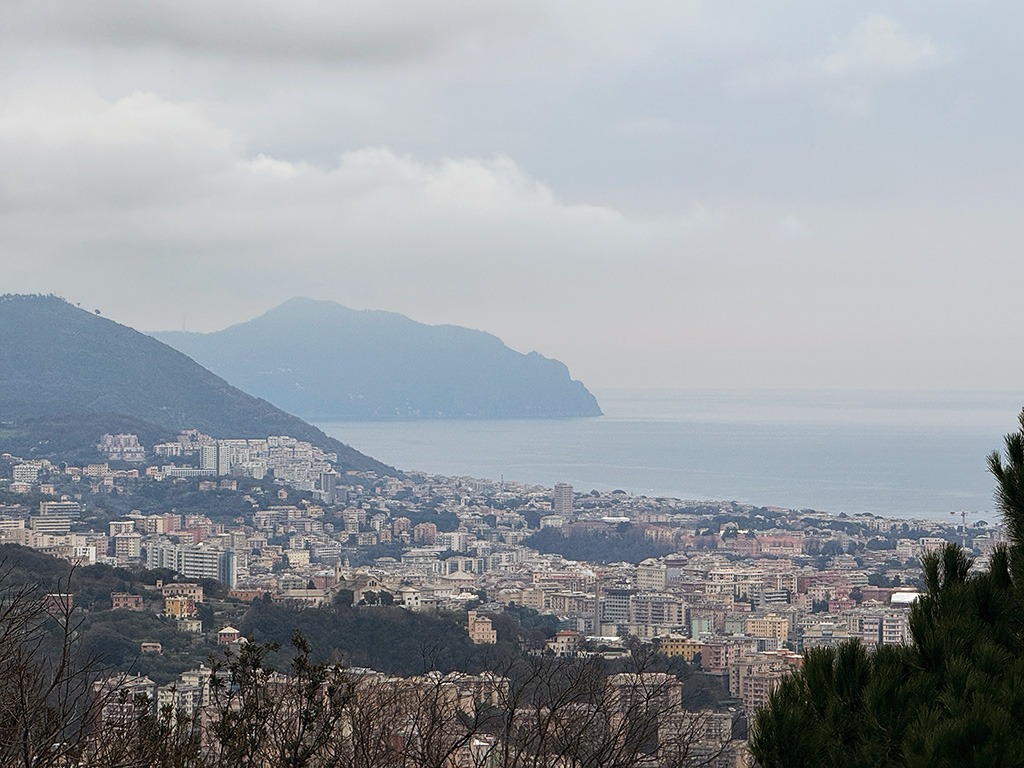
Stay in Castelletto and enjoy the best views of Genoa and the Ligurian coastline
Accommodation in Castelletto typically includes:
- Apartment rentals in residential buildings
- Boutique guesthouses
- A limited number of small hotels
Average accommodation cost: Moderate
Best suited for:
- Travellers seeking a quieter base
- Young couples
- Visitors who do not mind short transfers into the centre
- Nature lovers interested in hiking
Staying by the sea in Genoa (Boccadasse & Nervi)
While much of Genoa is focused around its port and historic centre, there are also neighbourhoods within the official city that offer direct access to the sea.
Areas such as Nervi and Boccadasse provide a very different atmosphere, with waterfront views, beaches, and a noticeably slower pace of life.
Getting to these parts from the city centre of Genoa is straightforward; both are connected via public transport, with journey times averaging 20–25 minutes (for Nervi, via train) and around 40 minutes (for Boccadasse, via bus).
These neighbourhoods are better suited to travellers looking to combine time in Genoa with a more relaxed coastal experience (the small but clean beaches here are a popular spot for locals and tourists alike), while still remaining within the city and within reach of historic sites.
Both Boccadasse and Nervi are local, residential areas, meaning you’ll find a good range of places to eat and drink, as well as essential services and amenities. Nervi in particular is known for Parchi di Nervi, an English-style garden with an art gallery and sea views.
Accommodation in Boccadasse & Nervi typically includes:
- Small seaside hotels
- Apartment rentals
- Guesthouses and B&Bs
Average accommodation cost: Moderate to high depending on proximity to the sea and time of year (elevated during the summer)
Best suited for:
- Couples
- Solo travellers
- Longer stays
- Travellers prioritising scenery and relaxation
My recommendation for staying in Liguria; Diano Marina
For travellers who are interested in staying outside Genoa itself, forget the crowds of Cinque Terre and consider my favourite seaside town in Liguria instead – Diano Marina – which offers a coastal alternative along the Italian Riviera.
Located around 100km west of Genoa, this seaside town provides a much slower pace, with beaches, a beautiful lungomare (seafront promenade), and a very relaxed atmosphere. From Genoa you can take a regional train to Diano Marina or drive (2 hours approximiate travel time in either case), which for travellers with a little more time in Liguria makes this town a good base for exploring Genoa via day trips.
Diano Marina is a quintessential Italian beach town, with family-orientated hotels, a large beach with dozens of stabilimenti (beach clubs), and a focus on la dolce vita. One of my all-time favourite restaurants in Italy is found here – Ristorante Pesce D’Aprile – which is reason enough for me to return.
On a previous trip to Liguria in 2025, Sara and I stayed at Hotel Torino in Diano Marina and loved its central location, the friendly and attentive service, and the spa facilities. With a focus on families and couples, this hotel offers a good starting point for researching a stay in the area.
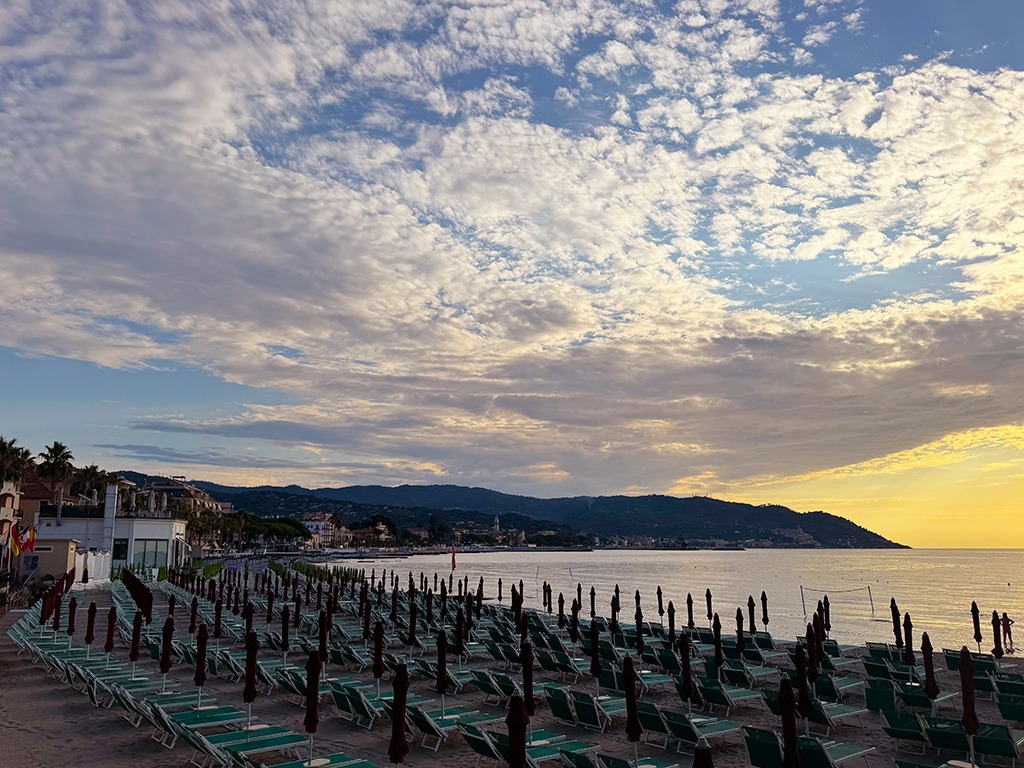
Enjoy a slower pace of life on the Ligurian Sea in Diano Marina, just a couple of hours from Genoa
Accommodation in Diano Marina typically includes:
- Seafront (or very close to the water) hotels
- Family-run guesthouses
- Apartment rentals
Average accommodation cost: Moderate, often better value than central Genoa (with the exception of summer, when prices increase)
Best suited for:
- Couples looking for a relaxed base
- Longer Liguria itineraries
- Travellers combining coast and city
- Families travelling with children
In the end…
I hope this guide has helped you decide where to stay in Genoa. Like many Italian cities, Genoa offers a range of neighbourhoods that each provide a different perspective on the city, from the historic streets of the Molo district to the more residential areas such as Carignano and Castelletto, and the coastal neighbourhoods along the Ligurian shoreline.
Whether you choose to stay in the heart of the old town, near a transport hub for exploring Liguria, or by the sea, there are options to suit a wide range of travel styles and preferences. There are plenty of great accommodation options across the city, from characterful apartments to some of the best hotels in Liguria, and with a bit of research you can often find best prices, great reviews, and a good location all at once.
If you have any questions about planning your trip or choosing accommodation in Genoa, feel free to get in touch here.