By: Warren George
Published: April 28, 2026
Last updated: May 7, 2026
Before moving to Rome in 2021, I lived for two years in the Colli Euganei, not far from Padua (Padova in Italian – I use both interchangeably in this guide so if you see the Italian version, be sure I’m talking about the same place), and as a result, I got to know this small city in Veneto very well. Let me share with you the perfect one-day itinerary to Padova based on my experiences from across the years.
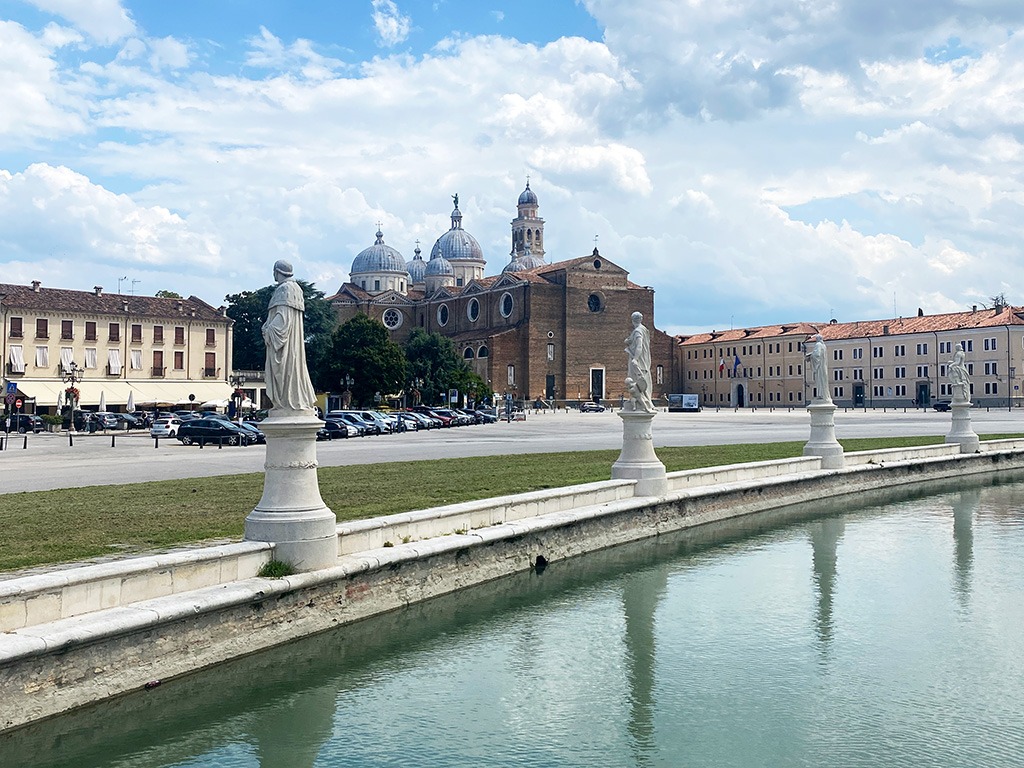
I count myself fortunate to have lived close to this picturesque city for two years
How to spend one day in Padua, Veneto
Padua/Padova is a small city in the Veneto region. It sits on Italy’s high-speed train line and autostrada network, between Venice and Bologna, and is one of northern Italy’s major economic and communications hubs.
Visiting Padova as a day trip or as a detour on a longer Italy itinerary couldn’t be easier. I lived very close to the city between 2019 and 2021 (in the Euganean Hills area to be precise) and got to know Padua very well as a result. I still return to this part of Italy frequently, visiting friends and for work, and can therefore share with you the ultimate Padova itinerary, including:
Who is this guide for?
This guide has been written for visitors looking for a detailed itinerary for visiting Padua as a day trip. Both first-time visitors to Padova and returning visitors will find the tips and recommendations in this guide useful.
Arriving in Padova and Getting to the City
Getting to Padova couldn’t be more straightforward, whether you are coming via train, bus, or car. For the purpose of this guide I will share how to get to Padova’s main transit station, regardless of how you are using public transport to get to the city, as this is the best starting point for our one-day itinerary.
Note: If you are already in Padova and are looking to jump straight into my suggested itinerary, click here to skip this section.
Flying to Padua
Note that Padua doesn’t have its own airport – the closest major airports to the city are:
- Venice Marco Polo (VCE): To arrive in Padova from VCE, you should first take the ATVO Fly Bus to Venice Mestre train station, and then a train to Padova. The combined journey time to Padova in this scenario would be around 50 minutes (20 minutes for the bus, and 15–20 minutes for the train, with time for changing trains at Mestre station).
- Bologna Guglielmo Marconi (BLQ): To get from Bologna airport to Padua first take the Marconi Express to Bologna Centrale train station (7 mins), then, take a train to Padova’s main station (30–60 mins).
Trains to Padova
Beyond the train connections detailed above from Venezia Mestre and Bologna Centrale, getting to and from Padova is straightforward by rial. This small city sits on the high-speed train line connecting Venice to Florence, Rome, and Naples, as well as regional train connections to Lake Garda, Verona, and Milan. Average travel times to Padova are as follows:
- Venice: 25 minutes
- Bologna: 30 minutes
- Verona: 45 minutes
- Florence: 1 hour 40 minutes
- Milan: 2 hours
While Italy’s fast trains mean that cities further away such as Rome and Naples can be travelled to/from quickly, day trips from these cities may not be viable unless you’re willing to spend a large part of your day on the train. From Rome the average duration is 3 hours 15 minutes one way, and from Naples nearly 4 hours 30 minutes.
To find out more about using Italy’s efficient and reliable rail network, including tips on booking tickets, navigating major train stations and the key operators, read my detailed guide here:
Buses to Padua
Padova is also well connected to the wider Veneto region and beyond by bus, and this makes for a more budget-friendly mode of arriving in the city. To understand the huge range of bus options available I’d recommend using Google Maps, entering where you’ll be starting from and setting the destination as Padova main station.
Driving to Padova
Padova sits just off the A4 (Venice-Milan) or A13 (Bologna-Padova) autostrada (motorway/freeway), with driving into the city centre taking roughly 15 minutes once taking the exit. Depending on where you are driving from, getting to Padova takes an average of:
- From Venice (Tronchetto): 40 minutes
- From Bologna: 1 hour 15 minutes
- From Milan: 2 hours 30 minutes
In the years that I lived near Padova I would frequently drive into the city to meet friends and to visit the sights. My parking lot of choice was – and remains – the one on Piazza Insurrezione. Parking here is safe and convenient for a day in Padova, located right in the historic city centre, but not within the ZTL (Zona Traffico Limitato – Limited Traffic Zone). For context, Padova main station is just 15 minutes away on foot.
A Morning in Padua
On the basis that you have arrived at Padova main station by bus or train, or have parked your car at Piazza Insurrezione, our first step is a maximum 20 minutes on foot, and the only way to start a day in Padova as far as I am concerned: breakfast at the historic Caffè Pedrocchi.
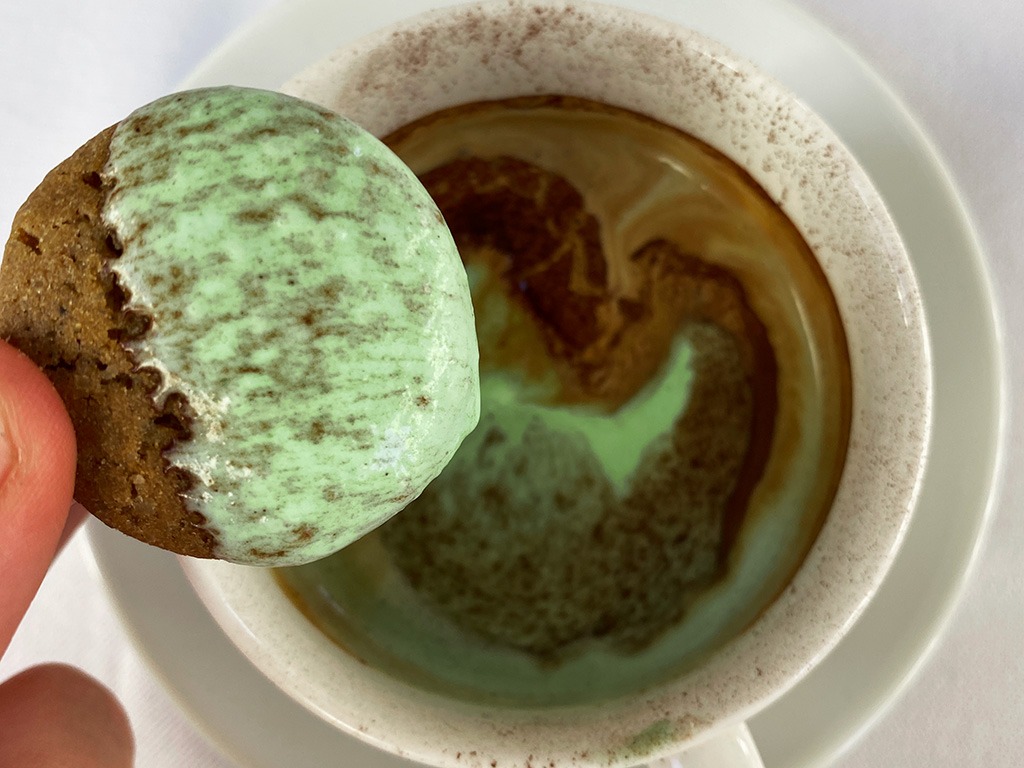
Caffè Pedrocchi’s signature green (mint) coffee is must try during any visit to Padua
This grand café is famously known as the “café without doors” because, until 1916, it was open 24 hours a day. For a traditional breakfast, order a croissant (commonly referred to as a brioche in this part of Italy) and a coffee of your choosing.
Suitably fuelled up, let’s make our way to the first main stop on our itinerary: the Scrovegni Chapel.
Scrovegni Chapel
Heading north-east on foot for less than 10 minutes, you’ll arrive at Padova’s most historically significant site: the Scrovegni Chapel. This chapel is remarkable for its cycle of frescoes by the artist Giotto, completed around 1305, which are widely considered the artistic starting point of the Italian Renaissance.
Scrovegni Chapel: Practical Information
Visits into the chapel are time-controlled and limited to 25 people. This is done to ensure the preservation of this early-Renaissance masterpiece and to guarantee a positive visit experience for all. Because of the capped visitors per slot, entrance to the Scrovegni Chapel can book up fast. Therefore, I’d strongly recommend booking your tickets in advance via the official website here or an anthorised third party such as GetYourGuide.
Visits to the Scrovegni Chapel take around an hour, so depending precisely on when you arrived in Padova, you may find yourself with a little time spare before lunch.
If this is the case, I’d recommend visiting the Eremitani museums (directly next to the chapel) which house a world-class collection of archaeological finds covering both the city and area’s long history, from ancient Rome through the Middle Ages up to the early modern period.
With a visit to the Scrovegni Chapel and possibly the museum next door complete, it’s now time to head to lunch.
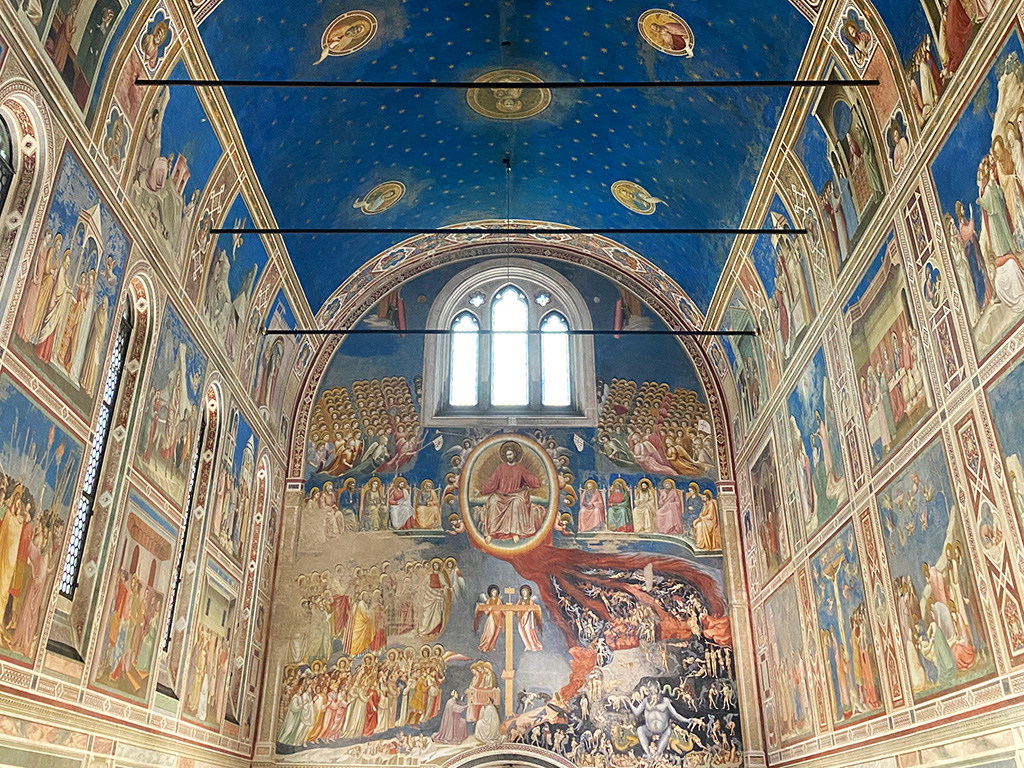
Seeing is believing at the Scrovegni Chapel – these frescoes by Giotto are simply breathtaking
Lunch in Padova
Lunchtime in Padova, and Veneto in general, is not the revered time of day as it is in other parts of Italy; while sit-down lunches at restaurants are perfectly normal, locals tend to have a quick break and something light before continuing with their day.
In Padova, there are two major piazzas: Piazza della Frutta and Piazza delle Erbe, which sit at the heart of the city and are the focal point for lunchtime. Nearby, you’ll also find the elegant Piazza dei Signori with it’s famous clocktower. These piazzas (all around 10-15 minutes on foot from the Scrovegni Chapel) are ringed by numerous bars and cafés, and under the Palazzo della Ragione you’ll find a gallery packed (known as Sotto il Salone) with casual food and drink outlets.
For a truly local lunch, grab a spot at any bar or café and order a few tramezzini. These small sandwiches, packed with fillings as per the traditional style originating in Venice, are a light, quick, and inexpensive lunch which are perfect for a busy one-day visit to Padova.
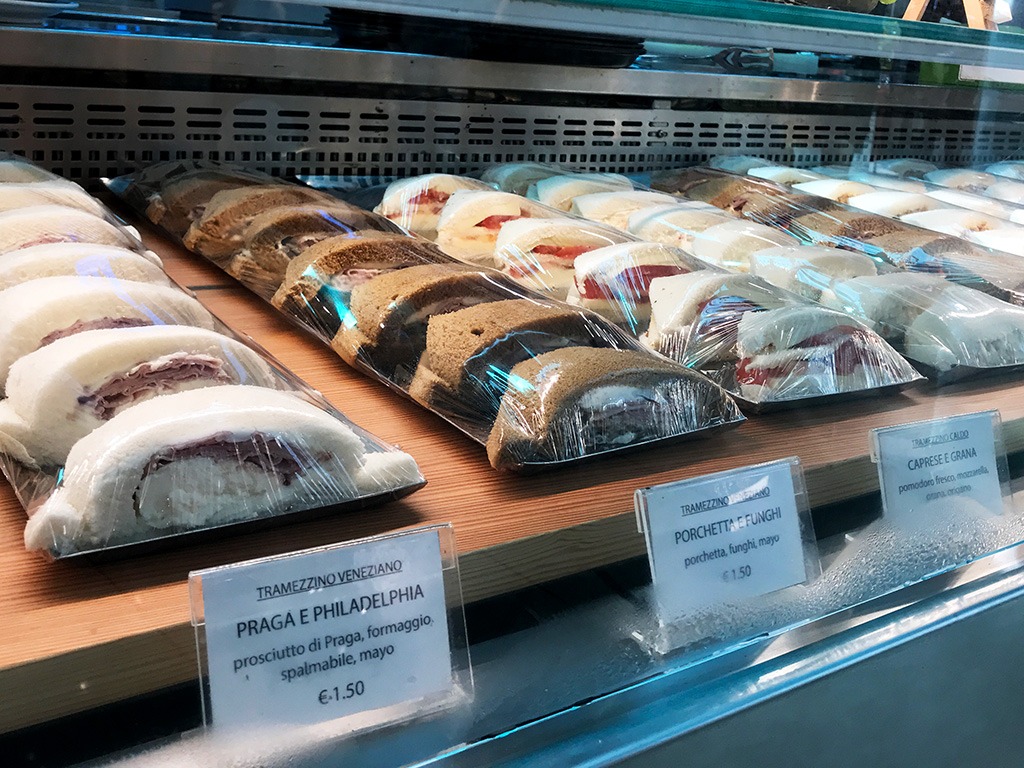
Cheap, good quality, and plenty of flavours to choose from; tramezzini are our go-to lunch when exploring Veneto
Alternatively, if you are looking for something a little different, head to Peace ‘n’ Spice, around 10 mins walking from the Scrovegni Chapel. This restaurant was one of mine and Sara’s go-to places when living near Padova, and we still go here whenever we are in the area.
We love Peace ‘n’ Spice as they are an authentic “cucina etnica,” meaning they offer “ethnic” (non-Italian) cuisine. On the menu here you’ll find dishes from everywhere east of Italy, starting in Greece through to Bangladesh.
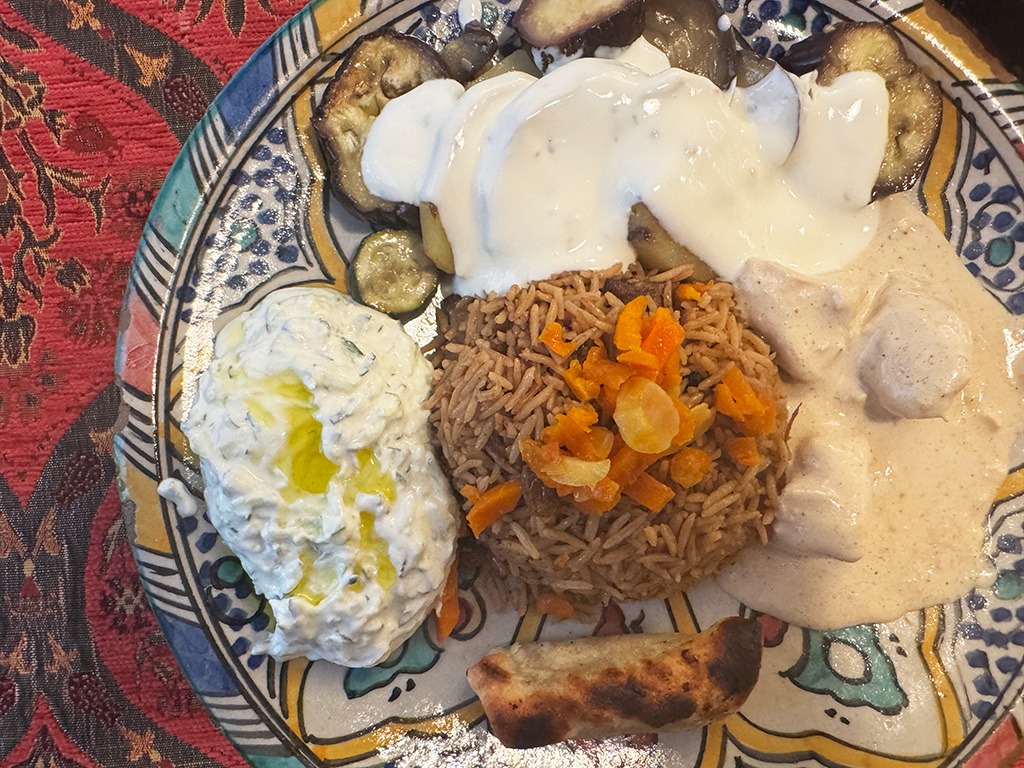
Greek tzatziki, Pakistani chicken, Syrian vegetables and more; if you’re looking for a break from Italian, you won’t be disappointed at Peace ‘n’ Spice
An Afternoon in Padua
Post-lunch, there is a range of things to see and do in Padua. Let me share the top options, marking those that I particularly enjoy:
Basilica of St Anthony (my personal favourite sight in Padua)
The Basilica di Sant’Anthonio is the spiritual heart of Padova and an absolute must-visit for history and culture lovers. The massive edifice is an architectural marvel, blending Romanesque, Gothic, and Byzantine styles and inside, the atmosphere is one of deep spirituality.
You’ll find the tomb of Saint Anthony, the patron saint of the city, where pilgrims from across the world venture to pay their respects to Il Santo (simply “The Saint”). Beyond its religious significance, the basilica is an art enjoyer’s dream; it houses several bronze masterpieces by Donatello. Even if you aren’t religious, walking through the quiet cloisters attached to the church provides a peaceful escape from the city bustle – the main reason I love this basilica, beyond the art and architecture.
Visits in to the cathedral are free and subject to mass timings, and getting here from the historic center of Padova (Scrovegni Chapel) area takes around 20-25 minutes on foot. Note that no photos are permitted inside the basilica as this is a revered Roman Catholic pilgrimage site.
Shopping in the Historic City Centre
Padova offers a shopping experience that rivals its more famous neighbour, Venice, but with a far more authentic, local feel. Start your retail therapy on Via Roma and Via Umberto I, the city’s primary pedestrian roads, where you can walk through the iconic arcaded streets.
Here you’ll find a mix of high-end Italian designers and well-known international brands, a reminder of the city’s wealth during the the times of the Venetian Republic (La Serenissima). For a more unique experience, don’t miss the Sotto il Salone, the ancient market located under the Palazzo della Ragione. This is the oldest covered food market in Europe, and even if you aren’t buying produce to enjoy in the moment or take home, the sights and smells are worth the trip.
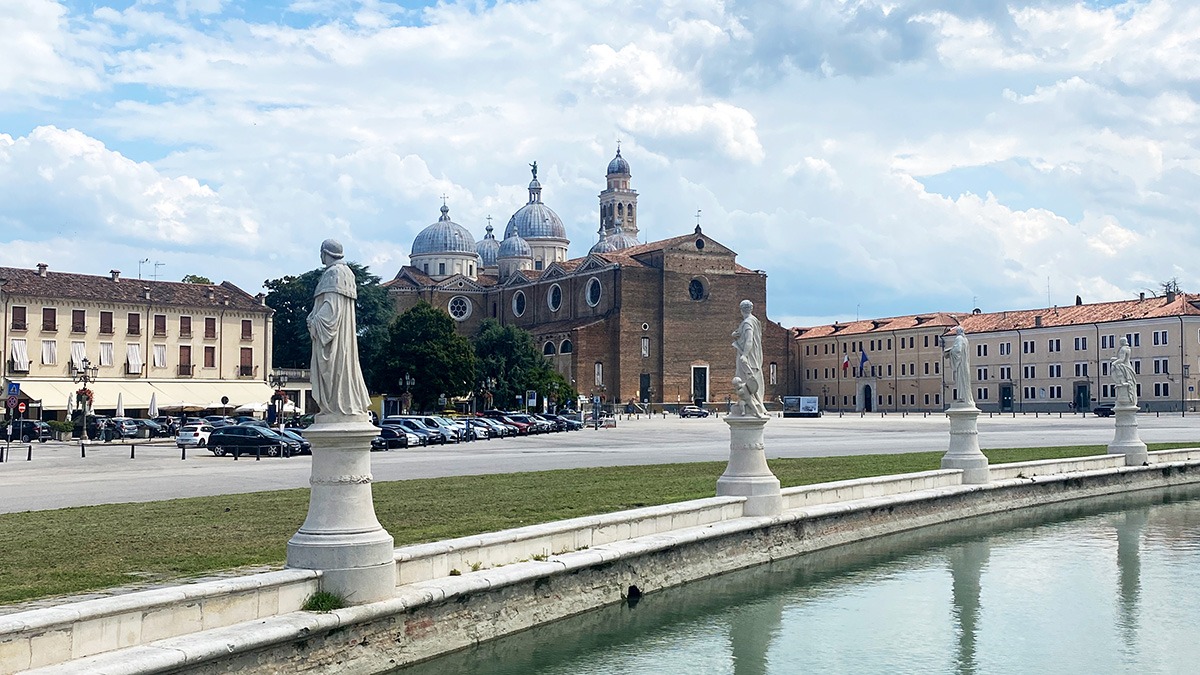
Prato della Valle
Few public spaces in Europe are as breathtaking as Prato della Valle in my opinion. Covering nearly 90,000 square meters (roughly four times the size of St Peter’s Square at the Vatican), this piazza serves as the city’s living room.
Prato della Valle is designed around a central green island, Isola Memmia, which is encircled by a canal lined with 78 statues of Padova’s most illustrious former residents. On any given day, you’ll see students sketching and studying, tourists and visitors relaxing (particularly in summer, in the absence of a nearby beach) and residents walking their dog. This is Padua’s ultimate people watching spot.
From here, you can also see the massive Abbey of Santa Giustina (another must see, especially for those interested in religion and history). Prato della Valle is roughly 25 minutes on foot from the historic center of Padova where I recommend having lunch, and a 5 minute walk from the Basilica of St Anthony.
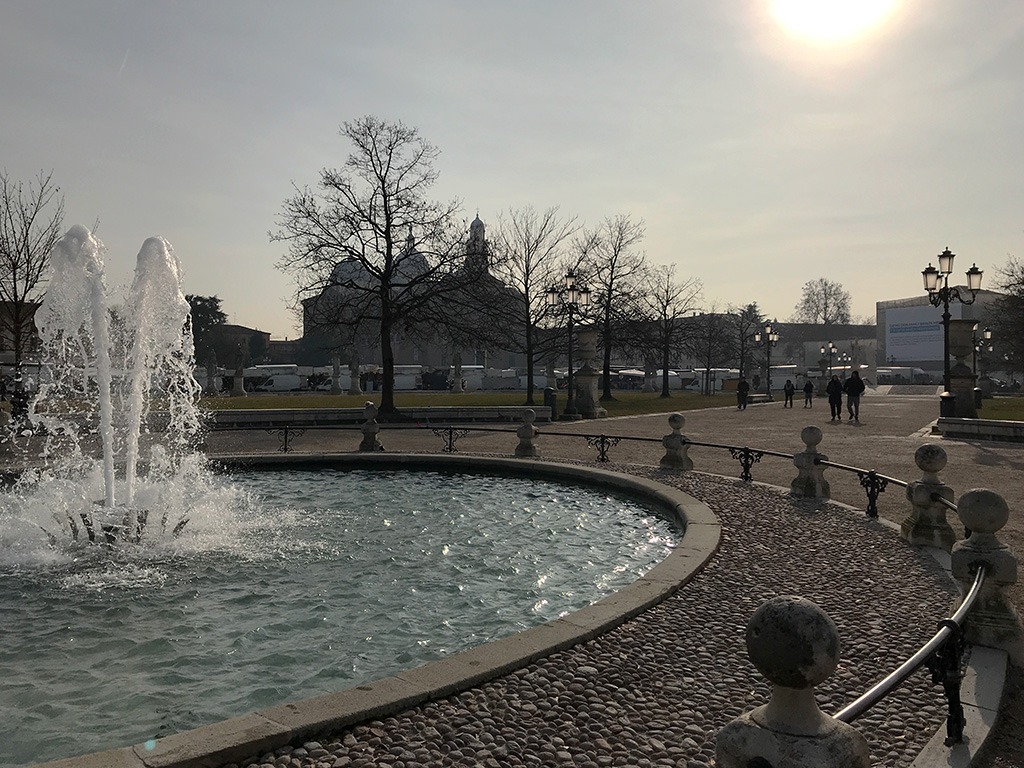
If you happen to visit Prato della Valle on a Saturday, the piazza transforms into a massive traditional market where you can find everything from vintage clothing to local antiques
The Botanical Garden (another personal favourite)
As the world’s oldest university botanical garden still in its original location, the UNESCO World Heritage Site Orto Botanico di Padova is a fascinating stop for nature lovers and history enjoyers alike. Founded in 1545 for the cultivation of medicinal plants, the garden retains its original circular “Garden of the World” layout, and walking through the gates feels like stepping into a living museum of science.
In stark contrast to the historic sections, the modern Biodiversity Garden features high-tech glasshouses that recreate five different biomes from across the earth. It is an incredible educational journey that showcases the relationship between humans and plants, making it a refreshing, green interlude during a day trip. You’ll find the gardens around 20 minutes walking from the historic center of Padua, and just 10 minutes from the Basilica of St Anthony and Prato della Valle.
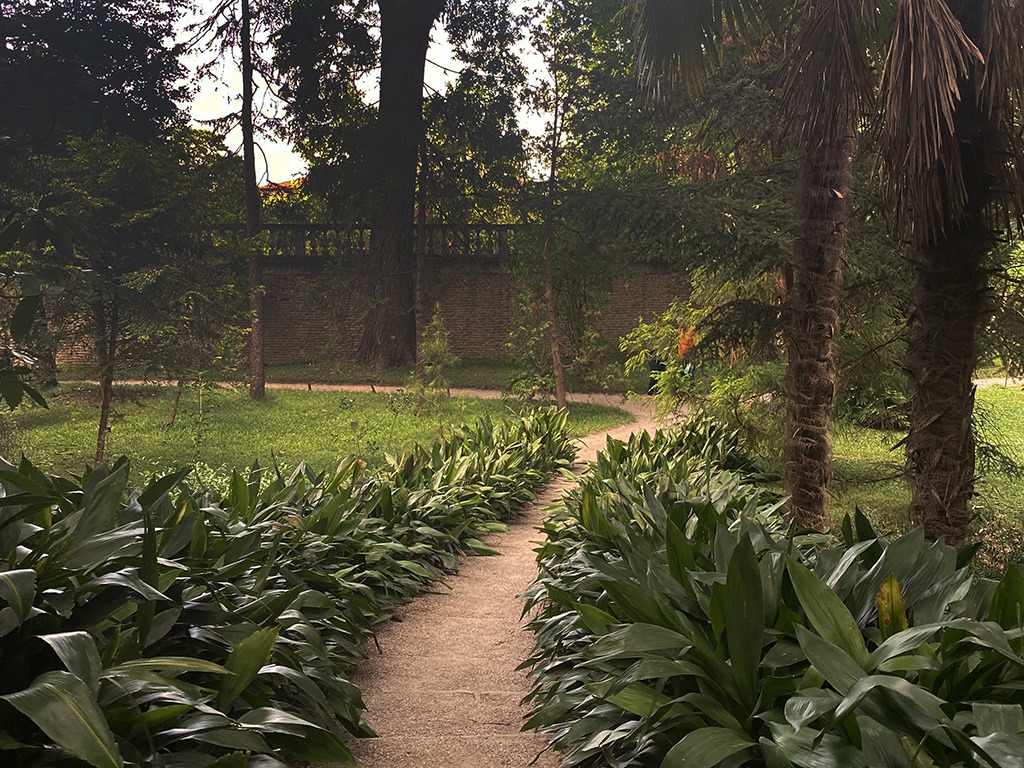
I especially enjoy visiting the Botantical Gardens in Padua during the summer where you can escape the heat in the shaded garden
Aperitivo in Padova
If you’re not ready to leave Padova yet, then you are in for a treat when it comes to aperitivo time here. Padova, alongside Venice and Milan, is one of the birthplaces of modern Italian aperitivo culture. This is down to the fact that Aperol, now a world-famous drink, was created here.
With this legacy, the people of Padova take aperitivo very seriously; from late afternoon onwards, the city’s famous piazzas and bars fill with locals looking to unwind with a spritz after work. In fact, Padovans are so proud of Aperol and the spritz, that the city government mandated in 2008 that the price of a spritz should not exceed €2.50 (though it has since naturally crept up, but is nowhere close to the cost of a spritz in major cities like Rome).
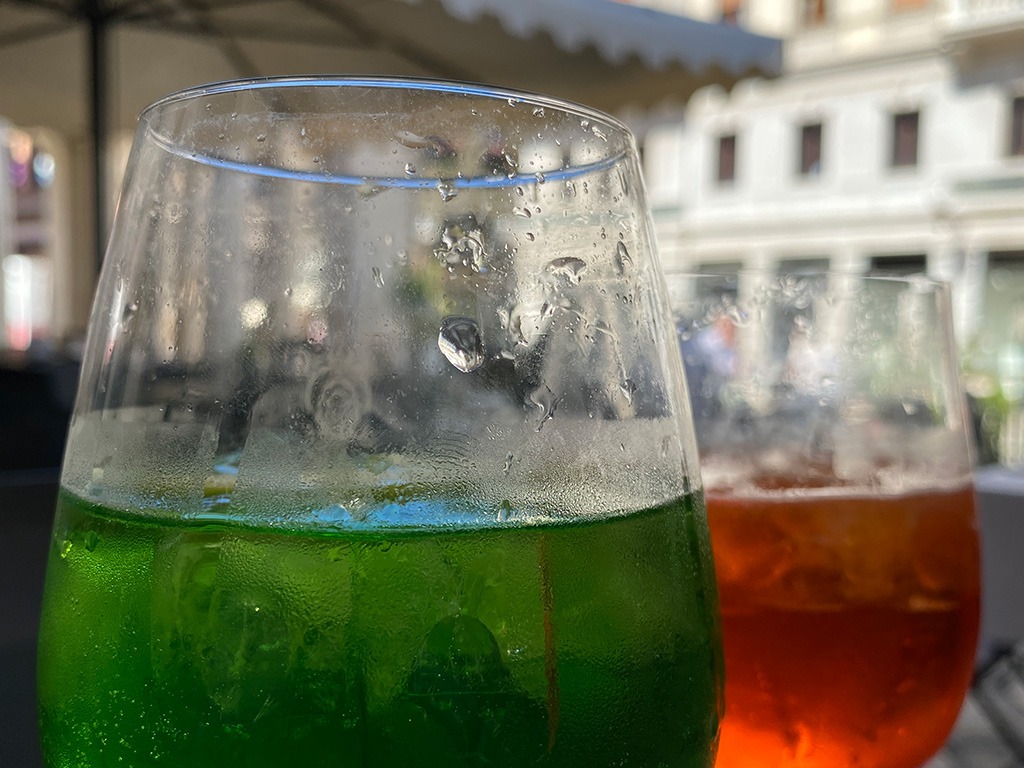
Only in Padova will you find such an interesting array of spritzes
So, where should you head for aperitivo in Padova for a true local experience? For us, there are two spots:
- Goppion Caffetteria: This small, independently owned bar isn’t going to be in any guidebooks, but that’s why we love it. We would come here regularly to enjoy authentically (and generously!) made spritzes with friends who lived nearby. Controversially (in Padua), I am not a fan of Aperol and will therefore typically order a Luxardo spritz, made with liqueur from the surrounding area where Sara and I lived previously.
- Caffè Pedrocchi: I recommended Pedrocchi previously at the start of our itinerary, but as it is open all day, there’s no reason you can’t return here for an elevated aperitivo in a historic institution. My go-to spritz here is a P31 Spritz, made with Pedrocchi’s very own, apple based liqueur.
Dinner in Padova
If you are looking to complete your day in Padova with dinner, there is one restaurant that I strongly recommend booking a table at: Marechiaro.
Restaurants don’t come much more traditional than here, where you’ll find an extensive menu featuring Venetian and Italian classics, served in a beautifully decorated interior. The service at Marechiaro is second to none, and they are especially accommodating if you are travelling with a family and children.
If you are pressed for time before leaving Padova and don’t want a traditional sit down dinner, consider a quick bite at Caffè Pedrocchi or a small plate at Peace ‘n’ Spice, both recommended previously.
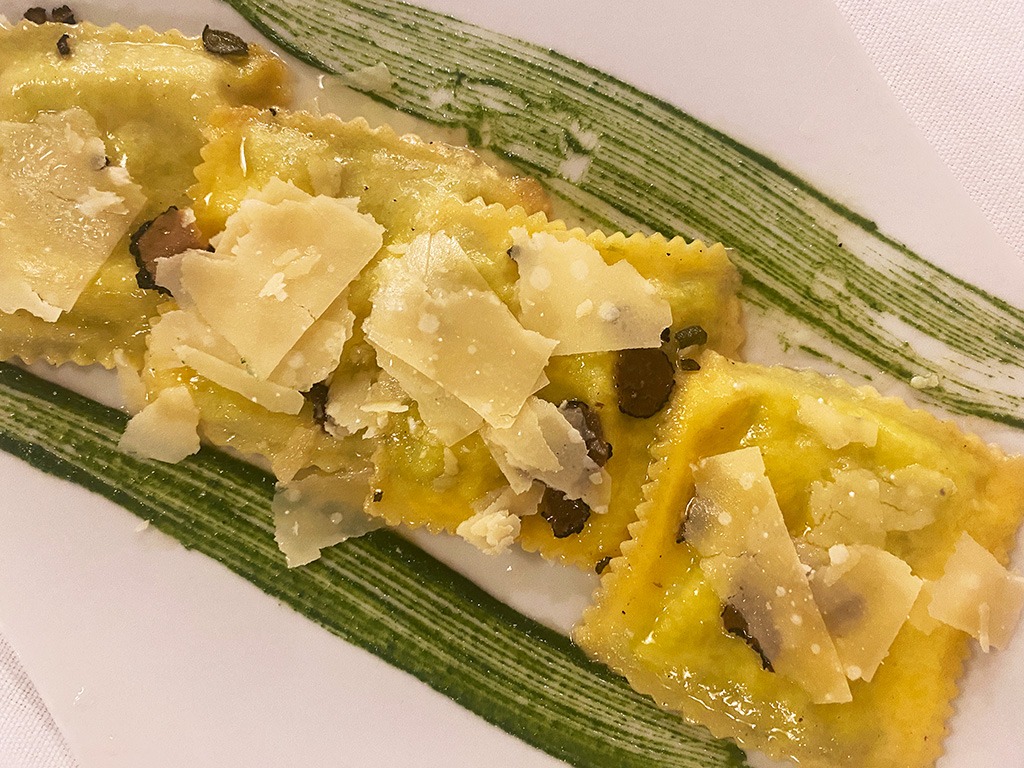
I still dream about this freshly made pasta from Marechiaro with truffle and Venetian hard cheese long after eating it
Bonus: Staying in Padova
As hopefully this guide has shown, for a small city, Padova offers visitors a lot. Therefore, I would recommend considering a stay in Padova, even for one or two nights (or at least nearby in the Venetian countryside), so you can fully enjoy your time here without worrying about onward travel.
For any visitor to Padua, I recommend staying in the historic city centre area, focused around the city’s famous piazzas and within walking distance of the main sights and the train station. You won’t find many large hotels here, but instead smaller boutique B&Bs and apartment rentals.
Sara and I enjoy basing ourselves at Erik Langer Suites, right across from Caffè Pedrocchi in the heart of the city. These modern, well-equipped apartments are comfortable, and being right in the heart of the city centre makes dining and sightseeing very easy.
To conclude
Padua in Veneto might not be a huge town, but it is packed with history, nature, religion, and mouth-watering food and drink. The city can be comfortably visited in a single day as a trip from Venice, Milan, Florence, or even Rome with the right planning.
I hope this guide has been useful in showcasing the perfect day in Padova. For further Italy travel questions, get in touch here.