Published:
December 18, 2025
Last updated:
August 11, 2026
Sicily and Sardinia are Italy’s two largest Mediterranean islands, but they offer very different experiences. If you’re wondering “which one should I visit?”, this guide breaks it down clearly so you can choose based on what matters to you: beaches, history, food, landscape, and travel style. I’ve spent extensive time exploring both islands, and I’ll walk you through the real differences so you can decide before you book anything.
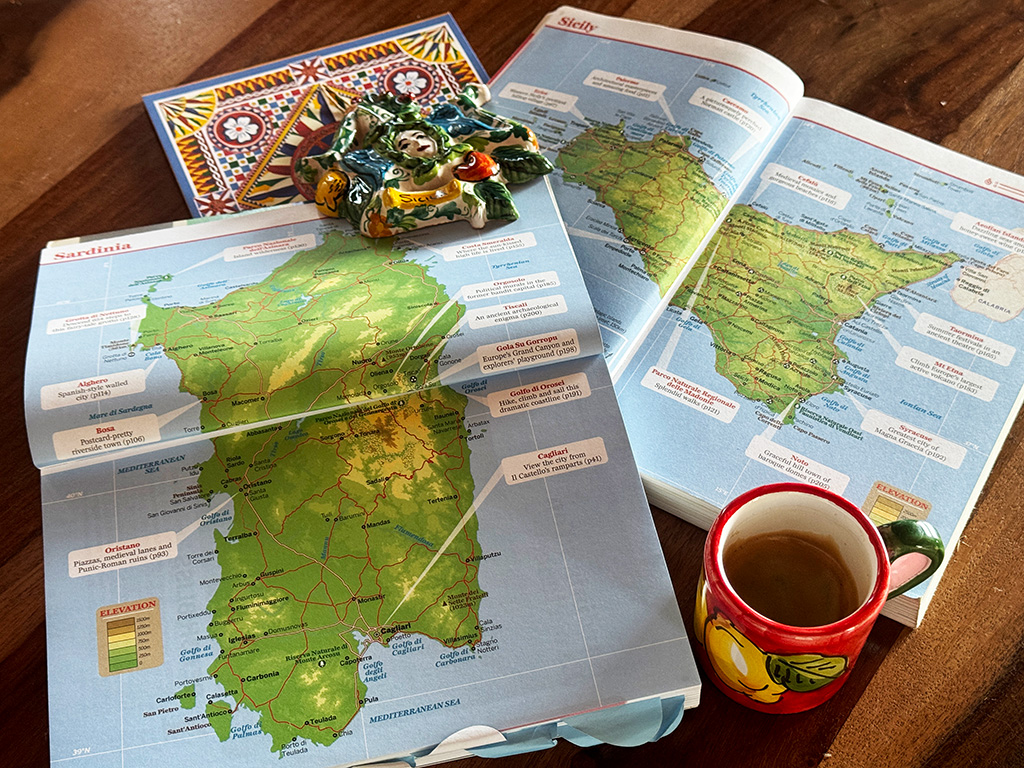
Sicily or Sardinia? Which one is right for you? Grab a coffee and let me outline each island so you can decide
Sardinia and Sicily – Which Island Is Right For You?
I’ve travelled throughout both Sicily and Sardinia extensively so if you’re considering a trip to these islands but can’t decide which is best for you, I’m here to share with you the must-know facts and main differences. In this guide I’ll compare the following:
- Key facts and figures about the two islands
- Accommodation options and where to stay on Sicily and Sardinia
- History of Sicily and Sardinia
- Food and drink on the two islands – differences and similarities
- Getting to each island
- Transport and getting around each island
- What to do on Sicily and Sardinia
- My choice – Sardinia vs Sicily
Key facts and figures
Here are some quick headlines about each island to help you better understand the rest of the information in this guide:
Size (landmass)
Sicily: 25,711 km²
Sardinia: 24,090 km²
Population (residents)
Sicily: 4.8 million approx.
Sardinia: 1.5 million approx.
Weather & Climate
The weather and climate of these islands are fairly similar, with each experiencing mild winters, warm (and sometimes wet/stormy) springs and autumns, and very hot summers.
Accommodation options and where to stay
Both islands offer visitors a wide range of accommodation options, from camping and hostels through to high-end villas and luxury hotels. Here’s a breakdown of the key information:
Sicily Hotels and Vacation Rentals
Owing to its population density, you’ll find far more choices for accommodation on Sicily compared to Sardinia.
In all the major cities you’ll find plenty of options for self-catering rentals and hotels ranging from simple B&Bs through to large hotels.
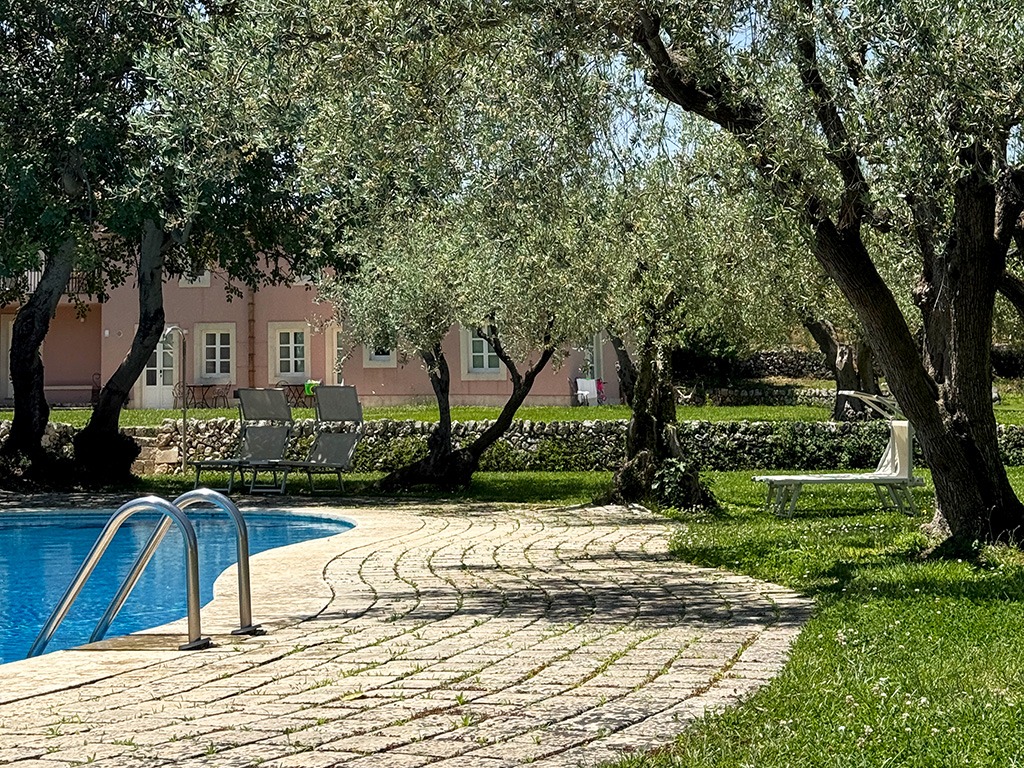
Southeast Sicily is one of my all-time favourite places to stay anywhere in Italy
In the countryside and areas between the cities there’s no shortage of apartment and villa rental options, as well as near-endless agriturismo choices.
Due to this wealth of choice and for the fact that the cost of living in Sicily is lower than the Italian average, most accommodation options on the island are cheaper than comparable properties on mainland Italy.
My favourite area to stay in Sicily is the Val di Noto where you’ll find untamed countryside, access to some of the island’s top archaeological sites, plus easy access to Catania airport and ferry connections to the Italian mainland.
Specifically I love Masseria degli Ulivi – this converted olive farm is one of my favourite places to stay anywhere in Italy as not only is the accommodation beautiful and comfortable, but the restaurant offers some of the best Sicilian cuisine available.
For a detailed overview of where to stay in Sicily, refer to my full guide here:
Sardinia Hotels & Vacation Rentals
Accommodation on Sardinia is mostly the reverse of Sicily; there are fewer options, meaning that prices are generally higher than the Italian average.
Higher prices are also driven by Sardinia’s popularity as a holiday destination for Italians, and for the fact certain areas such as the Costa Smeralda are favoured by the global rich and famous.
These higher prices are offset, however, by the fact that Sardinia is generally a more relaxed and exclusive destination.
My favourite place to stay in Sardinia is the city of Alghero, in the north-west of the island. This city is a hybrid of Italian and Catalonian culture, meaning it’s impossible to eat badly. The city is also home to amazing beaches, and the nearby countryside and surrounding area offers some of Sardinia’s most incredible scenery.
While there are hotels in Alghero, staying in an apartment is my preference when visiting. On a previous visit I rented I Fiori and would recommend it to anyone visiting as a couple, or as a family or small group of friends. Located just 5 minutes from the historic centre of the city, you’ll struggle to find a more convenient and well-equipped base.
To understand more about where to stay on Sardinia, read my full guide here:
History of Sardinia and Sicily
While both islands are now part of the modern Italian state, this is a relatively modern occurrence with both Sardinia and Sicily being incorporated into the united Italian Kingdom in the 1860s.
Prior to this, each island was controlled by various civilisations and Mediterranean powers over the centuries (with some overlap), all of which have left their own distinct mark on both places – let me share a brief overview:
Pre-antiquity (c. 6000 BCE to 1200 BCE)
Both Sardinia and Sicily were inhabited long before the ancient world of Greece and Rome left their mark.
In Sicily, various indigenous groups lived across the island including the Sicani (from which experts now believe the name ‘Sicily’ derives for the island), Sicels and Elimi. Each of these peoples were concentrated in different areas and left behind traces of settlements, burial sites, and artefacts. Some of the best places to step foot into this era include the Necropolis of Pantalica, a UNESCO World Heritage site located not far from Syracuse, where thousands of rock-cut tombs demonstrate just how advanced and connected early Sicilian societies were.
Sardinia’s early story is more uniform: the island was home to the Nuragic civilisation, whose stone towers, the nuraghi, have become icons of Sardinia’s past. Sites such as Su Nuraxi di Barumini, also a UNESCO World Heritage site, show that this Italian island was far from isolated. The Nuragic people built complex settlements, cultivated the land, created metalwork, and developed unique sites including Domus de Janas and sacred wells, many of which can be visited today.
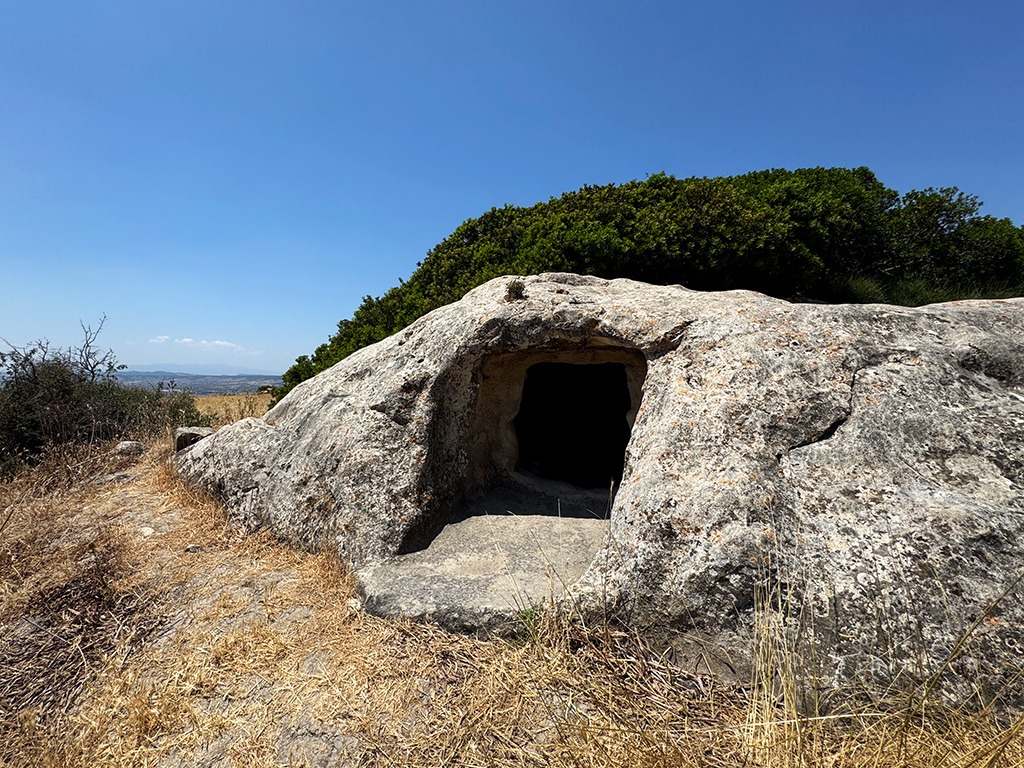
The remnants of the Nuragic civilisations that thrived in Sicily in pre-antiquity are unlike anything else in western Europe
Pre-Roman influences
From around 800 BCE, Sicily was colonised by Greek migrants seeking trade opportunities and fertile land. They founded city-states such as Syracuse, Naxos/Taormina, Agrigento and Selinunte, each becoming important centres of culture, learning and commerce. Syracuse in particular grew into one of the most powerful cities in the ancient world, defeating both the Carthaginians and Rome at various moments.
Meanwhile, western Sicily came under the influence of Carthage, the maritime power based in what is now Tunisia in North Africa. Their presence shaped the island’s economy and defensive structures until Rome ultimately conquered Sicily in 241 BCE, during the First Punic War.
Sardinia followed a similar route but under different influences. Rather than Greek settlers, the island saw contact with Etruscans from mainland Italy, particularly across the north coast. Carthage also controlled large parts of Sardinia for centuries, especially the south around modern-day Cagliari, using it as a strategic trading outpost until Rome incorporated the island in 238 BCE.
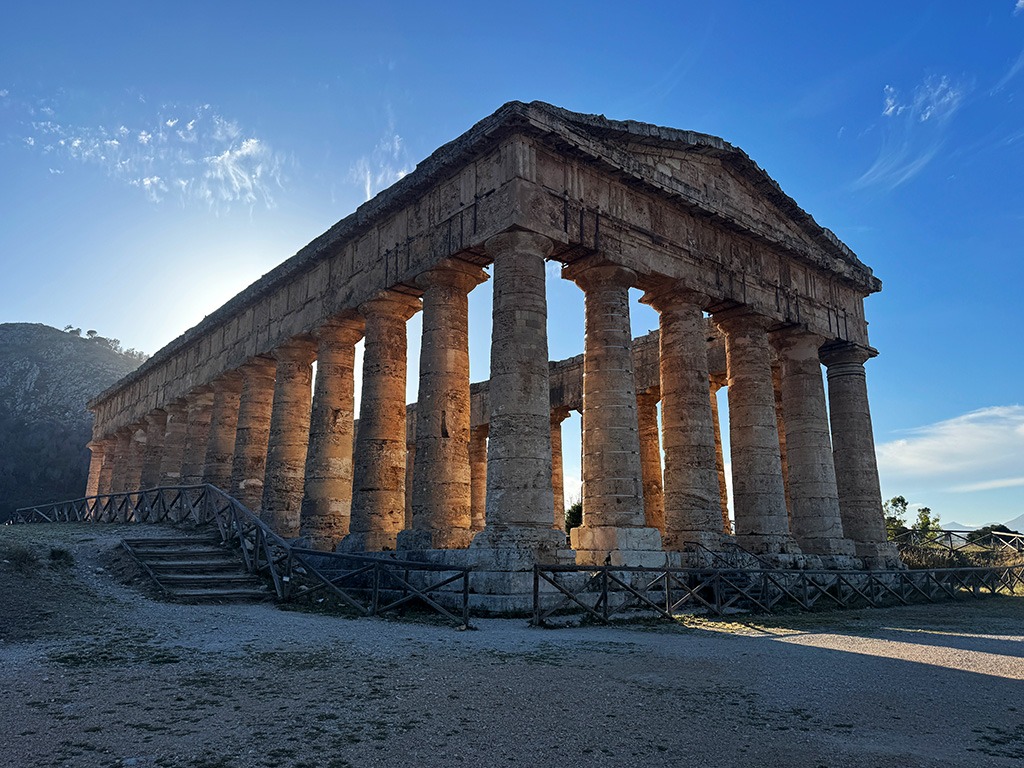
Ancient Greece’s influence is prevalent across Sicily, especially in the huge temples that still stand on the island
Roman control
Under Rome, both islands prospered. Sicily became one of Rome’s most important grain suppliers – its Sicilian soil, enriched by activity from Mt Etna, was ideal for agriculture. Sardinia provided grain as well, but also salt, metals, and strategic naval bases across the Mediterranean.
Both islands remained under Roman rule until the collapse of the Western Empire. After brief periods of Gothic control, Sicily was conquered by the Fatimid Caliphate in the early 900s, connecting it more closely with North Africa and ushering in a period that heavily influenced Sicilian cuisine, agriculture and architecture.
Sardinia, meanwhile, began to slip from Roman oversight around 456 CE, eventually developing into four autonomous kingdoms (the Giudicati), each ruling different parts of the island.
Post-Rome, pre-Iberian control
After the fall of Rome, both islands entered complex periods of shifting authority.
Sicily moved between Byzantine, Arab, and Norman control. The Normans in particular transformed the island, building monumental cathedrals in Palermo, Cefalù and Monreale, all now UNESCO World Heritage sites. The fusion of Arabic knowledge, Norman architecture, and Latin Christian culture produced one of the most extraordinary artistic periods in the Mediterranean, which can still be seen today.
Sardinia, far more remote, evolved differently. While the Byzantines maintained nominal control for several centuries, real power eventually shifted to the local Giudici rulers who governed regions such as Torres, Cagliari, Arborea, and Gallura. This era created the foundation for Sardinia’s unique identity, language, and traditions that still stand apart within Italy.
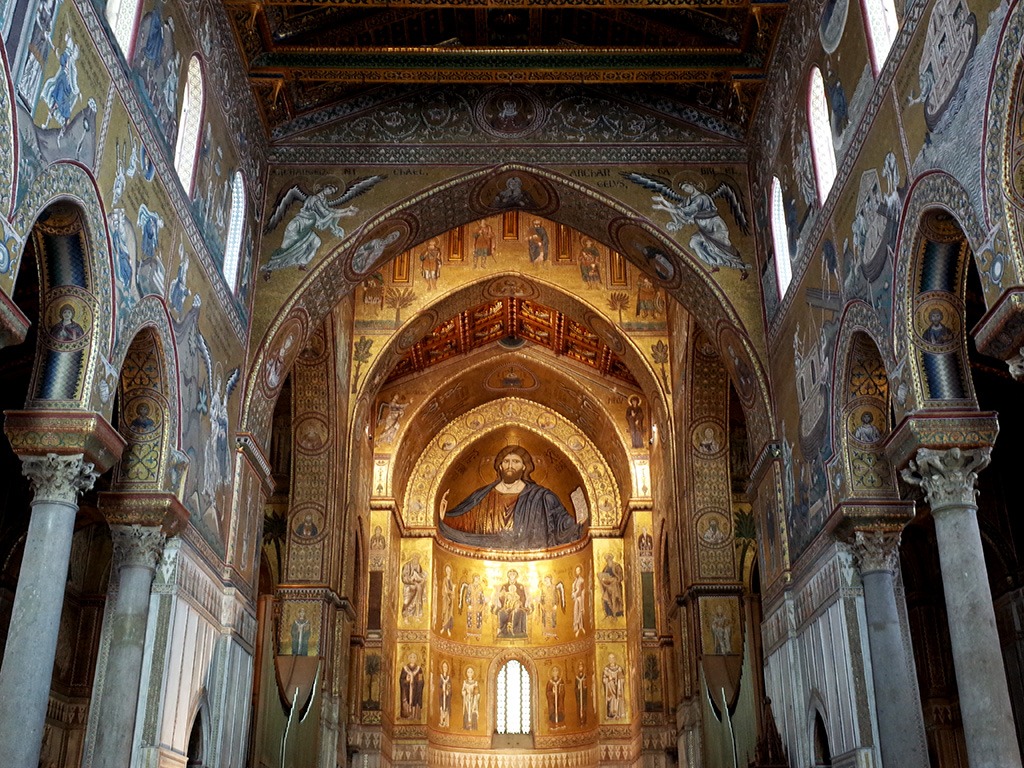
The history and culture of both islands have been shaped by numerous empires and civilisations, and this is particularly evident in Sicily and in sites like Monreale cathedral
Aragonese and Spanish control
During the Middle Ages, both islands fell under the expanding influence of the Crown of Aragon – Sardinia first in 1324, followed by Sicily in 1409. When Aragon merged with Castille in 1479, forming what became modern Spain, the islands were incorporated into Spanish rule.
Each island was managed by a viceroy, and Spanish culture blended with local traditions. This influence is especially visible in Alghero, where Catalan traditions survive, and in parts of Cagliari and Sicily’s major cities. Spanish fortifications, churches, and civic architecture remain significant monuments today.
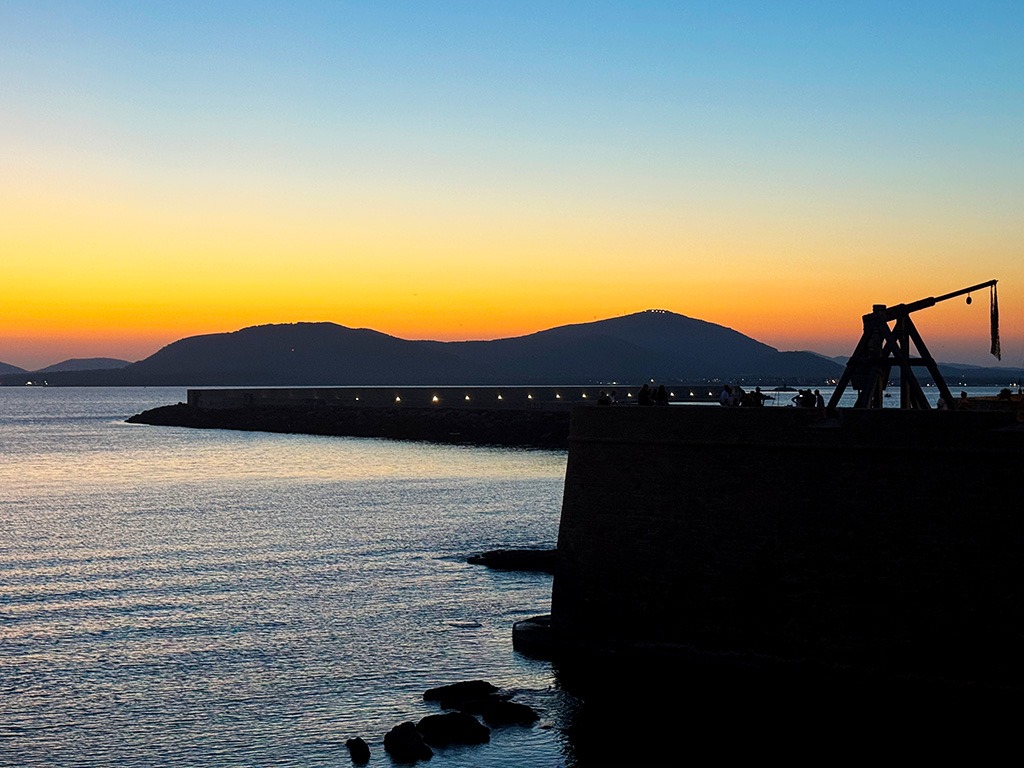
Alghero is referred to as ‘mini Barcelona’ for its Catalan-leaning identity, language and cuisine
Italian control, pre-unification
Following the War of Spanish Succession in 1713, Sardinia briefly passed to Austria before being granted to the House of Savoy in 1720, forming the Kingdom of Sardinia-Piedmont. This state would eventually lead Italian unification.
Sicily, meanwhile, came under the Bourbon Kingdom of the Two Sicilies, ruled from Naples. The Bourbons shaped much of the architecture and urban planning you still see today in cities such as Palermo and Catania.
It was from Piedmont-Sardinia, however, that the movement for Italian unification began, and Sicily was one of the first regions annexed during Garibaldi’s campaign in 1860.
Italian unification and modern times
Following unification in 1861, both islands became part of the modern Italian state. Despite being tied politically, their identities remained distinct, shaped by geography, history, and culture.
Today Sicily and Sardinia attract visitors from all over the world, each offering a completely different experience: Sicily with its incredibly varied history and volcanic landscapes; Sardinia with its beautiful beaches and relaxed pace of life. These islands appeal to different types of trips, which is exactly what this Sicily vs Sardinia comparison helps you decide.
Food and drink
Sardinian and Sicilian cuisines are very different, with a few overlapping elements – in our experience there’s only one main area that the two islands share in terms of their cuisines and approach to food:
Seafood
Being islands, it’s not a surprise that both Sicily and Sardinia’s cuisines feature a lot of seafood. Through both islands you’ll find Italian classics such as spaghetti alle vongole and mussels in broth, as well as delicious crudi (raw) options and grilled fish platters.
This said, both islands feature some special local dishes such as red prawns from Mazarra in Sicily, or lobster in Catalonian style in Alghero in Sardinia – if you enjoy seafood, order these if you see them on the menu – I promise you won’t be disappointed!
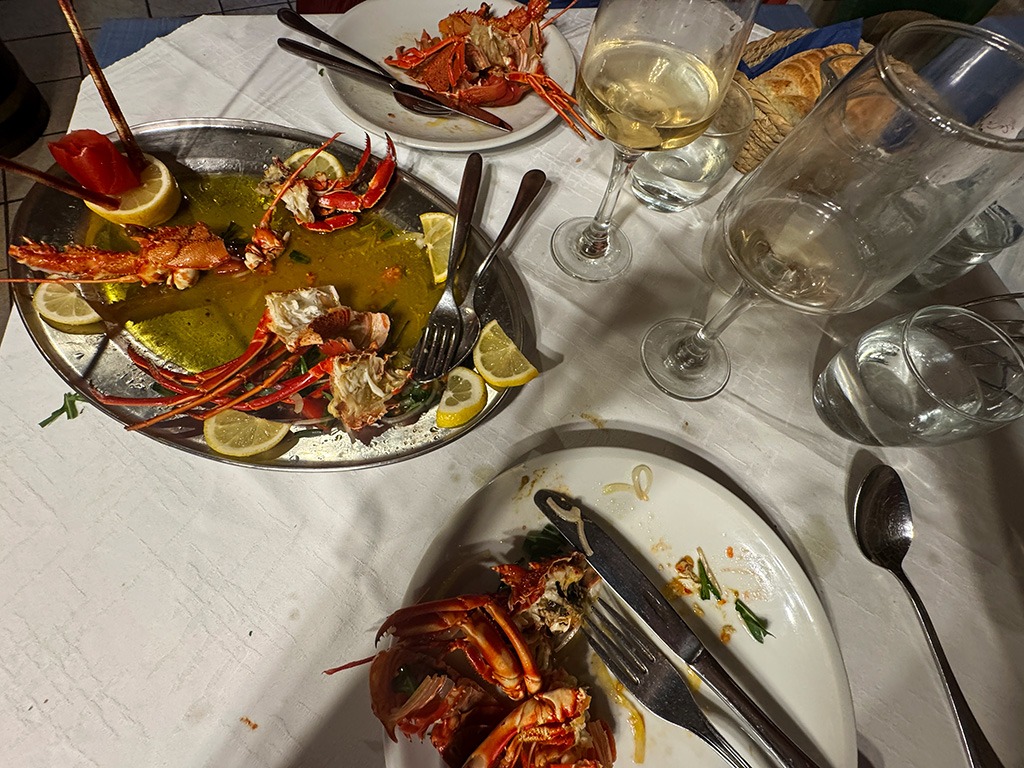
Few dishes are less iconic in Sardinia than Catalan-style lobster – each time, Sara and I forget to get a photo before enjoying it so this photo of our finished plates is the only testament we have
Now let’s take a look at what’s different between these two islands:
Meat
Both islands have a tradition of meat in cooking, but this isn’t as pronounced in either region compared to other parts of Italy, such as Tuscany (with its famous Florentine steak).
One of the most famous Sardinian dishes is porceddu, slow-roasted suckling pig cooked over an open fire. It’s rich, flavourful, rooted in centuries-old traditions and is perfect after an entire day of exploring Sardinia’s interior towns or beautiful beaches.
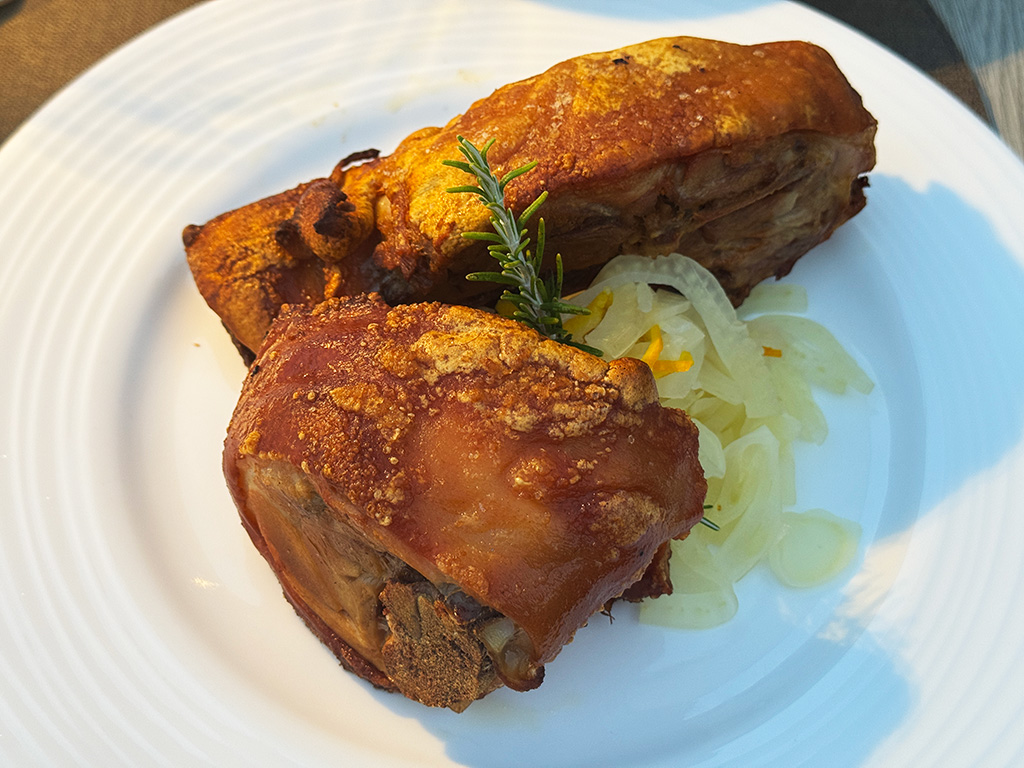
Meat eaters will be in heaven in Sardinia with plates like porceddu, traditionally served with light vegetables to cut through the meat’s richness
Sicily, by contrast, has less of a meat tradition, where game and animals such as cows and sheep were less plentiful historically. They were typically reared for the production of other foodstuffs such as cheese, and only consumed as meat on special holidays and for major occasions.
Sicily’s history of control under the Fatimid Caliphate during the early middle ages, as well as its proximity to North Africa, has meant that meat has played less of a role in the development of Sicilian cuisine compared to other foodstuffs.
Wine
While both islands are renowned for their wine production, the styles and taste profiles vary considerably:
Sicilian wine
Sicily’s secret weapon when it comes to wine is Mount Etna; Europe’s most active volcano has enriched this island with fertile soils across hundreds of thousands of years (and continues to do so through frequent eruptions of volcanic material), meaning that the island now produces some of Italy’s most renowned wines.
Sicilian wines are generally bold and filled with flavour – all thanks to the rich soil from which the wines grow across the island. Prime examples include Etna Bianco and Rosso wines, and my personal favourite red wine (period), Nero d’Avola.
Sardinian wine
Sardinia is known for its production of both red and white wines, but it’s the latter that shines here in my opinion.
Sardinian white wines typically tend to be from the Vermentino grape, which while cultivated in other regions such as Tuscany or Liguria, Sardinia’s unique island climate means that the whites produced here stand apart from their mainland counterparts.
One of our favourite producers is Sella & Mosca, based near Alghero in the northwest of the island. While they are a large-scale producer, this doesn’t detract from the work they undertake to ensure the integrity of the wine and their respect for the local area.
If you visit Alghero, we’d highly recommend booking a tasting tour of Sella & Mosca to understand more about their approach to winemaking, and to taste some of their signature creations.
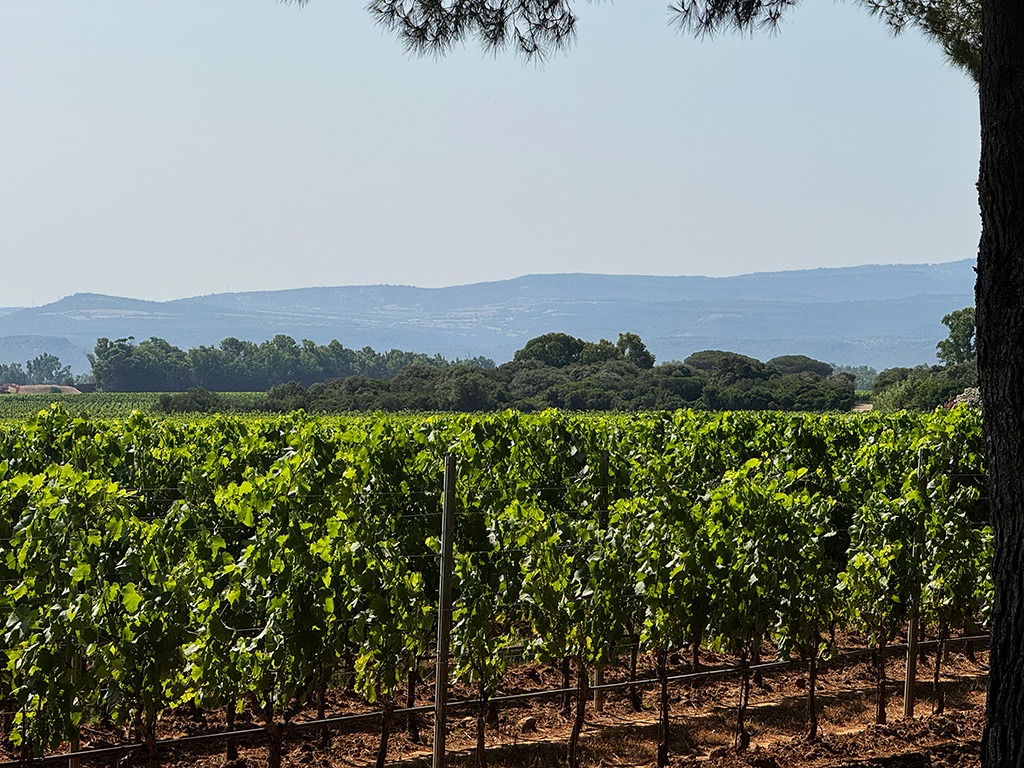
You can even stay at Sella & Mosca’s vineyard if you really want to indulge in their wines
On a related note…
Both Sardinia and Sicily are home to some of Italy’s most famous after-dinner drinks. For me, these drinks embody the essence of both islands:
Marsala fortified wine is a semi-translucent amber-coloured dessert wine, ranging from dry to sweet depending on classification. Good Marsala wine in my experience has a slight ‘twang’ to it, and a strong, semi-sweet smell – these punchy elements remind me of Sicily’s character as an energy-filled island, drawing on thousands of years of cultures mixing.
Mirto, so named as it’s made from mirtilli (blueberries), is a dark, sweet liqueur with a slightly fruity smell. What it lacks in appearance and initial smell, is made up for in taste and strength; the sweetness is smooth, and it packs a punch. Try it with a sorbet if offered when travelling in Sardinia in the summer; Sara and I still dream about one mirto sorbet we had after dinner in San Teodoro previously!
Fruit & Vegetables
While vegetables and fruit feature heavily in both cuisines, you’ll find their use varies considerably based on the traditions of the two islands.
In Sicily, citrus fruits feature heavily in all aspects of food and drink; you’ll find oranges and lemons being used for juices and granita for breakfast, in salads at lunchtime, and providing flavouring at dinner. This is a legacy from Sicily’s Arabic control, which extends also to the increased use of nuts in cooking, having been introduced by Muslim traders and arrivals in the Middle Ages.
Sardinian cuisine conversely follows a tradition closer to mainland Italy, even if it is geographically further away, compared to Sicily. You’ll find the same seasonal produce on offer in Sardinia as you will in Lazio or Tuscany – for a complete view of what’s in season and where in Italy, take a look at these articles by my good friends at Casa Mia Tours.
Sweets – pastries and desserts
In my experience, this is one area where Sicily absolutely trumps Sardinia; while Sardinia is home to some delicious sweets (such as seadas, a fried pastry stuffed with cheese and covered in honey), there’s almost no end to the treats you can get in Sicily, at any time of day. The most famous examples include:
- Granita – My all-time favourite thing to have for breakfast. Granita is a semi-frozen, intensely flavoured mixture of fruit juice, nuts, or coffee, traditionally served with a warm brioche.
- Cassata – A classic Sicilian dessert made of ricotta, candied fruit, sponge cake and marzipan. It’s an edible tribute to the island’s layers of Arabic, Norman and Spanish influence – essentially Sicily in dessert form.
- Martorana (Frutta Martorana) – Almond-paste sweets shaped and painted to look like real fruit. You’ll find them in pastry shops, especially around holidays across the region, but they’re traditionally most associated with Palermo.
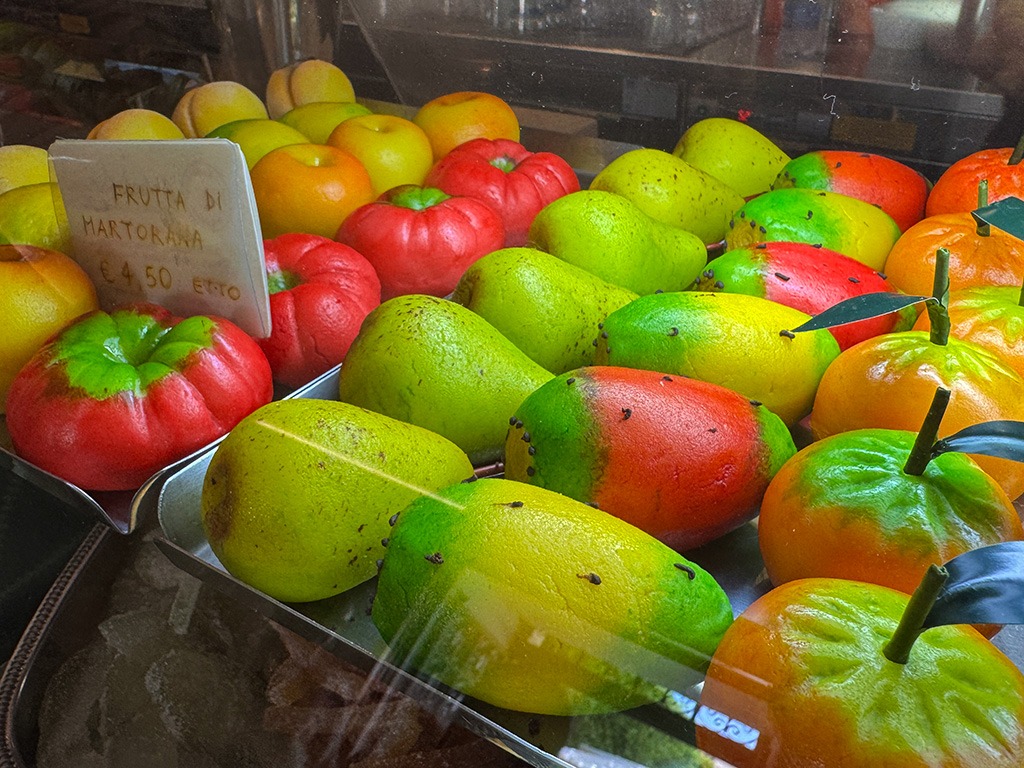
Things don’t get more quintessentially Sicilian than martorana
Getting to each island
Getting to Sicily
Travelling to Sicily couldn’t be easier, with several options available:
Sicily by air
Sicily is home to several airports, the principal two being Palermo Falcone-Borsellino (PMO) and Catania Fontanarossa (CTA).
Both Palermo Falcone-Borsellino (PMO) and Catania Fontanarossa (CTA) airports are home to routes between the island and Italian mainland, as well as cities across Europe including the UK. Both airports also offer connections to Lampedusa all year round, and other more local destinations.
Other airports include Trapani Birgi (TPS), Comiso (CIY) and Lampedusa (LMP).
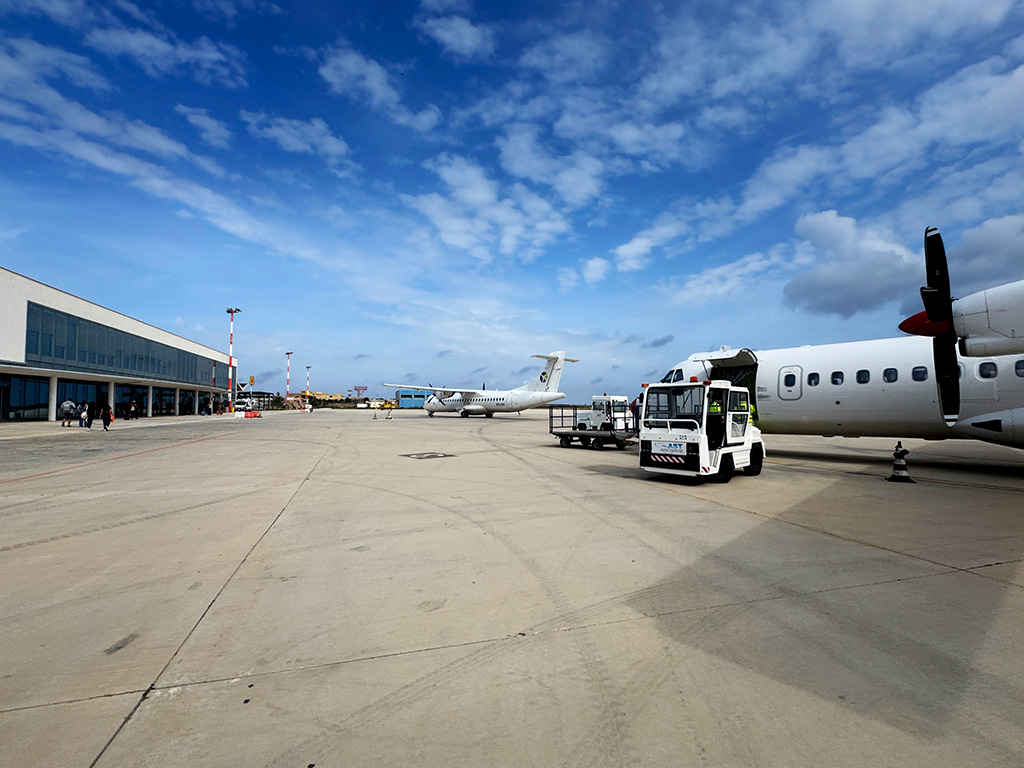
More remote parts of Sicily can be easily reached via air from the main island or Italian mainland
Sicily by road
While geographically an island, that doesn’t mean you can’t drive to Sicily from the Italian mainland. There’s a catch however – without a bridge (they’ve been talking about building one for 2000+ years!), you need to use the ferry connection between Porta San Giovanni and Messina.
This journey takes roughly 20 minutes to cross the straits, and there are multiple boats per hour shuttling passengers and vehicles back and forth. Technically this crossing is classed as part of the Italian autostrade (motorway/freeway) network, meaning you’ll need to book your ticket in advance or pay the toll on the day of your travel.
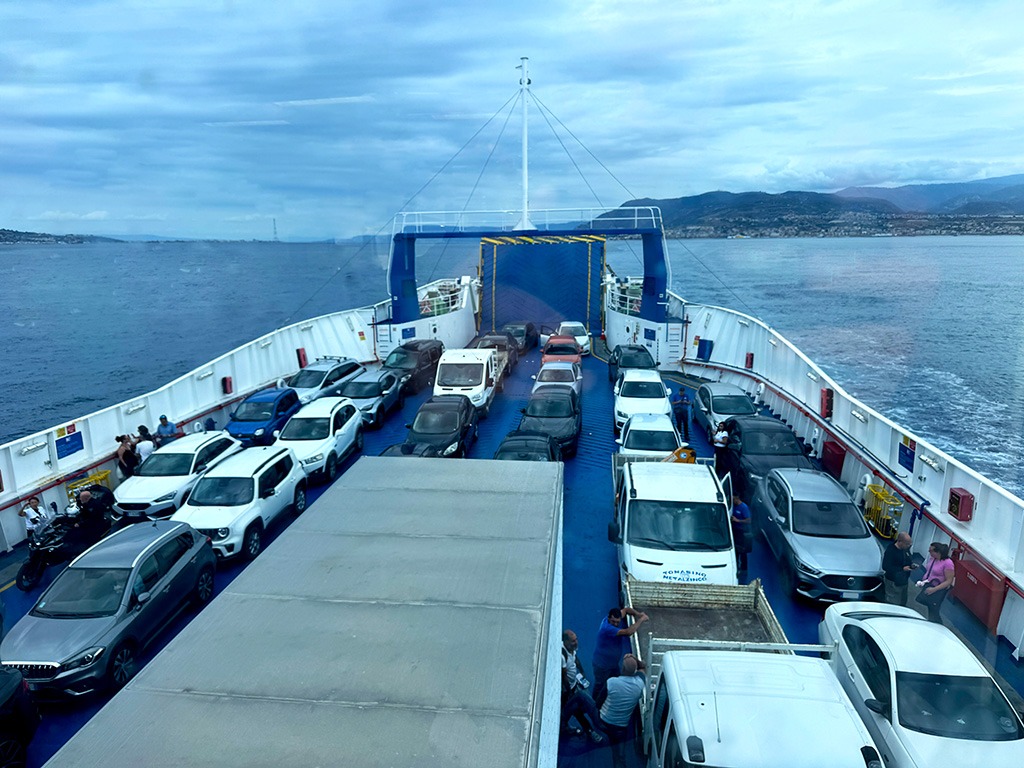
The ferry connections between Messina and San Giovanni run 24 hours a day, 7 days a week, 365 days a year
Sicily by train
To find out more about using Italy’s efficient and reliable rail network, including tips on booking tickets, navigating major train stations and the key operators, read my detailed guide here:
Sicily by ferry
Another option for getting to Sicily is via ferry from the Italian mainland, or from other destinations such as Tunisia and Malta.
As mentioned above, there are frequent connections daily between Calabria and Sicily which take around 20 minutes.
Alternative route options include departures from Civitavecchia port (near Rome), Naples and Salerno, connecting most commonly to Palermo and Catania.
Note that these ferries can get extremely busy in the summer months with Italians travelling for their vacations. It’s best to book your spot in advance as soon as you know when you’d like to travel.
Learn more about navigating to, from and around Italy via ferry in my detailed guide. Find out how to book tickets, understand timetables and route options, and much more here:
Getting to Sardinia
Travelling to Sardinia is a little less straightforward. As it’s more remote from the Italian mainland than Sicily, there are two means of arriving here:
Sardinia by air
The island’s main airports are Cagliari Elmas (CAG), Alghero Fertilia (AHO) and Olbia Costa Smeralda (OLB).
These airports offer routes connecting Sardinia with mainland Italy, the UK, and many European cities, especially in summer when flights from low-cost carriers such as Ryanair increase in frequency.
Note when booking flights to/from Sardinia to the Italian mainland that you’ll see discounts and reductions advertised; unfortunately these are reserved for Sardinia residents as a way to make access to Italy easier, and aren’t applicable to non-residents.
Sardinia by ferry
Getting around each island – transport options
For both islands, my overriding recommendation is to use a car to explore if you’re planning on venturing beyond the major cities. The major sites, landmarks and areas of interest on both are spread out and (unfortunately) I haven’t found the public transport in either Sardinia or Sicily to be reliable.
If you’re travelling to Sardinia or Sicily with your own vehicle via ferry you’ll have no issues getting around. For rental cars, be sure to organise your pick-up and drop-off for one of the major cities or airports; smaller towns rarely have rental offices, and if they do, they keep very limited opening hours in my experience.
What to do in Sicily and Sardinia
Neither island is short of incredible things to see and do – here’s an overview of some of our favourite activities and sites:
Sicily
Explore UNESCO World Heritage Sites
Sicily is home to a large concentration of UNESCO World Heritage sites, from the late-Baroque towns of the Val di Noto, to the archaeological area of Syracuse and the Necropolis of Pantalica, to Mount Etna, which continues to shape Sicilian soil and culture.
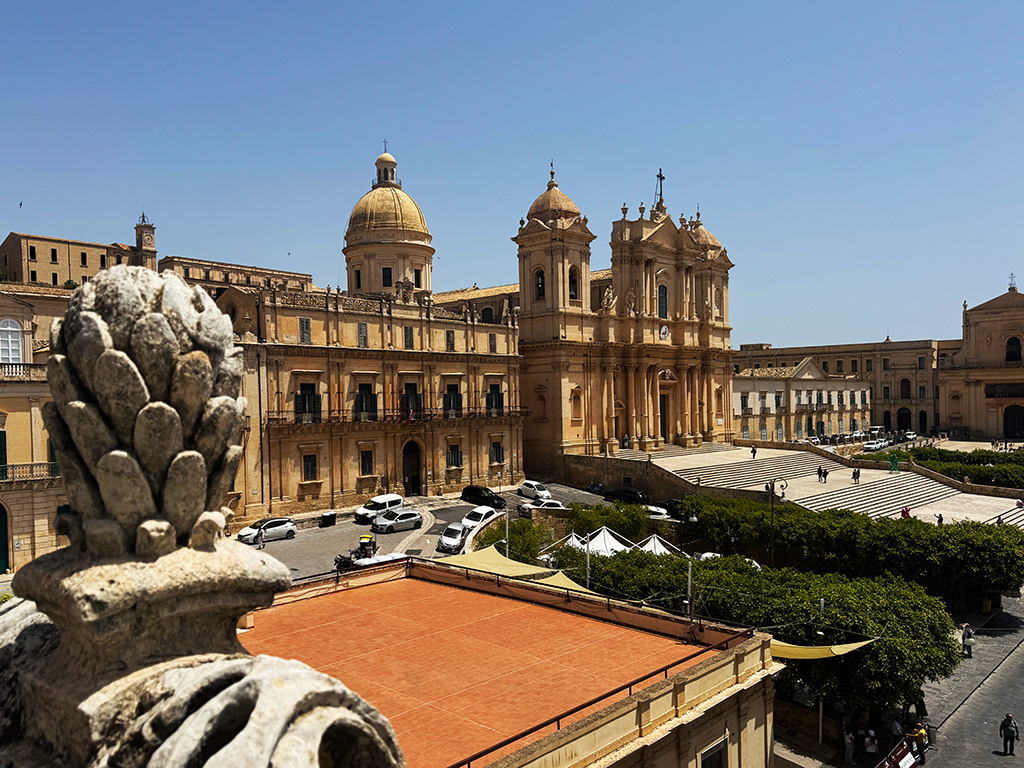
Rebuilt after a devastating earthquake in 1693, the towns of the Val di Noto are a showcase of Baroque architecture
Taormina & Monte Tauro (White Lotus location)
Taormina’s hilltop ancient theatre, dramatic views from Monte Tauro, and glamorous hotels have long made it one of the most popular locations in Sicily, and its featuring in the White Lotus second season only added to this. For a complete guide to visiting Taormina, check out my full guide here:
Beaches & Sea
From the rural coastline near Ragusa to the Caribbean-style waters of San Vito Lo Capo, Sicily’s beaches offer something for every type of traveller.
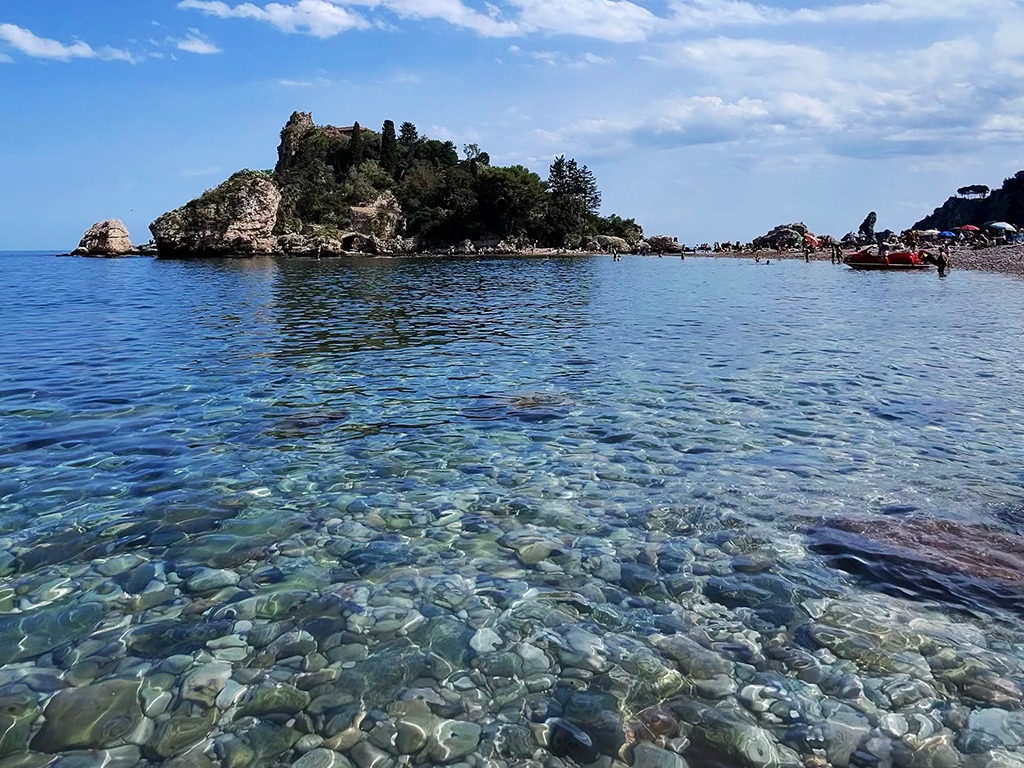
Some of our favourite beaches anywhere in Italy are in Sicily
Sardinia
Domus de Janas & Sacred Wells
These ancient burial chambers and spiritual sites are some of the most remarkable pre-antiquity remains anywhere in Europe. Many are accessible by car and make excellent half-day trips.
UNESCO World Heritage – Su Nuraxi di Barumini
The most complete Nuragic complex on the island and essential for understanding Sardinia’s past. If you’re planning to visit this site, be sure to also stop by the Giara national park, where you’ll find Europe’s last remaining wild horse colony.
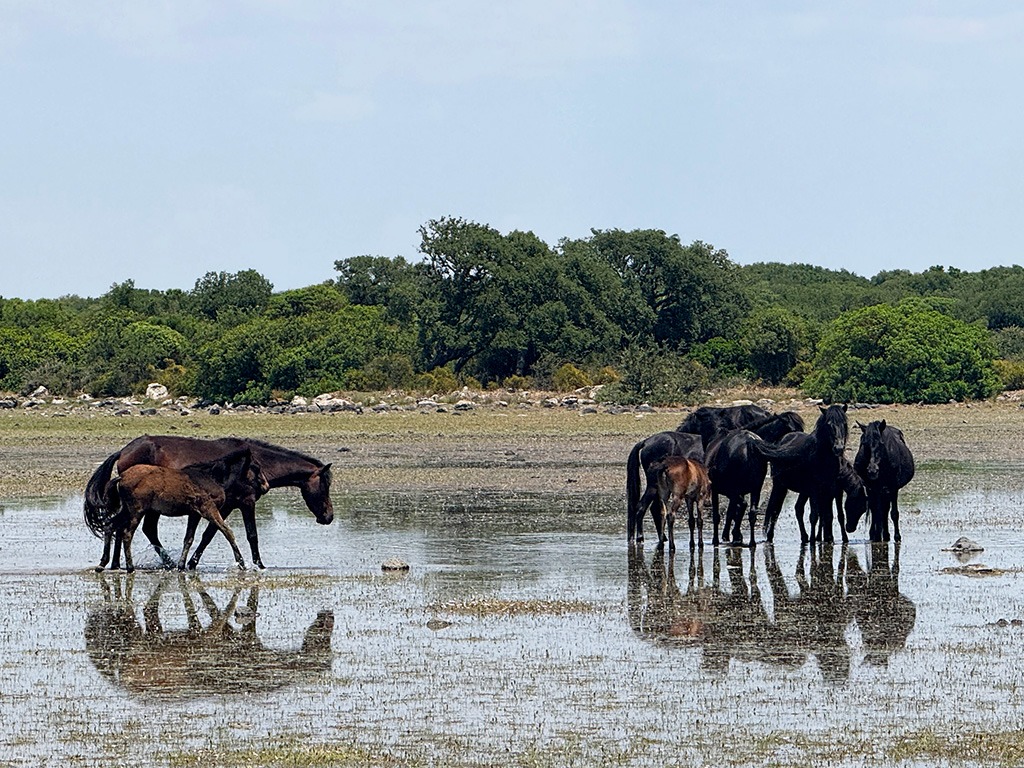
Nature lovers should not miss the opportunity to see Europe’s last wild horses in the Giara National Park
Beautiful Beaches
Sardinia is world-famous for its coastline. From the white sands of La Pelosa near Stintino to the coves around Cala Gonone, these beaches are officially among the most beautiful in the world.
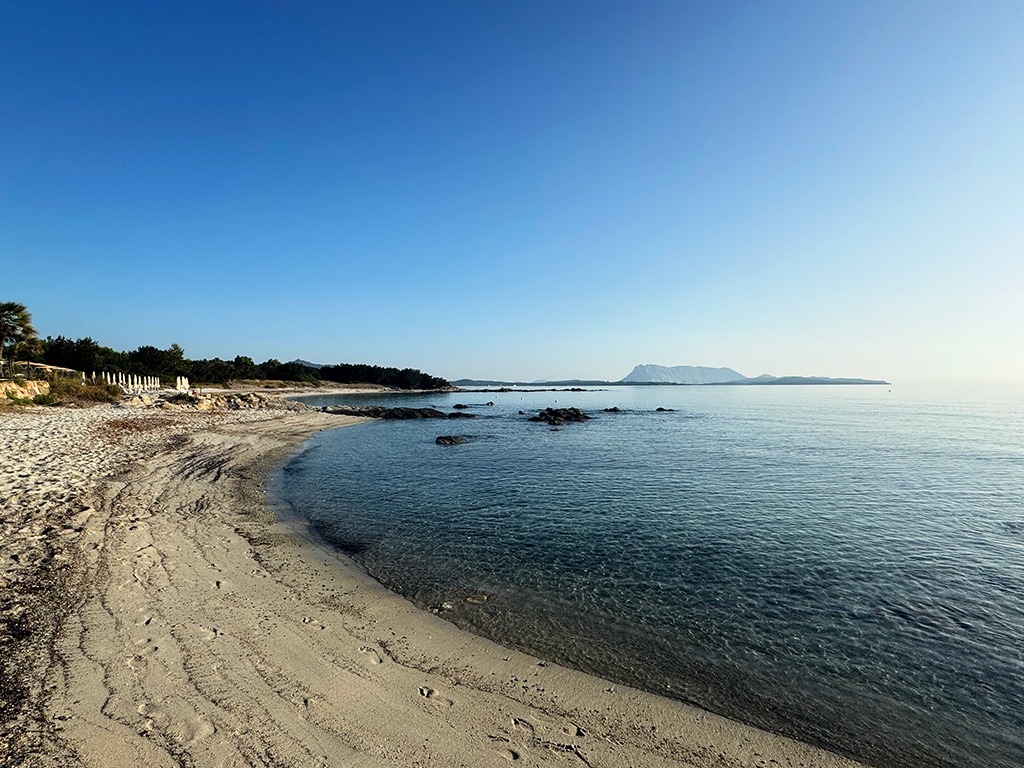
Sardinia’s beaches are world-famous for their fine sand and unspoiled waters
My choice – Sicily or Sardinia?
If I had to choose one region to visit, it would be Sicily. This is no reflection on Sardinia as I really like it too, and visit often, but I love Sicily. The combination of history, nature and its incredible cuisine means I spend as much time as possible there.
Want to know more about Sicily or Sardinia? Get in touch and I’ll be happy to answer your questions.