Published: April 1, 2026
Last updated: August 31, 2026
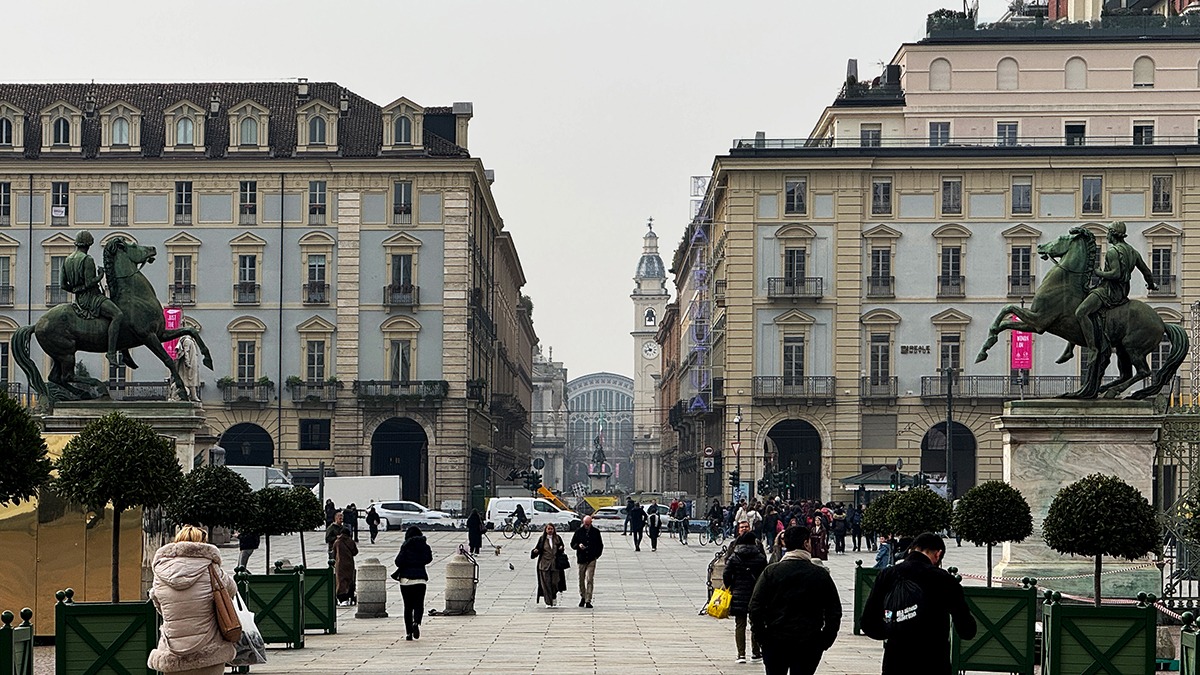
Turin, in northwestern Italy, was one of the last major Italian cities that we visited and explored, and when we did, we regretted not having done so sooner. This is an amazing city full of beautiful architecture, fascinating history, rich food and drink, and so much more. Let us share with you everything you need to know to plan the perfect trip to Turin, based on our personal experiences.
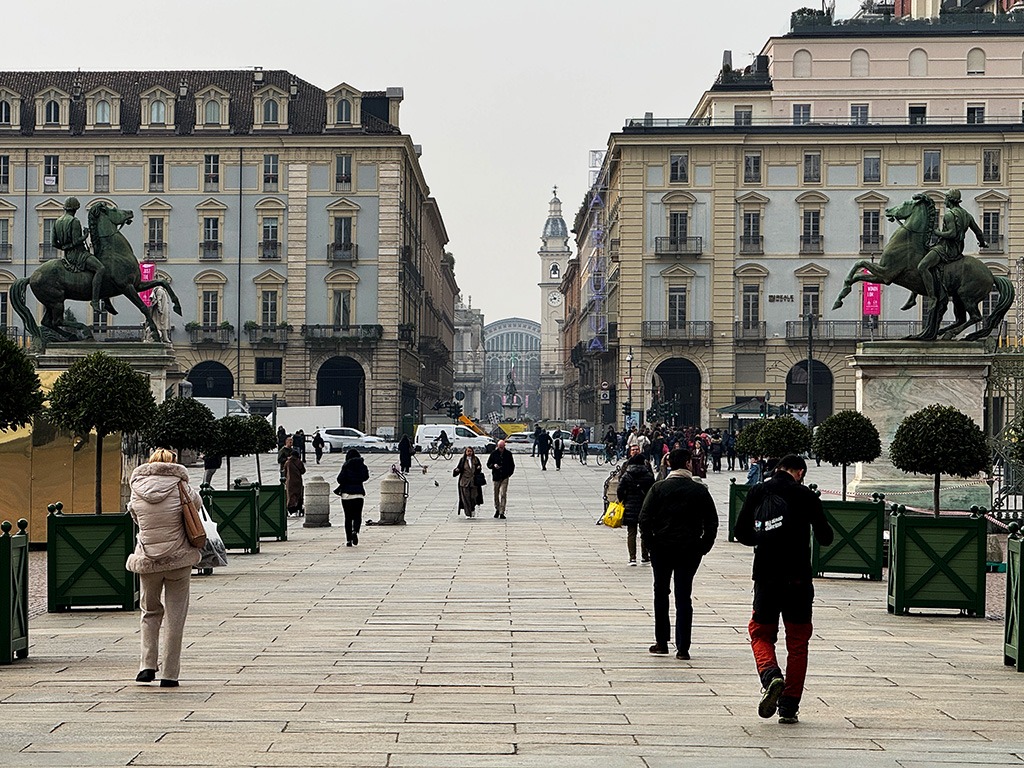
I have to confess, Turin wasn’t high on my visit list until relatively recently, but when I spent the time getting to know the city fully, it quickly became one of my favourite places in northern Italy.
Discover the definitive Turin Italy visit guide
As the capital city of the Piedmont region, Turin is often overlooked by visitors coming to Italy, who more often than not, gravitate towards the “headline” cities of Rome, Florence and Venice.
Many travellers pass through on their way to the Alps or use it as a gateway to this area’s famous wine country, without pausing to appreciate what the city itself offers.
Whether you are planning to visit Turin as a standalone city break or as part of a wider northern Italy itinerary, this guide covers everything any visitor to the city could need to organise a trip, including:
Who is this guide for?
This guide has been written with first-time visitors to Turin, Italy in mind, providing definitive guidance on the fundamentals of visiting. We share below the best areas to stay in, getting to, from and around Turin, what to see and do, where to eat and drink, and much more.
This guide should also be used by returning travellers looking for up-to-date information and recommendations based on recent visits to Turin and Piemonte. If you are building out a wider Turin itinerary or northern Italy itinerary, this page should help you place the city in context.
Key facts about Turin, Piedmont
Turin is the capital of the Piedmont region (Piemonte in Italian, pronounced pe-a-mon-teh) and one of the most important cities in northern Italy from a historical, cultural and economic standpoint. Here are some key facts to help frame your visit and contextualise the recommendations and information within this guide:
Turin or Torino?
The Italian name of the city is Torino, while Turin is the anglicised name for the city. You will see both used interchangeably. In this guide, we refer primarily to Turin, but when you are here, expect to see Torino on train tickets, maps and signage most commonly.
Where is Turin located?
Turin is located in northwestern Italy, close to the border with France and at the foot of the Alps. The River Po, Italy’s longest river, begins in this region and flows through the city. This position in northwestern Italy also means that Turin feels distinct (very French) from many of the more southerly Italian cities most visitors first associate with the country.
What is the population of Turin?
Turin has a population of around 850,000 people, making it one of Italy’s largest cities.
How big is Turin?
The city covers approximately 130 km², making it comparable to Manchester in the UK or Boston in the USA. The wider metropolitan area is significantly larger and includes much of the surrounding Piedmont region, from the rolling hills of wine country to the mountain backdrop that famously frames the city.
Why visit Turin Italy?
Turin offers visitors a different perspective on the “classic” Italy, which is typically associated with the famous cities and the south of the country. It is less crowded than many major cities, highly organised, and known for its 19th-century architecture, well curated museums and rich food and wine culture. It was Italy’s first capital after unification and remains closely associated with the Savoy family, as well as with Italian industry through companies such as FIAT.
For us, one of the reasons to visit Turin is that it manages to feel grand without being overwhelming. Turin’s city center and historic center are full of interesting buildings, elegant baroque squares, ornate residential buildings, and local life that still feels grounded and less touristy. It’s a city with a strong cultural scene, delicious food specialties, decadent local wines, and far fewer tourist traps than many better-known Italian destinations.
A brief history of Turin
Turin’s recorded history stretches back to Roman times, though its greatest influence came much later as the seat of power for the House of Savoy. Here’s a brief overview of the story of this city, but if you are already familiar with Turin’s history, or are pressed for time and more interested in reading our practical tips to visiting Turin, click here to jump to the next section.
Ancient Turin
The first documented people to settle in this area of Italy were the Taurini people, a tribe of Ligurian and Celtic heritage, where accounts record that they were attacked by Hannibal during the Second Punic War with Rome in 218 BCE.
As Rome’s influence expanded beyond central Italy, all of north-west Italy fell under Roman control, and in 28 BCE Rome founded a colony named Julia Augusta Taurinorum, which would ultimately become modern-day Turin. A testament to this ancient history is the fact that the city’s modern grid layout still follows in places the Roman colony’s urban planning.
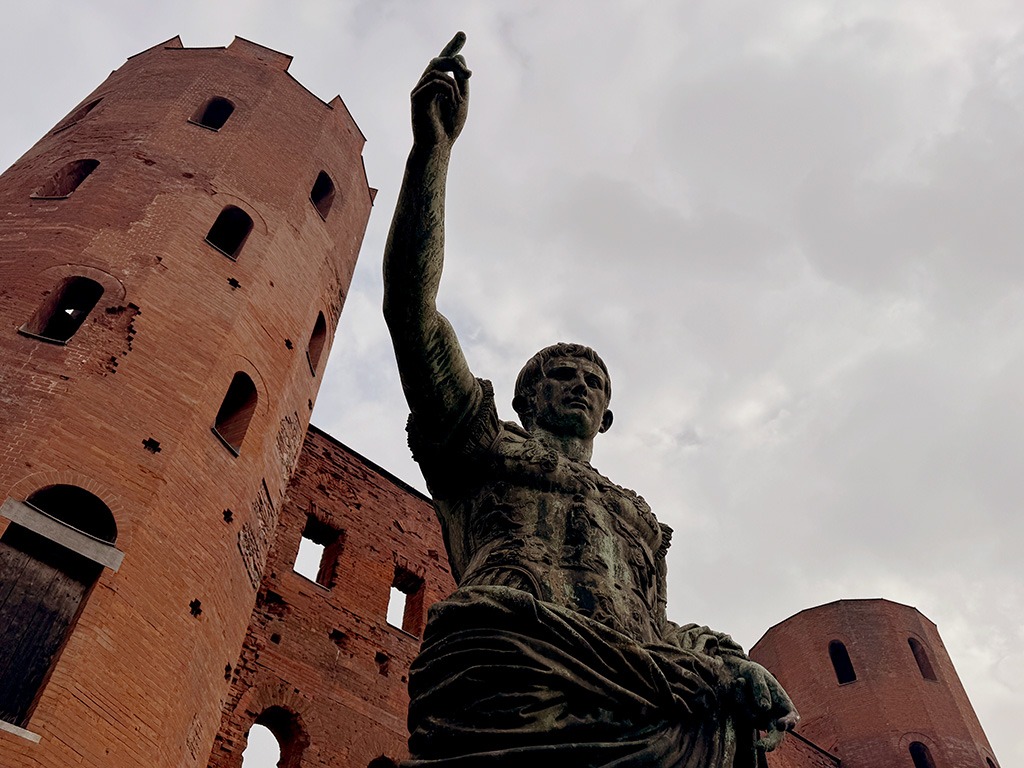
Throughout Turin you’ll find traces of the ancient Roman city, with the best examples being the Palatine Gate (freely visitable, pictured above) and the ancient theatre, now part of the Royal Palace complex.
Post Rome, pre Savoy
Rome’s control of Italy began to fracture in the 400s and with the deposition of the last Western Roman Emperor, Romulus Augustulus, in 476 CE, most of Italy came under Ostrogothic control. The Goths were themselves later replaced by the Lombards, a Germanic people from northern Europe who conquered a large swathe of northern Italy and ultimately gave their name to the neighbouring Lombardy region.
In 774 the Frankish king Charlemagne conquered this part of Italy. For the next couple of hundred years, this corner of Europe was relatively peaceful. Turin’s position and historical legacy were not as prized as those of other major Italian cities, where it acted primarily as a stopover for travellers, merchants and mercenaries transiting between Italy and France.
By the Middle Ages, Turin was still far from being the dominant force it would later become, but its location ensured it remained relevant. Though it was never a prominent medieval town in the same way as places like Florence or Milan, traces of the Middle Ages still shape the city’s story.
”Turin is a beautiful city: its spaciousness exceeds, I think, everything that has ever been conceived before.
Mark TwainAmerican Writer
Rise of the Savoy
The Savoy family, with roots in the Savoy region of modern-day France (southeast France, now on the border with Italy), first became the rulers of Turin in the early medieval period and remained so, with periods of interruption, until the dissolution of the Italian monarchy in 1946.
Before the Savoy moved the capital of their duchy to Turin in 1563, their power had been focused around Chambéry, now in modern-day France.
The move of the Savoys’ royal seat and administration from Chambéry to Turin made the city one of Italy’s most important urban centres, especially where it sat at a crossroads between the rest of Italy and France, which for much of the Renaissance and early modern period was Europe’s pre-eminent continental power.
This was the period that transformed Turin into the ordered and monumental city we recognise today, centred on grand spaces such as Piazza Castello, Piazza San Carlo, and later Piazza Vittorio Veneto.
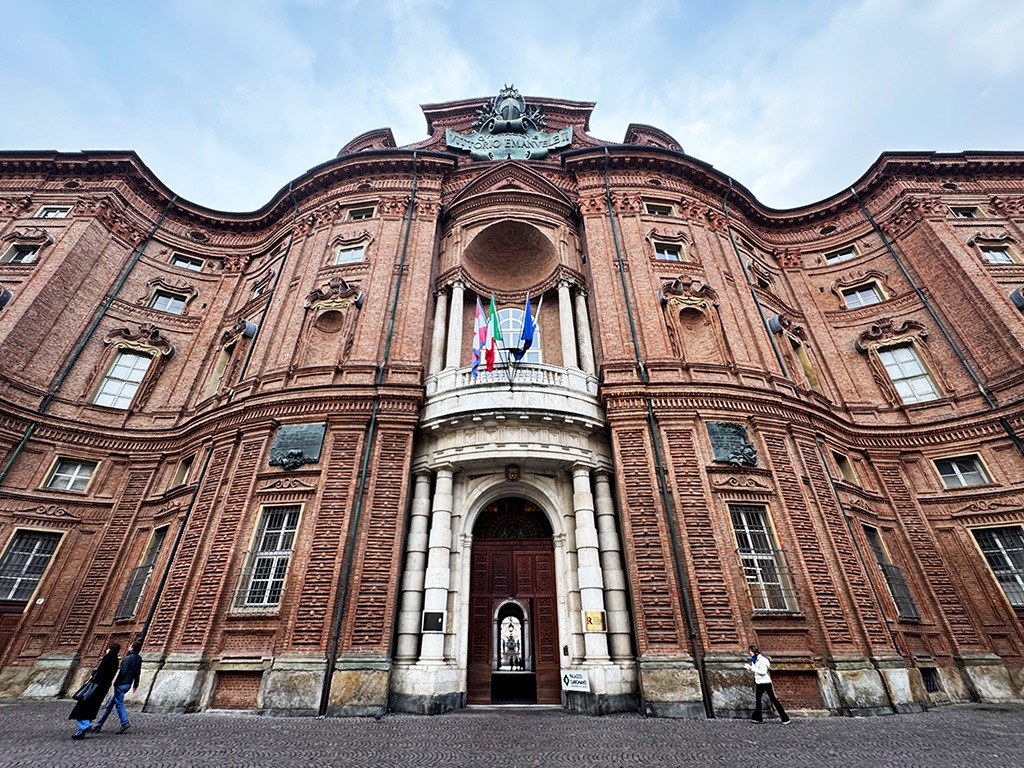
This period also laid the foundations for landmarks such as the Royal Palace, or Palazzo Reale, as well as Palazzo Madama, Palazzo Carignano (pictured above), and the wider complex of Royal Museums that today help make Turin one of the most historically layered cities in northern Italy.
This cultural importance was further underlined by the foundation of institutions like the University of Turin, one of the oldest higher education facilities in Italy. Many of the city’s famous landmarks, such as the Royal Palace, were also constructed, or at least begun, during this period, where Savoy power and wealth began to expand their immediate domains in Piedmont.
Expansion beyond Piedmont and French control
Unlike other Italian kingdoms, duchies and republics, Savoy did not expand overseas or seek to influence inter-Italian politics in an overly aggressive way.
However, this changed following the Treaty of Utrecht (1713), a peace agreement reached following the War of the Spanish Succession (1701–1714), where the House of Savoy, for its support for the victors, was awarded Sicily. This was shortly afterwards traded for Sardinia, and the Savoys proclaimed a joint realm comprising Piemonte and Sardinia.
In 1802, Napoleon Bonaparte conquered Piemonte and Turin, annexing the region and city, and much of northern Italy including Milan, into his French Empire. French control did not last long, however, and following Napoleon’s defeat in 1814, the Kingdom of Piedmont-Sardinia was restored under the Savoys.
Italian unification and the first Italian capital
In the first half of the 1800s, a growing sense of Italian nationalism developed and was fostered in Turin. This movement – now known as the Risorgimento, often translated in English as the “Resurgence” or “Revival” – ultimately led to the unification of Italy under the Savoy family. Turin became the first capital of unified Italy in 1861; the capital moved to Florence in 1865, and ultimately to Rome in 1870.
During the period of unification, as the House of Savoy came to control the disparate kingdoms, duchies and republics of Italy through a combination of war, diplomacy and referendums, Turin was recognised as the capital of the first Italian state.
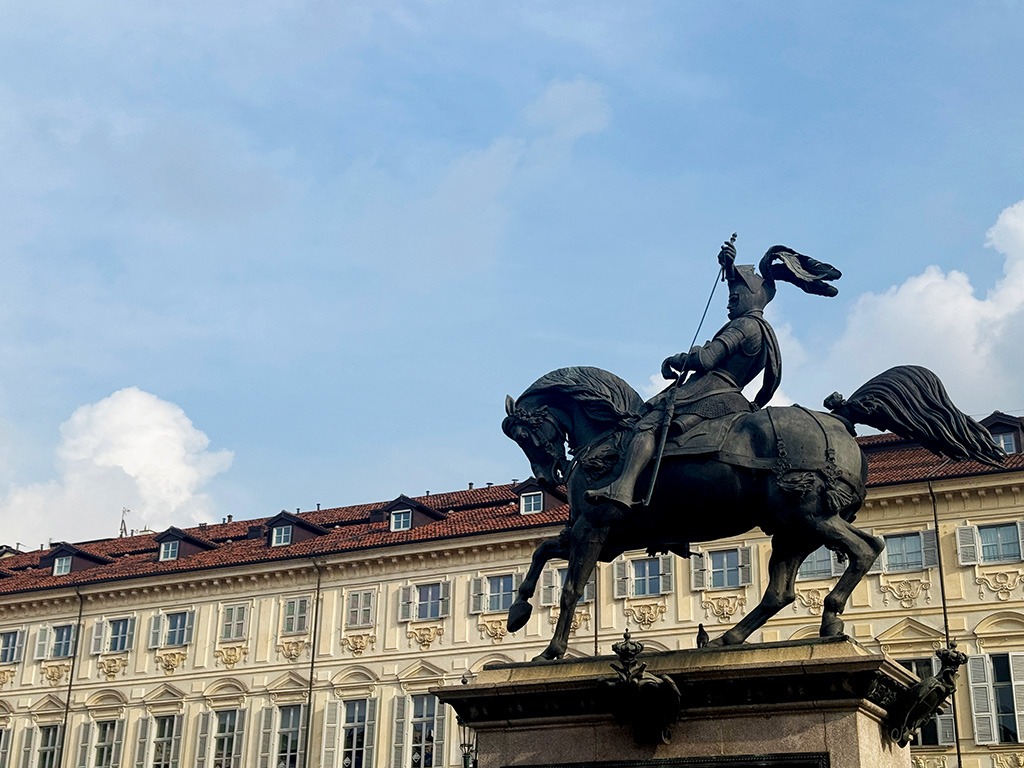
Turin is proud of its Savoyard heritage as the city that unified Italy
Industrial and Modern Turin
While no longer the capital city of the newly unified Italy, Turin remained a key urban centre in the north of Italy through the end of the 1800s and into the 20th century.
The city was targeted by Allied bombing during World War II but, fortunately, unlike other cities such as Naples or Milan, escaped major damage.
In the second half of the 20th century, Turin became Italy’s industrial powerhouse, driven largely by the car manufacturer FIAT. This period brought rapid expansion and migration, both internally from within Italy and from abroad, to the city, creating what Turin is today: a modern, contemporary city that still reflects its cultural heritage and diverse history.
This industrial identity also gave rise to popular tourist spots such as the former FIAT factory at Lingotto and the excellent National Automobile Museum which is now one of the city’s standout museums beyond the historic center.
Turin’s more recent international profile was also boosted by the Winter Olympics, when the city hosted the 2006 Winter Games and introduced itself to a wider audience in a new way.
Getting to and from Turin
Turin is one of the best-connected cities in northern Italy, with excellent and efficient links by train, road and air. Here’s a breakdown of the main ways of getting to and from the capital of Piemonte:
Trains to and from Turin
Turin is a major rail hub and is well connected to cities across Italy as well as neighbouring France. In the centre of Turin there are two major train stations that visitors should familiarise themselves with:
Torino Porta Nuova
This is the city’s primary train station and the most common point of arrival and departure for visitors to Turin where its location in the heart of the city makes it convenient for sightseeing. As a quick point of reference, the Royal Palace is around 20–25 minutes away on foot, or roughly 10–15 minutes by public transport, depending on the route and waiting times. It is also integrated with Turin’s metro, bus and tram network (more on this below).

If you are looking for accommodation with easy access to the train station, sights and Turin’s city center, this part of the city can be a very practical base.
This station is the last stop on the north-eastern branch of Italy’s high-speed rail line, connecting Turin to the following cities via services operated by Italo and Frecciarossa:
- Milan – around 1 hour
- Venice – around 3 hours 30 minutes to 4 hours
- Bologna – around 2 hours
- Florence – around 3 hours
- Rome – around 4 hours 30 minutes
- Naples – around 5 hours 30 minutes to 6 hours
- Salerno – around 6 hours 30 minutes
Torino Porta Nuova is also a major connection point for local lines to other parts of Piemonte and northern Italy.
Torino Porta Susa
This modern station is a little distance away from the historic heart of Turin, around 10 minutes by public transport from Porta Nuova, and is popular with business travellers coming to the city, as well as those travelling onward internationally to France via rail.
Torino Porta Susa is also on the same high-speed line as Porta Nuova detailed above, with travel time between the two stations being just 5–8 minutes when travelling via Italo or Frecciarossa. The stations are also connected via the city’s metro line, making getting between Porta Nuova train station and Porta Susa very easy in the case you are connecting via Turin on a longer itinerary, with a journey time of around 10 minutes.
At both stations you’ll find plenty of cafés, shops and other amenities. Of the two, if you’re looking to maximise your time in Turin and are travelling to the city by train, make Torino Porta Nuova your point of arrival and departure.
To find out more about using Italy’s efficient and reliable rail network, including tips on booking tickets, navigating major train stations and the key operators, read my detailed guide here:
Driving to Turin
Turin is connected to the Italian autostrada network via the A4 eastwards to Milan, with a drive time of around 1 hour 30 minutes, and the A6 southwards to Genoa, with a drive time of around 2 hours. It is also close to the French border via Alpine routes, with one of the most common options being via the Fréjus Tunnel, with a drive time of roughly 1 hour 30 minutes to 2 hours from Turin depending on your exact destination and traffic.
Driving in the city and neighbourhoods of Turin itself is easier compared to many major Italian cities, where the modern grid layout and wide streets ensure that traffic generally flows more smoothly.
However, like most towns and cities in Italy, the historic heart of Turin is covered by a ZTL – Zona Traffico Limitato (Limited Traffic Zone) – which restricts vehicle access to only those with permission, generally residents, public transport and emergency vehicles.
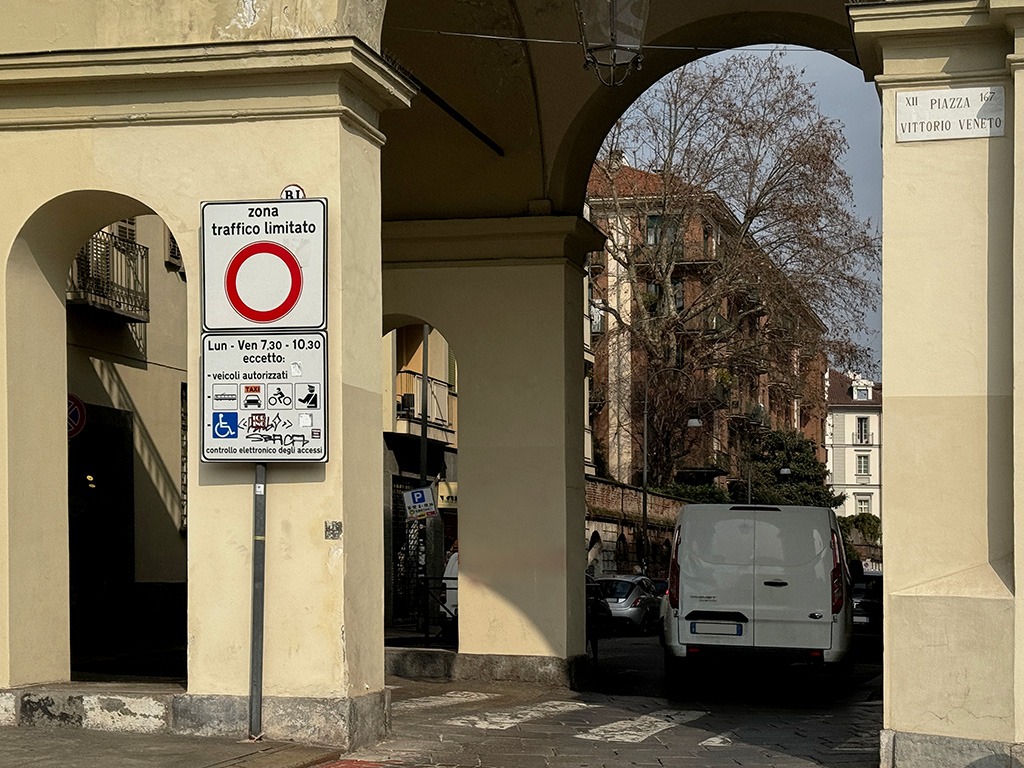
If you are driving to and around Turin, pay close attention to signs like this that signify areas within the Zona Traffico Limitato
Turin ZTL
If you are staying at a hotel/B&B within the ZTL area, your concierge/reception might be able to obtain permission for your vehicle to enter and exit the ZTL. There is no uniform approach to this, so you will need to check with your hotel directly.
If you are driving to Turin and are looking to stay centrally, either in a hotel/B&B which does not enable ZTL access or in an apartment rental, I’d recommend parking at one of the following locations to avoid fines for accessing the ZTL without permission:
For a complete up-to-date overview of Turin’s ZTL, check the official website here.
Driving in Italy isn’t half as bad as some of the stereotypes make out. By understanding a few fundamentals you can explore this incredible country by car, without the stress. Find out everything you need to know about getting on the road in Italy in my detailed guide here:
Flying to Turin
Turin is served by Turin-Caselle Airport (TRN, Aeroporto di Torino-Caselle), located around 16 km north of the city centre. TRN is a small regional airport and is home to routes connecting this part of Italy to the rest of the mainland, including Rome and Naples, Sicily, including Palermo and Catania, and a range of European cities and UK destinations.
Getting to and from Turin airport and the city centre is straightforward, where you have the following options:
- Train (to Porta Susa, around 30 minutes)
- Bus services (around 40–50 minutes)
- Taxi (around 30 minutes depending on traffic)
If you are coming to Turin from beyond Europe or the UK, I’d recommend flying to Milan instead of Turin. Malpensa and Linate are the nearest major international airports to the city and from Milan you can take a train to arrive in Turin in around 1 hour, or continue by road if that better suits your wider itinerary.
Where to stay in Turin
Turin is a relatively compact and very well-organised city, making it easy to choose a base depending on your trip priorities and travel preferences. For almost all travellers we would recommend looking for accommodation in the city centre of Turin to maximise your time here, and to enjoy everything that the city has to offer to the fullest – whether museums, historical sites, shopping or restaurants.
Within the centre of Turin there are sub-areas, each with a distinct feel and sense of place. Our preferred part is the Quadrilatero Romano, which offers a slightly more local and lived-in feel compared to other areas.
It is still within walking distance of key locations such as Porta Nuova train station, around 15–20 minutes on foot, and the Egyptian Museum, around 10 minutes on foot. This part of Turin’s city center also places you close to Piazza Castello, Palazzo Madama, the Royal Palace, and many of the city’s narrow streets and older corners that still feel more intimate than the grand avenues elsewhere.
If you prefer something more polished and classically elegant, areas around Piazza San Carlo and Via Roma put you in the middle of some of the city’s most picturesque streets. This is also where you’ll find famous names such as Caffè Torino, one of the city’s historic cafés, and near, the Turin Palace Hotel, one of the top hotels to get a sense of Turin’s more formal side.
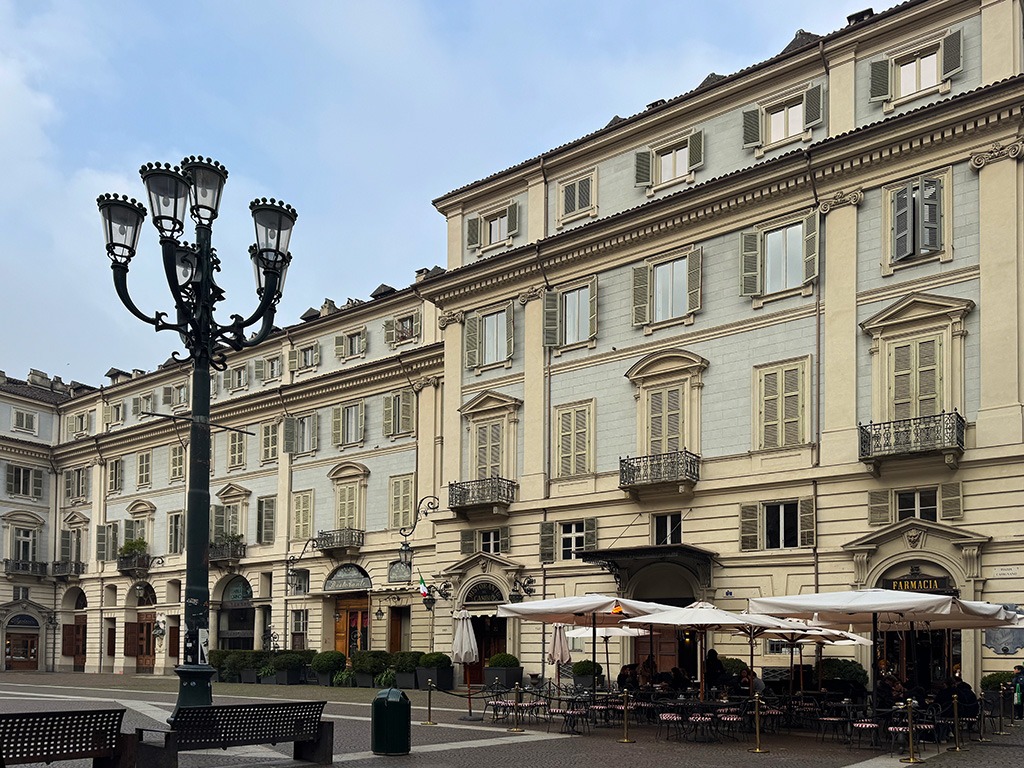
It’s hard not be charmed by Torino’s elegant architecture in the areas around Via Roma
The San Salvario neighborhood is another good option to consider, especially if you want to be close to Porta Nuova station and enjoy a more youthful, social atmosphere in the evenings. Lingotto, meanwhile, can work well for visitors interested in the Automobile Museum, the former FIAT factory, or a more modern shopping mall environment.
If you are considering a visit to Piemonte but are not sure that staying in Turin itself is the right option for you, we’d recommend considering a stay in the town of Barolo. Approximately 1 hour from Turin by road, this town is the birthplace of Italy’s “King of Wines”, named after the town itself. This is an absolute must for wine lovers, and still means you can get to Turin easily to explore the city.
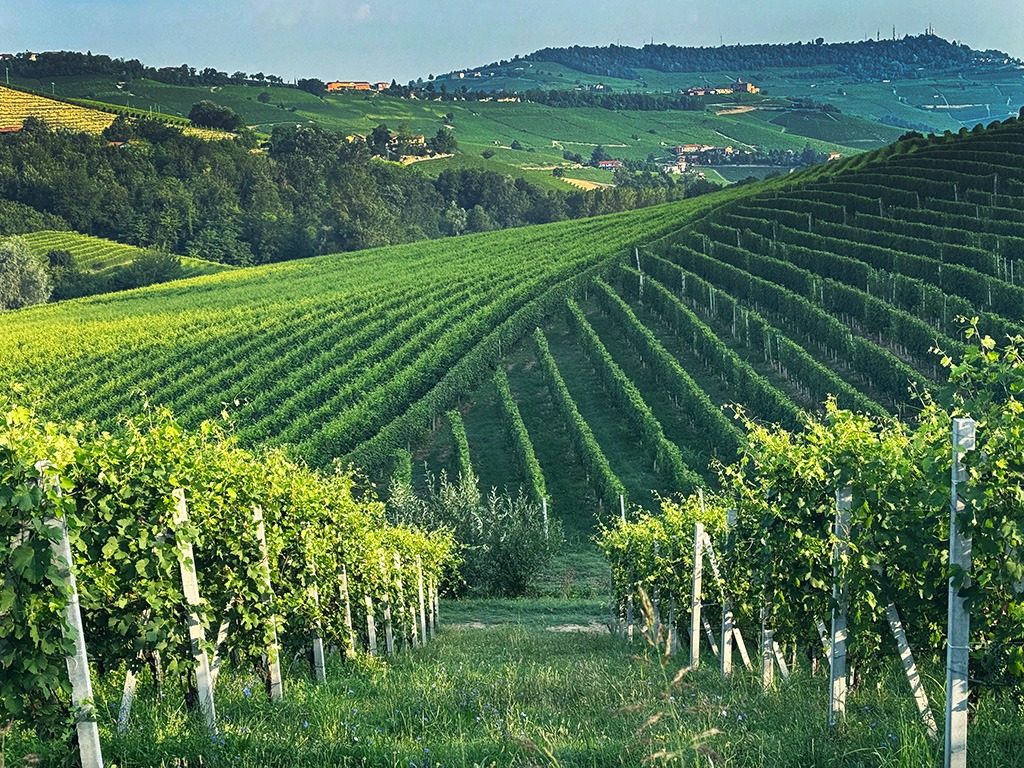
Staying in Barolo opens up a different side of the Piedmont region, one of rolling hills, vineyards and slower-paced small towns and traditional villages.
For a complete breakdown of where to stay in Turin and nearby, including more personal recommendations, take a look at my in-depth guide here:
How to get around Turin – public transport, taxis, and walking
The centre of Turin, unlike almost all of Italy’s major cities, follows a modern grid layout that makes getting around, whether on foot or by public transport, very easy. Let’s take a look at the main modes of transport in Turin.
Walking
I am an advocate for walking when exploring anywhere, as it means you’ll discover things you may otherwise miss if travelling around by public transport or taxi.
Having travelled the length and breadth of Italy, spending time in all of the country’s major cities, I can honestly say that Turin is one of the most walkable cities in this country.
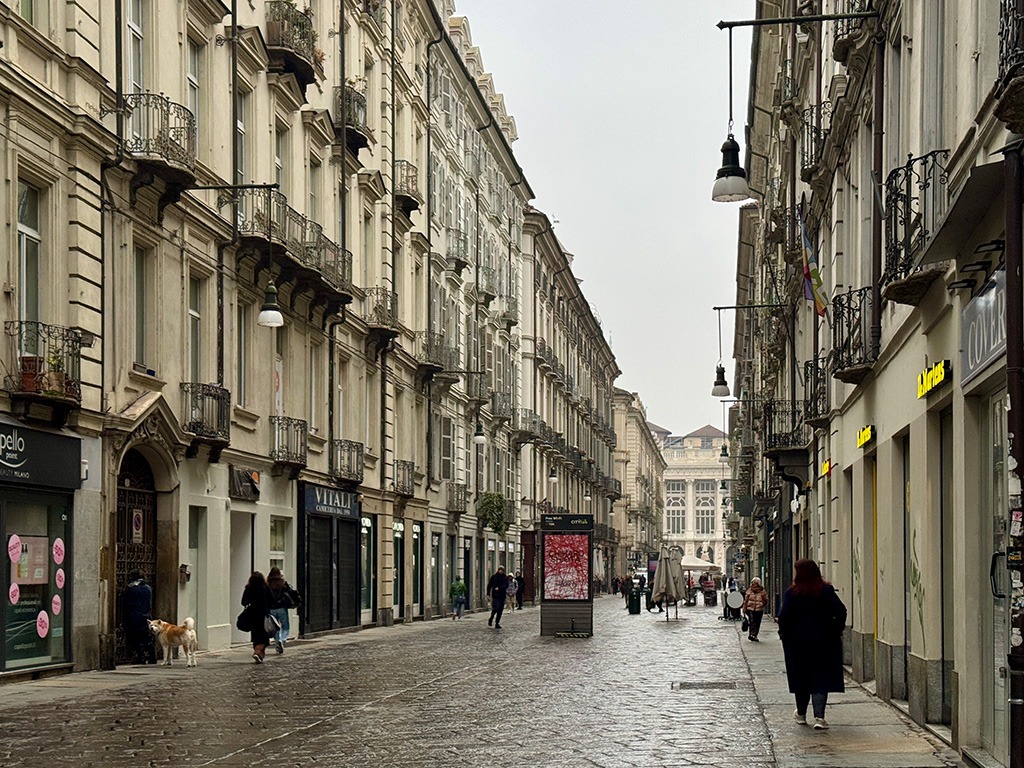
Not only is it easy to navigate by following the clear grid layout, almost all of the historic centre is flat – a true rarity in Italy.
Of course, there are times when walking is not viable, whether due to bad weather, although the porticoed streets in the centre mitigate rain and sun in part, limited time, or mobility challenges. Let me share with you next what you need to know about the city’s public transport.
Metro, trams and buses – Turin public transport
Turin’s public transport system is one of the most efficient and well-organised in Italy, operated by GTT (Gruppo Torinese Trasporti), with integrated tickets valid across buses, trams and the metro.
Buses and trams in Turin
The most common transport methods in Turin are the city’s numerous buses and trams, criss-crossing the city centre and connecting residents and visitors to outlying neighbourhoods and beyond. Tickets for Turin’s buses and trams can be purchased at self-service machines at metro stations, at authorised sales points including tabacchi, and online via the public transport operator GTT. These tickets are valid for 100 minutes and can also be used on the city’s metro.
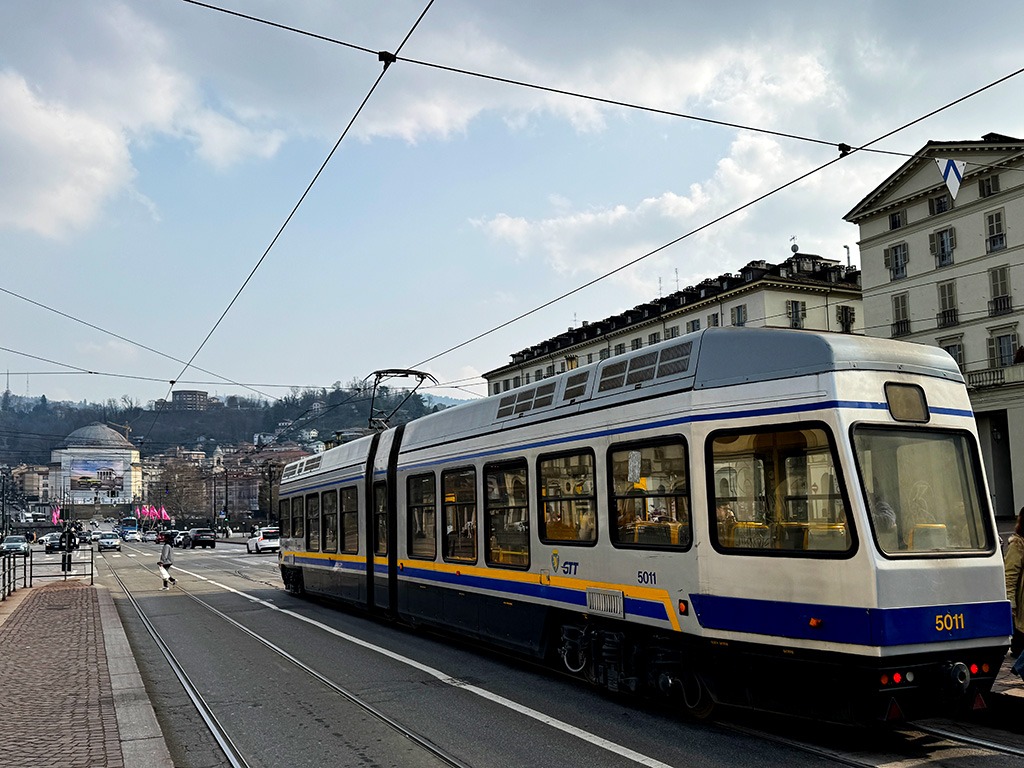
Turin’s highly organised transit system is easy to use making getting around the city stress-free and simple
Turin Metro
Like other major Italian cities such as Milan and Naples, Turin has a metro system connecting key parts of the city conveniently. Well, “system” might be a stretch as it is a single line, much like Genoa, but regardless, it is efficient and useful.
The metro is especially convenient if you are moving between the train station, the Lingotto area, and other parts of the wider city without wanting to rely on taxis.
Taxis in Turin
We shared previously how driving in Turin is more straightforward than in many places in Italy, meaning that taxis here are an especially efficient way of getting around if you’d prefer not to walk or use public transport.
The local authorities do mandate fixed fares on some key routes, especially those involving major transport hubs, though these can change, so it is always best to check the latest official information before travelling.
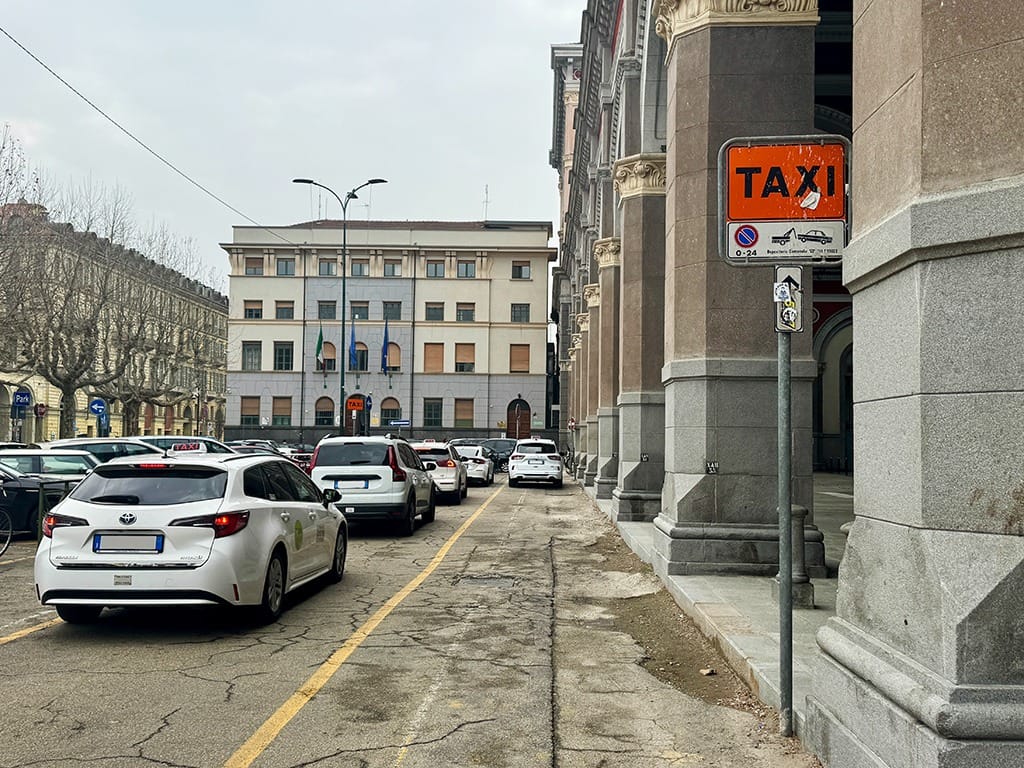
You’ll find taxi ranks dotted around the city with cars waiting to take you to your chosen destination, such as this one at the Porta Nuovo train station
What to see and do in Turin
Turin’s main attractions reflect its royal past, cultural heritage and unique identity within Italy. Here are our top recommendations for what to see and do when visiting, or even revisiting, this former Italian capital.
The Royal Palace and Turin Cathedral (including the Turin Shroud)
There are many examples of royal palaces across Italy, but the one here in Turin is particularly special. It was continually inhabited until Italy became a republic in 1946 (unlike many others in Italy) which meant that the way the rooms look now have not been recreated but capture a moment in time.
The palace collection was also in large part curated by the Savoy family themselves, so when you visit you are seeing the things that they found interesting. As well as the royal apartments, our favourite part is the royal armoury which was created in the 1830s by the then-ruler of Turin, Charles Albert. He selected pieces from the Savoy collection including all sorts of weapons, suits of armour for both men and horses, early firearms and more. Housed in a long gallery, the collection is absolutely fascinating!
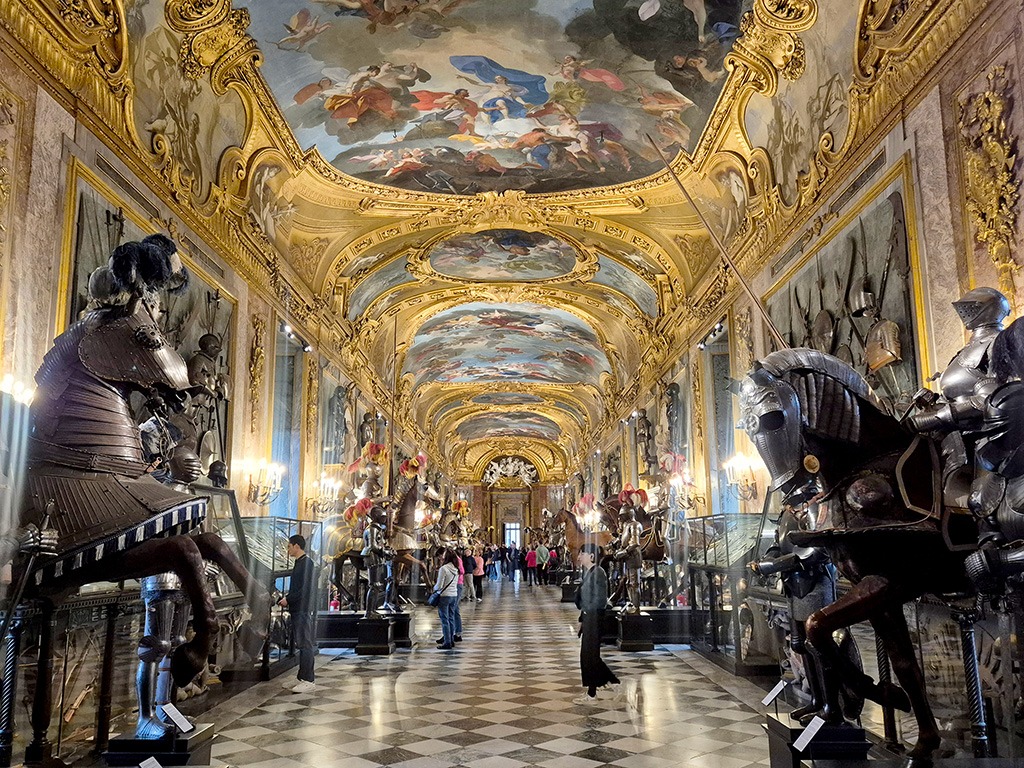
I didn’t expect the Royal Armoury to be one of my favourite parts of the collection but there is just so much to see here
The other thing that makes the Royal Palace of Turin so special is that it’s home to the Shroud of Turin. The shroud is not on open display but is kept in the Chapel of the Holy Shroud, which sits between the royal apartments and the cathedral.
The Royal Palace & Cathedral – Background
At the start of the 16th century the Duke of Savoy Emmanuel Philibert had taken back control from the French and secured the Savoy family’s status as a political power. Part of his changes included moving the capital to Turin and he took over the bishops’s palace as it was perfectly located in the heart of the city.
This old palace was right next to the cathedral, and over the years it was expanded and renovated to suit the new royal owners. The shroud was already owned by the Savoy’s but it was brought here in 1578, and then around a hundred years later, the Chapel of the Holy Shroud was built, connecting the palace and the cathedral.
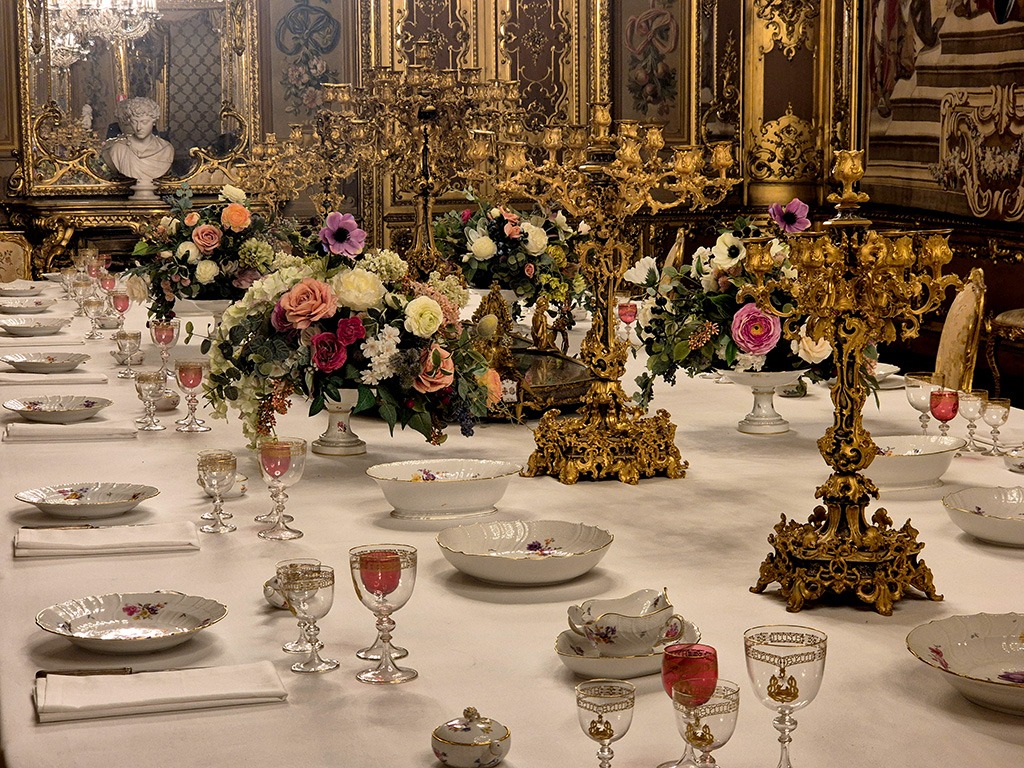
We loved the formal dining room, set up with one of the family’s ornate silverware set – it felt like they might walk in and sit down for a meal at any moment
The Royal Palace & Cathedral – Practical Information
The first thing to note is that visiting the Royal Palace and the cathedral are two separate visits. You cannot go from the Chapel of the Holy Shroud directly into the cathedral or vice versa. The cathedral itself will not take a lot of time to see, so we recommend going here first and then starting your visit to the palace complex afterwards.
Visiting the cathedral is free but you will need a ticket for the palace. These can be bought online, either from the official website or an authorised reseller, in advance which we highly suggest doing as this is a popular sight in Turin.
There is a lot to see, but as the visit route is broken up into different sections, you don’t have to do it all at once. In the courtyard of the palace there is a small cafe and in the gardens there is plenty of seating where you can take a break.
The other important fact about visiting the palace and the cathedral is that you will not be able to see the Shroud of Turin. It is kept in a large sealed box in a chapel of the cathedral, so you may pray in front of this if you wish, but it is not visible at all.
The Egyptian Museum
As a big-time history enjoyer, this museum is a personal highlight for me during any trip to Turin – long before I found my passion for ancient Roman history, I was fascinated by ancient Egypt.
This museum had long been on our wish-list as it is home to one of the most important collections of Egyptian antiquities outside Egypt at the Museo Egizio, or Egyptian Museum, rivalling international collections such as the British Museum in London and the Met in New York.
The Egyptian Museum – Background
The Museo Egizio is one of the clearest reasons to visit Turin if you have even a passing interest in history, ancient art, or the wider museum scene in northern Italy. Although some visitors and locals casually refer to it as a Turin city museum, it is much more significant than that and stands among the city’s major global-level institutions.
Founded in 1824 and opened to the public a few years later, the collections here were brought together during a period of intense archeological activity in Egypt, where Italian teams excavated major sites and tombs up and down the now.
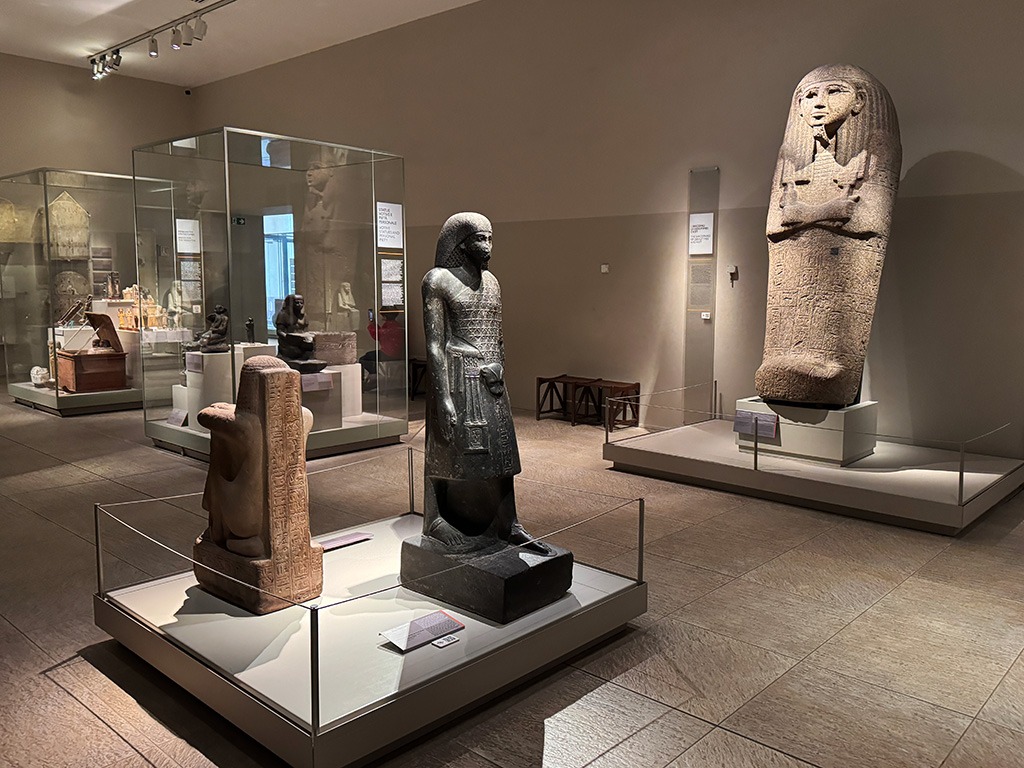
Beyond the incredible artefacts, this museum is excellently organised and accessible to all visitors
This museum is widely considered one of the best of its kind in the world and can easily take several hours to explore and even if you are not usually drawn to museums, this is one of Turin’s standout attractions.
The Egyptian Museum – Practical Information
The museum is located in the historic heart of Turin, at Via Accademia delle Scienze 6, just a short walk from the Royal Palace complex (around 10 minutes) and around 15 minutes from Porta Nuova station on foot.
Tickets can be purchased online via the official website here, or via third parties such as GetYourGuide. I’d recommend booking in advance both to guarantee entrance and to save time on the day of your visit.
The museum interior is air conditioned and features lifts/elevators throughout, making it visitable for everyone. You’ll find a small café/bar inside offering classic Italian light bites, coffee and alcoholic drinks. During busy periods this spot can become very busy, so it is advisable to bring water and snacks with you, especially if you plan to spend a good amount of time here.
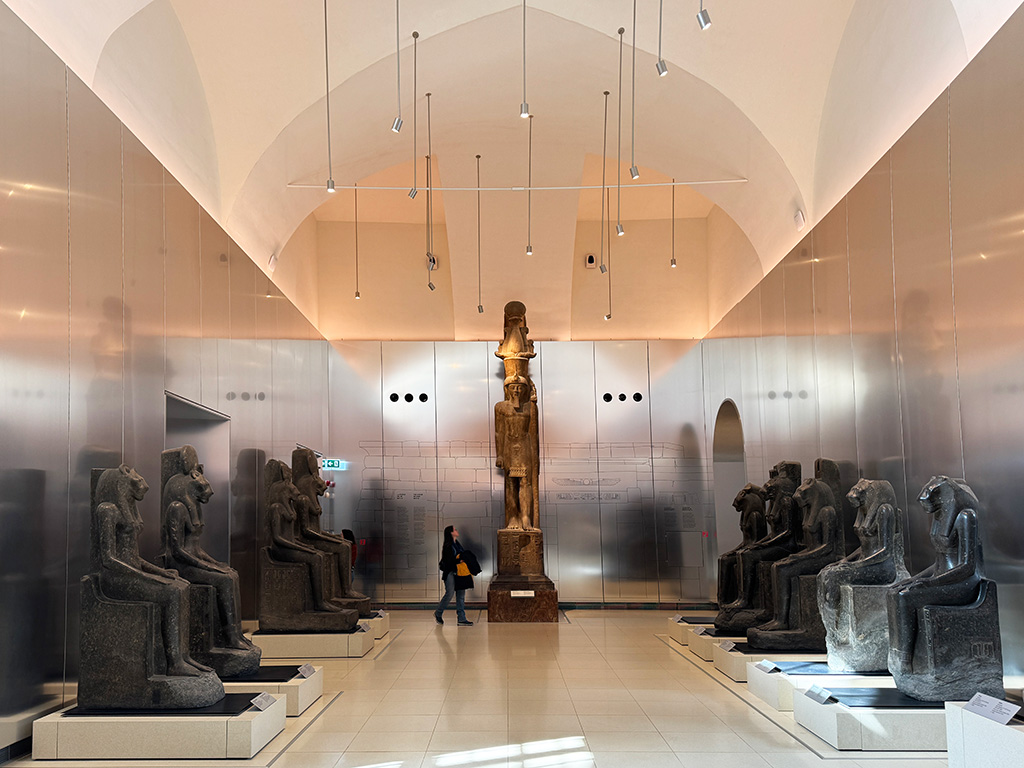
To fully explore the collections of the Egyptian Museum you should allow 3–4 hours, but those with a passion for history could easily spend a whole day here.
Mole Antonelliana & National Cinema Museum
The Mole Antonelliana is Turin’s most recognisable landmark. Originally intended as a synagogue, it now houses the National Cinema Museum, also often referred to more simply as the Cinema Museum. Here’s what you need to know about visiting:
Mole Antonelliana & National Cinema Museum – Background
The museum inside is one of the most enjoyable I have visited in Italy, and even visitors who are not especially interested in film often end up loving it. Inside, exhibitions explore the history of cinema in an engaging and interactive way, and the wider setting inside the Mole itself is unforgettable.
Inside, exhibitions explore the history of film in an engaging and interactive way. You can also take a lift to the top of the Mole for panoramic views over the city and towards the Alps, which on a clear day are particularly striking.
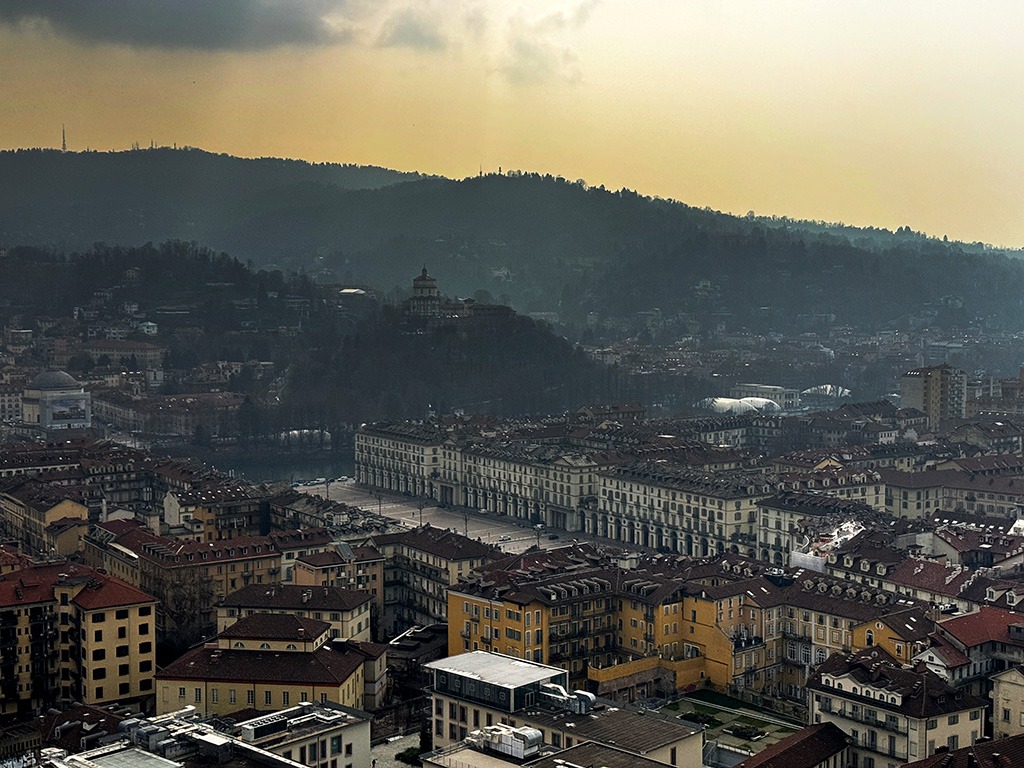
From the top of the Mole you get a superb sense of Turin’s ordered layout, the surrounding mountains, and just how broad the Po valley feels from above.
Mole Antonelliana & National Cinema Museum – Practical Information
The Mole and Cinema Museum is located a little way outside of the immediate historical centre of Turin at Via Montebello, 20, around 15 minutes on foot from the Royal Palace/Cathedral area and around 20 minutes from Porta Nuova train station on foot. It also sits not far from Corso San Maurizio, making it easy to combine with a walk through this side of the city.
If you’d like to take the elevator/lift to the top of the Mole you should absolutely book your entrance ticket in advance as it is subject to timed entry and limited spots.
For the cinema museum, advance booking is less important, but generally recommended to save you time on the day of your visit and to guarantee entrance. Tickets can be booked online via the official website, including for the lift/elevator, as well as for the museum itself, or via third parties such as GetYourGuide.
To fully visit the museum and take the ride to the top of the Mole you should allow around 2 hours, but film buffs should allow more time as the exhibits and numerous spaces and experiences can easily draw you in.
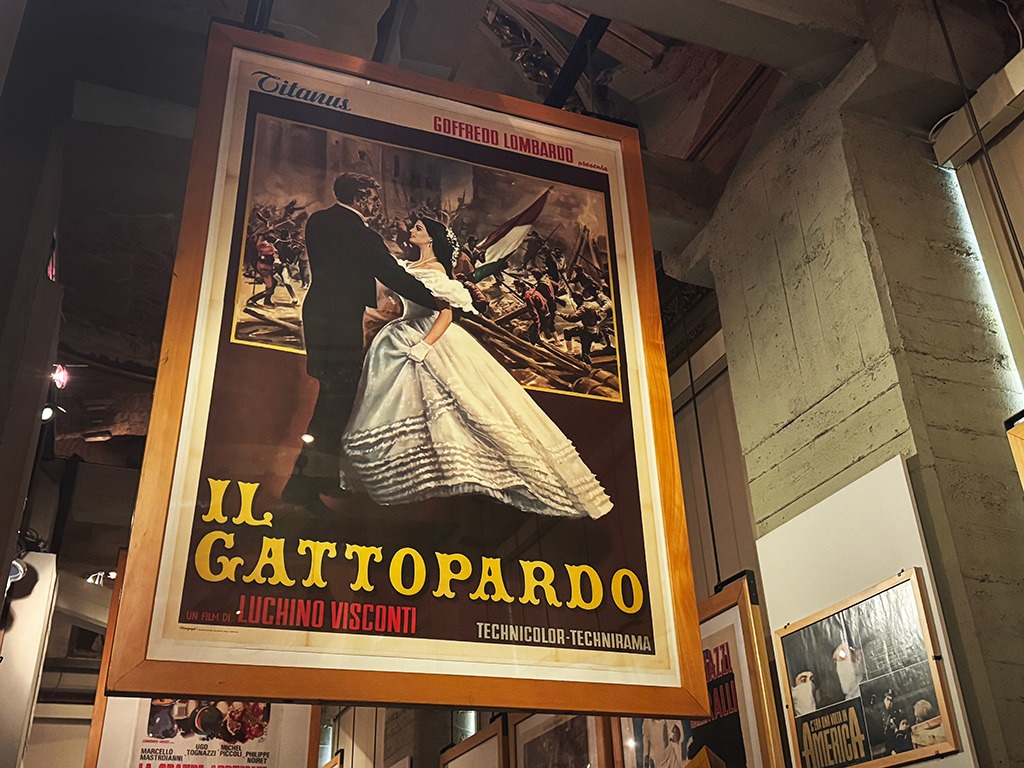
My favourite part of the Cinema Museum is the Poster Gallery featuring original adverts for films in Italy and beyond
Shopping for fashion, food, and drink
Turin might not be considered a retail location in the same way that Rome or Milan is, but that doesn’t mean you can’t shop here. In fact, when Sara and I first visited Turin we were surprised, in a good way, at the range of shops, brands and markets across the city.
The main area when it comes to big brands is Via Roma, the city’s polished main street, where the porticoed streets house stores of recognisable names, Italian and international, as well as institutions such as Rinascente. Eataly’s flagship Turin location, meanwhile, is in the Lingotto area rather than on Via Roma (but there is smaller Eataly concession here).
Another great location for shopping, especially when it comes to food and drink produce, is the city’s Mercato Centrale, located at Piazza della Repubblica, 25, in the Porta Palazzo area. If you want the older and more traditional market experience, you should also look at Porta Palazzo Market, one of the city’s most important everyday commercial hubs.
On the note of food, one thing that Turin is renowned for throughout Italy, and no trip to the city would be complete without enjoying, is chocolate. One of Italy’s most historic chocolate producers, Baratti & Milano, has roots in Turin dating to the 19th century, and the historic café in Galleria Subalpina near Piazza Castello genuinely feels like a trip back in time.
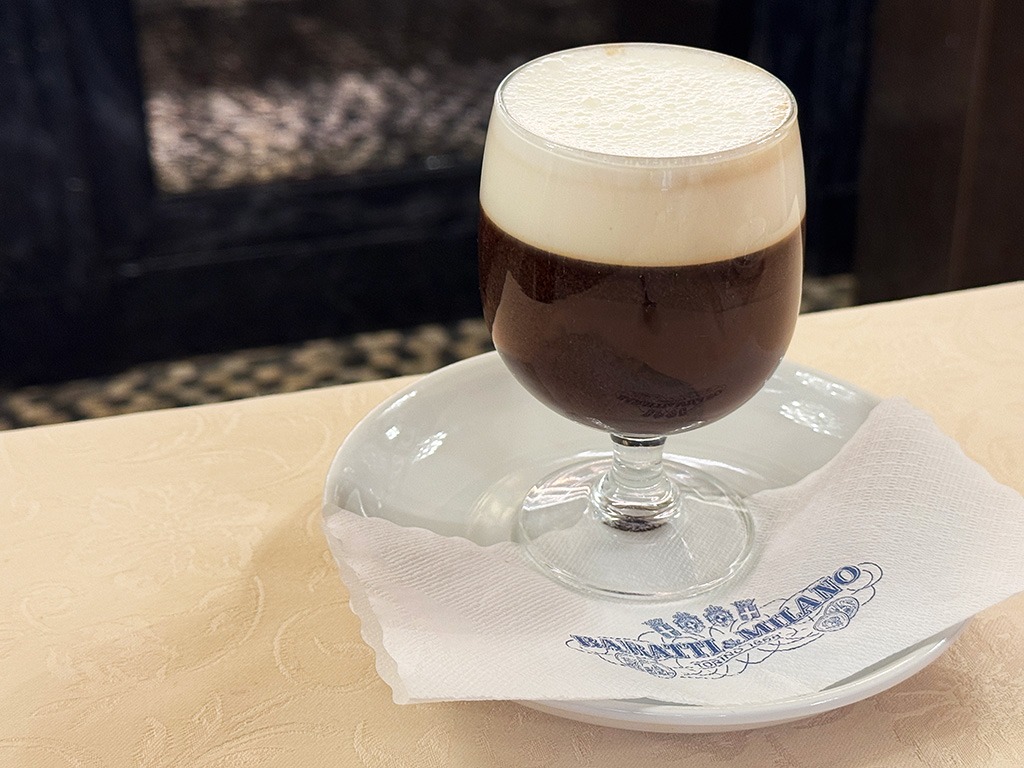
Beyond purchasing chocolate here, as we do for friends in Rome and family back in the UK, you can also sit in the historic café and enjoy chocolate-based drinks and cocktails, including one of the quintessential symbols of Turin: Bicerin.
Eating and drinking in Turin
As we approach the end of this guide, I’d like to share with you some final recommendations that will complete your time in Turin: food and drink.
At the centre of Piemonte, and drawing on its legacy as a former capital of Italy, Turin is a nexus for one of Italy’s most distinct sub-cuisines and for some of the country’s most iconic wines and aperitivi. For anyone interested in food, local specialties, and local wines, this is a city that rewards curiosity and indulgence.
Normally in my city guides I’d include a recommendation on what to eat for breakfast, and where to eat it. However, Turin is not renowned for anything especially notable when it comes to breakfast, so all we’ll recommend is heading to a local bakery/café at the start of your days here to enjoy a freshly prepared pastry, sometimes referred to as a brioche in this part of Italy, with a coffee. With breakfast ticked off, let’s move on and start indulging in Piemonte’s rich cuisine:
Lunch in Turin
While the Turinese don’t take lunch as seriously as in other parts of Italy, this part of Italy is more serious about aperitivo and dinner, that doesn’t mean you’ll struggle to find great restaurants to enjoy lunch when visiting.
One of our favourite spots in the city is Le Vitel Etonné, just a 5-minute walk from the Egyptian Museum, making it the perfect place to de-brief after a morning visit to the museum.
On the menu you’ll find must-try Turin and Piemonte classics such as agnolotti, a hearty filled pasta typical of Piedmont (pictured below), as well as a good wine list heavy on the area’s famous products. Booking in advance is recommended as tables are limited, but during warmer months they also have a few spots outside which make for a fun people-watching place.
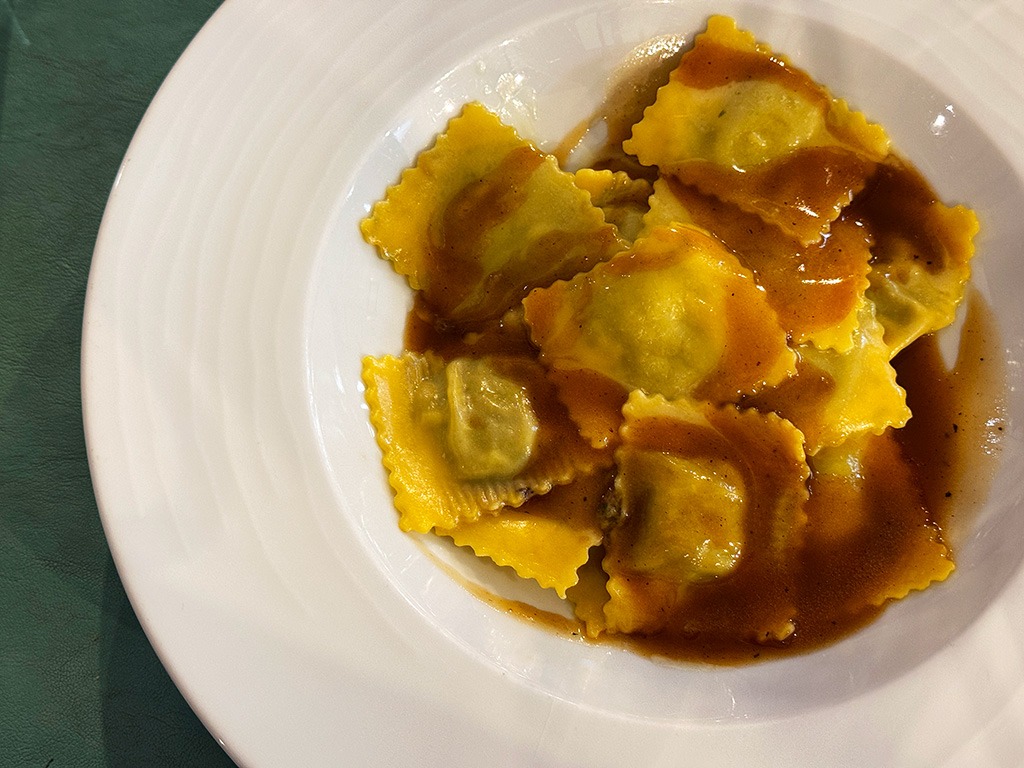
Things don’t get much more quintessentially Turin than a plate of agnolotti – meat or vegetable stuffed pasta with a rich savoury sauce
Another great place for lunch, especially for travellers with limited time or exploring on a budget, is the previously recommended Mercato Centrale at Piazza della Repubblica, 25. Much like the corresponding locations in Milan and Rome, this covered market features numerous vendors and kiosks offering all types of high-quality food and drink, from regional specialities to international options.
Aperitivo in Turin
I used to joke that aperitivo – generally 5 pm until 8 pm – was my favourite “meal” of the day, but in Turin, I realised it actually was. I love these hours at the end of a long day of sightseeing and exploring, when travelling, or working, when at home, when the whole of Italy switches off to enjoy a drink, alcoholic or not, collectively, in advance of dinner.
In Turin, aperitivo is sacred, and this city is the home of vermouth, the fortified aromatised wine flavoured with herbs, spices and botanicals. Where spritzes are the go-to aperitivo drink across almost all of Italy these days, in Turin it is more common to see locals enjoying a short measure of vermouth in the evening, though you can still get spritzes easily. One of my favourite places to enjoy a vermouth is Vermoutheria Peliti’s along the banks of the Po river.
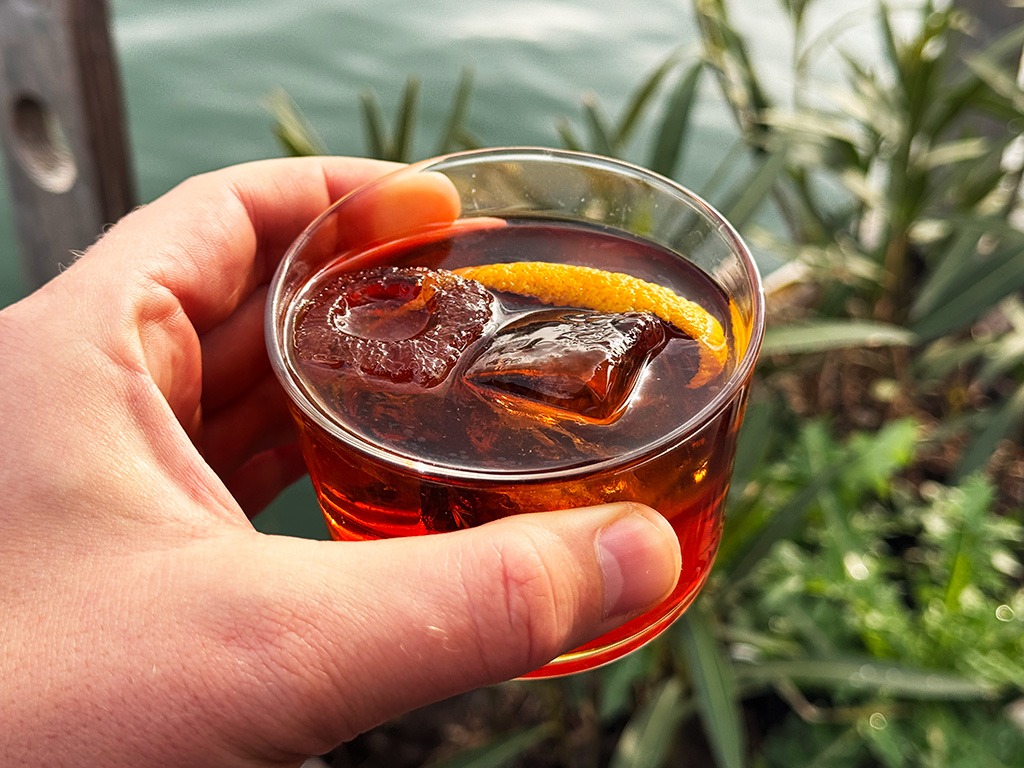
I love this spot, set a little way from the city centre where the serenity of the river and the view of Chiesa di Santa Maria del Monte dei Cappuccini on the opposite side create a very different feel from the historic heart.
Alternatively, if you are looking to satisfy a sweet tooth at this time of the day, make your way to Baretti & Milano, previously detailed, and order a Bicerin, a traditional layered drink made with coffee, chocolate and cream. If I’m feeling especially indulgent, I’ll order a corretto version, “correct” in Italian, which features a measure of alcohol mixed in.
Dinner
The people of Turin, and Piemontese in general, take dinner very seriously and traditionally this is the main meal of the day in this part of Italy. I am a big fan of embracing local customs wherever I go, and in Turin, that means heading to a traditional restaurant to enjoy more of the city and region’s signature dishes.
We love Tre Galline in the Quadrilatero Romano neighbourhood, which couldn’t be more traditional if it tried. The menu features classic options such as vitello tonnato and tajarin, and it has one of the most impressive wine lists I have yet to see in Piemonte. Be sure to book ahead as, while this is a medium-sized restaurant, it is popular with locals and visitors alike.
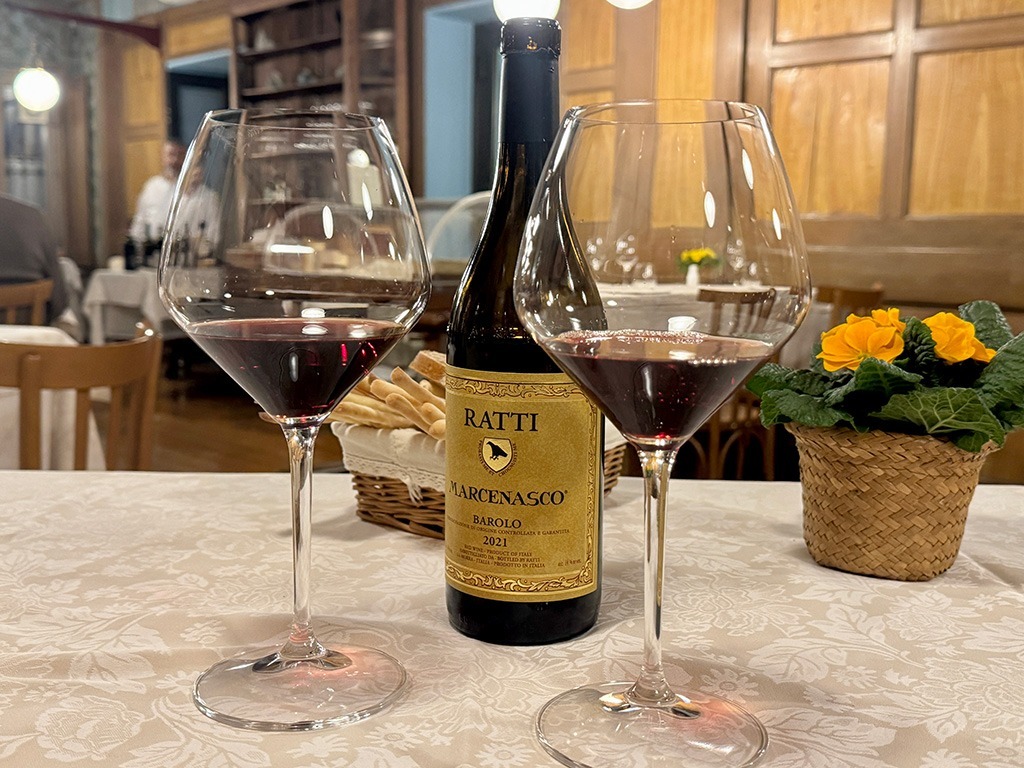
If you are here to sample the region’s cuisine and wines, such as Barolo, this is the place for you.
If you, like Sara and me, enjoy mixing things up occasionally when travelling when it comes to what to eat, skip the Italian and head to LAO 老 for some of the best far eastern Asian food we’ve ever had. We stumbled across this small restaurant tucked away in the Quadrilatero neighbourhood on a recent trip to Turin and thank the gods we did. The menu features pan-Asian options, all reasonably priced, and the service is second to none.
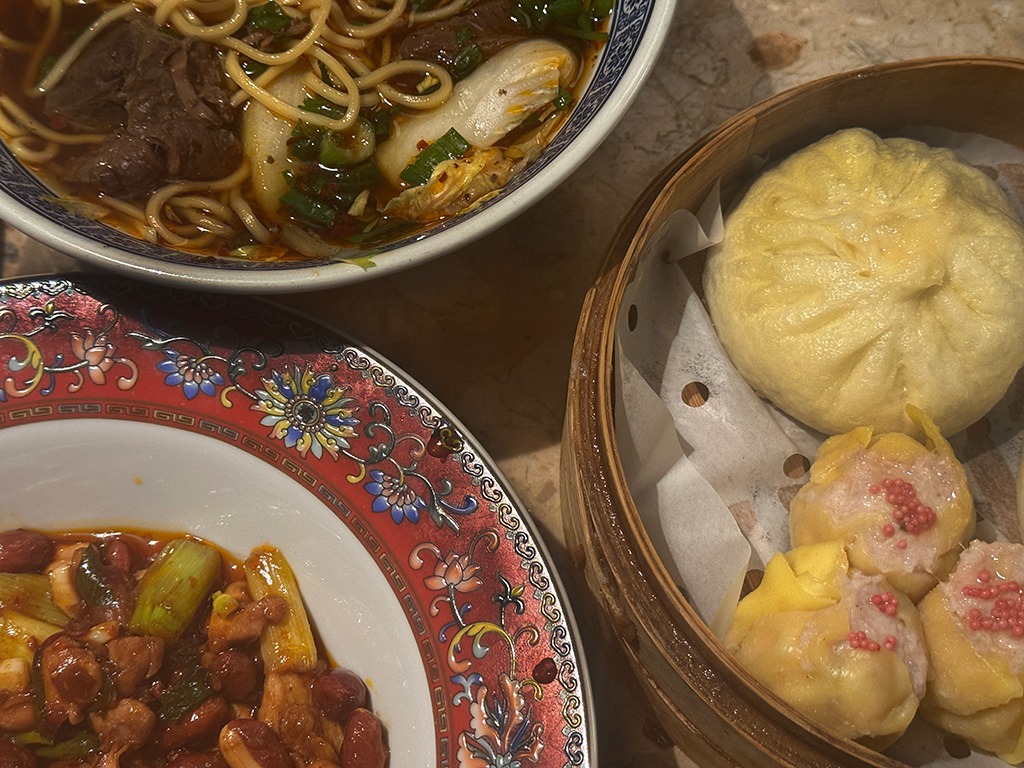
Like most good restaurants, booking in advance is recommended as otherwise you may have to wait for a table to become available.
To summarise
Hopefully this guide has helped set you on the right path to plan a trip to Turin, or at the very least, shown you that this city is worth exploring at a later point. Between its indulgent cuisine and drinks, unique history and cultural scene, and accessibility, this city should be on everyone’s Italian itinerary.
Whether you want to build a tighter Turin itinerary focused on the historic center and museums, or a broader trip taking in the Piedmont region, surrounding mountains, wine country and smaller towns, Turin is a city that more people should take seriously.
If you have further questions about visiting Turin, Italy, get in touch here.