
Published:
September 30, 2026
Last updated:
September 30, 2026
There’s a point every day in Italy, no matter the time of year or region, that a large part of the population stops to mark the end of daytime and the arrival of dinner. Often enjoyed with a drink, this point of the day is aperitivo time, a distinctly Italian tradition which has become synonymous with la dolce vita, the sweet life. But what exactly is aperitivo? This guide will give you the answer and more, about this special daily ritual.
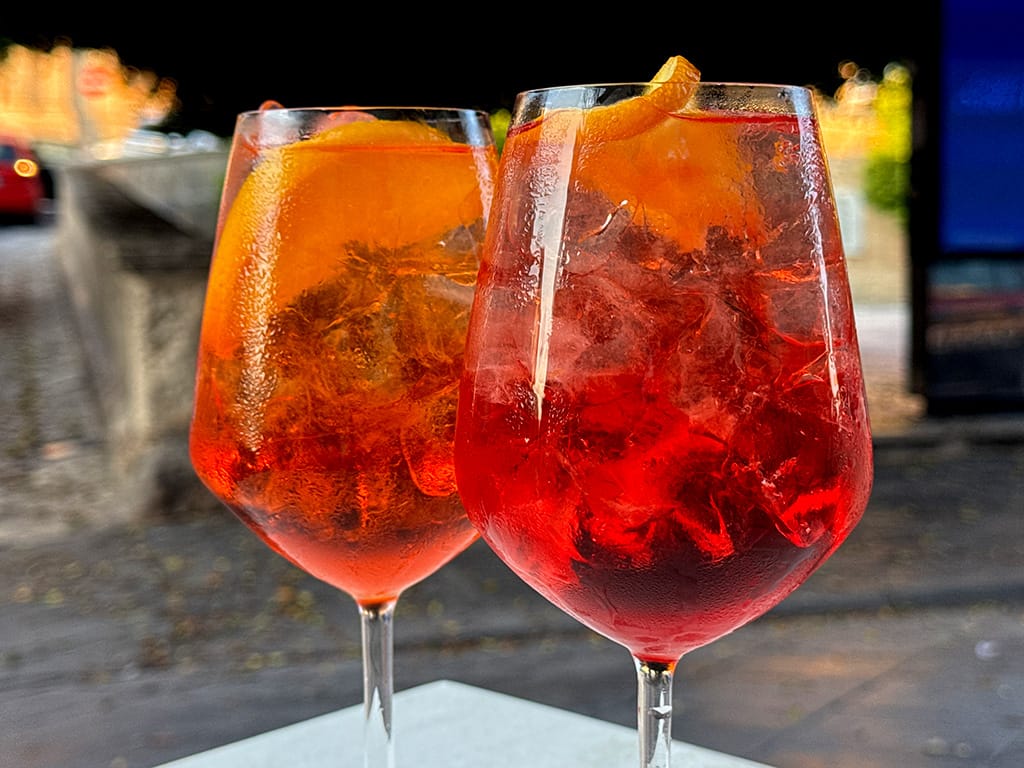
Does anything else symbolise Italy’s famous good living more than a spritz
Your comprehensive guide to Italian aperitivo time
I used to joke that aperitivo was my favourite “meal” of the day, initially because it provided a cultural excuse to enjoy a drink (“I’m blending in!”) and to eat some not-so-healthy snacks (“It’s traditional!”). However, in the years since I moved to Italy way back in 2019 I’ve come to genuinely love this point of the day.
This is down not only to the reasons above (I won’t shy away from admitting there aren’t many things better than a spritz at the end of a day), but for what I believe aperitivo represents. It is a moment of collective and shared relaxation where most of the country slows down and takes a moment to catch up with friends, family, or colleagues in an informal setting before dinner. This is the cultural essence of aperitivo, but what is it actually? Let me define this for you, plus:
Who is this guide for?
This guide has been written for those looking to understand aperitivo in Italy: the technical definition, how it sits in Italian culture, the history of aperitivo, classic Italian pre-dinner drinks and snacks, and more. While this guide mentions some of my favourite places in Italy to enjoy aperitivo, it does not include a full breakdown of bars and cafes in major locations. If you are looking for location-based recommendations, take a look at my destination guides here:
What is Aperitivo?
To fully appreciate aperitivo, the first thing I’ll share is two clear definitions of how the word “aperitivo” itself is used and defined in Italy, and what it refers to in each context:
“Aperitivo” as a Noun
The word “aperitivo” most commonly refers to a specific time of day, which while flexible, typically refers to post work hours (5 PM onwards) until dinner (around 8 PM). At this point of the day all across Italy, nearly everyone from residents to visitors enjoy a drink (alcoholic or soft) with something small to eat, signing off the day before starting dinner.
In noun form, the word also refers to the collective elements that make up aperitivo: the time of day, drinks, and food.
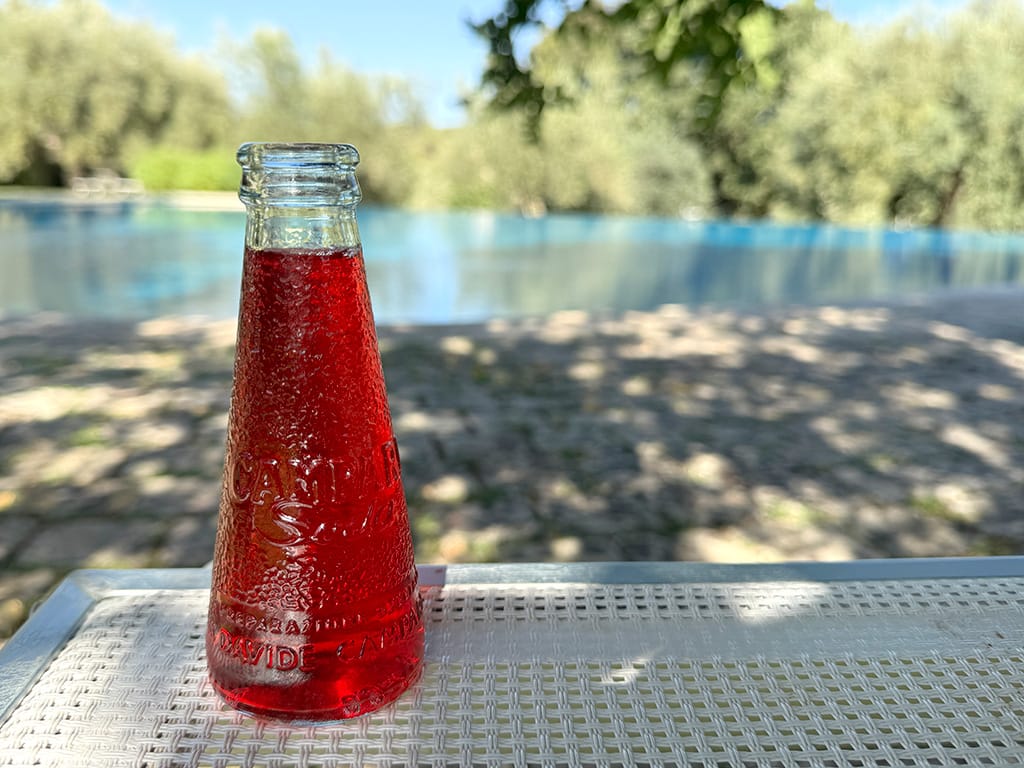
The timings are not hard and fast – it isn’t unusual at weekends to see bars offering aperitivo from 12 PM
“Aperitivo” as a Verb
“Aperitivo” is also used in verb form in Italian, like other meals of the day such as lunch and dinner. While this isn’t natural to English speakers, once you recognise the use of the word “aperitivo” as a verb in Italian, signage at bars will make more sense. Italians will use both the noun and verb forms interchangeably, and will also use the word “aperitivo” at other times of day when ordering foods and drinks often associated with the evening ritual.
How to pronounce “aperitivo”
Curious to understand the correct pronunciation of “aperitivo”? All vocabulary in Italian is broken out into distinct syllables when said out loud, and in this case, “aperitivo” features five syllables:
a – pronounced “ah”
per – pronounced “per”
ri – pronounced “ree”
ti – pronounced “tee”
vo – pronounced “voh”
Stringing them together, you have: “ah-per-ree-tee-voh”
Aperitivo Etiquette & FAQ
I really do consider aperitivo as one of the key points of the day here, and like many things in Italy when it comes to food and drink, there are some cultural nuances to aperitivo that Italians follow naturally but visitors sometimes miss. To help you enjoy this sacred time like a local, here are some tips for aperitivo etiquette, plus answers to some common aperitivo questions.
Should I toast / cheers during aperitivo, and if so, how?
Absolutely! Aperitivo is a celebration of the working day’s end and toasting is fundamental to the social ritual of this time of the day. The classic cheers that you’ll see and hear is by raising and clinking glasses (being careful not to cross arms / overlap, as this is considered bad luck) and exclaiming “Cin cin!” (pronounced chin chin) or “Salute!” (pronounced sah-loo-teh), meaning “cheers” and “to health” respectively. You’re then free to drink and eat freely, unless you’re in one specific region in Italy…Veneto.
When Sara and I lived near Padua in northeast Italy, we soon observed that locals would tap their glasses on the table after clinking, before then drinking. No one could tell us why this was done; it is just one of those things that symbolises the cultural diversity you’ll find across Italy, and is something Sara and I still do now years later as a tribute to our time in Veneto.
What is the difference between aperitivo and happy hour?
Where happy hour in a bar can occur at any time of day, aperitivo is almost always enjoyed in the late afternoon / early evening. To avoid confusion, happy hours are not as common in Italy as other countries, and are usually only found on offer at lower priced establishments in larger cities. Italian aperitivo emphasises pacing, good company and sociability over drink discounts, so you’re unlikely to see many buy-one-get-one-free promotions and such.
What's the deal with aperitivo pricing?
First things first: nearly anytime you order a cold drink to enjoy when seated at a bar, you’ll be given some snacks, typically crisps/potato chips and/or nuts. These are complimentary, and you will not be charged extra on top of the list price for the drink. These salty and savoury snacks are commonly referred to as stuzzichini (“stooz-zee-keen-nee”) but you’ll often encounter the English world ‘snacks’ used in bars.
Where things get a little confusing, however, is when you see bars offering additional snacks (on top of the chips/nuts/crisps) for an extra cost. This is commonly referred to as an aperitivo “formula” (pronouced the same as in English) and means for a small charge you’ll receive more to eat with your drink. I’ll talk more about common aperitivo snacks further below.
Can I get aperitivo drinks and snacks as a takeaway?
Yes, most bars will offer drinks as takeaway, but not necessarily all drinks. Anything bottled can almost always be purchased to enjoy later, whereas spritzes and long drinks (anything that has to be made) are not always available as takeaway. Italy’s laws concerning public consumption of alcohol (i.e., at the beach, in parks, piazzas, etc.) are relaxed, so an alternative if you’d like to enjoy aperitivo on the go is to grab your drinks and snacks from a supermarket.
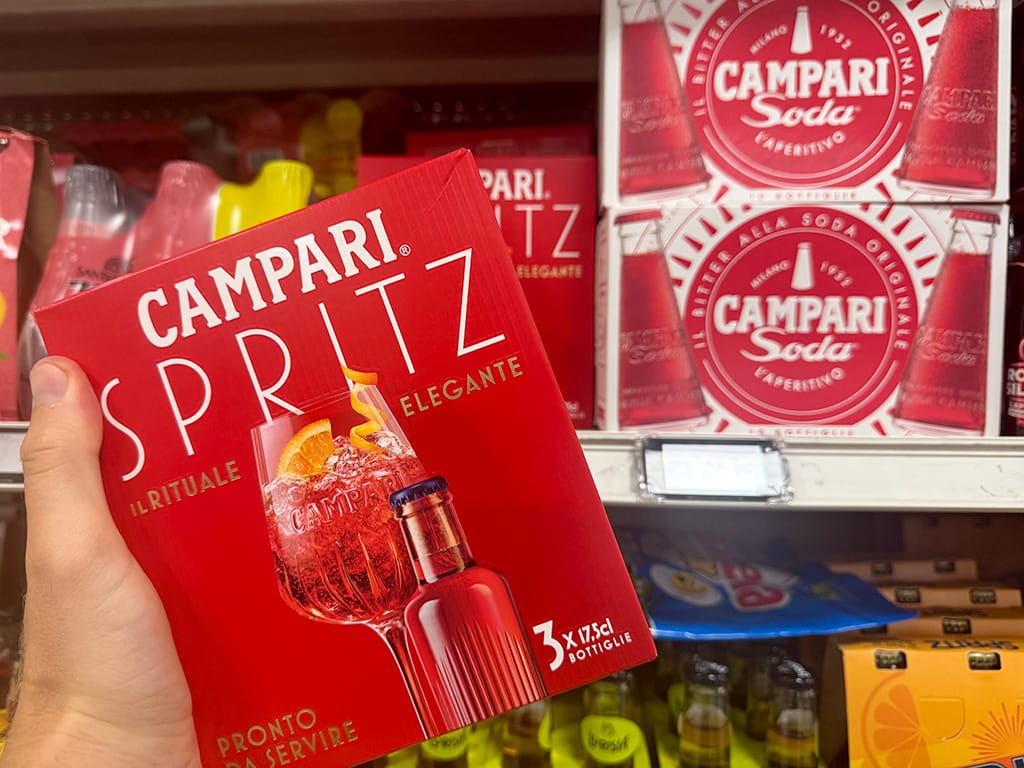
Most larger supermarkets even stock ready made/pre-mixed aperitivo classics these days
History of Italian Aperitivo
Aperitivo as we know it today has its roots in ancient Rome. The word itself is derived from the Latin aperire, which means “to open”, and by no surprise, the Italian verb aprire has the same root and meaning. Depending on interpretation, the “opening” in this case could be that of the start of the evening, or of the stomach by consuming something in preparation for dinner. Most Italians will tell you it’s the latter, but I personally like both meanings.
An ancient Roman precursor to modern aperitivo existed in the form of a gustatio where wealthy citizens consumed spiced wine and small cold dishes prior to dinner. Moving into the Middle Ages, monasteries in Italy (and elsewhere in Europe) were renowned for the production of Rosolio, a bittersweet tonic which was traditionally enjoyed after dinner as much as pre-dinner. Rosolio laid the groundwork for the creation of Italy’s now iconic bitters with are now synonymous with aperitivo.
By the late 1700s and early 1800s, what we would now recognise as aperitivo culture had firmly taken hold in Turin and Piedmont. This was thanks to the advent of Vermouth and the ruling House of Savoy’s love for the herb infused fortified wine.
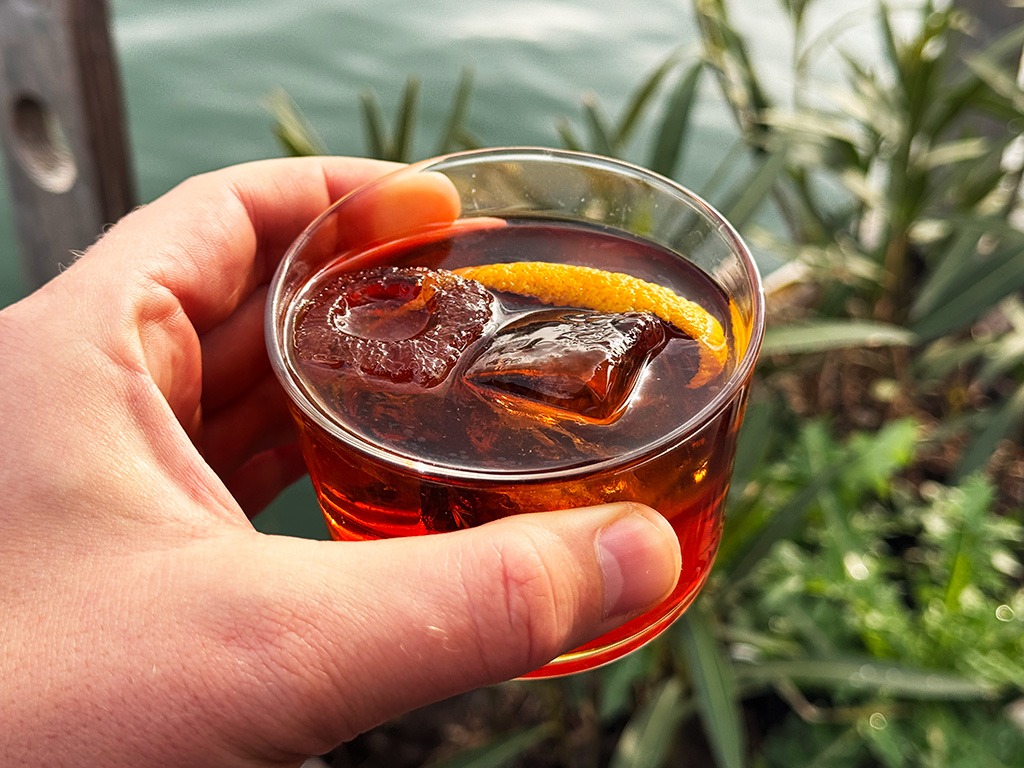
Looking for something traditional and simple for aperitivo? Look no further than a glass of Vermouth
In 1860, Campari (my all-time favourite aperitivo liqueur) was founded and quickly became the go-to pre-dinner drink in Milan. At the same time, Austrian troops stationed in Venice (while Veneto was under Habsburg control) found that by adding a “spritzer” (German for “splash”) of soda to the local wine, they made it more palatable – complaining it was too strong undiluted – and hence the Spritz was born.
Come the early 20th century, several more aperitivo brands had been founded, including Select in Venice and Aperol in Padua. In the post-WW2 years, these brands and others marketed their liqueurs beyond northern Italy, capitalising on Italy’s industrial boom in the 1950s and 1960s by selling aperitivo as the best way to relax after a long day at work. Harking back to its ancient Roman roots, the idea stuck.
In recent decades, aperitivo culture has grown in recognition and permeation, not just in Italy but globally. This has been driven largely by evergrowing numbers of visitors coming to Italy, as well as the popularisation of the Spritz as the top aperitivo drink and a modern symbol of la dolce vita.
Venice at Sunset: Cicchetti, Food & Wine Tour
Enjoy cicchetti like a Venetian as you eat and drink your way through the Floating City’s most picturesque neighborhoods.
Venice at Sunset: Cicchetti, Food & Wine Tour
Enjoy cicchetti like a Venetian as you eat and drink your way through the Floating City’s most picturesque neighborhoods.

Top Aperitivo Drinks
Aperitivo is not exclusively limited to drinking alcoholic beverages; in fact, there is a whole market dedicated to alcohol-free aperitivi and its common to see people enjoying soft drinks before dinner. Let’s take a look at what to drink for aperitivo, alcholic and non, starting with the most famous:
Spritzes
Beginning with the Spritz, Italy’s favourite pre-dinner drink is the undeniable emperor of aperitivo. Since its humble beginnings in the 1800s, the Spritz is now the go-to choice for many Italians, and the majority of tourists for an evening drink. Spritzes come in a plethora of flavours, with the most popular being:
- Aperol Spritz, with a sweet citrus-centred base, this is the world’s top spritz
- Campari Spritz: with a bitter citrus and herby base, this is my choice spritz ninety nine times out of a hundred
- Select Spritz: A mildy bitter base, more herbal than Aperol or Campari, but still citrus-focused
- Hugo Spritz: A lighter, elderflower (Saint Germain traditionally) base, garnished with mint
There is one thing that all spritzes share: the use of a sparkling wine (typically Prosecco, throwing back to the drink’s roots), occasionally lengthened to reduce the drink’s strength with soda or carbonated water. Beyond the popular spritzes mentioned above,you’ll find variations that use regional liqueurs as their bases, such as Limoncello in Sorrento and Basonotto (basil) liqueur in Liguria.
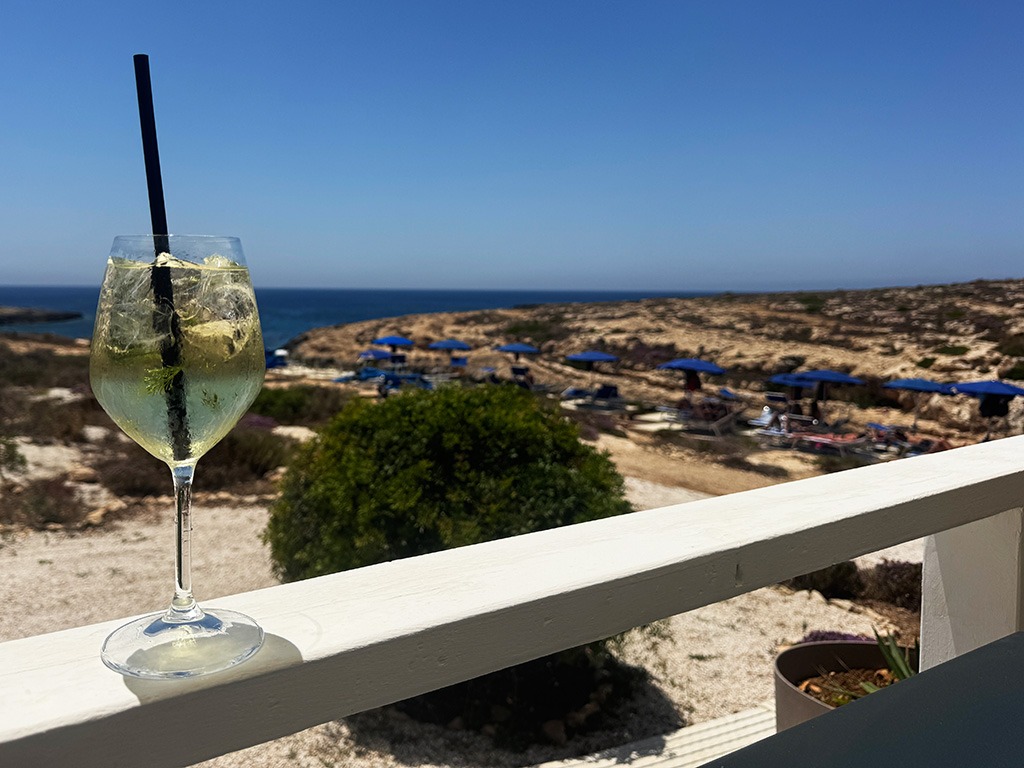
While the most common aperitivo drinks are favourites Aperol Spritz and Negroni, I love a regional variation like this Finocchietto (fennel liqueur) Spritz found only in Sicily
Wine
Before the Spritz conquered aperitivo time, wine was the go to pre-dinner drink, either in fortified form such as Vermouth, or in normal style as you’d enjoy with dinner. Until relatively recently it was common in much of Italy to see people enjoying a glass of wine pre-dinner versus those with a spritz or cocktail, particularly in parts of Italy with less of a liqueur culture, such as Florence or Rome.
Longer Drinks and Classic Cocktails
In recent years longer drinks and cocktails have grown immensely in popularity in Italy, and now it is not uncommon to see “international” drinks being ordered pre-dinner alongside Italian classics. Top examples include:
- Negroni: This is my go-to aperitivo drink and comprises equal parts gin, Vermouth and Campari, served with ice and garnished with citrus. A popular variant with a slightly lower alcohol content is the Negroni Sbagliato (which loosely translates as ‘(A) Wronged Negroni’) which sees the gin swapped for Prosecco.
- Americano: I call this a “Light Negroni” as you’ll find the same equal measures of Campari and Vermouth, but no gin. Instead, it is topped out with soda water but still retains some of iconic bittersweet taste of a Negroni.
- Gin Tonic: Referred to in Italian as “Gin Tonic”, without the “and”, the “English aperitivo” (as our Italian friends call it) classic has exploded in popularity in last few years. Italian’s love the bitterness of gin and the refreshing taste of tonic, likening it to traditional spritzes.
- Old Fashioned: Whiskey-forward with a small measure of sugar and Angostura bitters, served over ice and garnished with orange.
- Mojito: A latin classic with a rum base, offset by citrus and sugar, lengthened with soda water and garnished with mint.
Vodka based drinks remain less common, but most dedicated cocktail bars and higher-standard hotels will offer Martinis, Cosmopolitans, Long Island Iced Teas, and others classics.
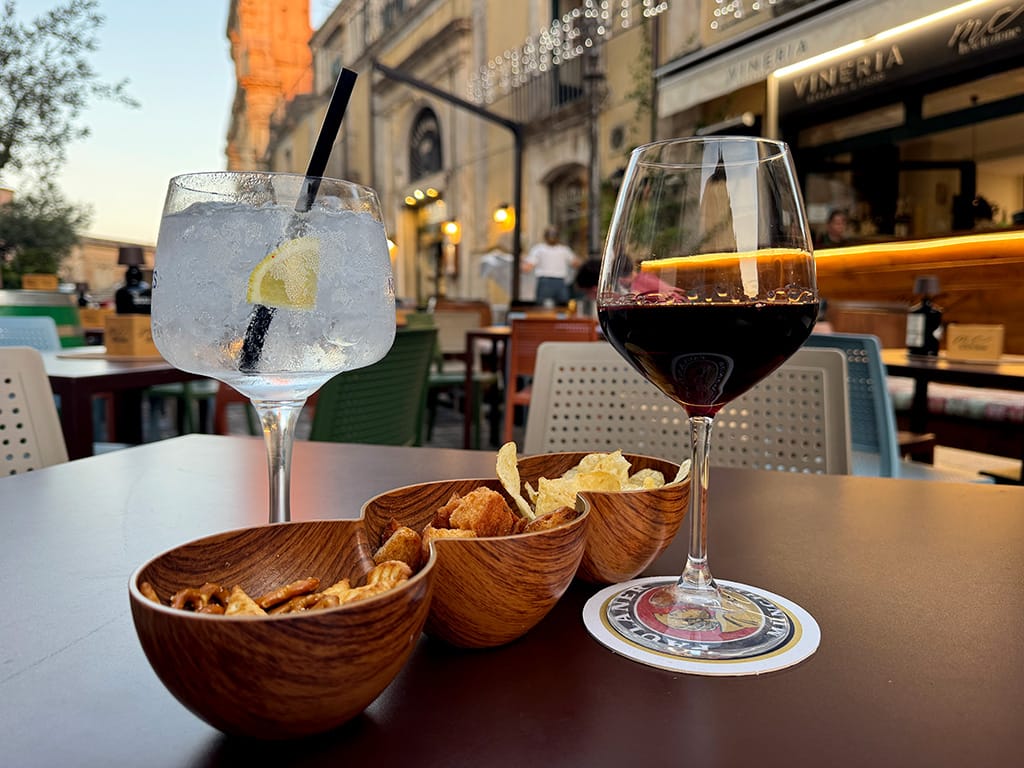
Sometimes you can’t beat the classics when it comes to aperitivo: if Sara and I don’t order a spritz or bitter drink, we’ll likely go for wine and Gin Tonic
Beer
While beer was historically drank in Italy generally with pizza and rarely in other scenarios, the growing popularity of artisan craft beers has seen beer become a more common aperitivo choice. Most bars in Italy will offer at least a couple of bottled beer options, and some also offer draft (alla spina), though this is less common and should not be relied on if you’re normally a beer drinker.
Non-Alcoholic Drinks and Low-Alcohol Options
The key tenet of aperitivo is relaxing at the end of the day, and as such, it is perfectly acceptable if you want to you drink something non-alcoholic. This is one of the great universalities of aperitivo: everyone can enjoy a drink.
When it comes to non-alcoholic options, Italy is home to brands such as Crodino and Sanbitter, which specialise in zero-alcohol aperitivi that mimic the bittersweet tastes of traditional alcoholic options. Beyond low- and no-alcohol beers, wines, and spirits, there’s nothing stopping you from ordering a soft drink or juice if you do not drink alcohol and are still looking to enjoy aperitivo time.
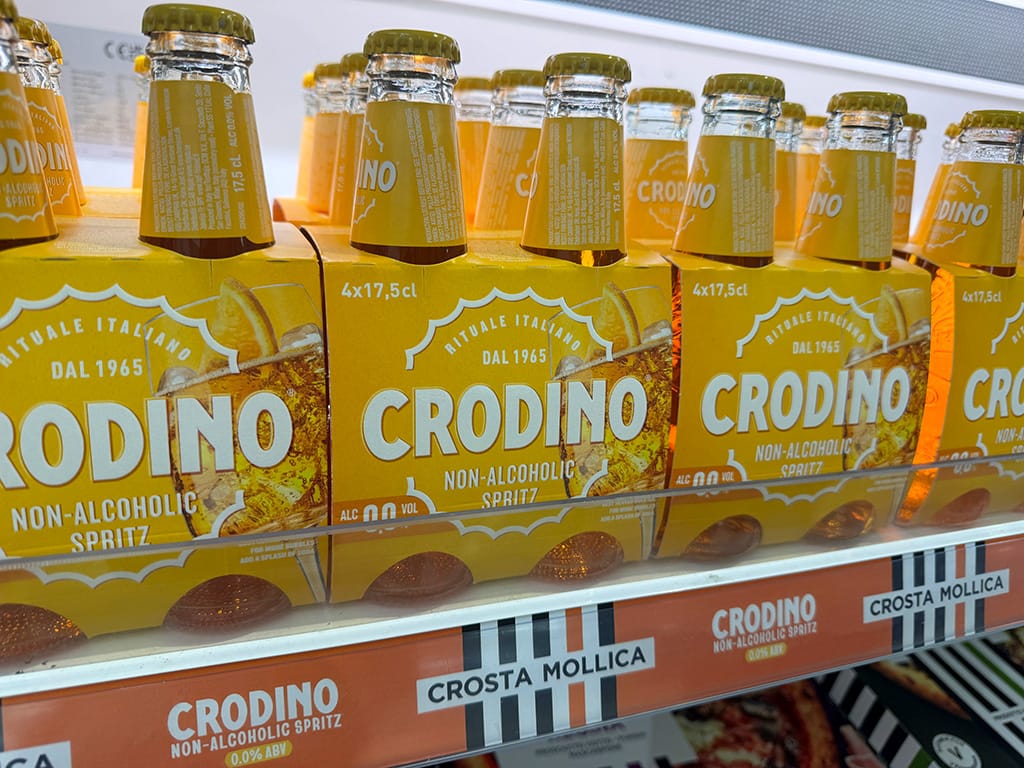
Same brand, different country: as drinking trends change, brands like Crodino are expanding their famous non-alcoholic aperitivi into new markets like the UK
What to Eat at Aperitivo – Top Aperitivo Snacks
As mentioned previously, no matter where you are in Italy, you’ll almost always be served complimentary finger foods (chips/crisps and/or nuts) when ordering a drink for aperitivo. Some higher-end bars may even also additional appetisers including cheeses, cold cuts and crostini (small bread crackers). While this can vary regionally (you’ll likely receive taralli in Puglia or olives in Sicily for instance), what should you do if you want more or something else to eat?
Many bars now offer enhanced aperitivo experiences either as a “formula” or as an “apericena“. Here’s the difference:
- Formula: This format tends to include the same free snacks mentioned above, plus bread-based items such as pizza slices or other local specialities. The most famous example of this is Cicchetti in Venice, which is a food accompaniment to aperitivo more akin to Spanish or Portugese tapas. If you find yourself in Venice for aperitivo, be sure to order these small plates to be treated to a truly local experience.
- Apericena: Taking things one step further, the name itself explains it: “aperi” being short for aperitivo, and “cena” being the Italian word for dinner. This is a modern concept from the past couple of decades where aperitivo bars will offer for a set price a larger selection of foods to go with your drink. The idea is being that you eat enough food to replace dinner (depending on your appetite of course!), and some apericene even offer unlimited buffets and served buffet-style, making it the Italian equivalent of an “all-you-can-eat”.
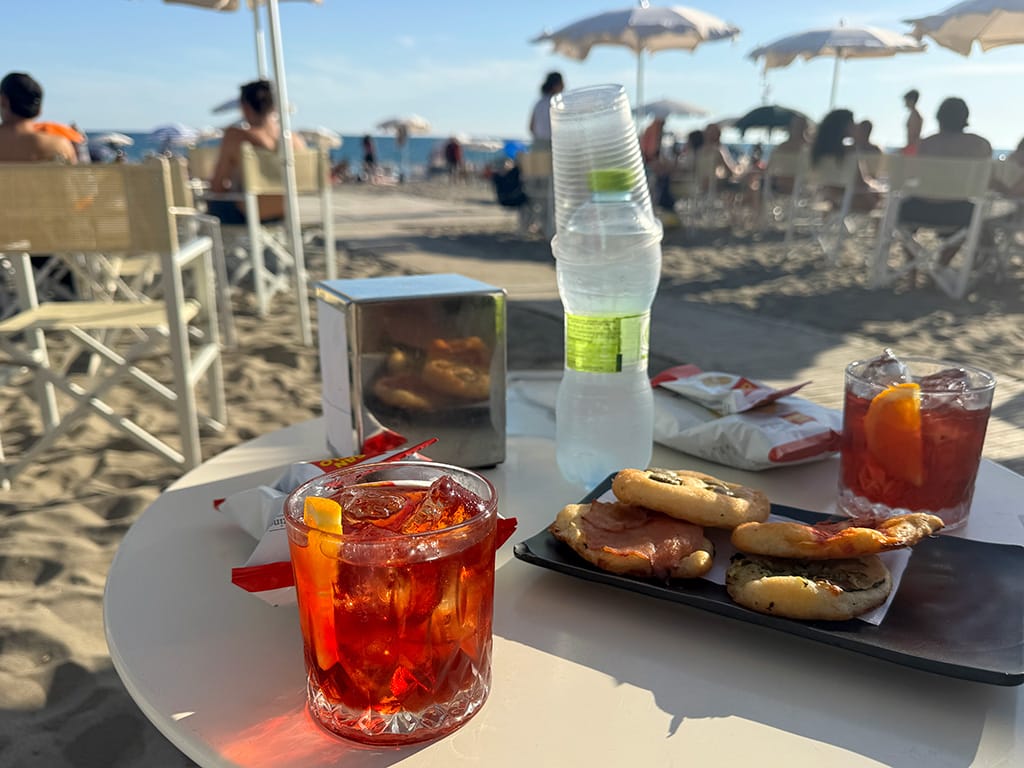
There’s no need to over complicate things; aperitivo is about simply enjoying your drink, snacks, environment and company
My Favourite Places for Aperitivo in Italy
I shared at the start of this guide why I love aperitivo hour and with this in mind, I have some go-to spots to enjoy a drink at the end of the day, whether at home in Rome, when on the road for research, or vacationing in Italy. Here are some of my top spots which I recommend paying a visit to if you happen to be visiting any of the cities or locations listed below:
Ostiia (Rome), Lazio – In my current hometown of Ostia I have two favourite places for aperitivo; during warm weather you’ll find me at Angel’s Beach right on the water (see previous photo above), otherwise I’ll be the main piazza at Ginepro. Both locations are real local aperitivo bars, offering fairly priced and well-made drinks, plus a selection of simple snacks.
Sorrento, Campania – My home away from Rome, there are many bars I love in Sorrento, but one more than any other; Terrazza Vittoria at Hotel Continental. You won’t find a bar with a better view on mainland Italy, or better service.
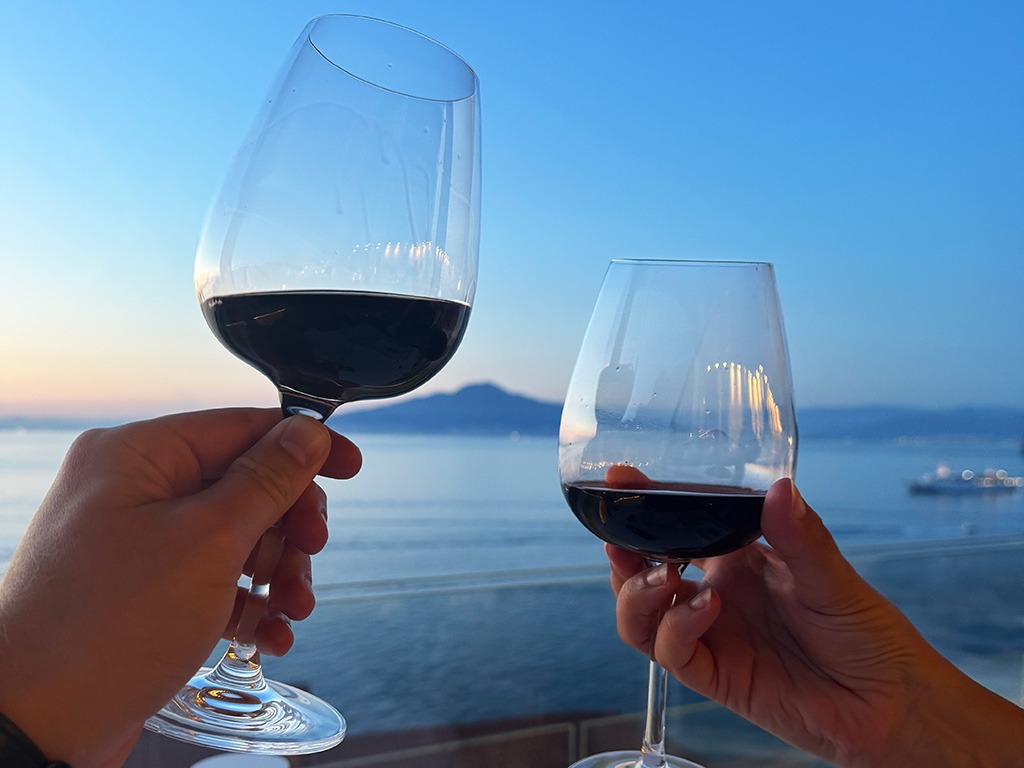
Beyond amazing cocktails, Terrazza Vittoria also has a world-class wine list
Milan, Lombardy – In the heart of the city, located at one of the entrances to famous Galleria with views of the Duomo you’ll find the current home of Campari. Camparino was founded in 1915 by the Campari family and has remained an institution ever since. Campari Group now owns Aperol, so trust me when I say you won’t find a better Aperol or Campari Spritz anywhere else.
Padua, Veneto – Between 2019 and 2021 I’d often find myself in Padua when living nearby, and when COVID restrictions permitted and then subsequently relaxed, I’d always find time for a drink at either Caffè Pedrocchi or Goppion Cafe. Pedrocchi is one of Italy’s great original coffee houses which became a focal point for aperitivo in Aperol’s home city, whereas Goppion is a day-to-day local bar. Need another reason to stop for a drink in Padua? The city is so proud of it’s aperitivo heritage that the price of a spritz here is fixed by local government decree.
Naples, Campania – Right next to Naple’s Royal Palace you’ll find another of Italy’s original coffee houses which now doubles-up as a great spot for aperitivo. Sara and I love stopping at Gambrinius when in Napoli, particularly at Christmas time when their main room is decorated with beautiful trees and traditional ornaments.
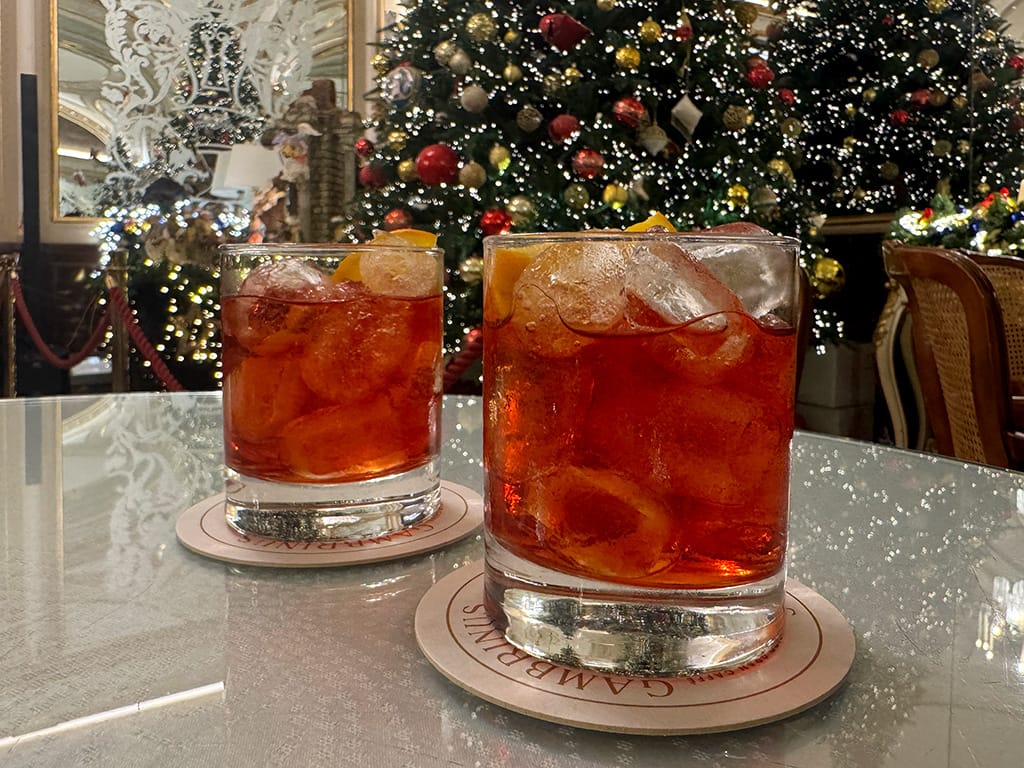
The red of Campari matches Christmas decorations perfectly, if you needed an excuse to order a drink with my favourite bitter liqueur…
Florence, Tuscany – The Negroni was invented by Count Camilo Negroni, a Florentine, at a bar located in the old ‘Casoni’ on Via Tornabuoni in 1919. Sadly this address no longer houses a bar, but directly opposite, you’ll find the new spiritual home of the Negroni at Giacosa. No trip to Florence is complete for me without a stop here to try their expertly made Negroni’s in the cosy, art-deco interior.
Genoa, Liguria – Situated in the backstreets of Genoa’s old town there is a bar like no other in the city. Located in an ex-palazzo, Les Rouges is a speakeasy-style spot that serves cocktails and light drinks made by only the best barmen in Liguria. Arrive early to snag a corner table where you can marvel at the frescoed ceilings as you enjoy your aperitivo.
Taormina, Sicily – If you’re looking for a bar with near 360-degree views of the historic town, surrounding countryside and Mount Etna, and more importantly, an extensive drinks range, look no further than Wunderbar in Piazza IX Aprile in Taormina. This institution in the historic centre of town is a favourite with locals as well as visitors where you can also enjoy something delicious from their food menu alongside your drink.
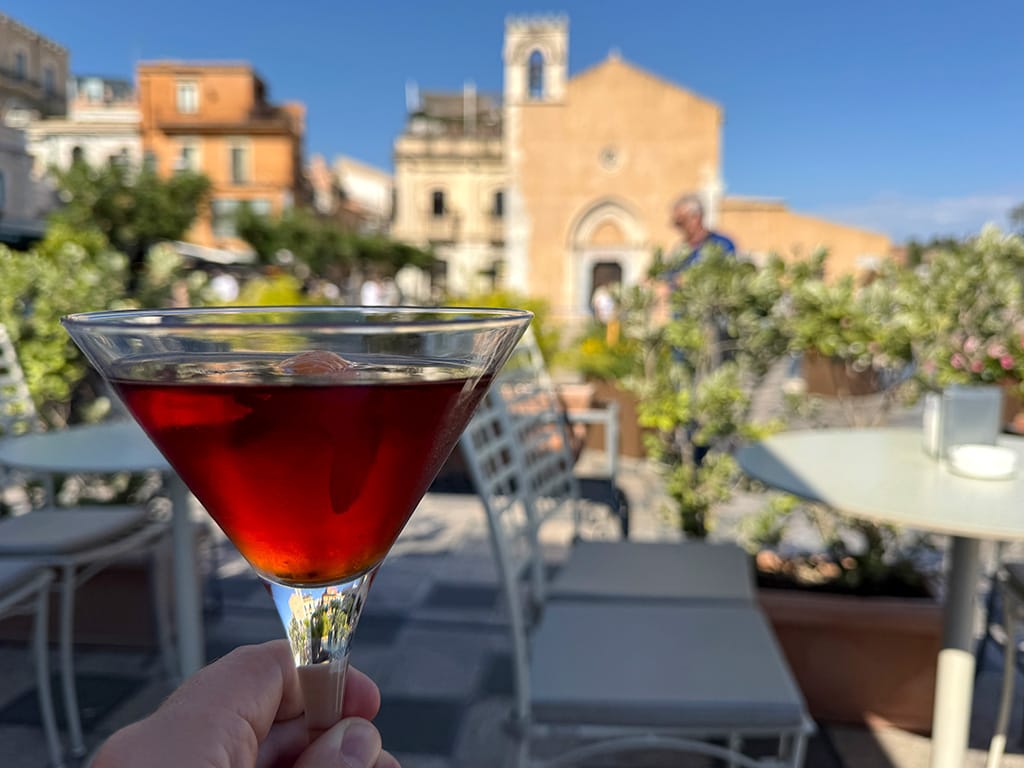
I love Wunderbar’s cocktails that combine the classics; this Manhatten with Campari was a personal highlight of a recent trip to Taormina
Signing off
Hopefully this guide has told you what you need to know about aperitivo, or at the very least, has you thinking about to drink this evening. Have some further questions about aperitivo hour or something else about life in Italy? Contact me here